The hyperrealistic representation of architecture is not a new concept due to the ubiquity of tools that offer the possibility of creating perplexing images with photographs. However, those who defend the expressive capacity of hand drawings have found ways to take advantage of the digital tools of the last decades to represent their architectural projects.
A new group of young Mexican architects is committed to a form of representation that relies on tools from our era, simultaneously taking up concepts from the sixties and seventies, where the technique of collage made it possible to face the frustrating reality that took place at the time to represent the utopias thought up by architects.
As part of our 2018 Venice Architecture Biennale coverage we present the proposal for the Finnish Pavilion. Below, the participants describe their contribution in their own words.
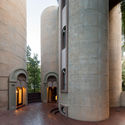
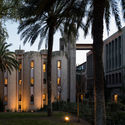
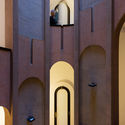
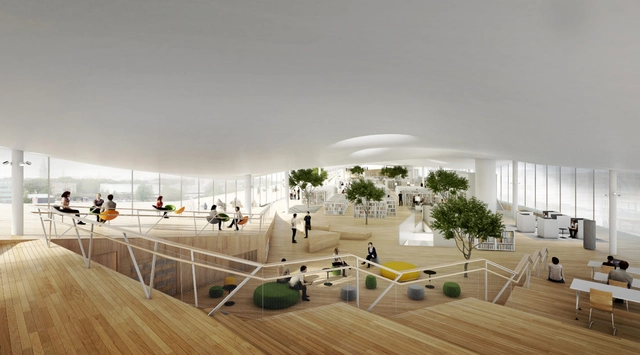
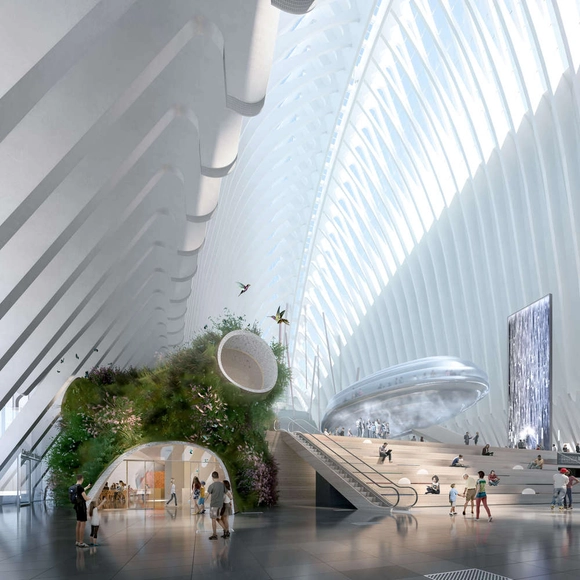
Earlier this month, in a conference held by the City of Arts and Sciences (Valencia) the winner of a private architecture competition to build the new CaixaForum Valencia was announced. The future cultural center in the Spanish city will be located inside one of Santiago Calatrava's building.
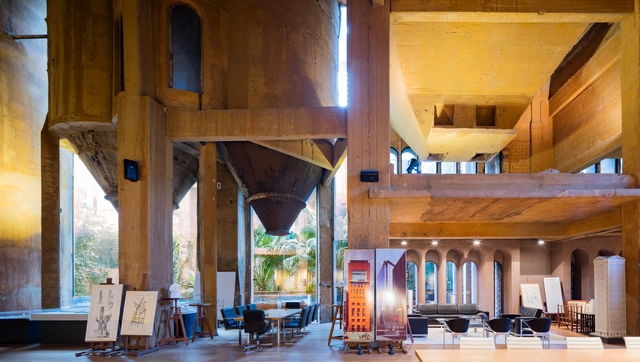
Of the nine proposals presented, architect Enric Ruiz-Geli (Figueres, 1968) from Studio Cloud 9 was chosen as the winner. An investment of around 18 million euros is expected to be needed to make the CaixaForum Valencia project a reality. In addition, about 5 million euros will be allocated annually for the maintenance, programming and operation of the center.
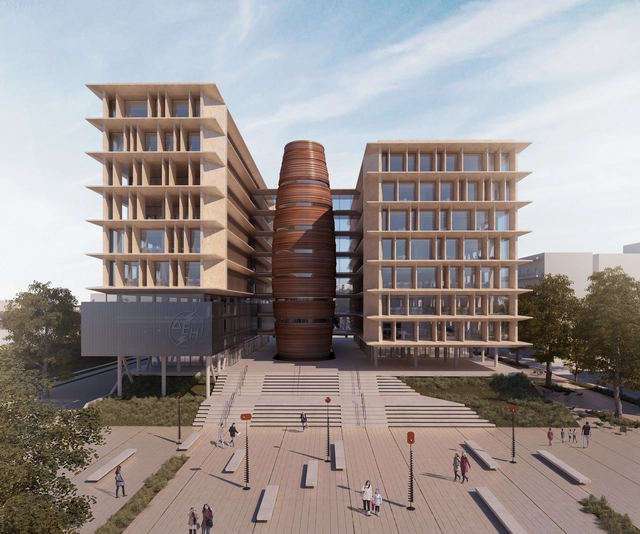
Micromega’s winning proposal for the new Public Power Corporation HQ in Athens seeks to define the company’s public character in creating an integrated urban park around and under the structure. The site which held the steam-powered station is to become a contemporary landmark for the city whilst establishing a dialogue with the historical complex and the existing old electricity factory.
Through Micromega’s design, PPC’s commitment to sustainable forms of energy will be established by three main “topoi” (spaces) that educate and express the company’s renewable sources – sun, wind, and water. In the creation of the new urban park, the architects hope to activate environmental awareness, reminding the public of the alternative clean sources available.
The argument, made by architectural historian Charles Jencks in the introduction for the recently released book Postmodern Design Complete, that Postmodern styles never truly left the architectural profession is stronger than ever. The movement from the late 70s and 80s which began as a reaction against the utopian canon of modernism has recently been re-entering the architecture scene and defining our present moment of architectural culture.
This brings up an important question: What is the current movement of architecture? And what came directly after postmodernism? If anything, it was an immediate cry of “No more Po-Mo,” followed recently by a wave of “save Po-Mo” perhaps best demonstrated by the rallying to save Philip Johnson’s AT&T Tower from a Snøhetta makeover. Even Norman Foster claimed that although he was never a fan of the postmodern movement, he understood its importance in architectural history. Postmodernism is making its recursive return with Stirling-esque rule-breaking jokes and pictorial appearances.
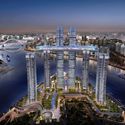
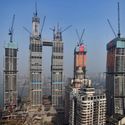
Currently under construction in Chongqing, China, Moshe Safdie's Raffles City Chongqing features an extraordinary engineering feat of erecting a 300 meter long “horizontal skyscraper” above four 250 meter high towers. An extensive urban district set at the meeting point between the Yangtze and Jialing rivers once constructed Raffles City Chongqing will hold the world record of the highest sky bridge linking the towers.
LEGO is going green. The Danish company has announced that they have begun production on a range of pieces made from a plant-based plastic sourced from sugarcane.
As a nod to their plant-based origins, the first sustainable pieces will take the form of LEGO botanical elements such as leaves, bushes and trees.
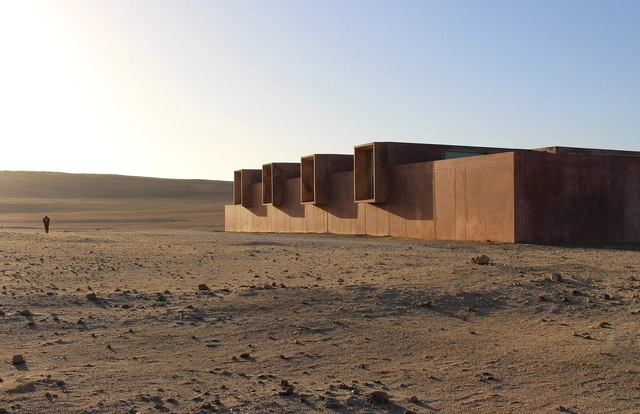
Site Museum of Paracas Culture / Barclay & Crousse. Courtesy of Barclay & Crousse. Image
Two South American architects have been selected as the winners of The Architectural Review and The Architects’ Journal’s 2018 Women in Architecture awards. This year’s top prize, Architect of the Year, has been awarded to Peruvian architect Sandra Barclay, while Paraguayan architect Gloria Cabral has been selected as the winner of the Moira Gemmill Prize for Emerging Architecture, with both being recognized by the jury for their mastery of materials.
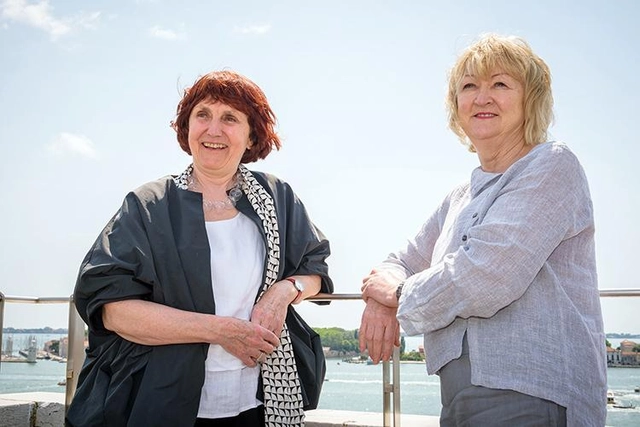
At a press conference earlier today, curators of the 2018 Venice Biennale Yvonne Farrell and Shelley McNamara of Grafton Architects revealed more information about this year's upcoming event, to be hosted from May 26th to November 25th. Building on the thematic concept the duo presented last June—“Freespace”—the event will feature a main exhibition in the Central Pavilion of the Giardini and the Arsenale featuring work by 71 participants, while two Special Sections will feature a total of 29 further participants. Elsewhere, 65 national pavilions will present contributions from around the world, including 7 first-time participants: Antigua & Barbuda, Saudi Arabia, Guatemala, Lebanon, Mongolia, Pakistan and the Holy See.
Fosun Group hired Woods Bagot to transform commercial planning of Dahua, an 82-year-old historic textile mill, into China’s next retail and entertainment district. Located in Xi’an’s urban center, the site sits next to Daming Palace, the Tang Dynasty’s royal residence and a national heritage site which attracts thousands of tourists each year.
Children playing soccer on sandy street outside the boundaries of bigness. Image Courtesy of National Pavilion UAE - la Biennale di Venezia
As part of our 2018 Venice Architecture Biennale coverage we present the proposal for the UAE Pavilion. Below, the participants describe their contribution in their own words.
The National PavilionUAE will present “Lifescapes Beyond Bigness,” an exhibition exploring human-scale architectural landscapes, at the 2018 Venice Biennale. The exhibition aims to highlight the role of architecture and urban design in forming the choreography of people’s daily routines. It particularly investigates the role of ‘quotidian’ (every day) landscapes in accommodating, enhancing, and facilitating social activities across different places in the UAE.
Update 3/2/18: A previous version of this article named Snøhetta as the leader of the team; the principal architect is in fact Liminal Studio.
Australian firm Liminal Studio, in collaboration with Snøhetta and Rush Wright Associates, has been selected as the winner of an international competition for the design of the new History and Interpretation Center at Cascades Female Factory Historic Site in South Hobart, Tasmania.
One of the most significant female penal sites dating back to 19th century, when Australia was still a British penal colony, the Cascades Female Colony was inscribed as a UNESCO World Heritage Site in 2010. The new History and Interpretation Center will allow visitors to learn about the site’s history and how its social, cultural and political implications have impacted present day Australia.
Videos
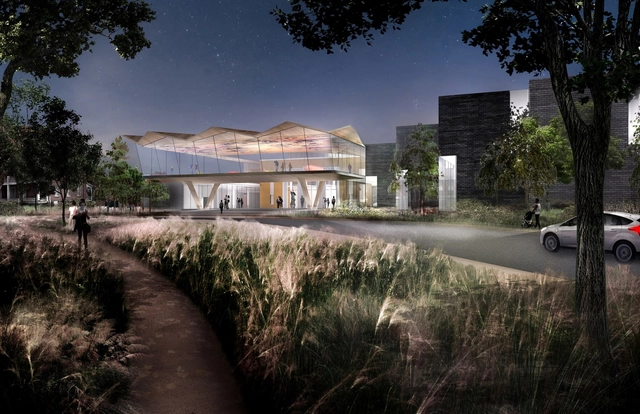
New North Entry from Crescent Drive. Image Courtesy of Studio Gang
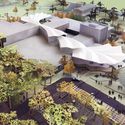
Studio Gang has revealed the design of their $70 Million expansion of the Arkansas Arts Center, located in historic MacArthur Park in the state capital of Little Rock. Working with associate architects Polk Stanley Wilcox and landscape architecture firm SCAPE, Studio Gang has envisioned a sweeping roof structure that will connect the existing architecturally disparate museum pavilions into a cohesive whole.
An “Ice Breaker” is a colloquial term used to connote something that relieves inhibitions or breaks the tension between people. In Toronto, Ice Breakers is an annual international design competition for innovative public works that break up the dreary, seemingly endless winter with engaging, colorful, and humorous installations along the city’s waterfront that encourage spontaneous interaction.
Now in its second year, the 2018 exhibition is produced in partnership between Ports Toronto and the Waterfront BIA to bring five unique structures to life around the theme of “Constellation.” Proposals from enlarged bears inspired by the Ursa Major constellation to giant wind chimes were among those selected from hundreds of entries from all around the world, now on view until February 25.
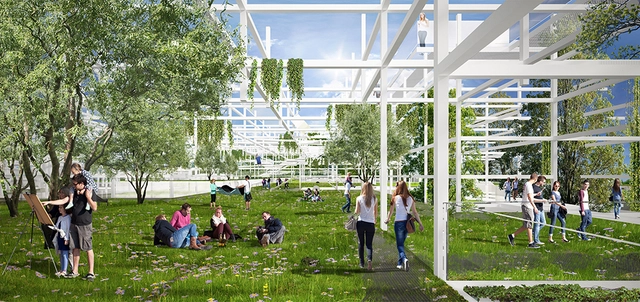
OVO Grąbczewscy Architekci's stacked garden-like proposal has been awarded third place in a competition for the new Małopolska Science Center in Krakow, Poland. The competition brief asked for the design of an innovative cultural institution with an iconic architectural form that would represent creativity, openness and independent thinking. As a reflection of both the city and the region, the center is also intended to provide a model for sustainable construction, energy efficiency, and education that inspires immersive visitor engagement.
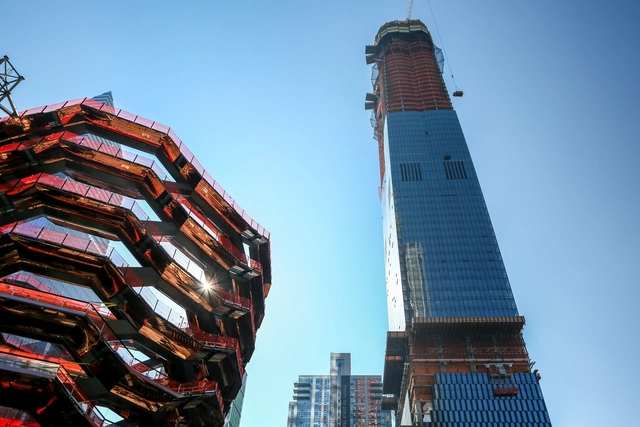
Hudson Yards’ first condominium tower, 15 Hudson Yards, has topped out at its full architectural height of 914 feet, with exterior cladding also more than halfway complete. Designed by Diller Scofidio + Renfro (the firm’s first true skyscraper) in collaboration with Rockwell Group and executive architects Ismael Leyva Architects, the tower will contain a total of 285 residences, half of which have already been sold.
In the letter, Docomomo US President Theodore H.M. Prudon and Docomomo US NY/Tri-State President John Arbuckle highlight the structure’s critical acclaim and essential place within Modernist architectural history, urging the Commission to calendar the building for designation as quickly as possible.
The iD Town in Shenzhen, Guangdong, China, is a project with many charms. The building itself has a distinctive history: in its prime, it used to be the Honghua Dyeing factory, but then was abandoned. Topographically, too, this building occupies a unique place, perched on a hilltop and surrounded by the mountains and the coast of the Southern Chinese Sea.
With minimal interventions, O-OFFICE architects have managed to refurbish this 8-hectare factory in Shenzhen into a thriving cultural and community center. The original ground floor was converted to form a large open concrete pavilion. What was once a workshop for purifying rough cloth was turned into a reception center – the Z gallery – with 7 individual artist studios, exhibition and meeting rooms and a café. Rotating wall-doors and sliding glass doors help the gallery take on different expressions during different events or in different seasons.
Global higher education analysis firm Quacquarelli Symonds (QS) has revealed its rankings of the world’s top universities for the study of Architecture / Built Environment for 2018. The eight edition of the survey compared 2,122 institutions across the globe offering courses in architecture or the built environment, narrowing down the list based on criteria including academic and employer reputation.
For the fourth straight year, MIT has topped the rankings, once again coming out ahead of the Bartlett School of Architecture and the Delft University of Technology (TU Delft) in 2nd and 3rd respectively. Read on for the full rankings.
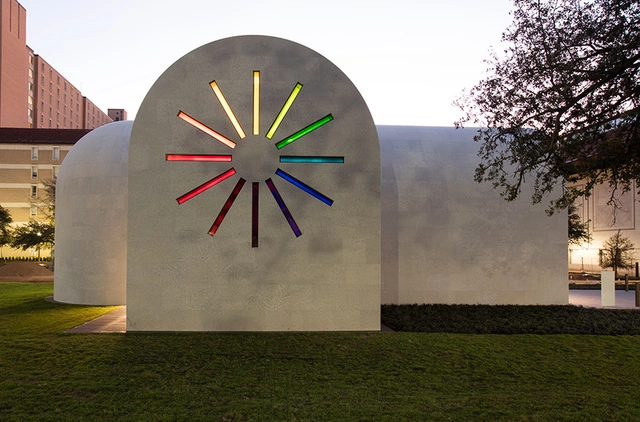
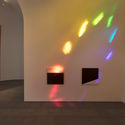
Ellsworth Kelly died in December 2015 at the age of 92, less than a year after he announced a gift of one of his most lasting creative contributions: plans for the artist’s only building, which had been sitting in his New York studio since 1986.
Titled Austin, this 2,715-square-foot work on the grounds of the Blanton Museum of Art on the University of Texas at Austin campus would be his final—and perhaps greatest—effort, an immersive space whose artistic value matches that of the marble panels and sculpture within. Unlike the Rothko Chapel in Houston, in Austin the artist and architect are one, says Carter E. Foster, the Blanton’s deputy director for curatorial affairs.
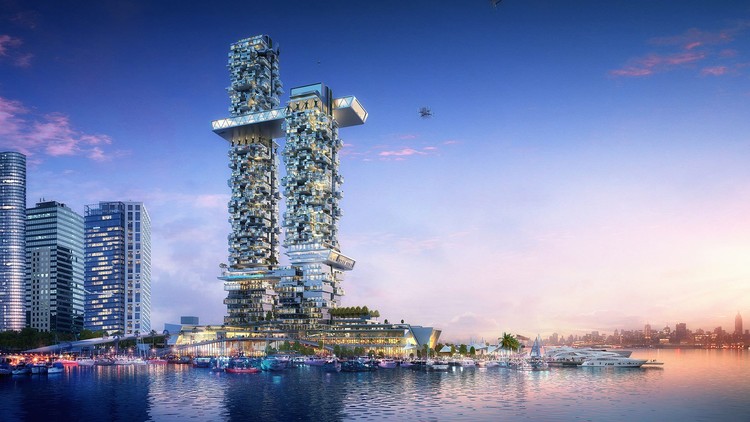
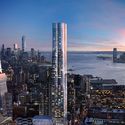
Humphreys and Partners, a Dallas-based architecture firm, presented a vision of future residential living at the 2018 International Builders’ Show earlier this year. Tackling current issues of affordable housing, sustainable design and how technology is changing the way we live, their futuristic vision Pier 2: Apartment of the Future consists of two soaring skyscrapers on the Manhattan waterfront.
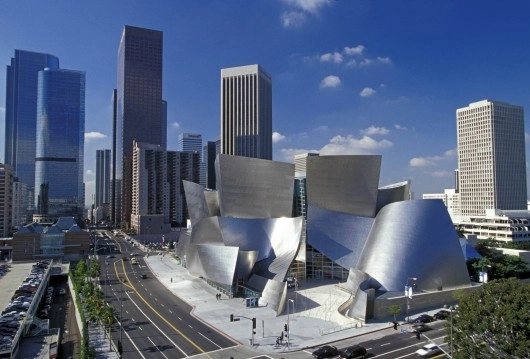
Walt Disney Concert Hall. Image Courtesy of Gehry Partners, LLP
Internationally acclaimed architect Frank Gehry (born 28 February 1929) has been headlining architectural news platforms since he established his Los Angeles practice in 1962 and remodeled his home in Santa Monica. Notorious for his expressive use of form (and its-sometimes inflationary effect on project budgets), Gehry is best known for the Guggenheim Museum in Bilbao, which fellow architect Philip Johnson once dubbed “the greatest building of our time.”
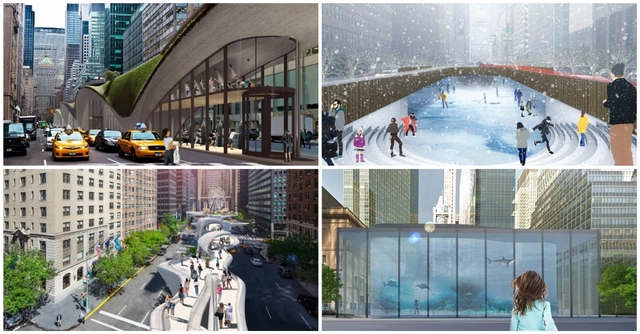
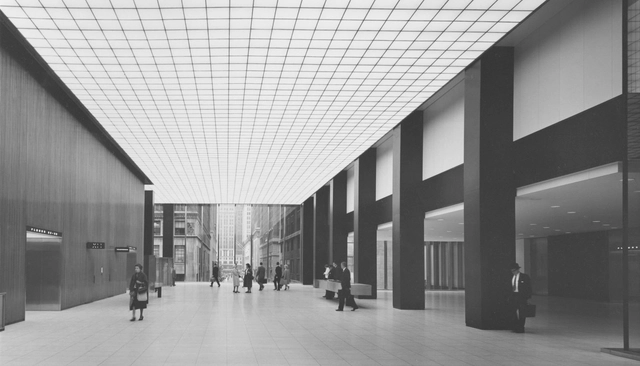
Seventeen entries have been selected as finalists in the “Beyond the Centerline” competition, which is seeking ideas for how to “re-envision and enliven the traditional traffic medians of the Park Avenue commercial district between 46th and 57th Streets."
Organized by development company Fisher Brothers, the ideas competition asked architects to submit their “most ambitious and creative visions unencumbered by zoning code, cost, weight limit, or other restrictions.”























.jpg?1517410628&format=webp&width=640&height=580)
.jpg?1517410032 "© Laurian Ghinitoiu")
.jpg?1517409890 "© Laurian Ghinitoiu")
.jpg?1517409616 "© Laurian Ghinitoiu")
.jpg?1517410674 "© Laurian Ghinitoiu")
.jpg?1517410628)
.jpg?1519827682&format=webp&width=640&height=580)