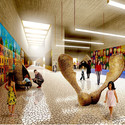
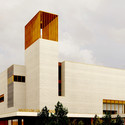
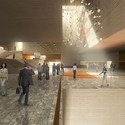
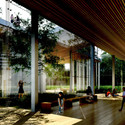
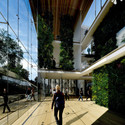
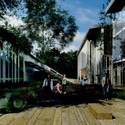
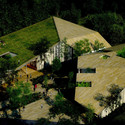
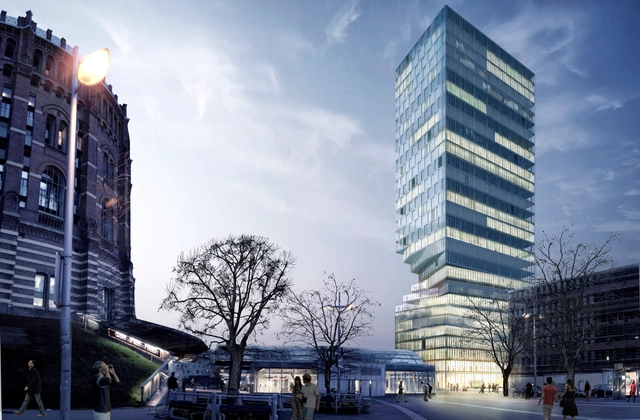
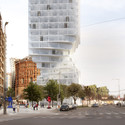
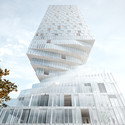
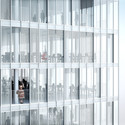
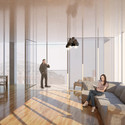
MVRDV has been announced as winner of a two-stage, BAI-backed competition for a new “spatially-flexible” tower with a twisting “hourglass figure” near Vienna’s world famous Gasometers. The 110-meter “Turm mit Taille” (Tower with Waist) was shaped to minimize the effect of the building’s shadow cast onto neighboring buildings and an adjacent metro station.
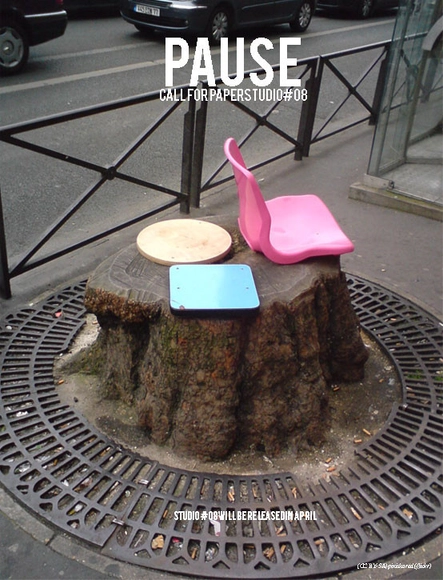
STUDIO Architecture and Urban Magazine is calling for submissions for its ISSUE#8 publication: Pause. As the title suggests, the issue will look at the modern city’s propensity for change and movement by focusing on “the crystallization of a moment, a temporary stop out of time and space, where you can listen to the sound of silence.” The magazine is looking for a variety of different submissions, from essays to infographics, relating to any field of design. Interested contributors must send a 200-word abstract (in English) explaining their proposal. The deadline for this is February 25th. Final pieces chosen for the issue are to be submitted by March 20th, with an expected publication date in April. For full submission requirements, click here!
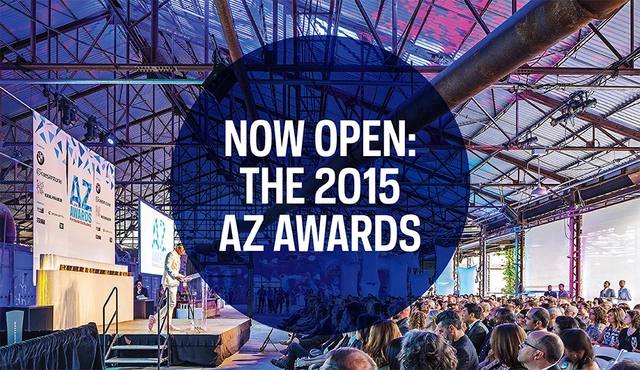
AZURE Magazine is inviting architects, designers, students, clients and manufacturers to submit to the fifth annual AZ AWARDS competition (#azawards15) and get their exceptional work the recognition it deserves. Established in 2011, the AZ Awards is an international competition celebrating design excellence. The winners and finalists of the AZ Awards greatly benefit from the exposure offered by this widely recognized competition.
Entries are juried by a panel of international design experts at the forefront of their professions. Finalists and winners will be published in the 2015 AZ Awards Annual and recognized at the AZ Awards Gala in Toronto on June 19, 2015.
The competition is open to architects and designers from all disciplines, as well as students, manufacturers and clients for work completed by December 31, 2014.
https://www.archdaily.com/589171/call-for-entries-az-awards-2015Sponsored Post
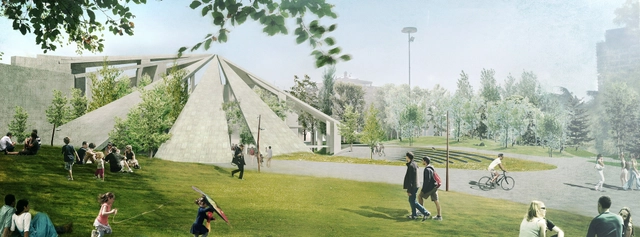
Amongst the proposals received was one from a Canadian team comprised of architect Naiji Jiao and landscape architect Seven Xiru Chen, whose entry “The Pyramid Park" was awarded first place. Read more about the winning entry after the break.
Shelter is pleased to invite architects, planners, students, engineers, designers, thinkers, NGOs and organizations from all over the world to take part in the first annual Dencity Competition. Rapid world growth and urbanization is not allowing cities to adapt and provide for their inhabitants. Towns are quickly growing into cities, and some of the densest places in the world are comprised of makeshift homes, otherwise referred to as slums. Furthermore, already overcrowded cities have to absorb people leaving their rural hometown in hope of job opportunities. There are currently over 1 billion slum dwellers in the world. This number is expected to reach 2 billion by the year 2030. Now, more than ever, we need to play a central role in the development of substandard neighborhoods. Slums effect much more than just housing; they affect almost all living conditions and communities as a whole.
The competition to masterplan Muscat, Oman’s new district, Al-Irfan, is over. Organized by the Royal Institute of British Architects (RIBA), five teams were chosen to submit proposals for the development project. Of those five, international firm Allies and Morrison has been selected to oversee the design process. The firm will be working in with the Oman Tourism Development Company SAOC (Omran) to develop a site of over 7.4 million square meters into a thriving urban center that will provide business and residential opportunities for the people of Oman.
64 North, HNTB Engineering, Bionic Landscape Architecture and sculptor Ned Kahn have been chosen by the City of Palo Alto to realized a new bicycle and pedestrian bridge over the 14-lane Highway 101 at Adobe Creek. Their winning proposal, “Confluence” will connect residential and commercial areas in south Palo Alto to the Baylands Nature Preserve and the regional Bay Trail network.
Read on for more information and a video about the design.
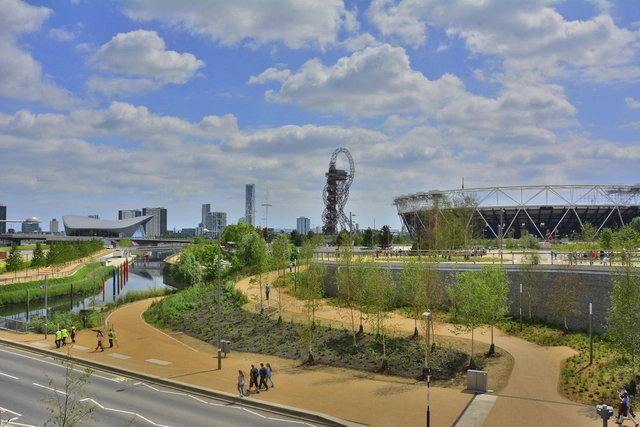
Five consortiums have been shortlisted to envision the University College London’s (UCL) new 125,000-square-meter campus on a key section of London’s Olympicopolis. Planned for the site’s cultural and educational district, nearby the future homes of Victoria & Albert Museum, University of the Arts London and Sadler’s Wells, the campus’ first phase will include the university’s first School of Design, a “Museum of the Future,” and the UCL Center for Experimental Engineering.
The complete shortlist, including Aecom, Gehl Architects and Stanton Williams, after the break.
The 2015 RIBA Norman Foster Travelling Scholarship has launched and is inviting applications from schools of architecture around the world. A £6,000 grant will be awarded to one student by a panel of judges which will include Lord Foster and the current President of the RIBA, Stephen Hodder. First established in 2006, the scholarship is now in its eighth year and is designed to fund international research on a topic related to the survival of our towns and cities in a location of the student’s choice.
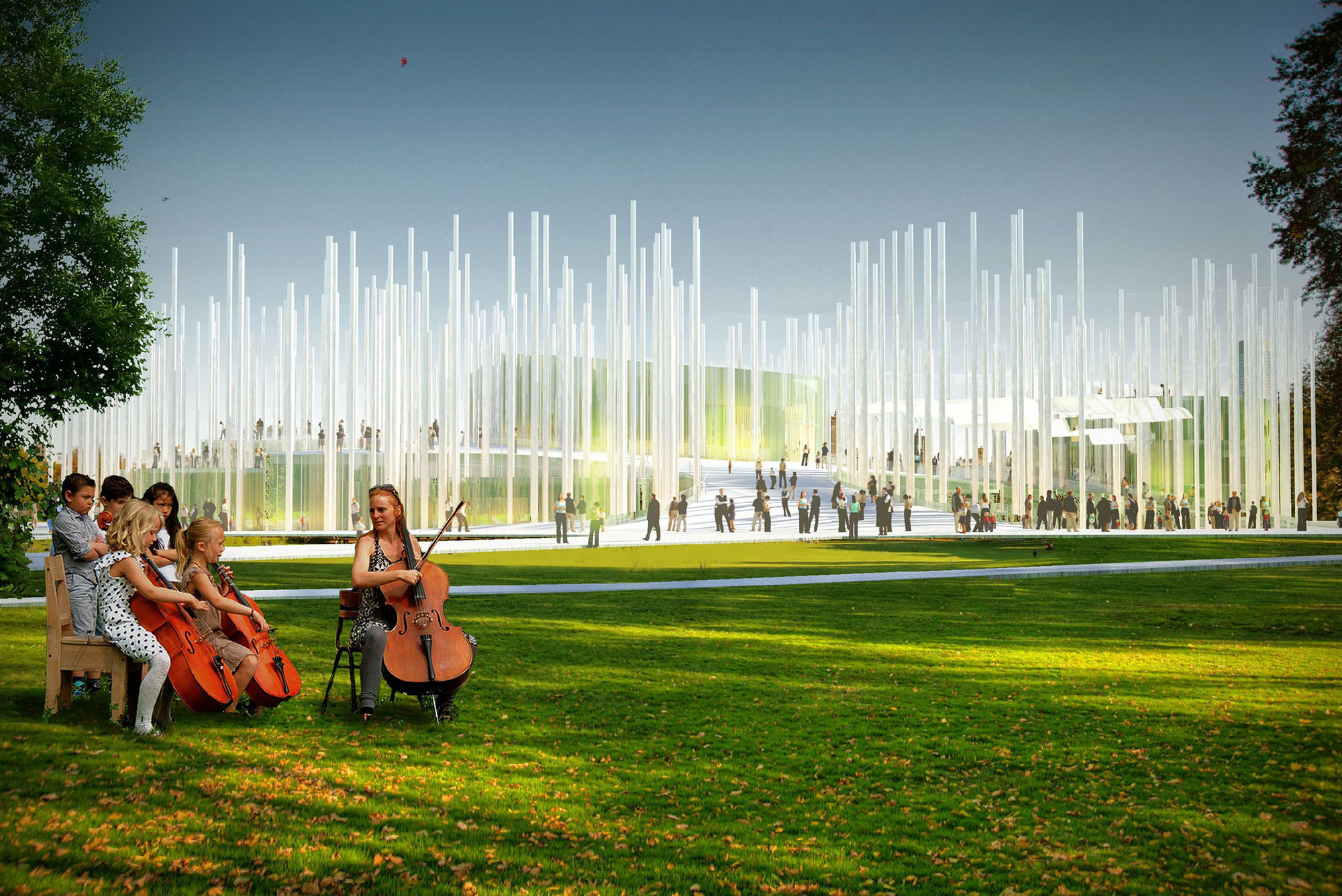
The city of Bressanone, Italy, is looking for a new School of Music, and Tomas Ghisellini Architects have won a recognition of honor for their proposal. Taking inspiration from the loggias, piazzas and cloisters of the surrounding city, their school design creates a “landscape within a landscape” in which students may study and practice music. Called “Supernova,” the design includes a rehearsal hall, classrooms, and plenty of indoor and outdoor spaces that act as transitional space between the city fabric and the abutting parkland. Learn more, after the break.
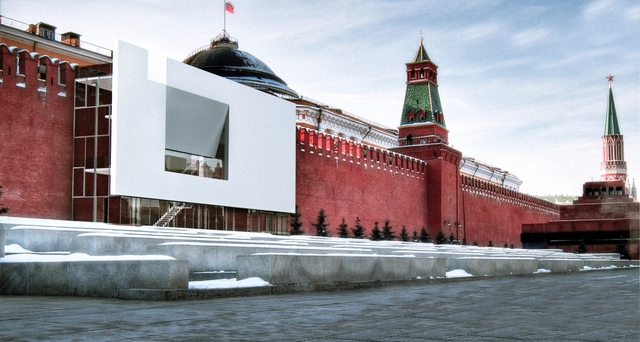
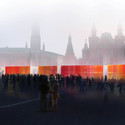
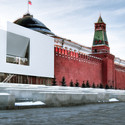
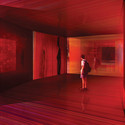
The results of the Red Square Tolerance Pavilion Competition, hosted by Homemade Dessert (HMMD), have been announced. Placed directly in the center of Moscow's Red Square, the competition asked designers to advocate the many facets of tolerance (social, religious, and political) by manifesting them in the form of a temporary pavilion. To further enhance these ideas, the pavilion is not only a symbolic space, but an educational one, with lecture halls and exhibition areas as its program, encouraging entrants to promote tolerance in all aspects of their designs.
The AIA Small Project Practitioners (SPP) invites architects and architecture students to submit design ideas to the 2015 SPP Small Project Design Competition – POP-UP 2015: “A Safe Space.” In this unique design competition, submitters are asked to design a discreet, compact and efficient shelter for the homeless. The fully constructed and completed winning design will be donated to the local non-for-profit partner, The Mad Housers, for use by their clients and program participants.
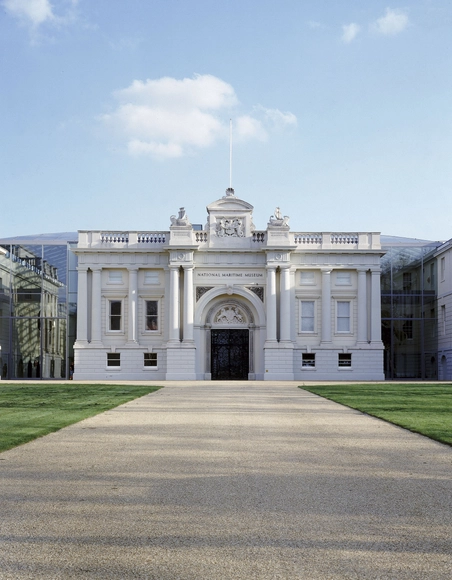
London’s National Maritime Museum is looking for an architect to revamp its West Central Wing building. As the Architects’ Journal first reported, the 1807 Daniel Asher Alexander-designed structure will be given £2 million to upgrade its facilities and establish new galleries, as well as connect the West Central Wing to the museum’s BDP and Rick Mather-designed Neptune Court podium via a bridge. All requests to participate are due January 20, 2015. Find more details, here.
Embracing Limits. Image Courtesy of Architecture at Zero
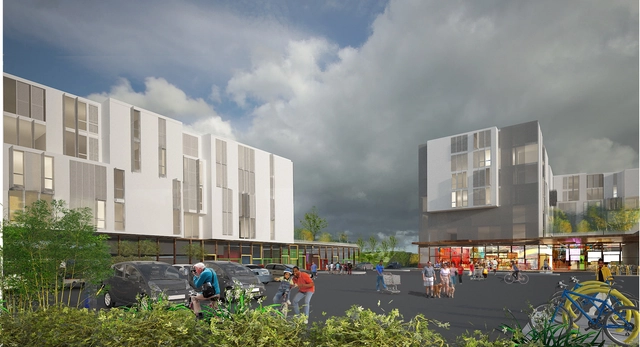
Recently, the Architecture at Zero design competition, sponsored by Pacific Gas and Electric Company, came to a close. Open to a variety of fields and skill levels, the competition challenged entrants to create a zero net energy (ZNE) design specific to an Oakland-based site run by the East Bay Asian Local Development Corporation (EBALDC). ZNE buildings maintain equal amounts of energy input and output annually, and thus function as independent sustainable units, making them a smart solution when considering future impact.
One of four shortlisted proposals (click to view them all). Image Courtesy of The Architects' Journal
Sutherland Hussey, Faed Brown Architects, Daykin Marshall Studio, and Gibson Thornley Architects have been announced as finalists in the RIBA-backed competition for a new community hub and sports pavilion for the Sessay Cricket Club in North Yorkshire. The four shortlisted competitors, selected from over 80 entrants, will be reviewed by a judging panel on January 8. A winning team is expected to be announced shortly after.
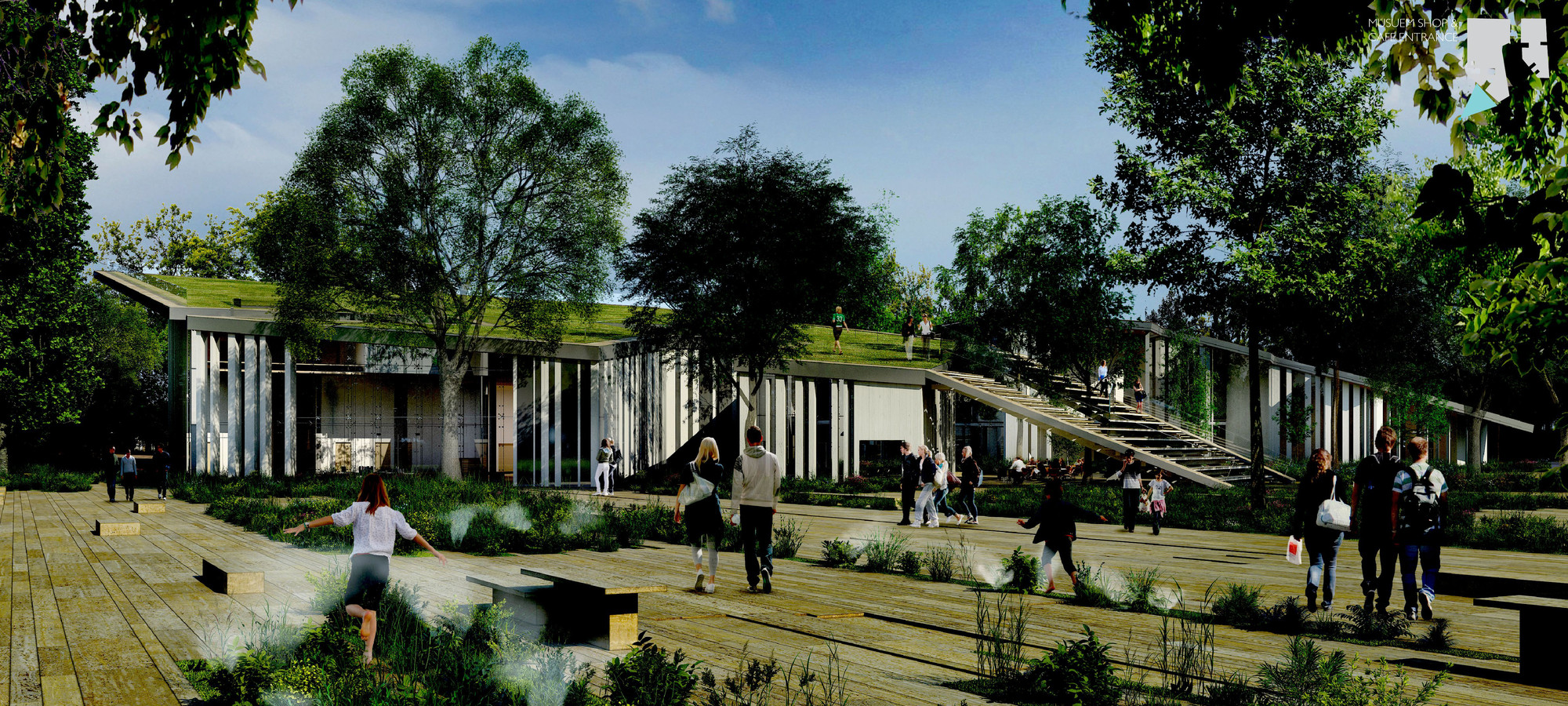
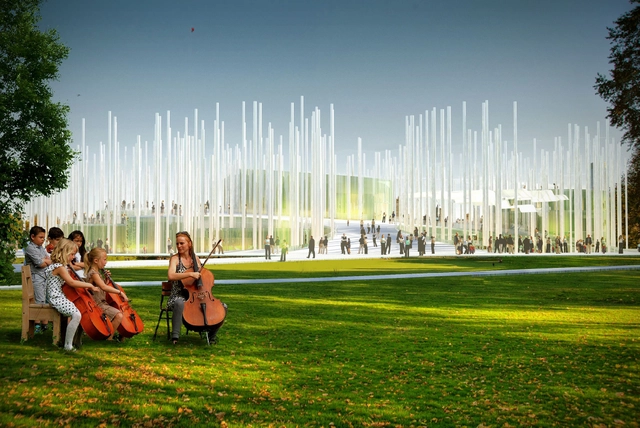
Recent participants in the Liget Budapest design competition, Graeme Massie Architects have taken home third place for their proposed Museum of Ethnography design. The museum, one of five museums planned for the Liget Budapest development, is located at the very corner of Budapest City Park and is meant to act as a welcoming landmark for the city. Graeme Massie fulfills this requirement in a unique fashion, creating a building that is instantly recognizable, but still manages to blend with its surroundings. Learn more, after the break.
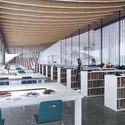
Sang-Uk & Heeyun has shared with us their entry for the AWR Copenhagen New Modern Library Competition. Centered around park, sea, and the city, the undulating ribbed library aims to connect to its surroundings seamlessly. “The form of building reflects the idea of continuous and extended circulation from everywhere to everywhere,” says Sang-Uk & Heeyun.
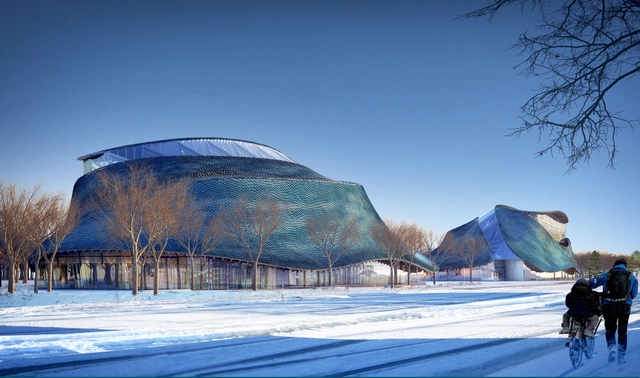
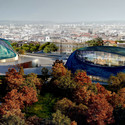
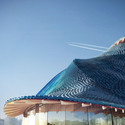
Taking home third place in the Liget Budapest competition, the Laboratory for Explorative Architecture and Design (LEAD) has proposed a colorful design for Budapest’s new photography and architecture museums. A stunning shade of blue, the undulating buildings will mark the entrance to Budapest City Park, and provide a new cultural hotspot for Hungary’s capital city. Learn more about them, after the break.
What happens at the intersection of urban culture and architecture? How can the four elements of hip hop (DJing, MCing, Breaking and Graffiti) inspire the built environment? Participants of JUX.TA.PO.SI.TION are encouraged to create a sketch using mediums of their choice to depict new building forms, urban design concepts, and/or architectural products inspired by the four foundational elements of hip hop. This international competition is open to all individuals including students, graffiti artists, architects, urban planners, landscape architects, graphic designers, muralists, etc. You can complete the free registration form and find more information, here.
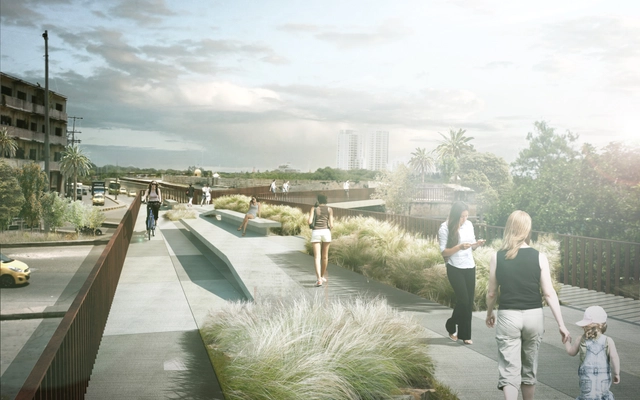
MOBO Architects has won a competition to refurbish the vertical and horizontal access structures of the UNESCO protected fortresses that surround Cartagena's colonial walled city. With an aim to create a walking tour through the bastions and walls that is both safe and pleasant, MOBO’s winning proposal offers a series of urban interventions that will unify the existing disparate structures and create a continuous pathway for pedestrians and cyclists. This, as MOBO describes, will “completely restructure the way that the citizens and visitors use not only the wall, but also the spaces in the city.”
After public outcry rejected Michael Maltzan Architecture’s winning entry “The Lens,” which sought to replace St. Petersburg Pier with an ambitious sail-like concrete canopy and aquatic habitat, the fate of the structurally inapt inverted pyramid remained in limbo. Now, two years after the culmination of the original competition, the City of St. Petersburg, Florida, alongside the preservations of the Concerned Citizens of St. Pete, has selected eight scaled back proposals in hopes that one will provide a sensible solution that will both maximize the pier’s potential and satisfy the locals.
Shortlisted competitors, including FR-EE / Fernando Romero EnterprisE, Alfonso Architects, and Rogers Partners, received a $30,000 stipend to submit these preliminary design concepts, complete with reports, renderings and cost estimates. Take a look at all eight proposals, after the break.
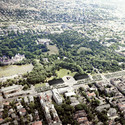
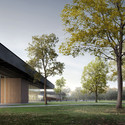
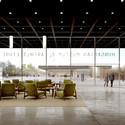
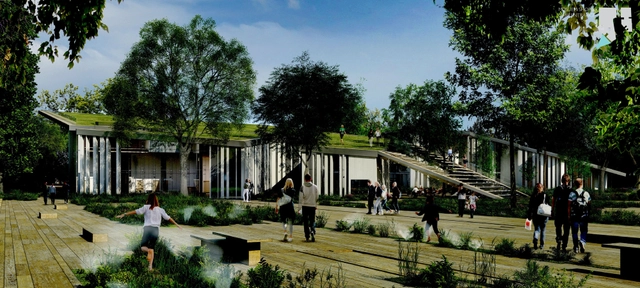
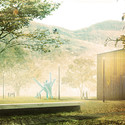
The Liget Budapest Competition has recently announced its winners, and Kengo Kuma and Associates has taken home honorable mention for their House of Hungarian Music design. Conceived as a house in the woods, the proposal seeks to embed itself in the landscape, having a low impact on the natural environment while becoming a focal point of Budapest’s urban environment.
The Liget Budapest Architecture Competition has recently announced the winners for Budapest’s new Hungarian House of Music museum design. Coming in second place is architecture firm ARCVS Projektni biro. Their proposal takes the form of an 8-pointed star-shaped dome, held up by a veritable forest of columns. This uncommon shape provides numerous places, both indoors and out, for education, leisure, and exhibition, establishing itself as a prominent destination for the people of Budapest. Learn more, after the break.












.jpg?1420827616)



.jpg?1420827616)