The ‘World’s Greenest Commercial Building’ Opens in Seattle

Courtesy of Miller Hull Partnership

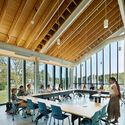
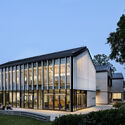
The Bullitt Center, a six-story, 50,000 square foot office building in Seattle that aspires to be the world’s greenest building, opens its doors to the public today on Earth Day. This $30 million “living laboratory,” designed by Miller Hull Partnership, distinguishes itself from other sustainable projects with its composting toilets, the exclusion of 350 common toxic chemicals – including PVC, lead, mercury, phthalates, BPA and formaldehyde – along with a strict energy and water budget that aims for self-sufficiency under the Living Building Challenge. The environmentally-conscious Bullitt Foundation hopes that the new center will demonstrate that carbon-neutral office space can be “commercially viable and aesthetically stunning,” a series of systems that can be easily copied elsewhere without being overly demanding in upkeep.

Read more about the Bullitt Center after the break…

Olson Kundig Architects to Design New Museum of Art for WSU

The Pierre / © Benjamin Benschneider

Seattle-based architect Jim Olson of Olson Kundig Architects has been selected by Washington State University to design a new Museum of Art. Over the years, Olson has complied a spectacular portfolio of stunning homes designed for art collectors worldwide. This experience has given Olson a “wealth of experience in not only crafting beautiful environments for works of art, but in working with artists to discover new opportunities for expressing their creativity,” according to Chris Bruce, director of the museum.

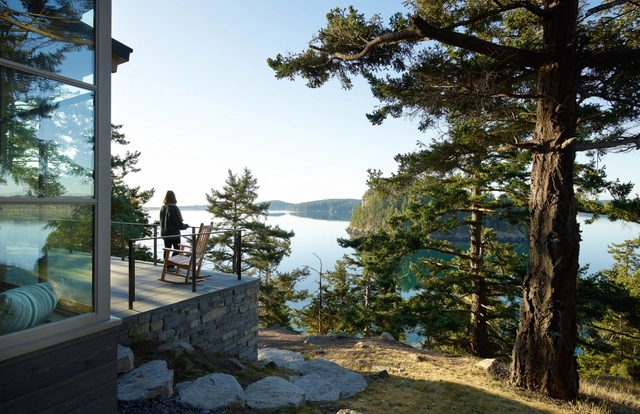
Shadowboxx / Olson Kundig Architects

© Tim Bies

Architects: Olson Kundig Architects
Location: Lopez Island, ,
Year: 2009
Photographs: Michael Burns, Tim Bies, Kevin Scott, Benjamin Benschneider

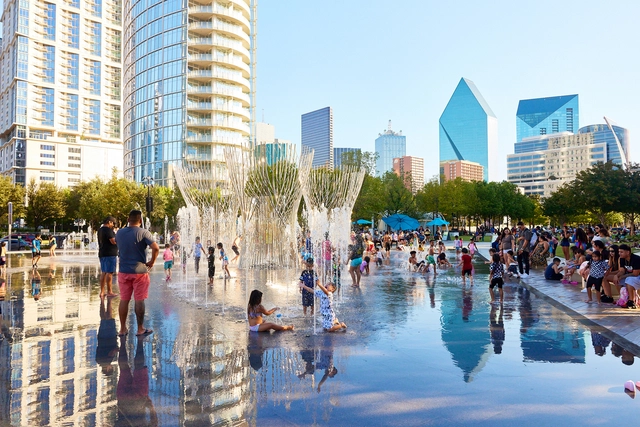
Seattle Center HUB (Hybrid Urban Bioscape) Competition Entry / Aétrangère

Courtesy of

The Center HUB (Hybrid Urban Bioscape) is an innovative urban space that explores the value of urban hybridization as a design opportunity to address sustainable and technological issues in the definition of the contemporary public space. The starting point for the proposal by Aétrangère was to introduce an innovative approach to reach the same goals envisioned by the Seattle Center Century 21 Master Plan. Instead of conceiving the demolitions, reconstructions, new buildings, the underground parking, and the major open space as separate elements, they allow some degree of integration for sustainable features we focused on defining this public space project starting from a sustainable approach. More images and architects’ description after the break.

Transforming Seattle’s 520 Floating Bridge Competition Winners

Courtesy of David Dahl and Nicole Lew

RETHINK REUSE recently announced the winning entries in their Transforming Seattle’s 520 Floating Bridge 2012 International Design Ideas Competition. With the goal of envisioning new, innovative reuse strategies, the winners successfully answer the questions: What is a floating bridge when its function is no longer needed? What can designers do when faced with the design problem of reusing thirty-three floating concrete pontoons? More images and information on the winners after the break.

City OKs design of Amazon’s Seattle Headquarters

©

With a 3-2 vote, Seattle’s Downtown Design Review Board has voted in favor of ’s plans for a three-block, high-rise complex in the Denny Triangle. The board voted after conducting five, comprehensive meetings over the last six months to review ’s evolving NBBJ-designed proposal. Although this design review approval is simply a recommendation to the city’s Department of Planning and Development, it is still a milestone for the ambitious project.

The five acre site, roughly located between Sixth Avenue, Blanchard Street and Westlake Avenue, is currently occupied by expansive parking lots, the Sixth Avenue Inn and the King Cat Theater. Continue after the break to learn more.

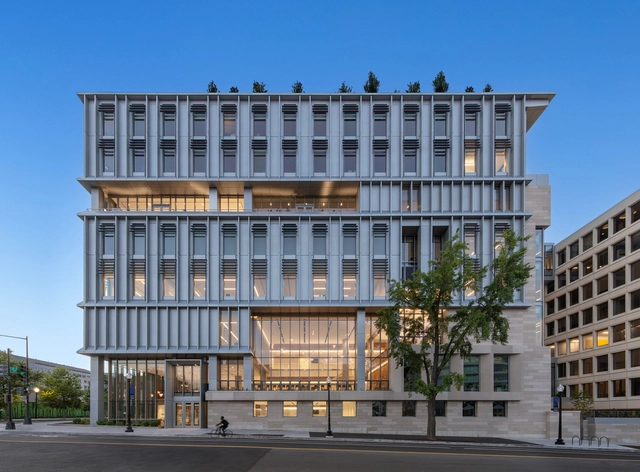
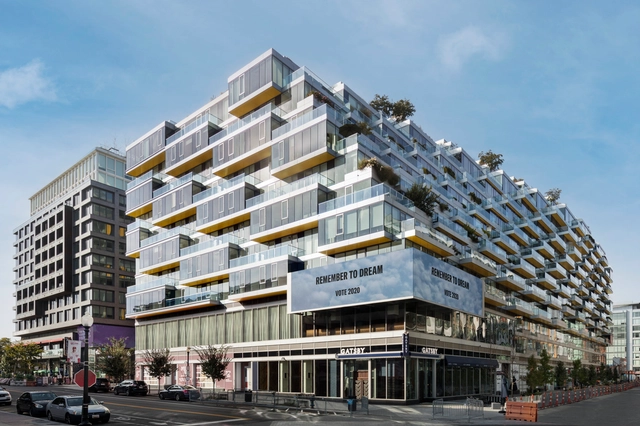
625 Rhode Island Avenue / Suzane Reatig Architecture

© Alan Karchmer

Architects: Suzane Reatig Architecture
Location:   DC, United States
Project Year: 2012
Photographs: Alan Karchmer

Amazon’s Seattle Headquarters / NBBJ

Amazon’s Seattle Headquarters; Images ©

NBBJ’s design for the Amazon’s new headquarters in downtown Seattle, , promises to consolidate the companies currently scattered buildings into a 3-block development that includes high-rise towers, a variety of open spaces, and landscaped plazas.  The 3.3 million square foot design was presented to the city’s Design Review Board (DRB) in great detail outlining the division of the each of the buildings, their integration into the downtown urban fabric and the synthesis of the currently underdeveloped Denny’s Triangle.

Follow us after the break for more.

Seattle Design Festival

© 2012 Design in Public

The annual Seattle Design Festival, created by Design in Public, is an event that encourages all to ‘engage our world’ by offering the public an opportunity to better understand design and how it adds value to our lives, our city, and our region. This fun-filled weekend, which takes place September 20-23, is a collaboration among ten nonprofit partners that created an ambitious set of offerings: more than 35 events, including tours, films, speakers, exhibits, installations, and family programs—all aimed at a public audience. For more detailed information, including a complete list of events going on that weekend, please visit here.

Artisan Barn 
Addition / Hutchison & Maul Architecture

Courtesy of

Seattle-based Hutchison & Maul Architecture has designed an addition, dubbed the Artisan Barn, to a historic barn in Uniontown, . The existing space currently houses studio, performance and gallery areas for artists, along with a gift shop. Materials will be salvaged from an onsite Loafing Shed to create a new classroom onto the existing barn structure. Additionally, Hutchison & Maul will assist in designing a master plan that will integrate landscape and outdoor performance spaces into the surrounding area.

Continue after the break for the architects’ description.

Bainbridge Island Museum of Art / Coates Design Architects

Courtesy of

Located on a prominent corner of , Washington, the Museum of Art is not only the anchor tenant of the Island Gateway development, but it will soon become the cultural center of its community. Designed by Coates Design Architects, an inspiring and creative experience is provided to residents and visitors alike. More images and architects’ description after the break.
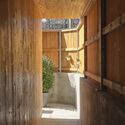
Francis Gregory Library / Adjaye Associates

© Edmund Sumner

Architects: Adjaye Associates
Location: , DC,
Project Year: 2012
Photographs: Edmund Sumner

The Pierre / Olson Kundig Architects

© Benjamin Benschneider

Architects: Olson Kundig Architects
Location: , Washington, USA
Project Team: Tom Kundig, FAIA
Project Architect: Jon Gentry, LEED AP
Project Manager: Chris Gerrick, LEED AP
Project Year: 2010
Project Area: 2,500 sqf
Photographs: Benjamin Benschneider

Transforming Seattle’s 520 Floating Bridge 2012 International Design Ideas Competition

Courtesy of RETHINK REUSE

RETHINK REUSE, an independent group whose goal is to inspire discourse on the topic of reuse is inviting all to participate in their Transforming Seattle’s 520 Floating Bridge 2012 International Design Ideas Competition. The goal is to envision new, innovative reuse strategies. The 520 bridge will be decommissioned in 2014 due to high maintenance costs, damage, and the need for additional lanes. The State Department of Transportation is requiring of the new bridge’s design-build team that it be reused or recycled in a sustainable fashion; current trends for the reuse of pontoons have been floating docks, breakwaters and piers, but what else could be done with such a feat of engineering? More information on the competition after the break.

Urban Intervention Seattle Center Competition Proposal / Hoshino Architects

With a challenge to make a series of random ephemeral public spaces using a simple structure in the Center, the intervention by Hoshino Architects proposes areas of such spaces to be transformed to voids and purely leave the circulation spaces on the ground level. In contrast, the public contents circles are randomly scattered on the field level. As normal urban spaces, the circulation spaces sometimes change to unexpected functions, such as a viewing gallery for the event staged at the field level. This dual layer structure intertwines and creates the complex ‘Porous-scape’. More images and architects’ description after the break.

Foss Waterway Seaport / Olson Kundig Architects

Courtesy of

Designed by Olson Kundig Architects, the Foss Waterway Seaport, Puget Sounds premier maritime heritage, education and recreation center began undergoing historic rehabilitation and adaptive re-use. When building rehabilitation is completed, the new 45,000 square foot public facility will feature an expansive maritime heritage museum, compelling indoor program spaces (including a K-16 marine science and environmental education center), a heritage boat building shop and the “Discovery Wharf” childrens learning center. More images and architects’ description after the break.

Amazon Proposes Three New Towers in Seattle

Via Early Design Guidance Submittal

Tomorrow, Amazon representatives are scheduled to present their design for a three-block proposal that will introduce three new towers to the skyline and add 3.3 million square feet of office space to the downtown area. Quite possibly the largest development ever proposed downtown, the complex will consume five acres in the Denny Triangle Urban Village that is currently being used for parking, the Sixth Avenue Inn and the King Cat Theater.

Continue reading for more information on the Denny Triangle project.

What Makes it GREEN? – Live Jury Interviews, Winners Announcement, and Reception

Courtesy of AIA

Designers in the Northwest and Pacific Region create some of the world’s most sustainable buildings. What Makes it GREEN? (WMIG?) celebrates the region’s achievements and the interdisciplinary teamwork required to meet the 2030 Challenge®. For over a decade, WMIG? has educated and inspired the larger design community with creative solutions for .

Jurors from the 2012 What Makes It GREEN? Awards will be interviewing the shortlisted project teams from around the region live at Seattle City Hall April 18 starting at 9am with the winners being announced that evening. For those interested in sustainable design, green buildings, and energy-efficiency, this is an opportunity to learn behind-the-scenes what goes into designing the kinds of buildings that will help us reach carbon neutrality by 2030. For more information, please visit here.

UPDATE: zHome / David Vandervort Architects

© Aaron Ostrowsky

Last June we announced the zHome community designed by David Vandervort Architects, a target zero-energy community in Washington that is one of many springing up across the country, changing the way communities are planned and developed.  Since World War II spawned the era of suburban living, the Levittown model has been the trajectory along which so many communities across the country have gone.  Now with and ecologically conscious design being at the forefront of many architects’ practices, it makes perfect sense for whole communities to take the leap as well.  But what does that mean for the lifestyles of its residents?  And does this make an exclusive neighborhood where only some are willing or able to comply. Follow us after the break for more.

Urban Intervention: Public Space Competition Proposal / PRAUD

Courtesy of

The public space proposal for the Urban Intervention competition creates a new way of creating a dialog between the park and the city. Designed by PRAUD, each solid and void creates its own topography, and thus the topography of the solid provides different experiences for pedestrians and joggers, while topography of the voids provide different types of functions and landscape fields. More images and architects’ description after the break.
Urban Island Prototype 01 / Erick Kristanto

Courtesy of

Unlike the old concept of public spaces that rely on objects as a single attraction, the new prototype of urban island by Erick Kristanto for the Urban Intervention Competition uses various different activities as multiple magnets. The activities are pooled on the elevated platform as a new addition of the center complex. Since all of the programmed activities are moved to the elevated platform, the ground floor can be almost free of structure for flexible multipurpose space. More images and architects’ description after the break.