Assess: Who Cares for Chilean Cities?
“Assess: Chile at Columbia” is an initiative led by the Latin Lab at the Graduate School of Architecture, Planning, and Preservation’s (GSAPP) of Columbia University that discusses, in several formats, the state of contemporary cities in the southern country by addressing the question: who cares for Chilean cities?
This project aims to raise questions and skip external, often patronizing understandings of Chilean practices. To do so, “Assess: Chile at Columbia” invites Chilean scholars who— closely in touch with both national practices and international debates in the fields of architecture, public space, and urban projects—are uniquely positioned to initiate a critical conversation.
Distinguished Chilean scholars Luis Eduardo Bresciani, Romy Hecht, and Rodrigo Pérez de Arce selected three projects to represent each of the aforementioned categories in the exhibition Answers form Architecture, Public Space and Urban Projects, to be held on the 100 Level of Avery Hall. This show will inform the Conference “Who cares for Chilean cities?,” at which renowned US-based scholars Saskia Sassen, Stan Allen, and Iñaki Ábalos will assess the topics and works presented by their Chilean peers, opening up a further discussion moderated by GSAPP faculty Clara Irazábal, Galia Solomonoff, and Enrique Walker.
Event: Buell Center at Columbia University presents “Comments on Comments”

How do we talk about architecture? Housing? Cities? Culture? Politics? And, equally important, how don’t we talk about them? Comments on Foreclosed, a forthcoming book and online archive of public reactions to Foreclosed: Rehousing the American Dream, a 2012 exhibition at the Museum of Modern Art in New York that was co-curated by the Buell Center, has been produced to document just this kind of public discussion and the various platforms that shape it.
On February 18th, The Buell Center will mark the completion of the book and website, www.commentsonforeclosed.com, with a public event, “Comments on Comments”. A performance of excerpts from the archive will open a multimedia panel discussion and Q&A. In so doing, certain gaps in the public conversation on American housing and urbanism will be identified, and systemic deficiencies called out.
Frank Lloyd Wright Archives relocate to New York

The Museum of Modern Art, Columbia University and The Frank Lloyd Wright Foundation have announced that the vast archives of American architect Frank Lloyd Wright (1867-1959) have been jointly acquired by the University and the Museum and will become part of their permanent collections. The archive, which includes some 23,000 architectural drawings, 44,000 historical photographs, large-scale models, manuscripts, extensive correspondence and other documents, has remained in storage at Wright’s former headquarters – Taliesin (Spring Green, WI) and Taliesin West (Scottsdale, AZ) – since his death. Moving the archives to New York will maximize the visibility and research value of the collection for generations of scholars, students and the public.
“The Frank Lloyd Wright Foundation takes seriously its responsibility to serve the public good by ensuring the best possible conservation, accessibility, and impact of one of the most important and meaningful archives in the world,” said Sean Malone, CEO of the Frank Lloyd Wright Foundation. “Given the individual strengths, resources and abilities of the Foundation, MoMA and Columbia, it became clear that this collaborative stewardship is far and away the best way to guarantee the deepest impact, the highest level of conservation and the best public access.”
Continue after the break for more images and an informative video.
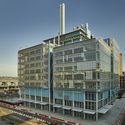
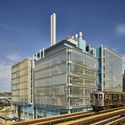
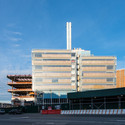
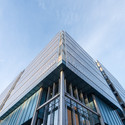
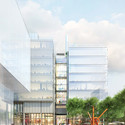
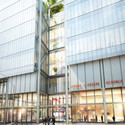
Diller Scofidio + Renfro Unveils New Columbia University Medical Building

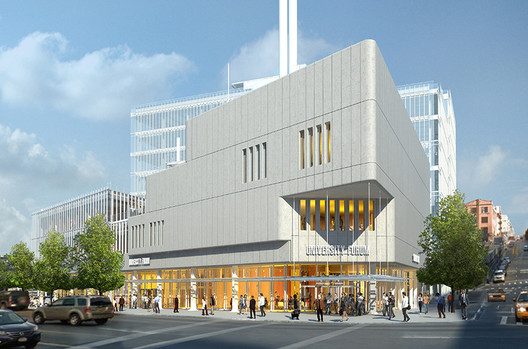
Columbia University has been at the forefront of medical education for more than two centuries, as it was the first medical school in the United States to award the M.D. degree in 1770. Now, the Columbia University Medical Center (CUMC) has announced plans for a new, state-of-the-art medical and graduate education building that reflects how they believe medicine is and should be taught, learned and practiced in the 21st century.
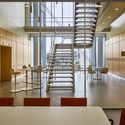
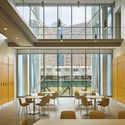
Located on the CUMC campus in the Washington Heights community of Northern Manhattan, the 14-story facility will aim to achieve LEED Gold certification and incorporate technologically advanced classrooms, collaboration spaces, and a modern simulation center. The design is led by Diller Scofidio + Renfro, in collaboration with Gensler as executive architect.
Continue after the break for more details!
We Are Here Now / Spatial Information Design Lab / Columbia University

Addicted to checking your favorite site, like ArchDaily, for constant updates, or checking in with Facebook or Foursquare? Don’t worry – you’re not alone, and Columbia’s Spatial Information Design Lab can prove it. In addition to sharing your whereabouts with friends, your geographic mark provides valuable insight in examining the psycho-geography and economic terrain of the city.
More about the study after the break.
‘Interpretations: Promiscuous Encounters’ Symposium

The Graduate School of Architecture, Planning, and Preservation (GSAPP) at Columbia University will be holding the Interpretations: Promiscuous Encounters Syposium taking place Friday, March 23rd from 12:00pm – 8:30pm. Promiscuous Encounters, which is free and open to the public, has two main ambitions: first, to examine the fascinating blurriness and productive interplay between the critical, curatorial and conceptual capacities of architecture, including how and where they intersect and overlap and, second, to expand the definitions of what these terms mean in relation to theory and practice by reexamining the sites of criticality and their modes of operation. More information on the event after the break.
In Progress: Steven Holl Architects’ Campbell Sports Center Tops Out

The Campbell Sports Center at Columbia University celebrated its topping out last Wednesday. Steven Holl Architects designed the “inviting new gateway” for the Baker Athletics Complex – the primary athletics facility for the University’s outdoor sports program. With the structural frame place, the large interior space and amazing views of the city are already able to be experienced. Construction is two weeks ahead of schedule and the athletic complex is planned to open this fall. Continue reading for more images and information.
Steven Holl Architects’ Campbell Sports Center Breaks Ground at Columbia University

Campbell Sports Center designed by Steven Holl Architects began construction over the weekend. Complimenting the existing Baker Athletics Complex, the Campbell Sports Center will create a necessary and inviting new gateway to Columbia University’s complex at its location on the corner of West 218th street and Broadway. The five-story, 48,000 sqf facility will include an auditorium, strength training and conditioning rooms, offices for varsity sports, a hospitality suite, and student-athlete study rooms. Led by Steven Holl and Chris McVoy, the Campbell sports Center is scheduled to open in fall 2012.
Steven Holl shared, “We are honored to collaborate with Dianne Murphy and Columbia Facilities in creating this new state of the art athletics facility. Its inviting architecture indicates the invigorating presence and future of intercollegiate athletics at Columbia University.”
GSAPP Columbia University Events

Columbia University’s School of Architecture, Planning and Preservation recently shared with us their event schedule for Fall 2011. The event series will run from September 9th to November 29th and start at 6:30pm in Wood Auditorium, Avery Hall, unless otherwise noted. The events are free and open to the public. More information on the events after the break.
Visual Permeability Pavilion / Columbia University Graduate School of Architecture Team

Recently completed as part of a digital fabrication course at Columbia University’s Graduate School of Architecture, the Visual Permeability Pavilion was designed and built as part of their end of the year show and graduation ceremonies. The purpose of the pavilion is to provide multiple spaces for relaxation, contemplation, and social interaction. The group members included Luis Alarcon, Aaron Berman, Michael Georgopoulos, Eun Ki Kang, Dayeon Kim, Nicole Kotsis, Jeeun Grace Lee, Aaron Mark, Hylee Oh, and Steven Sanchez. More images and their description after the break.
Plastics in Architecture and Engineering at Columbia GSAPP
Columbia University GSAPP Presents their fourth conference on architecture, engineering and materials March 30 to April 1 at Wood Auditorium in Avery Hall. Permanent Change: Plastics in Architecture and Engineering explores the boundaries between architecture, engineering and materials science by mobilizing symposia, studios, exhibitions, books and films in an intensely focused investigation.
The conference will be accompanied by two installations, Plastic Chains curated by Rosana Rubio Hernández and AirFlow-er designed by Yoshiko Sato with assistance from Shuning Zhao and John Hooper.
Columbia University GSAPP to Launch Studio-X Rio
Columbia University Graduate School of Architecture, Planning and Preservation (GSAPP) will launch Studio-X Rio this week with Dean Mark Wigley in attendance. Studio-X Rio is GSAPP’s global network of advanced research laboratories for exploring the future of cities. With locations in Amman, Beijing, Moscow, Mumbai, New York, and now Rio de Janeiro, it is the first truly global network for real-time exchange of projects, people, and ideas between regional leadership cities in which the best minds from Columbia University can think together with the best minds in Latin America, the Middle East, Africa, Eastern Europe, and Asia.
“Studio-X Rio is the first genuinely global network for thinking about the future of cities, incubating a whole new kind of conversation in which Rio de Janeiro will play a leadership role,” said Dean Wigley. “The most creative new ideas will be coming from Rio. Every urban problem is a fantastic opportunity for new thinking by a new generation.”
Studio-X Rio Opening Events:
March 16 — 18, 2011
Centro Carioca de Design
Praça Tiradentes 48
Centro, Rio de Janeiro
200060-070 Brazil
Free and Open to Public
For more information about Studio-X Rio click here.
Columbia University Northwest Corner Building / Rafael Moneo, Davis Brody Bond, and Moneo Brock Studio

The design for the new science building at 120th St and Broadway has its origins in the historic Morningside Heights campus plan designed by McKim, Mead and White for Columbia University in 1897. The architects determined very early on that the new building should respect the McKim Meade & White plan; that it would measure just sixty-five feet in width, and would retain the same separation from its neighbors as indicated in that plan. Because of the construction of the Manhattanville Campus to the north, the new building was able to provide a much-needed gateway to the old campus for pedestrian traffic to and from the new campus to the north.
Drawings and photographs of the Northwest Corner Building following the break.
Architects: Rafael Moneo, Davis Brody Bond and Moneo Brock Studio
Location: New York City, New York, USA
Lead Designer: José Rafael Moneo
Design Project Architect: Moneo Brock Studio
Lead Designers: Belen Moneo and Jeff Brock
Associate Architect: Davis Brody Bond Aedas
Partner-in-Charge: William Paxson
Contractor: Turner Construction Company
Structural/Mechanical Engineer: Ove Arup & Partners Consulting Engineers
Facade Consultant: R.A. Heintges & Associates
Geotechnical Engineer: Mueser Rutledge Consulting Engineers
Environmental Engineer: Rowan Williams Davies & Irwin
Landscape Consultant: Langan Engineering & Environmental Services
Lighting: Fisher Marantz Stone
Cost Estimating: Wolf and Company
Project Management: Columbia University Facilities – Capital Project Management
Client: Columbia University
Project Area: 188,000 sqf
Project Year: 2010
Photographs: Michael Moran Studio
Sightlines: New Perspectives on African Architecture and Urbanism

The Museum for African Art, New York, and Columbia University’s Institute of African Studies, Committee on Global Thought, and Center for African Education have announced the creation of Sightlines: New Perspectives on African Architecture and Urbanism, a lecture series devoted to Africa’s rapidly changing urban environments.
Sightlines will comprise talks by distinguished practitioners of architecture, urban planning, and architectural theory, each of whom will apply his or her particular area of expertise to the exploration of contemporary African cities as unique built environments. The lectures, which will be open to the public free of charge (see schedule below), will examine the architectural, social, physical, and emotional contours of the cities, while also addressing the global relevance and applicability of this emerging field of discourse. Sightlines additionally includes a lecture by Senegalese artist Viyé Diba, whose work is tied to urbanization.
Complete lectures schedule after the break.
Z-Top / C-Lab

C-Lab and Jeffrey Inaba recently collaborated with One Pot, with support from LIMN Architects and Design Compendium, to design a dinner table for 60 guests. This charity fund raising event was hosted in New York’s Park Avenue Armory, a rare Louis Comfort Tiffany interior.
The design required sixty linear feet of table surface in a slim thirty-five feet of available floor space. C-Lab creatively designed the Z-Top, not just fitting with in the spatial constraints, but also developing an immediate interaction among guests, prompting more informal discussion areas between courses, and cutting down the overall distance between diners.
We interviewed Jeffrey Inaba, and discussed C-Lab as an experimental research unit at Columbia University, his book “World of Giving” and research on altruism.
More following the break.
Architects: C-Lab
Location: New York City, New York, United States
Director: Jeffrey Inaba
Project Designer: Simon Battisti
Project Team: Justin Fowler, Nathalie Janson, Amanda Shin, Leah Whitman-Salkin, Jeffrey Yip
Photography: Naho Kubota
“Luminous walls: From clerestory windows to pixelated planes”, lecture at GSAPP
The movie “Luminous walls: From clerestory windows to pixelated planes“, is a shortened version of the lecture that will be presented by Thomas Schielke at the Columbia University in the Graduate School of Architecture, Planning and Preservation in New York (Oct. 26th, 2010). The timeline depicts different international lighting approaches from backlit clerestory windows for spiritual enlightenment to changing pixelated planes based on LED technology.
The overview of international projects from architects like Antonio Gaudi, Mies van der Rohe, Frank Lloyd Wright, Louis Kahn, Jean Nouvel, Peter Zumthor, Raffael Moneo, Toyo Ito, Christoph Ingenhoven and Karim Rashid or light artists as Peter Kogler and Erwin Redl covers various lighting methods and techniques for luminous walls and their visual appearance.
Post Parametric 2: Demo / Futures of Computing and Design
As parametric modeling software and parametric thinking become fully integrated into architectural design, the next phase of digital innovation will come from entirely new techniques and technologies.
Cloud computing, directable simulation, self-modeling buildings, and personal supercomputing will suggest new ways to think and to design. In this panel, experts from research and industry will demo and discuss these innovations, exploring how we might be designing architecture ten years from now.
Post Parametric 2 is the second in a series of events that aim to question, broaden, and re-frame the way we think about computing and design.
Panel:
Jonathan Cohen (Senior Research Scientist, NVIDIA)
Eitan Grinspun (Director of Computer Graphics Group and Associate Professor of Computer Science, Columbia University)
Hod Lipson (Associate Professor of Mechanical/Aerospace Engineering and Computing and Information Science, Cornell University)
Miko Matsumura (VP and Chief Strategist, Software AG)
Makai Smith (Product Manager, GenerativeComponents, Bentley Systems)
Moderated by David Benjamin (GSAPP and The Living) and Michael Reed (Columbia Computer Science and Blue Sky Studios)
Debate is this Monday, April 12, at 6:30pm in Avery Hall, Wood Auditorium, GSAPP, Columbia University.
Nostalgic Future: Tezuka Architects lecture in Columbia
With spatial designs that are skillfully integrated with the outside environment, Takaharu Tezuka and Yui Tezuka from designs range from private houses to community buildings. Their most important works are; the Roof House, in which daily life expands onto the roof. Echigo Matsunoyama Museum of Natural Science, which can be buried under 5m of snow. Fuji Kindergarten takes the form of a 200m-circumference oval-shaped roof space. In Woods of Net, 589 timber members are piled up to create a 320 cubic meter space to enclose the artwork.
Lecture is Wednesday, February 17 at 6:30 pm in the Avery Hall, Wood Auditorium, Columbia University.
Spontaneous Architecture Mini-competitions
The Spontaneous Architecture mini-competitions are a series of twelve monthly competitions to last throughout 2010. The entries are single images, and the entry fee is $5 per entry. The competition winners will be decided by fellow competition entrants (although no entrant may vote for their own proposal).
This collective voting will harness the group’s intelligence and interests and hopefully catalyze a discussion within the participating group which will be formally continued in a live event in New York City. The event will be held in collaboration with Columbia University’s Studio-X in downtown Manhattan and will coincide with the announcement of the competition winner(s).
They have recently launched the first one. Details, after the break.
Elizabeth Diller and Jürgen Mayer H., next week at Columbia
Two events will take place next week at Columbia University. On Monday, ‘Pointless’, a lecture by Elizabeth Diller. Then on Wednesday, ‘Re:Activators’, a lecture by Jürgen Mayer H. Both events will take place at 6:30 PM in Avery Hall, Wood Auditorium, Columbia University.
Elizabeth Diller is a founding member of DS+R, New York. Born in Lodz, Poland; she attended The Cooper Union School of Art and received a Bachelor of Architecture from the Cooper Union School of Architecture. Ms. Diller is Professor of Architecture at Princeton University.
Jürgen Mayer H. is the founder and principal of the cross disciplinary studio, J. MAYER H. Architects, founded in 1996 in Berlin, Germany. He studied at Stuttgart University, The Cooper Union and Princeton University. National and international awards include the Mies-van-der-Rohe-Award-Emerging-Architect-Special-Mention-2003 and Winner Holcim Award Bronze 2005. Jürgen Mayer H. has taught at Princeton University, University of the Arts Berlin, Harvard University, Kunsthochschule Berlin, the Architectural Association in London, the Columbia University, New York and at the University of Toronto, Canada.
Urban Design Debate + Book Launch in Columbia University
An urban design debate and a book launch will take place next monday November 9 at 6:30PM at the Wood Auditorium in Columbia Unviersity. “After BIGness” is the debate in which Alan Berger, Associate Professor at MIT, Kenneth Frampton, Professor at GSAPP, and Mahadev Raman, Principal at ARUP will discuse the designing for post crisis cities.
After the debate, at 8:30PM, the book “Emerging Urban Futures in Land Water Infrastructure” will be launched. The book documents the partnership between Columbia University and the University of Queensland that produced four years of student work in architecture, urban design, and urban planning in Brisbane and the surrounding areas.
This book is an archive of the resulting site research, design proposals, and relevant case studies, which is designed to serve as a comparative study of different teaching methods for post-professional studies in architecture and urban design.
For more information, click here.