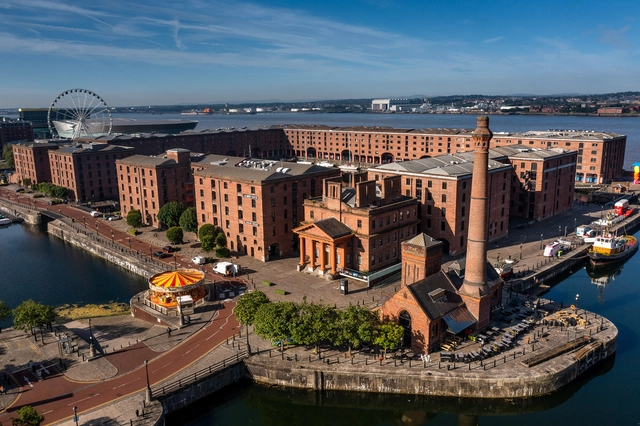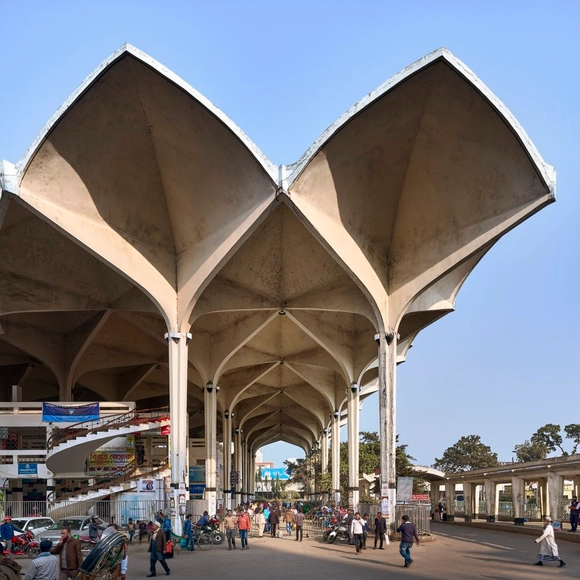
In the mid-twentieth century, a set of South Asian countries collectively experienced a catharsis from colonizers' rule. The period that followed sparked an era of ideas and philosophies for a new future. During this time, architects were pivotal in creating modernist structures that defined the countries' post-colonial, post-partition and post-imperial identities. South Asian architects used design as an expression of hopeful societal visions, most of which have been actualized. With this success in nation-building, there has been a lack of accreditation for women architects in shaping South Asian histories.
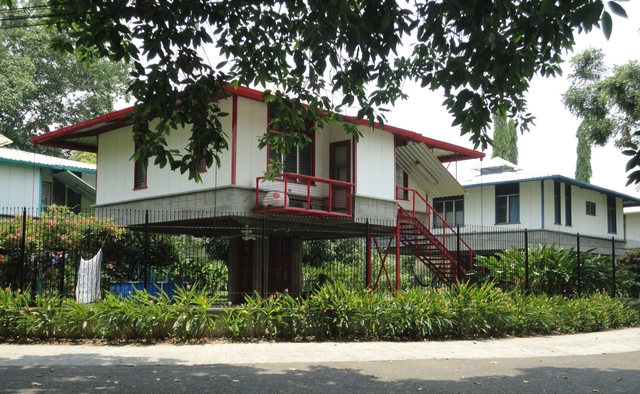
Honduran architect Angela Stassano is contributing to Central America's architectural landscape with her applied research regarding bioclimatic designs. Based in San Pedro Sula, Honduras, her projects draw from local heritage techniques to address the needs of hot, humid tropical environments. Stassano has developed her expertise through over 30 years of hands-on research, culminating in a bioclimatic architecture guide that outlines her methods for construction in this region. One of her most notable projects, Las Casitas, is a residential complex that embodies this research. The project includes multiple energy-efficient tropical houses that harness the local climate, resulting in low energy and operational costs.
"One of the first hits I got when I was googling about female architecture was a high-rise building in Australia, whose architects said that they had been inspired by Beyoncé's curves when they built it," exclaimed the Dutch architect Afaina de Jong in her last talk for TEDxAmsterdamWomen in 2021. "I mean, really? Her body? Beyoncé? Of course, she is amazing, but to translate her body literally in a building… Is that female architecture?", she continued indignantly.
De Jong is the founder of AFARAI studio, where she works with an interdisciplinary methodology combining theory and research with design. She considers her studio as "a feminist practice that encourages change on social and spatial issues and that accommodates differences," so Afaina is likely familiar with the concept of 'intersectionality'.
"We think we are diverse, and we think we have equality, but is that really the case?"
Highlighting the stories of female architecture shaping the built environment, the documentary "Women in Architecture", by Boris Noir returns for a second chapter. Initiated by Sky-Frame, in collaboration with ArchDaily, this installment of the docu-series delves into the stories of Dorte Mandrup and Tosin Oshinowo, drawing a parallelism between both of their lives and focusing on their distinct paths and challenges. Stay tuned for the online screening on November 12th at 7:30 am EST, 12:30 pm CET on ArchDaily.
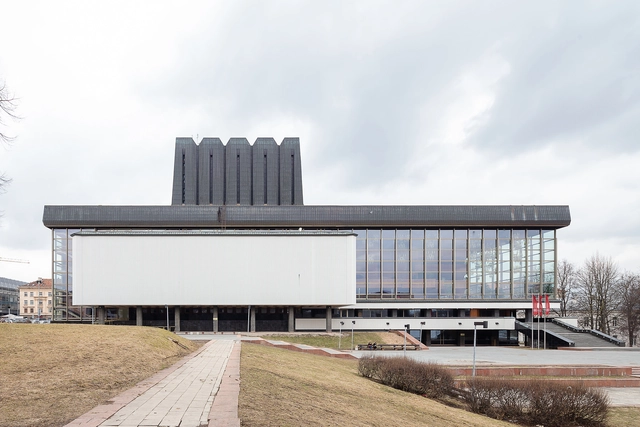
Standing out among the array of cultural programs, the opera and theater typology is often understood as encompassing the luxurious and elitist spirit of a bourgeois society focused on entertainment. Across the Soviet Union, this represented the opposite of the principles to be promoted. However, despite the opposition of the political class, the program remained widely popular. As the historical structures, symbols of the previous regime could no longer be promoted, the search began for a new image of the Opera House, one aligned with Socialist ideals and the concept of "art belonging to the masses."
This is the case of Soviet Lithuania, which, in the 1940s, began the process of developing a new Opera and Ballet Theater in Vilnius to replace the theatre in Pohulianka. The process resulted in an unusual commission, as young architect Elena Nijolė Bučiūtė won the 1960s competition for architectural design, turning the initial socialist realist proposals into a welcoming and expressive design, blending elements of early and late modernism. This also represents a surprising accomplishment for a young architect who was a woman and not a member of the Communist Party. Open House Vilnius featured the project in its program for several editions.
Alero Olympio (1959-2005) was an architect and builder known for an intimately ecological approach to architecture. Born in Ghana, she divided her practice between Ghana and Scotland. She focused on work that prioritized people and was sincerely committed to social and environmental sustainability, prioritizing using locally sourced materials.
Her work legacy includes physical buildings like the Kokrobitey Institute, her advocacy for earthen constructions, research on sustainable forestry products, and so much more. However, a gap exists in the institutionalized archives of her work, leading to the current ongoing efforts to build a comprehensive archive of her contributions. The 2024 Womxn in Design and Architecture (WDA) annual conference organized by Princeton University School of Architecture made a significant contribution. It featured exhibitions, seminars, and panel discussions that reflected on Alero Olympio's legacy and examined the architectural insights her work continues to offer.
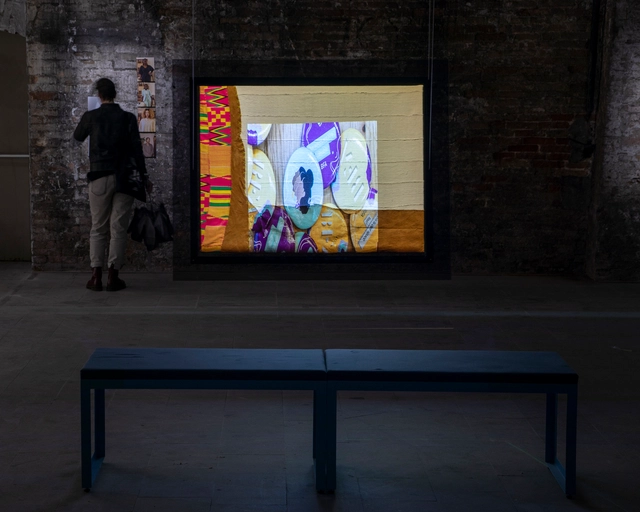
Black Females in Architecture (BFA) is a social enterprise supporting a membership of more than 450 Black women in built environment professions worldwide. Founded by architects Neba Sere, Selasi Setufe, and Akua Danso, the group advocates for diversity, race and gender equity across all sectors of the built environment, including architecture, urbanism, landscape, engineering, design, and construction.
We are happy to premiere their short film "A Voice for the 450 Plus" to a global audience for the first time since it was shown at the 2023 Venice Architecture Biennale. The film is a celebration of the ongoing contributions of Black women in the built environment fields, showing the world how they contribute to shaping the future of our cities.
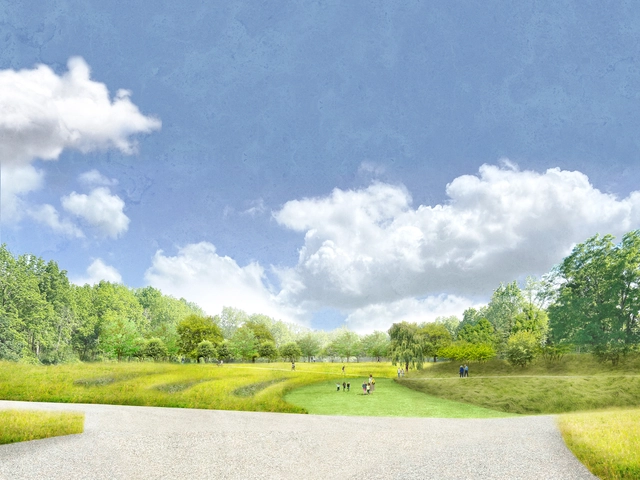
Rendering of Dia Beacon’s south landscape. Image Courtesy of Studio Zewde, 2024
Dia Art Foundation announced a major landscape project to reimagine the land at Dia Beacon, New York. Commissioned landscape architect Sara Zewde of Studio Zewde aims to go beyond the simple arrangement of attractive plants and integrate ideas of ecology, culture, and people into the design. Taking over the museum’s 32-acre campus, the project will create an expanded outdoor park, free to access for visitors and locals alike, complete with native meadows, sculptural landforms, and winding pathways. The project, which has been recently extended to also include the museum’s eight back acres, is expected to open to the public in 2025.
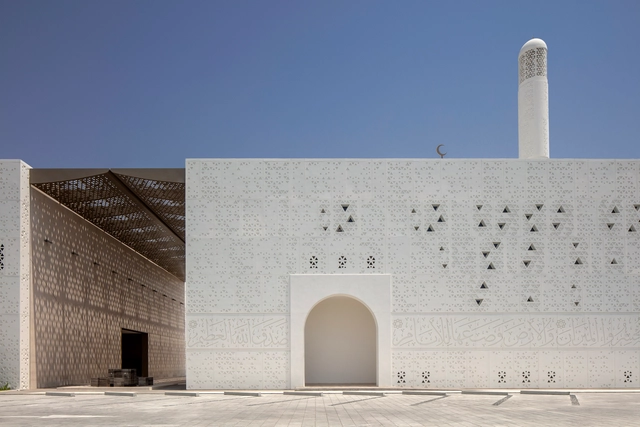
This curated collection unfolds the narratives of some of the most compelling architectural projects by women from the Global South. From the unique streets of Dubai to the rural landscapes of Niger, each project serves as a testament to the power of architecture to transcend gender boundaries and create meaningful designs that connect people and their surroundings.
Expanding beyond just March 8th, ArchDaily acknowledges and celebrates the ongoing contributions of women who influence the development of the built environment globally. The "Women in Architecture" theme is central to our content strategy, underscoring our daily commitment to highlight the vital role and impact of female architects.
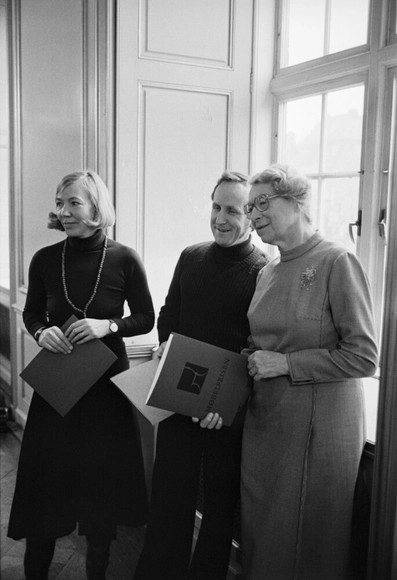
During the period 1925–1975, Danish society underwent significant changes. As a result, the architects were called upon to help shape the daily lives of the citizens in modern Denmark. The role of women was also changing, following the 1915 constitutional amendment that gave women the right to vote. In the following years, the first generations of women completed their educations within the design disciplines. During 1925-1975, women have had an important, if other overlooked impact, shaping the everyday environment by designing and reimagining kitchens, public buildings, housing, landscapes, and urban areas, among other things.
The Women in Danish Architecture project aims to offer a more complete understanding of Danish architecture history and to present it in a more engaging and inclusive way. The aim is to contribute to an understanding of architectural history as not created by great individuals but through mutual and creative collaborations. The project is anchored in the Section for Landscape Architecture and Planning at the Department of Geosciences and Natural Resource Management, University of Copenhagen.


In early 2018, spatial practitioner and Bartlett lecturer Neba Sere hosted a panel discussion at London's Architecture Foundation, where she was one of six young trustees. The topic: beginnings. How to go about them, move ahead, and transform them into something that lasts. Six years later, she looks back on the event as a beginning in itself: that day marked the creation of a WhatsApp group that would turn into Black Females in Architecture (BFA). BFA is now a 500-strong global membership network co-directed by Sere and fellow architects Selasi Setufe and Akua Danso.
BFA was initiated in response to the need for visibility of black women and female-identifying people with black heritage in architecture and the built environment. Last year, the group celebrated its fifth anniversary with the showing of a short film and a panel discussion at the Venice Architecture Biennale. Now, after putting in the groundwork of spreading information about the lack of diversity and equality in the industry and increasing their numbers, BFA is gearing up to drive physical change.
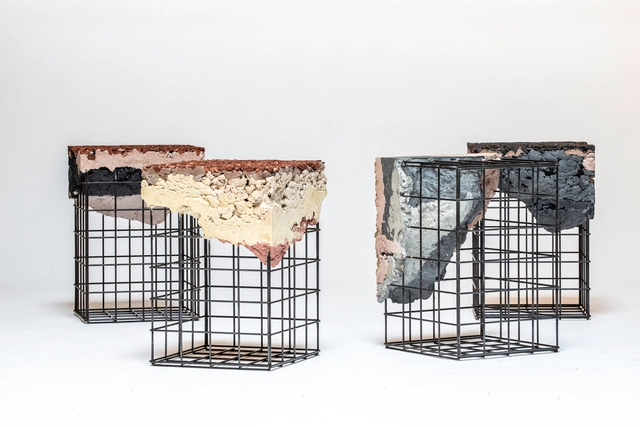
Irene Roca’s “Appropriating the grid” project is born out of the contemporary ruins of our current construction processes. An exploration of the waste that is generated and the legal complexities of discarding this waste awakened a sense of urgency and creativity in the architect, resulting in a collection that molds and re-formulates construction waste into versatile interior design objects.
https://www.archdaily.com/963957/materials-are-being-produced-according-to-fictitious-demand-in-conversation-with-irene-rocaDaniela Porto
As part of the 6th edition of “Time Space Existence”, the European Cultural Center (ECC) presented the “Reconceptualizing Urban Housing” exhibition. Taking place from May 20 to November 26, 2023, it brings together a diverse array of women-led architecture practices from around the world, each offering a unique perspective on collective housing, particularly within urban settings. The showcased projects feature approaches from Europe, North America, and more developing countries like Uganda, Malaysia, and Mexico.
Beverly Willis, architect, wearing a hard hat at a construction site. Image Courtesy of Library of Congress Prints and Photographs Division Washington
American architect and tireless advocate for gender equality Beverly Willis passed away on October 1, 2023, at the age of 95, as reported by The New York Times. Throughout her career, she was dedicated to breaking down barriers for women in a traditionally male-dominated profession. She ran an accomplished studio in San Francisco, having completed over 800 projects across the US, and established a Foundation for recognizing and promoting women in architecture. Across various programs and scales, her designs have gained national recognition for their humanistic concern for the occupant and for adapting historic buildings to modern purposes, a practice now known as adaptive reuse.
Courtesy of Jen Lewin, Photo by Brendan Burkett / The Pool
In the world of interior design, light serves as an essential medium, but light can also create immersive public spaces. While James Turrell, Olafur Eliasson, and Dan Flavin are celebrated for their transformative mastery of color, reflections, and luminous contrasts, it's crucial to note that the realm of light art isn't exclusively male-dominated. In response to the underrepresentation of female light artists, a refreshing and enlightening perspective emerges from the British lighting designers Sharon Stammers and Martin Lupton of Light Collective.
After founding the platform "Women in Lighting" their book "Women Light Artists," takes a bold step in introducing us to 40 creative women whose work radiates with responsive ingenuity and brilliance. The book offers a captivating spectrum of projects from interactive pools to the play of colorful daylight shadows dancing across a bridge in London, from the peaceful projection onto an iconic Berlin landmark to the vivid rainbow arching above Manhattan's skyline, each work embodies a unique dialogue between light and space. The luminous journey offers a valuable tribute to the power of female artists who, for far too long, have remained in the shadows.
What is architecture? Is it grand designs with complex structures, defying the laws of physics? Is it simple, everyday buildings that, when put together, create the urban fabric? In the mid-18th century, Laugier introduced the concept of the Primitive Hut, a structure, essentially a home, designed and built to meet the primitive man’s basic needs: shelter from the elements and nature. Any structure that meets these requirements would be considered authentic architecture. However, since then, our needs have evolved and are much more elaborate, especially when it comes to our homes. They need to provide shelter, security, thermal comfort, and space. Our homes have to be economical, environmentally friendly, and have access to the internet, among many other prerequisites. So what would the ideal modern human’s home, and thus true architecture, look like?
The Science of a Happy Home Report, carried out by Resi first in 2020 and then again in post-pandemic 2023, sought to discover exactly what elements people believed made up the ultimate happy home. The results were six prominent qualities: a home that is adaptable to meet our changing needs, a home that allows us to connect and build relationships, a home that mirrors our personality and values, a nourishing home that provides the conditions we need to thrive (i.e. air quality), a home that helps us relax, and a home that offers security and makes us feel safe. These needs, however, aren't being met for the majority of UK homes, and that's where Resi comes in.