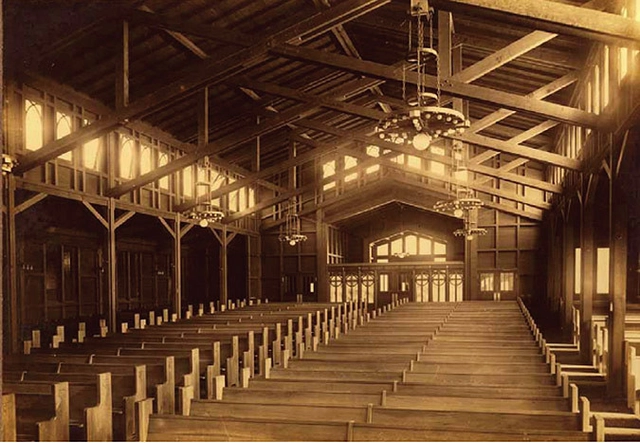
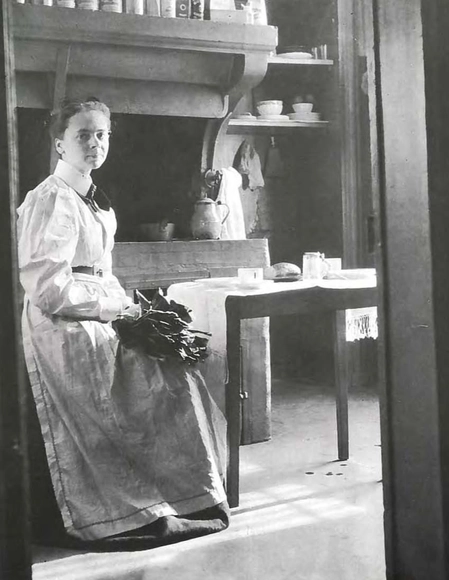
The recent announcement that Julia Morgan has posthumously received the 2014 AIA Gold Medal, the AIA’s top honor, while positive and inspirational, raises some important questions concerning the recognition and advancement of women in the profession. She is the first woman, living or dead, to receive the honor in the award’s 106-year history. From 1907 to 2012, all recipients have been men.
It seems Morgan was destined to be first. She was the first female graduate of the École des Beaux-Arts in Paris (1902) and the first woman to obtain an architecture license in California. She is known principally as architect of the extravagant and stunning Hearst Castle in San Simeon, California and the designer of over 700 buildings.
As part of their annual survey of the world's largest architecture practices, this year BD has also included a survey to help them quantify which countries are best suited for women with careers in architecture - particularly those who wish to work for large companies. In order to create these rankings, they found the ratio of male to female architects in various countries, and also sought out publicly available data on maternity and paternity leave requirements, and the average cost of childcare as a percentage of average wage. You can read more about their sometimes surprising results after the break.
The American Institute of Architects (AIA) has announced today their decision to posthumously award the 2014 AIA Gold Medal to Julia Morgan, FAIA (1872-1957), “whose extensive body of work has served as an inspiration to a generation of female architects.”
“Julia Morgan is unquestionably among the greatest American architects of all time and a true California gem,” said Senator Dianne Feinstein (D-CA) in her recommendation letter. “Morgan’s legacy has only grown over the years. She was an architect of remarkable breadth, depth, and consistency of exceptional work, and she is widely known by the quality of her work by those who practice, teach, and appreciate architecture.”
In a profession all-too-often associated with and dominated by men, women have begun to carve a space for themselves in the architecture world - but still few are recognized as they deserve.
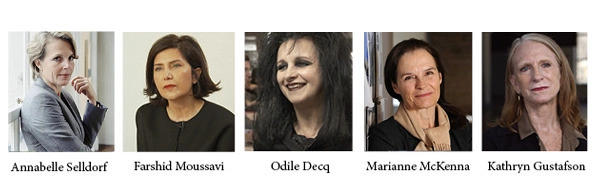
So Alice Shure and Janice Stanton, the founders of Amici Productions LLC, began work on a new documentary, Making Space: a visual register for future generations of architects that will documentwhat is changing in architecture today and how these changes are affecting women.
After interviewing over 30 architects, Shure and Stanton selected five women, five "rising stars" to hi-light. The documentary will show their day-to-day lives as well as tell the stories of how they achieved success.
Thanks to a recent Kickstarter campaign, this project will soon be a reality. But to get your sneak peek into these five female pioneers, read on after the break.
https://www.archdaily.com/447721/5-women-changing-the-face-of-architecturePola Mora
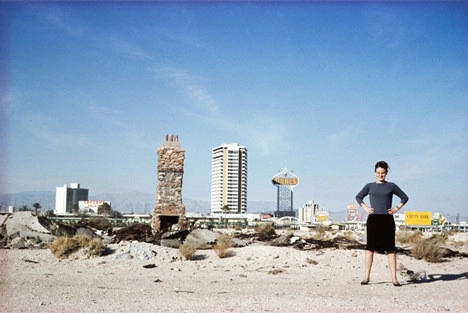
"In the 10 years I’ve been running my architectural practice, I [...] have gotten accustomed to people assuming that my male employees — whether younger or older — are the lead architects who will be making final decisions. Yet this time a lingering frustration colored the rest of my day, a sense that while feminism has made significant progress on a conscious level, little change has trickled down into the unconscious of our culture." Check out the rest of Esther Sperber's column for Lilith, in which she details the past travails of female architects (particularly Denise Scott Brown's), and their future mission, here.
https://www.archdaily.com/444021/on-gender-genius-and-denise-scott-brownKatherine Allen
All too often when it comes to the issue of women disappearing from the architecture profession, the question is: why? But perhaps we really should be asking: how? How can we keep women in the profession? How can more women advance to positions of power? And how can women start earning the money they deserve?
Despite a rise in female architecture students, the amount of women in architecture continues drop in the UK. Though this is not the case in many parts of the world - as female architects reportedly outnumber the men in South America - the UK has yet to find a solution to equalize the numbers for professional women in architecture. Jane Duncan, founder of Jane Duncan Architects and RIBA equality and diversity champion, weighs in the issue by asking “Why are so many women leaving architecture, and how can we buck the trend?” here The Guardian.
"In architecture’s 'Mad Men' era, there was a woman." So begins David W. Dunlap's eloquent eulogy, published yesterday in The New York Times, to Natalie de Blois. Dunlap explores de Blois' significant contributions to Skidmore, Owings, and Merrill's iconic buildings, including the Lever House, as well as the significant hurdles she had to overcome. As SOM partner Nathaniel Owings wrote of de Blois in his autobiography: “Her mind and hands worked marvels in design — and only she and God would ever know just how many great solutions, with the imprimatur of one of the male heroes of S.O.M., owed much more to her than was attributed by either S.O.M. or the client.” Read the entire article at The New York Times.
“Women are the ghosts of modern architecture, everywhere present, crucial, but strangely invisible,” writes historian Beatriz Colomina in “With, Or Without You,” an essay in the Museum of Modern Art’s 2010 catalog, Modern Women. “Architecture is deeply collaborative, more like moviemaking than visual art, for example. But unlike movies, this is hardly ever acknowledged.”
Colomina goes on to chronicle the history of modernism’s missing women, acknowledged, if at all, as working “with” Mies van der Rohe, Le Corbusier, Alvar Aalto, or Charles Eames. To put yourself in the shoes of Lilly Reich, Charlotte Perriand, and Aino Aalto, simply watch the cringe-worthy video of the Eameses on the Home show in 1956; Ray['s] introduced as the “very capable woman behind him” who enters after Charles has bantered with host Arlene Francis.
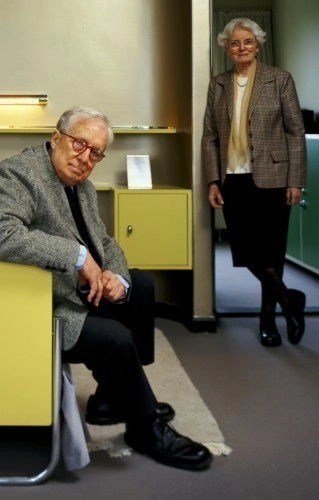
This spring, these ghosts came back to haunt us: Arielle Assouline-Lichten, a student at the Graduate School of Design at Harvard, read excerpts from an interview with Denise Scott Brown in which she mentioned her own absence from partner Robert Venturi’s 1991 Pritzker Prize. “They owe me not a Pritzker Prize but a Pritzker inclusion ceremony,” Scott Brown said. “Let’s salute the notion of joint creativity.”
Read all of Alexandra Lange's essay, after the break...
https://www.archdaily.com/402873/necessary-hauntings-why-architecture-must-listen-to-its-forgotten-womenAlexandra Lange
Surprisingly, Hawaii was revealed to have both a very high number of architects, and high levels of pay. Image via Shutterstock
Figures released last month by the National Endowment for the Arts offer telling insight into the architecture profession across the US, with a helpful breakdown of the representation of various demographic groups.
The data, collected between 2006-2010, reports the number of architects in each state and their race, gender, age and income. The data reveals which states have the highest/lowest income, the best/worst gender discrepancies, and also offer insights into the average age and races of architects, per state.
Read more about what the NEA statistics reveal after the break.
UPDATE: "WIA" has now reached its goal. A group of women fed up with the state of architecture today have started a campaign to transform the profession, to "redefine the ideas of success and compensation within our discipline [..., to create] healthful trends both within the academy and profession with real life/work balance [..., and] create more women leaders within the discipline." As they put it: "We want an approach appropriate to this century." The campaign, run by Nina Freedman, the Director of Projects for Shigeru Ban Architects, and Lori Brown, an architect, author and associate professor at Syracuse University, needs to earn only a few hundred dollars more to reach their $7,000 dollar goal. However, only 35 hours remain - if you're interested in learning more, check out their video here.
TechCrunch reported today that GoldieBlox, the startup that created “GoldieBlox and the Spinning Machine," a girl-oriented alternative to LEGO, has struck its first nationwide distribution deal with Toys ‘R’ Us. Responding on twitter, the Harvard GSD (@HarvardGSDExecED) asked its followers: could GoldieBlox be one of the answers to encouraging women to enter the architecture and engineering professions? The response from Tabitha Ponte (@tcpg) became an interesting exchange - check it out, after the break...
On April 12, 2013, the Board of Health of the Commonwealth of Virginia approved new laws deploying building codes and architectural regulations sanctioning that clinics offering first trimester abortions meet the same building specifications as newly-constructed, full-service surgical hospitals. Mandating compliance within about 18 months, these standards will entail significant and costly alterations to existing facilities that may bankrupt many clinics in the state.
The political maneuvering which occurred to achieve these architectural arrangements, and the responses of concerned professionals in Virginia, were well documented in the press. The Health Commissioner resigned in protest. The chair of the Department of Obstetrics and Gynecology at the University of Virginia’s School of Medicine called these building codes “arbitrary and capricious.” A director of the University of Richmond School of Law wrote an editorial challenging the legislation on legal grounds. Almost 200 physicians took a public stand, denouncing the politicians and urging the state to reject the architectural alterations.
Health policy analysts, social workers and advocates for low income women - who will be greatly impacted when these local clinics close - continue to speak up and organize. We have heard from just about everyone with a stake in the impending architectural arrangements.
Courtesy of Elizabeth Richter Chu for AIA President, Facebook Page
The American Institute of Architects (AIA) reports that it has elected Elizabeth Richter Chu, the CEO of Richter Architects in Corpus Christi, Texas, to serve as the 2014 AIA first vice president/president-elect and 2015 AIA president. James Easton Rains, Jr., FAIA, and Thomas V. Vonier, FAIA, will each serve as vice president from 2014 through 2015; James P. Grounds, AIA, will be the Institute’s Treasurer.
Image by Tom Morris, March 2012, based on the 'We Can Do It!' poster created by J. Howard Miller in 1942 for the U.S. War Production Coordinating Committee, as part of the homefront mobilization campaign during World War II. [Courtesy of Wikimedia Commons, via Design Observer
Today, KCRW's Design & Architecture will air a podcast on the topic of "Forgetting Women Architects." The show will feature ArchDaily columnist Guy Horton's interview with Denise Scott Brown as well as a conversation based on Despina Stratigakos' fantastic article for Design Observer, "Unforgetting Women Architects: From the Pritzker to Wikipedia." In the article, Stratigakos describes how women continue to be edited out of architecture history and calls for us to "unforget" them by including their stories in online resources such as wikipedia. You can listen to the podcast here.
Lord Palumbo, the Chair of The Pritzker Architecture Prize, has responded that this would be impossible due to the way that Pritzker Juries deliberate: "Pritzker juries, over time, are made up of different individuals, each of whom does his or her best to find the most highly qualified candidate. A later jury cannot re-open, or second guess the work of an earlier jury, and none has ever done so."
The letter goes on to suggest that Ms. Scott Brown is, however, still eligible for a Pritzker of her own; it also thanks Assouline-Lichten and James for "calling directly to our attention a more general problem, namely that of assuring women a fair and equal place within the profession. [...] one particular role that the Pritzker Jury must fulfill, in this respect, is that of keeping in mind the fact that certain recommendations or discussions relating to architectural creation are often a reflection of particular times or places, which may reflect cultural biases that underplay a woman’s role in the creative process. Where this occurs, we must, and we do, take such matters into account."
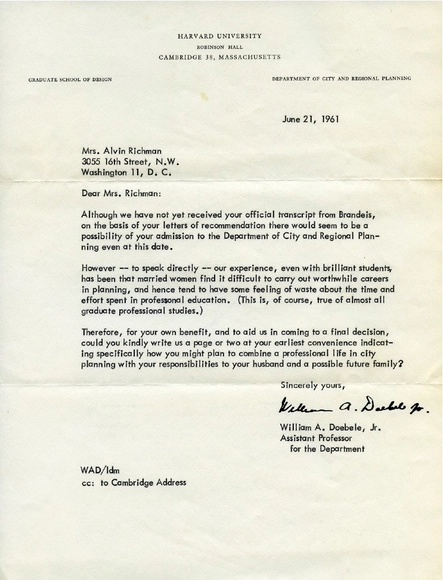
Courtesy of Phyllis Richman. Published June 6, 2013 on The Washington Post.
In 1961, Phyllis Richman, a student at Brandeis University, was considering applying to the Harvard Graduate School of Design's Department of City and Regional Planning. The response from Professor Doebele, which you can read above, was to question the validity/practicality of her desire to enter into higher education, being, as she would surely be, a future wife and mother.
While today it sounds almost quaint in its blatantly sexist assumptions, Ms. Richman's letter remains, unfortunately, all too relevant. In her article for The Washington Post, Richman says: "To the extent, Dr. Doebele, that your letter steered me away from city planning and opened my path to writing [a career Richman later describes as "remarkably well-suited to raising children"], one might consider that a stroke of luck. I’d say, though, that the choice of how to balance family and graduate school should have been mine."
She's absolutely right, of course; the decision was hers and hers alone to make. However, there's no avoiding that Richman eventually found success in a job that allowed her to live flexibly as a professional and parent. How many women, and for that matter men, can claim that of architecture? How many architects are convinced, just like Ms. Richman, to pursue success in other, more flexible careers?
More about Richman's letter, and where Denise Scott Brown comes in, after the break...