
-
Architects: ASPECT Studios
- Year: 2013



The 2010 launch of the “Boris Bike” - London’s cycle hire scheme, named after mayor Boris Johnson – was the clearest indication to date that cycling was no longer just for a minority of fanatics but a healthy, efficient and sustainable mode of transport that city planners wanted in their armoury. There are now more than 8,000 Boris Bikes and 550+ docking stations in Central London. And the trend’s not anomalous to London: Wikipedia reports that there are 535 cycle-share schemes in 49 countries, employing more than half a million bikes worldwide.
However, the real question is: will cycling actually change the city? Will it result in new urban forms or, as the title of Australian academic Dr Steven Fleming’s new book predicts, a “Cycle Space”? Like Fleming, I believe so. I believe that cycling might just be the catalyst for a 21st Century urban renaissance.
Read how, after the break...

A recent profile in Architectural Record highlights the career of Peter Wynne Rees, the chief planner of the City of London: the famous 'square mile' which contains the major financial district of Greater London, as well as some of its great tourist attractions, such as St Paul's Cathedral.
The profile focuses on the new crop of skyscrapers which Rees has ushered in in his 27 years as chief planner, something which has been contentious for preservationists. When he came to the job in 1985, the City of London had just one skyscraper: Tower 42, built in 1980. With the success of the Gherkin in the early 2000s, the surrounding area has seen many more high profile skyscrapers, such as the Heron Tower, 122 Leadenhall Street (The Cheesegrater) and 20 Fenchurch Street (The Walkie-Talkie).
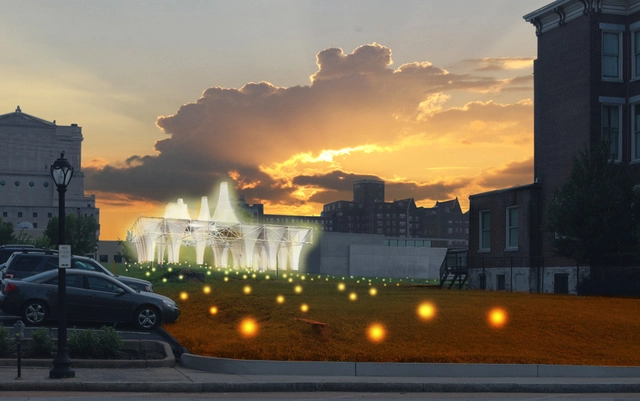
Freecell Architecture's proposal for the PXSTL Competition was recently announced one of the three finalists by the Pulitzer Foundation for the Arts and the Sam Fox School of Design & Visual Arts at Washington University. Participants were asked to reimagine a vacant lot in St. Louis’ Grand Center cultural district while exploring the critical role arts and culture play in creating vibrant, growing communities. The competition aims to demonstrate how small-scale interventions can spur large-scale urban transformation, and Freecell's proposal was selected for their ability to visualize Grand Center’s long-term vitality, emphasizing community engagement, interactive elements, and cross-disciplinary collaboration among St. Louis’ many cultural organizations. More images and information after the break.

“Increasingly we experience cities mediated by digital technology — whether that's via smartphone maps, digital transit signage, or texting a friend that you've arrived at a destination. How our city is built to support residents, businesses, and visitors [...] is now part physical and part digital.”
John Tolva, the Chief Technology Officer for the City of Chicago, is on a mission: a mission to bring the physical and digital worlds into conversation.
To embed more and more digital information into the physical world, a growing number of digital specialists are beginning to embrace the worlds of architects, planners and urbanists. But, so far, it has not been a two way street to make the digital leap.
Find out why architects should be at the forefront of the digital/spatial overlap, after the break...

Dharavi - Asia’s largest slum of one million with an average density of 18,000 residents per acre - is amidst a heated debate between its people, the government and private investors as it sits on some of India’s hottest real estate in Mumbai. While the government is grappling for solutions on how to successfully dismantle the low-rise slum and relocate its residents to a high-rise podium style typology, the investor’s profit-driven approach has placed residents on the defense, “rendering Dharavi a perfect storm of contested urbanism," as architect, urban designer and author William Hunter describes.
In light of this, we would like to direct you to an interview by Andrew Wad of Polis in which discusses Dharavi’s dire situation and the motivation behind Hunter’s new book, Contested Urbanism in Dharavi: Writings and Projects for the Resilient City. Read the interview in its entirety here and read a recap on Dharavi’s situation here.
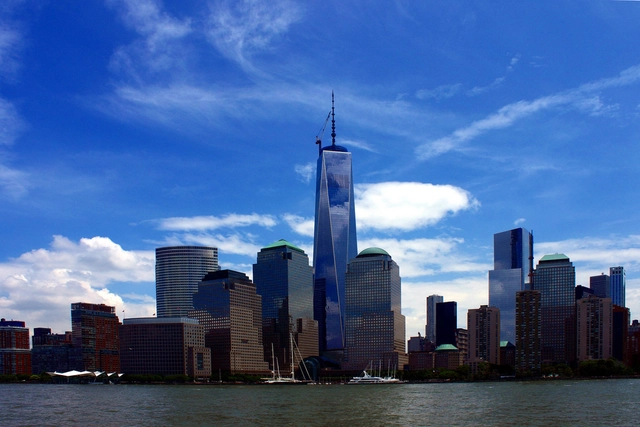
NYC Mayor Michael Bloomberg's twelve years in office will leave an undeniable impression on the physical landscape of the city for future generations. The new and revised policies of this administration have encouraged unprecedented growth of New York City and its outer boroughs in the years following 9/11. According to a new series called The Bloomberg Years by WNYC and this article by Matthew Schuerman, Bloomberg's three consecutive terms have made New York City's skyline taller, have made the city more attractive and in turn, more expensive.
Join us for more after the break.
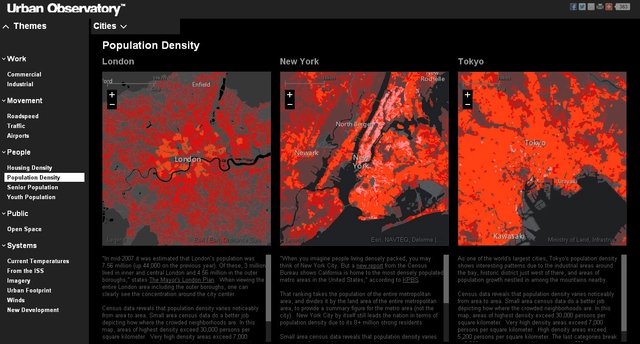
For the last fifty years Richard Wurman - architect, graphic designer and founder of the TED Conferences - has been dedicated to creating a platform that compares cities. In Wurman's early studies, he quickly learned that comparing global cities was no easy task. Cities use very different languages to describe their assets, from planning principles to land use types to social statistics. "They don’t collect their information the same way. They don’t describe themselves with the same legend," he tells Nate Berg of Next City.
Thanks to sophisticated mapping tools, delving into the statistical data of numerous cities has become far more manageable than in 1962, when Wurman produced his first comparative analysis using clay models of 50 different cities. Wurman's analog-driven statistical analysis has turned into the Urban Observatory, a website that allows users to choose from 15 variables and easily compare the public data of up to 16 cities around the world in real time.
More about the platform after the break.

This discussion on Quora, entitled "which is the most well planned city in the world?" certainly got us thinking; not only because of the interesting and diverse answers to the question, but also because of the different reasons which were used to support these answers.
Currently the most popular answer seems to be Zurich, on account of its excellent (and obsessively punctual) public transport, organized waste disposal and numerous public drinking fountains. Other cities which are commended for their public transport and cleanliness are Singapore and Seoul. But other contributors seem to have a very different idea of what makes a well-planned city - read on to find out more.
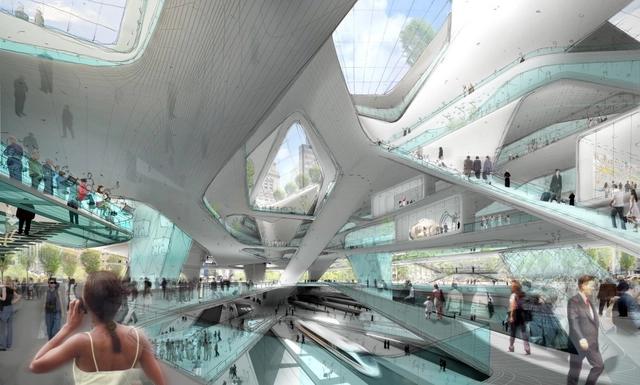
A landslide vote (47-1) by the New York City Council has limited the permit for Madison Square Garden to just 10 years. The decision comes after the property owner’s - MSG Company - 50 year permit expired earlier this year, sparking a heated debate on whether or not the city should deny the owners request to renew the permit in perpetuity and envision plans for a new Penn Station.
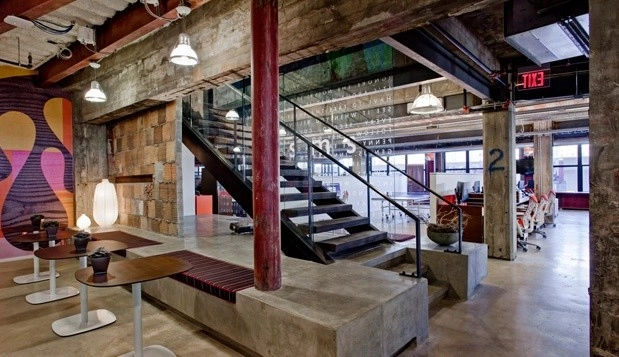
While the rest of the world scoffs at Detroit’s recent announcement of bankruptcy (using it as an opportunity to bemoan how far the city - and the country - has fallen since its golden Motown days), many Detroiters themselves are embracing the move as a long overdue turning point.
Like Las Vegas, undergoing an urban patronage from Zappos CEO Tony Hsieh, Detroit has similarly been the focus of its own CEO: native-Detroiter and Quicken founder Dan Gilbert. By channeling over $1 billion dollars into the city, and inspiring others to follow suit, Gilbert is helping Detroit attract young, tech-savvy entrepreneurs. Throw in the lure of cheap land/rental rates, and it’s no wonder the city’s is host to a burgeoning tech scene.
The only thing that’s been getting in these techies' way - is the city itself. Which is why many are hopeful that Detroit’s bankruptcy is just the beginning.
More after the break...
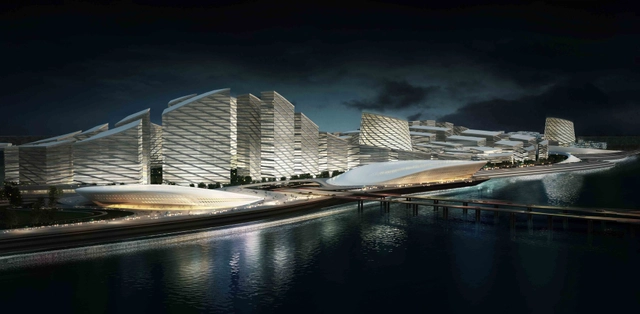
Designed as a sustainable master plan, the concept of water, waste, and energy management are integral to the concept of the Kanpur Riverfront Development project. Proposed by Studio Symbiosis, conservation of energy on the basis of transport management has been designed as an active design element in the master plan, which is a part of an overall scheme for rehabilitation of the Ganga river and the Ganga riverfront. More images and architects’ description after the break.
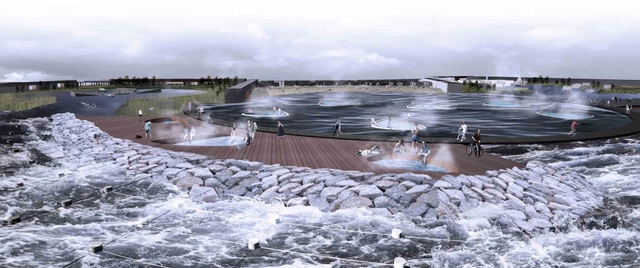
Instead of perceiving water as something to defend against, The Open Workshop took on the challenge of repositioning the water as a performative feature that connects across the obstructions currently on Arvene East of Far Rockaway. Taking the logic of the stabilizing rock jetties, the 'Recon-Figure' proposal utilizes a series of nested figures to augment the existing coastline. The figures engage the water, functioning as groynes and breakwaters that also offer recreational spaces, stabilize the coast, and concentrate wave action and associated energy capture. More images and architects' description after the break.
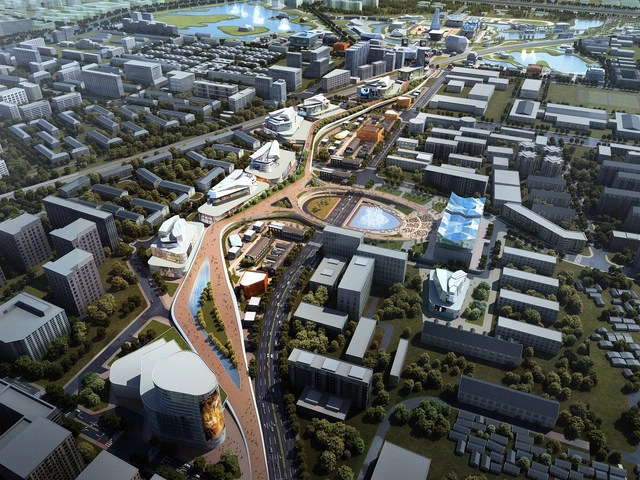
Aedas recently unveiled their master plan proposal for the CTS Temple of Heaven Performance Zone. Located in Beijing, their concept consists of a trio of urban, garden and lake environments while aiming to become the capital’s core cultural and commercial district and establish an international modern city life standard. More images and architects’ description after the break.

"I have a lot of big plans for the gallery, but every idea is an experiment; I don't necessarily want to enforce what it will be, but rather find out what it wants to be." This is how Thomas Ermacora described his vision of the Lime Wharf Gallery, a largely hidden series of spaces squeezed between Vyner Street and Regents Canal in the middle of Hackney's burgeoning creative quarter.
Ermacora hopes the gallery will become an "accelerator of change through culture", bringing arts, technology and social enterprise together for projects which generate optimism for the future. All of these traits made Lime Wharf Gallery the perfect space to present "Future Fitting." This evening of talks, orchestrated by Ermacora and Lucy Bullivant (editor of the new webzine Urbanista), focused on urban design that has the foresight and flexibility to deal with the needs of the future.
Read about the ideas presented at the Future Fitting event after the break...

SCAPE and Rogers Marvel have been unanimously selected from 27 international applicants to create a schematic design for one of the most visited destinations on the Mississippi River: Water Works in downtown Minneapolis. The SCAPE-Roger Marvel Team, which also includes New York-based James Lima Planning + Design and Minneapolis-based SRF Consulting, will be responsible for transforming the historically significant Central Mississippi Riverfront Regional Park, within which the Water Works district exists, with a master plan based on a series of “visionary” parks and trails.
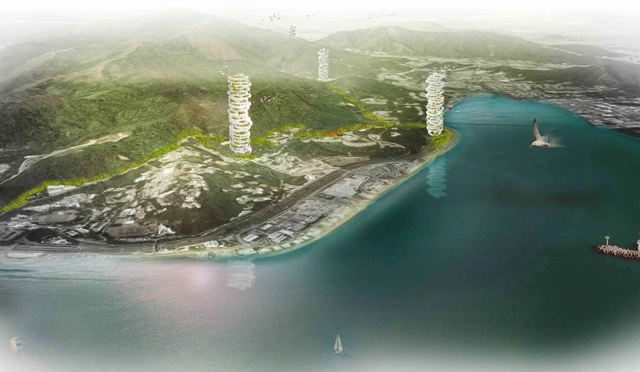
JAPA Architects shared with us their proposal, Dyv-net, Dynamic Vertical Networks, which deals with the development of modern, efficient and environmentally acceptable farming structures. Located in the Tai Po District, the second largest administrative district in Hong Kong, the architects foresee a paradigm shift to vertical agriculture structures which can be integrated into a territorial network along the country. More images and architects' description after the break.
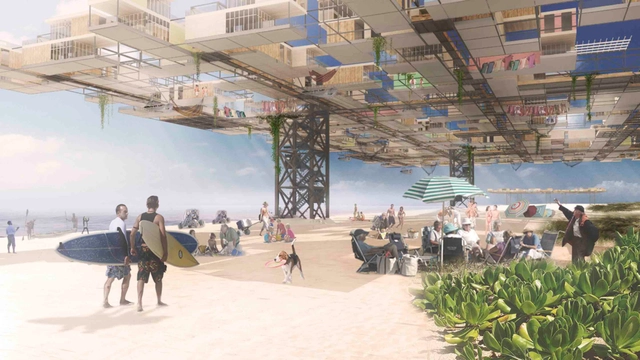
One of the selected entries in the MoMA PS1 Rockaway Call for Ideas, Stephen Yablon Architect’s "Yona on the Beach" accepts the inherent and increasingly dynamic weather conditions of barrier islands. Their idea is a new model for barrier island settlements; entire beach neighborhoods are raised high above the 100 year flood plain so that the barrier island below can naturally shift and change during storms with minimal impact to human habitation. More images and architects' description after the break.