1. ArchDaily
  2. Urban Planning

Urban Planning: The Latest Architecture and News

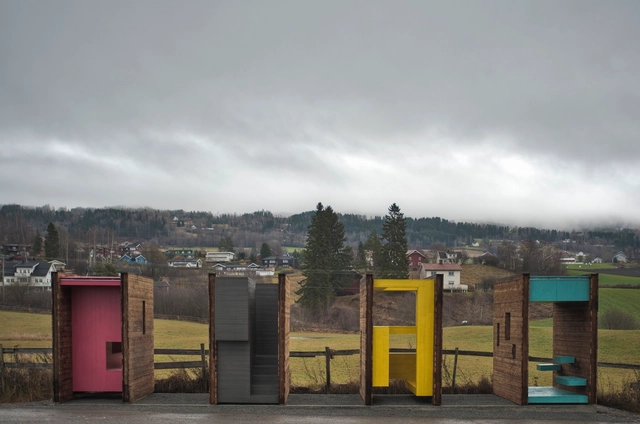
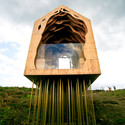
Las Cruces Lookout Point / ELEMENTAL

Las Cruces Lookout Point / ELEMENTAL - Public SpaceLas Cruces Lookout Point / ELEMENTAL - Public Space, ForestLas Cruces Lookout Point / ELEMENTAL - Public Space, ForestLas Cruces Lookout Point / ELEMENTAL - Public SpaceLas Cruces Lookout Point / ELEMENTAL - More Images+ 5

Las Cruces, Mexico
  • Architects: ELEMENTAL
  • Area Area of this architecture project Area:  148
  • Year Completion year of this architecture project Year:  2010

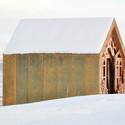
Trylletromler / Fabric Architecture

Trylletromler / Fabric Architecture - Public Space, Garden, Arch, Fence, FacadeTrylletromler / Fabric Architecture - Public Space, Garden, Fence, FacadeTrylletromler / Fabric Architecture - Public Space, Garden, Fence, FacadeTrylletromler / Fabric Architecture - Public Space, GardenTrylletromler / Fabric Architecture - More Images+ 19

Copenhagen, Denmark

"Marievik 15" Competition Entry / Louis Paillard Architects

Louis Paillard Architects' proposal for Marievik, a site south west of Sweden's capital, is an attempt to condense 65,000 square metres of housing, retail, restaurants and a school into just 12,000 square metres of available space through "six iconic objects." According to the architects, Stockholm is a city built "by public spaces, shared spaces, [and] parks and gardens", which led to their design "twisting itself around the void."

BGU University North Campus Master Plan / Chyutin Architects

Chyutin Architects have won a competition to design a new campus for the Ben Gurion University in Israel. Planned for a 30 hectare site in Beer Sheva, the 300,000 square meter campus will double the University’s existing facilities, both of which will be connected. Once complete, the new campus will include a welcoming public square with commercial and cultural facilities, as well as students dormitories, a congress center, academic and research facilities, sports facilities and more.

Reclaiming Rivers: The Latest Trend in Urban Design

For years, rivers were a source of transport and power, upon whose banks our cities were born.  But as cities industrialized, many of them clogged with filth and disease – making them not only ugly, but dangerous.  Unless they were useful, rivers were often diverted, covered, pushed underground, and forgotten.

Not anymore. Reclaiming rivers seems to be the newest trend in urban design, and cities across the world are hopping on the bandwagon. In the UK, the Environment Council is working to restore 9,500 miles of river; in Los Angeles, the eponymous river is about to undergo a complete transformation.

Architecture on the Frontline at The Battle Of Ideas

The Battle of Ideas is an annual, weekend-long series of panel discussions hosted at the Barbican in London, ranging across subjects from neuroscience to music and everything in between. With a strong thread of architecture and urbanism, this year offered a spectacular chance to probe the popular trends and fads in today's design culture.

Read on after the break for the highlights of the event.

A Walking City for the 21st Century

In a world where people live more mobile lifestyles than they have for centuries, cities are facing a problem they rarely planned for: their citizens move away. When jobs and resources start to decline, modern cities, such as Detroit, suffer difficult and often wasteful processes of urban contraction. In contrast to this, Manuel Dominguez's "Very Large Structure," the result of his thesis project at ETSA Madrid, proposes a nomadic city that can move on caterpillar tracks to locations where work and resources are abundant.

Of course this is not the first time that the idea of a nomadic city has been proposed. Ron Herron's Walking City is one of the more recognizable Archigram designs from the 1960s, and has been influential to architectural theory ever since. However, the design for the "Very Large Structure" expands on the Walking City by including strong proposals for energy generation on board the city.

Read on to see more on this provocative project - including a full set of presentation boards in the image gallery.

A Walking City for the 21st Century - Image 1 of 4A Walking City for the 21st Century - Image 2 of 4A Walking City for the 21st Century - Image 3 of 4A Walking City for the 21st Century - Image 4 of 4A Walking City for the 21st Century - More Images+ 10

Cities are for People: Turning Underused Spaces into Public Places

Subscriber Access | 

It begins with a fundamental premise: Buildings occupy only a fraction of land in cities. Just as important as physical structures, are the public spaces in between.

In many cities these spaces have long been disregarded. Today, however, we are witnessing bold experimentation and innovation coming forth from cities across the globe: cities re-using and re-imagining previously underused spaces in order to uplift communities and transform lives. 

Domplatz / hohensinn architektur

Domplatz / hohensinn architektur - Public Space, Facade, Arch
© Paul Ott photografiert

Domplatz / hohensinn architektur - Public Space, FacadeDomplatz / hohensinn architektur - Public Space, Table, Lighting, ChairDomplatz / hohensinn architektur - Public Space, Bedroom, Door, Lighting, Bed, Table, ChairDomplatz / hohensinn architektur - Public Space, Facade, BalconyDomplatz / hohensinn architektur - More Images+ 14

Copenhagen in 2050

As explained by this article in the Guardian, planners in Copenhagen are thinking ahead - to the years 2050 and even 2100 - to propose plans that will cope with the storms and floods that will threaten the low-lying city due to climate change. From "percolating pavements," "pocket parks" and "cloudburst boulevards," read about some of the innovative measures they are proposing, many of which are now being adopted around the world, here.

SeARCH Wins Urban Renewal Competition in Stockholm

SeARCH has won an invited, international competition for the urban renewal of Marievik. Their winning proposal, STA(CK)HOLM plans to transform an area along one of central Stockholm’s main access roads, opposite the island of Södermalm and facing a new bridge by Norman Foster, into a futuristic sustainable neighborhood.

How Vienna Designs Gender Equality Into the City Itself

An interesting article in The Atlantic Cities reveals the ideas behind "gender mainstreaming" in Vienna, a policy that began in the early 1990s and has had a huge effect on the past two decades of city planning there. Initially intended specifically to make the city more livable for women, the principles have proven so successful that they now form a part of the United Nations Human Settlements Programme's best practices. You can read the full article here.

Could Virtual Cities Make Our Real Cities Smarter?

Subscriber Access | 

This article, by Klaus Philipsen, FAIA originally appeared on his blog Community Architect.

As BIM (Building Information Modeling) slowly finds broader acceptance in the architecture and engineering of individual buildings, perhaps it is time to consider the next scale: the city. Just like virtual models help us design and understand buildings and embed information, virtual city simulations could have an application in real city planning, allowing us to go from “flat” GIS to three dimensional information modeling that includes terrain, infrastructure, buildings and public spaces. Could virtual cities be the answer to "smart cities"? Find out after the break.

A Country of Cities: A Manifesto for an Urban America

Last monday, Columbia University's Avery Hall was buzzing. 

The Graduate School of Architecture, Planning and Preservation (GSAPP) hosted a highly attended event that welcomed respected academics and professionals from architecture and real estate to what the dean, Mark Wigley, warned might take the form a a celebrity roast. Vishaan Chakrabarti, a partner at SHoP Architects and director of the Center for Urban Real Estate at Columbia, was on deck to deliver an abridged, more "urban version" of a longer lecture on his new book, A Country of Cities: A Manifesto for an Urban America. Proceeding the twenty minute lecture, an "A-list" panel of architects and historians - that included Kenneth Frampton, Gwendolyn Wright, Bernard Tschumi, Laurie Hawkinson and Reinhold Martin - lined up to discuss Chakrabarti's work.

Toward Cycle Cities: How Architects Must Make Bikes Their Guiding Inspiration

Subscriber Access | 

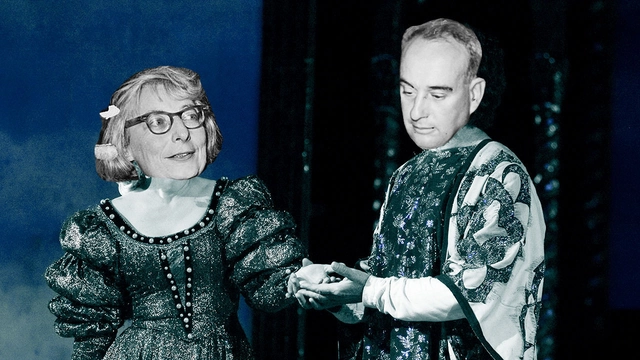
If Henry Ford were reincarnated as a bike maker, Le Corbusier as an architect of buildings and cities for bikes, and Robert Moses as their bike-loving ally in government, today’s bike plans would be far more ambitious in scope. Ford would be aiming to sell billions of bikes, Corb would be wanting to save the whole world, and, even if it took him a lifetime, Moses would be aiming to leave a permanent mark. 

They would want to give bicycle transport a leg-up, like the leg-up the motorcar received from farmlands being opened for suburban development. So who are our modern-day, bicycle-loving Le Corbusiers? And what, exactly, is their task?

Public Space Popping Up in London's Suburbs

Cricklewood, a North London suburb devoid of public space, is finding a new lease of life through a series of pop-up interventions - including a mobile town square designed by Studio Hato and Studio Kieren Jones - put together by civic design agency Spacemakers. While the project might have a bit further to go before any benefits are truly felt by the local residents, the project is part of a wider scheme financed by the Mayor’s Outer London Fund which will hopefully lead to the rejuvenation of more of the capital's suburbs. Read Liam O'Brien's full article in The Independent here.

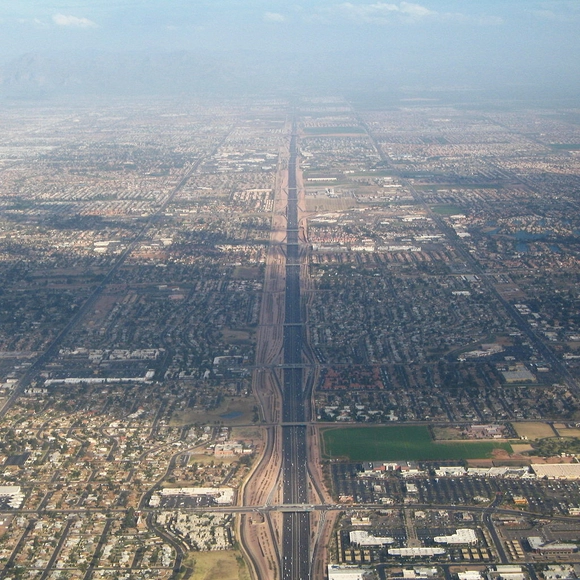
Winners Proposals Suggest Alternatives for San Francisco's 280 Freeway

The Center for Architecture + Design and the Seed Fund announced the winners of the Reimagine. Reconnect. Restore What if 280 came down?, a competition that explored the idea of removing San Francisco's 280 Freeway, north of 16th Street, in an effort to pedestrianize that portion of the city while generating funds for several regionally important transit projects. The open competition, which encouraged designers to submit urban design interventions, from public art to infrastructure, awarded $10,000 in prizes.

Urban Planning Lessons from the World's Largest (Temporary) City

For two months out of every twelve years, Allahabad in India becomes one of the most populous cities in the world - thanks to the Maha Kumbh Mela, a Hindu Festival that is the largest single-purpose gathering of people on the globe. In an article for Smithsonian Magazine, Tom Downey relates his experience of the Festival and sheds light on how a temporary city can swell to such astronomical sizes and still function as well as, if not better than, permanent cities. It is hoped that the research by Harvard Graduate School of Design at the Kumbh Mela can inform the construction of refugee camps, emergency cities and even permanent cities in the future. You can read the full article here.