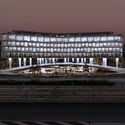
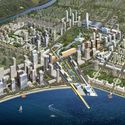
BIG unveiled its latest intervention, the Toyota Woven City, the company's first venture in Japan. Nestled at the foothills of Mt. Fuji, the project, in collaboration with Toyota Motor Corporation, is the world’s first urban incubator pushing forward the development and progress of mobility.
Used in Mexico City and in Reno, Nevada, Streetmix allows users to experiment and participate in the design of their streets. This bottom-up approach is a participatory tool that can include everyone in the decision making, without particular technical knowledge.
The Un-habitat or the United Nations agency for human settlements and sustainable urban development, whose primary focus is to deal with the challenges of rapid urbanization, has been developing innovative approaches in the urban design field, in order to encourage the active participation especially of children, women and underprivileged individuals.
Although cities are supposed to be built for everyone, they are in most of the time, thought, planned and designed by men: “Cities are supposed to be built for all of us, but they aren't built by all of us.”
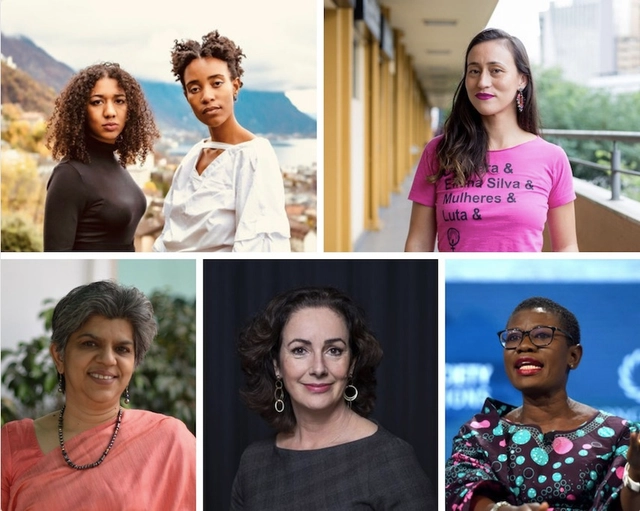
With basic different needs, men and women expect different outcomes from their urban surroundings. A city should be able to fulfill everyone’s essentials. Lately, the topic that has everyone's attention revolves around cities designed by women. With a female mayor onboard and a feminist agenda, for the past four years, Barcelona has been undergoing major transformations on this subject.
Canada's Capital Region - National Capital Commission
The NCC’s Urban Design Challenge 2020: Student Ideas Competition for Canada’s Capital is now on.
Urban Design Challenge 2020 is a competition that invites students from across the country to come up with design concepts for important sites in Canada’s Capital Region. The competition is organized by the National Capital Commission (NCC), the federal Crown corporation dedicated to ensuring that Canada’s Capital is a dynamic and inspiring source of pride for all Canadians, and building a legacy for generations to come.
The NCC is challenging students to propose innovative planning and design ideas for two important destinations in the Capital Region. • SITE
The Orbit illustrates Partisans’ vision for a cutting-edge community where small town and rural lifestyles are enhanced by the benefits and attributes of urban living. The award-winning Toronto-based architecture studio imagined a new urban fabric that inspires citizens.
CREATING HOMES FOR TOMORROW Within the 2019/20 educational program, CANactions School travels to 3 metropoles in western, northern and eastern Europe and explores their innovative approaches for creating more livable neighborhoods. Based on the findings, we develop new strategies for locally specific and globally relevant questions, considering spatial, economic, social and political measures.
THE FOUR CITIES The program is exposed to the housing context of the three European cities that are widely
As you may know, things aren't going too well for mother earth. With challenges like deforestation, fires, pollution, and even methane from cows we are facing an uphill battle against climate change.
One of the simplest, and possibly most effective, methods to reverse the damage is to plant trees, billions of them. According to the respected Science Journal, "The restoration of forested land at a global scale could help capture atmospheric carbon and mitigate climate change."
This is no easy task and will require hundreds of millions of people to plant trees in their front yards, backyards, patios, open land, businesses, cities,
Many challenges underline the urgency of reconsidering dominant approaches to development, land use, and the institutional framework that governs them, in addition to the political context, which requires a novel and creative counter-approach in Chekka and Surrounding Towns in North Lebanon. As such, this competition is an open call for planners, designers, environmental scientists, agricultural engineers, economists and other professionals to draft an intervention framework, which simultaneously answers the concept of sustainable development and the immediate needs of the people, including job opportunities and a local economy, without compromising their health, the environment and local economic resources.
Being able to move around cities is a basic requirement for the development of most human activities. Yet daily trips between home and work, study, leisure, and other daily commitments are not always done under the most comfortable conditions, whether it be because of crowded public transportation or unexpected traffic jams. Urban mobility is a hotly debated topic, from informal conversation circles to technical and scientific seminars. It's hard to find someone who doesn't have an opinion on the subject or some miraculous solution to the problems in their city or region. In fact, we have already posted several articles addressing this issue on this site, from utopian proposals to questions related to the daily lives of most of the population.
The AERIAL FUTURES: Living Laboratories Symposium examines the confluence of urban elements within the airport landscape—transportation, commerce, public space and technological interfaces—and how Asian airports introduce alternatives for life in transit.
By 2035, it’s estimated that air travel in Asia will be greater than Europe and North America combined, with routes in Asia serving an extra 1.8 billion annual passengers. Increase in airport capacity challenges physical infrastructure as much as operations and passenger experience. A trillion dollars is earmarked for airport development in Asia alone in the next 10 years. Unprecedented growth requirements are difficult to meet and concrete alone is
reSITE 2019 REGENERATE, a game-changing event on cities' regeneration
reSITE’s game-changing event brings together a global community of 50 thought leaders, architects, urbanists, and the most innovative minds to share state-of-the-art trends in sustainable architecture as well as urban planning and living. REGENERATE is a call to action offering solutions to the pressing questions arising from climate change, redevelopment, and young generation’s demands and changing values.
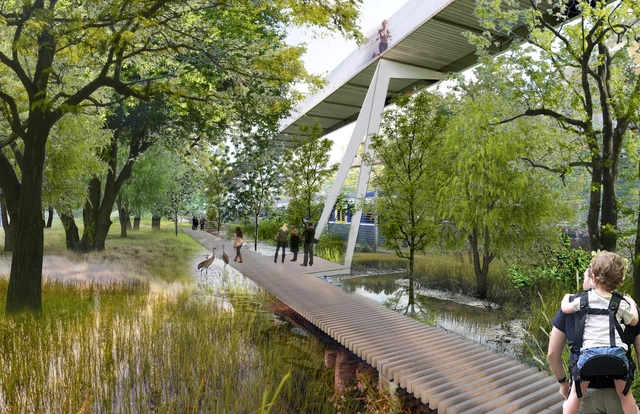
If you come to think of it, the urban development of the world's largest cities is like playing a game of Tetris; No matter how condensed or crowded, for architects, there is always room for more. However, this act of 'structural stacking' often creates unique architectural compositions.
As a follow-up to his first photo-series, Singaporean photographer and visual artist Kevin Siyuan put together 'Corridors of Diversity', a short montage of communal corridors and HDB (Housing and Development Board) block facades, featuring the dynamic designs and forms of Singapore's densely built environment.
How do designers think? How do they visually communicate complex ideas? What strategies do they employ to make a positive impact on the built environment? How does design change the way people see and experience the world?
https://www.archdaily.com/910758/design-your-summer-uc-berkeleys-college-of-environmental-design-is-now-accepting-applicationsSponsored Post
Courtesy of International Union of Architects (UIA)
As part of Tripoli’s economic revival plan, the International Union of Architects (UIA), in collaboration with the Lebanese Federation of Engineers and Architects (on behalf of the Tripoli Special Economic Zone / TSEZ), the Union of Mediterranean Architects (UMAR), and the Lebanese Government, have launched an international architecture competition to create a Knowledge and Innovation Center in the northern city of Lebanon.
The proposed site is situated on an empty lot within Oscar Niemeyer’s abandoned Rachid Karami International Fair, a modernist exhibition complex that has yet to see the light of restoration. The objective of the competition is to create a technology and business hub which will foster and promote start-up businesses and entrepreneurs, attracting students, young graduates, local and international companies to Tripoli and the neighboring region.
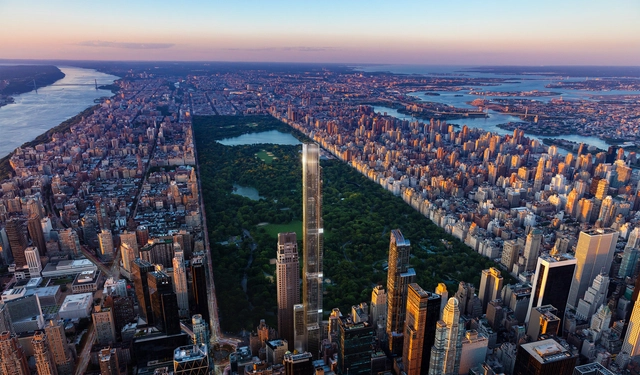
New York City has gained a reputation for its soaring towers thanks to unprecedented engineering technologies and New York’s air-rights policy, which permits developers to acquire neighboring unused airspace and construct large structures without any type of previous public review. But how are these super tall skyscrapers being accommodated? By replacing older existing structures. This out-with-the-old-in-with-the-new pattern comes as no surprise, as the “concrete jungle” is gradually being axed to make room for an even larger jungle.
With an academic background that includes social sciences, curatorship, and architecture, Michelle Mlati's trajectory is an interesting one; more so for the way her current work dabbles in these areas simultaneously.
Describing herself as an afrofuturist critical spatial designer, Johannesburg-based Mlati’s practice investigates elements of the city, from sustainability through to social dynamics, architecture to aural and visual cultures.