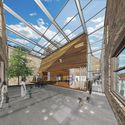
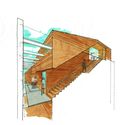
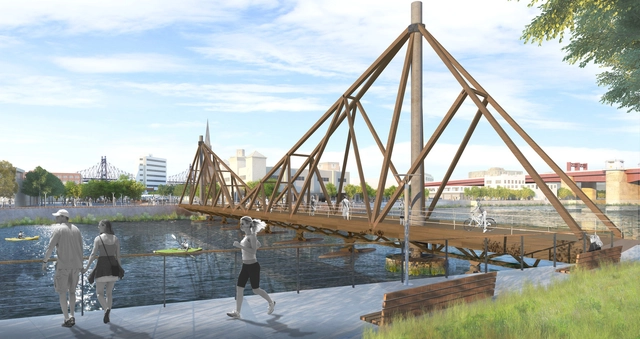
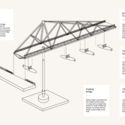
If you stand in Manhattan Avenue Park in Brooklyn’sGreenpoint neighborhood, you’ll see the Long Island City skyline across a small creek. On the Greenpoint side of the creek, a historic neighborhood of row houses and industrial sites is rapidly growing. On the Long Island City side, high-rise apartments and hundreds of art galleries and studios line the East River. Just a stone’s throw away, Long Island City can feel like a world apart from Greenpoint. That’s in large part due to the fact that only one bridge connects the neighborhoods—and it’s meant more for cars than pedestrians or cyclists. Isn’t there a better way? Architect Jun Aizaki thinks so. For the past few years, he and his team at CRÈME Architecture and Design have been working on the so-called “Timber Bridge at Longpoint Corridor."
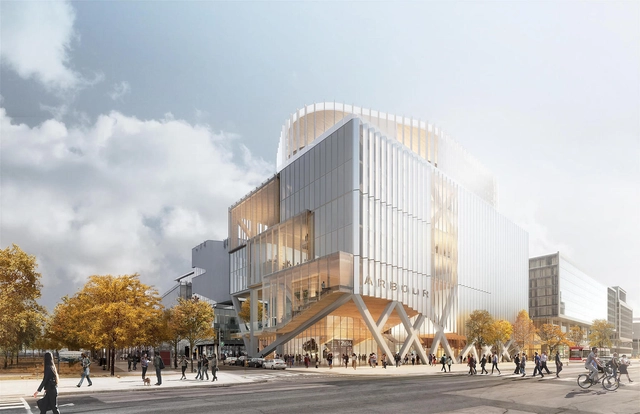
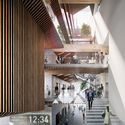
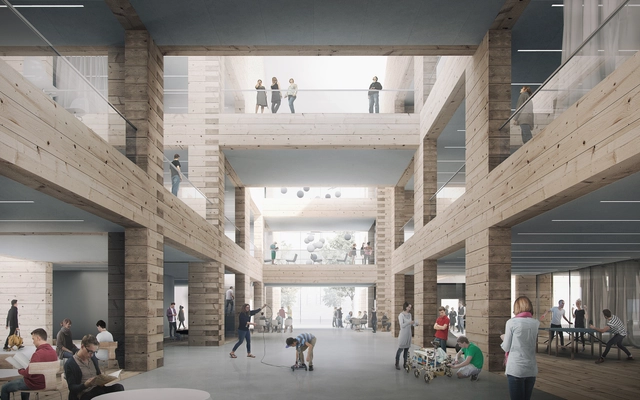
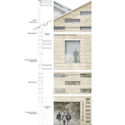
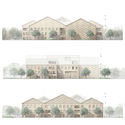
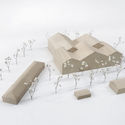
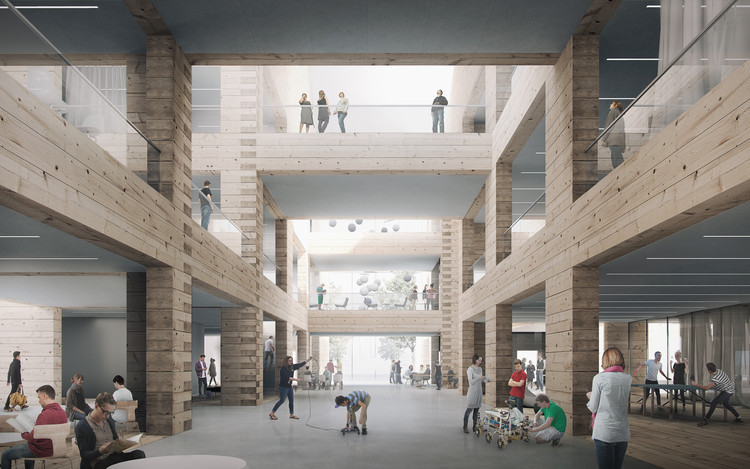
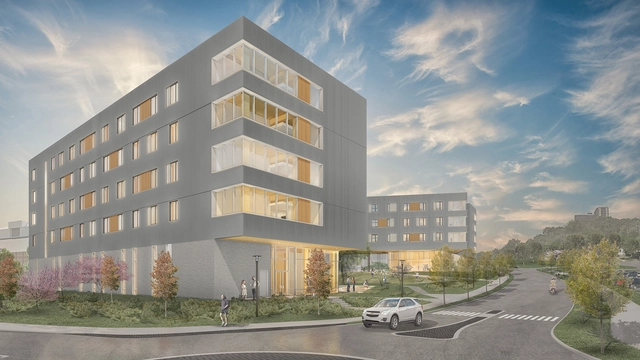
As their entry in a competition for The Arbour, a new academic building for the campus of George Brown College on Toronto’s Lake Ontario waterfront, Montreal-based firm Provencher_Roy have revealed their design for an adaptable mass timber building that could grow and change in time.
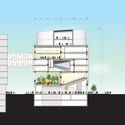
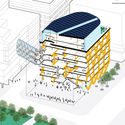
Using a staggered truss structural system that divides the building into modular cells measuring 8.4 meters tall, 17.4 meters wide and 40 meters long, the firm explains that the stacked program elements can be reorganized as necessary, with classrooms and double-height auditorium spaces able to be converted to basketball courts or column-free open offices by adjusting the cross-laminated timber flooring, which can be adjusted without compromising the rest of the structure.
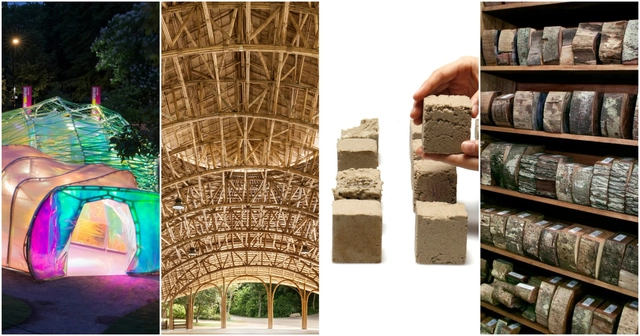
In architecture we are so caught up in creating something new, we often forget about what happens at the end of a building’s life cycle—the unfortunate, inevitable demolition. We may want our buildings to be timeless and live on forever, but the harsh reality is that they do not, so where is all the waste expected to go?
As with most non-recyclable waste, it ends up in the landfill and, as the land required for landfill becomes an increasingly scarce resource, we must find an alternative solution. Each year in the UK alone, 70–105 million tonnes of waste is created from demolishing buildings, and only 20% of that is biodegradable according to a study by Cardiff University. With clever design and a better awareness of the biodegradable materials available in construction, it’s up to us as architects to make the right decisions for the entirety of a building’s lifetime.
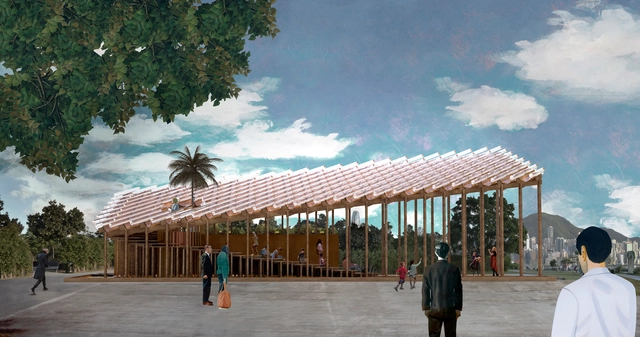
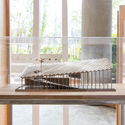
The West Kowloon Cultural District Authority (WKCDA) has announced the winning design for the inaugural Hong Kong Young Architects and Designers Competition. The competition asked local architects and designers emerging in their careers to design a "temporary pavilion that promotes sustainability and addresses economic and natural resources." The winning design, titled Growing Up, by New Office Works is a timberpavilion that sits on the waterfront in Nursery Park at West Kowloon. Paul Tse Yi-pong and Evelyn Ting Huei-chung from New Office Works will serve as Design Advisors with the project set to open in fall 2018.
AOR Architects, a young practice based in Helsinki, have won the commission to design Monio High School and Community Centre in Tuusula, Finland. The project explores an innovative use of timber log building and will be the largest timber log school building in the world after its completion. Consisting of a high school, music institute, and community college, AOR’s proposal combines these different programs in a multi-functional learning and community environment.
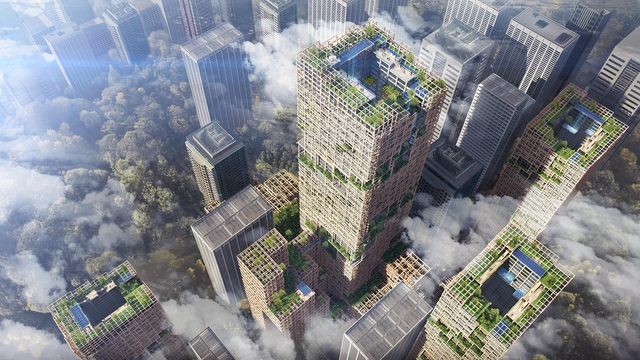
Timber tower construction is the current obsession of architects, with new projects claiming to be the world’s next tallest popping up all over the globe. But this latest proposal from Japanese company Sumitomo Forestry Co. and architects Nikken Sekkei would blow everything else out of the water, as they have announced plans for the world’s first supertall wood structured skyscraper in Tokyo.
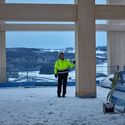
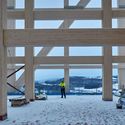
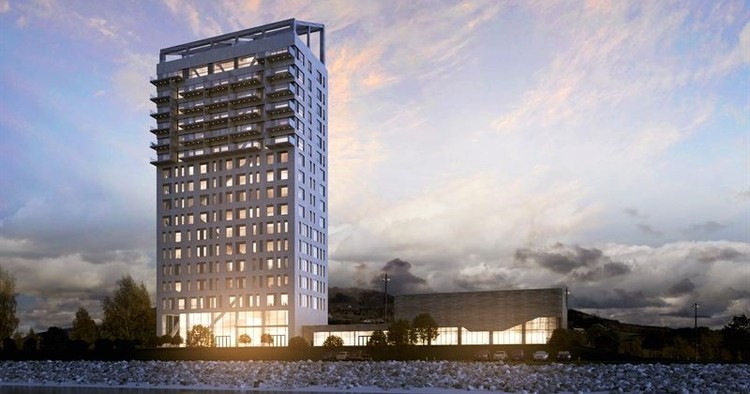
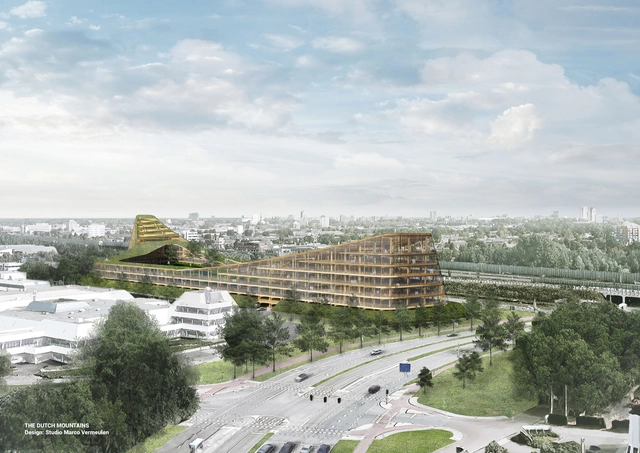
Over the last few months, we have seen a surge in large timber structures being constructed across the globe claiming to be the biggest, the tallest, or the first of their kind—for example, plans for the Dutch Mountains, the world’s largest wooden building, have recently been revealed. Contractors Moelven Limtre are one of the key drivers of this change as the perception of timber as a load-bearing material becomes more common. Their director Rune Abrahamsen is responsible for one of the current claimants of the world record for the tallest timber building, “Treet” in Bergen, at 51 meters tall. However, the contractor’s latest project Mjøstårnet is set to reach an even taller height of 81 meters.
Plans have been revealed for the “largest wooden building in the world” to be located just outside Eindhoven in the town of Veldhoven, The Netherlands. Known as the Dutch Mountains, the complex was conceived via a multi-disciplinary partnership made up of tech companies, service providers, architects and developers, and would contain a hi-tech, mixed-use program for residents and visitors.
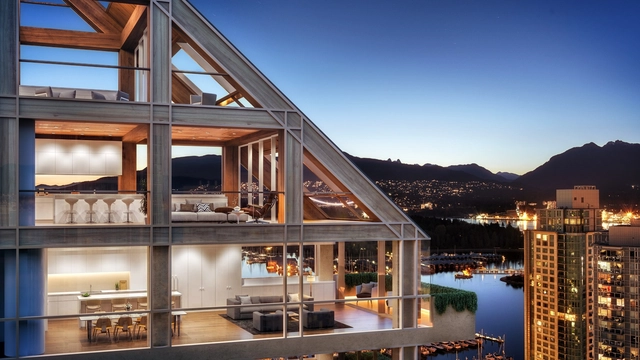
A new set of renderings has been released the Shigeru Ban Architects’ Terrace House development in Vancouver, revealing the interiors of the residential building for the first time. Being developed by PortLiving, the project will utilize an innovative hybrid timer structural system. When completed, it will become the tallest hybrid timber structure in the world.
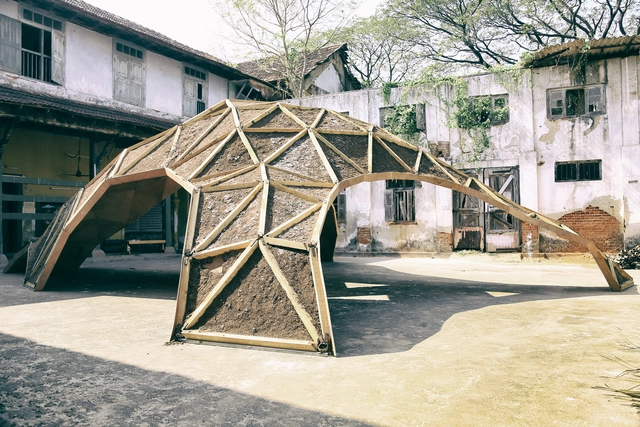
Are the concrete buildings we build actually a sign of architectural progress? Defunct housing projects abandoned shopping malls, and short-sighted urban projects are more often than not doomed to a lifetime of emptiness after they have served their purpose. Their concrete remains and transforms into a lingering reminder of what was once a symbol of modern ambition. Stadiums and their legacies, in particular, come under high scrutiny of how their giant structures get used after the games are over, with few Olympic stadiums making successful transitions into everyday life. With a new approach to sustainability, the Shell Mycelium pavilion is part of a manifesto towards a more critical take on building. Say the designers on their position: “We criticize these unconscious political choices, with living buildings, that arise from nature and return to nature, as though they never existed.”
The Shell Mycelium Pavillion is a collaboration between BEETLES 3.3 and Yassin Areddia Designs and offers an alternative to conscious design through temporary structures. Located at the MAP Project space at the Dutch Warehouse, the pavillion formed part of the Kochi Muziris Biennale 2016 Collateral in India.
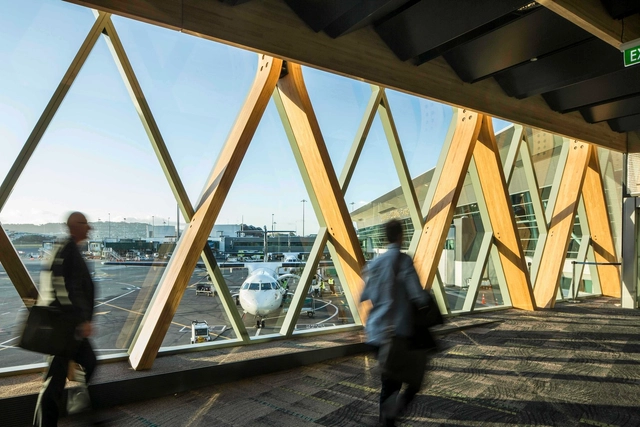
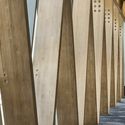
The structure of the facade is the result of recognizing the great versatility of laminated wood when designing large structures and complex shapes, allowing, in this case, to propose the construction of a straight piece that is curved to join the next piece.
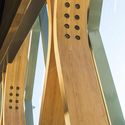
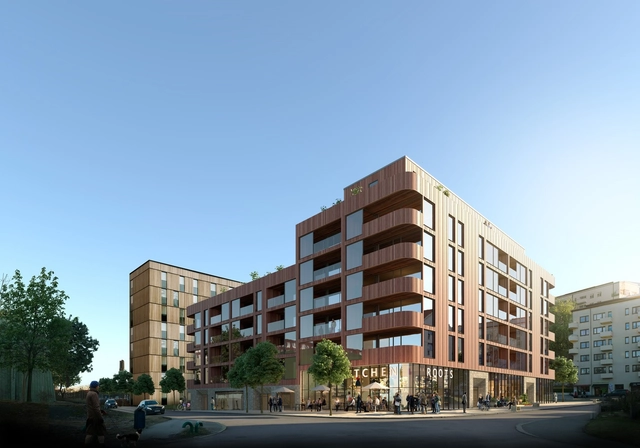
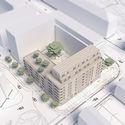
Riksbyggen and Sweco Architects were announced as the winners of a government-led competition to create a cross-laminatedtimber framed housing development for the Johanneberg district of Gothenburg, Sweden. The proposal, called “Slå rot” (Swedish for “put down roots”), was chosen for its response to its existing environment with nods to tradition, while still providing an innovative structural system and modern living to the neighborhood.
Penda, collaborating with wood consultants from CLT-brand Tmber, has unveiled the design of ‘Tree Tower Toronto,’ an 18-story timber-framed mixed-use residential skyscraper for Canada’s largest city. Drawing inspiration from the distinctly Canadian traditional modular construction, including Moshe Safdie’s iconic Habitat 67, the tower is envisioned as a new model of sustainable high-rise architecture that can establish a reconnect urban areas to nature and natural materials.
Although we’re conditioned to buy most of our furniture in one piece, or at least have it ready-to-build IKEA-style, there’s something special about creating something from scratch. Building something from its raw materials lets you see its journey from start to finish, with you learning about the craft it along the way, whether by yourself or with friends. The team at ArchDaily is sharing our very own built Tiki Bar – complete with instructions. Read on for some summer nostalgia you can build in your own backyard through a step by step Tiki DIY guide:
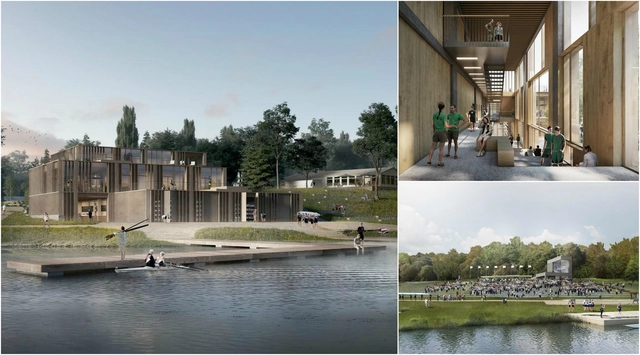
Denmark-based AART architects have been selected to design the country’s national rowing stadium, seeing off strong competition from prominent firms such as BIG and Kengo Kuma. Situated upon Bagsværd Lake on the outskirts of Copenhagen, the scheme seeks to allow the sporting elite and broader public to form a close interaction with picturesque natural surroundings.
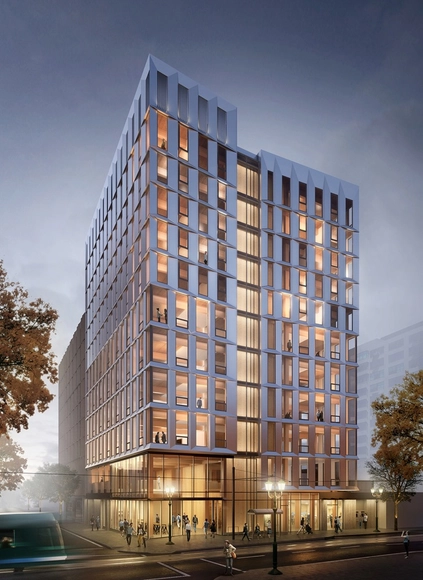
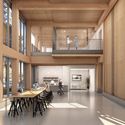
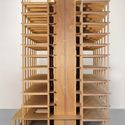
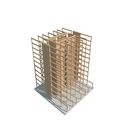
The United States’ first mass-timber highrise (defined by Emporis Building Standards as a building with an architectural height of 115-328 feet, or between 12 and 40 floors) has been granted planning permission, allowing construction on the landmark project to begin. Located in downtown Portland, Oregon, the building known as Framework will cap out at 12 floors and approximately 128 feet, ushering in a new era of tall building construction in the US.
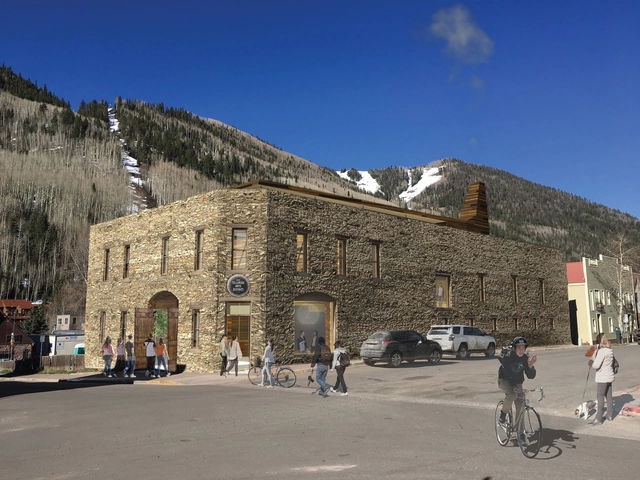
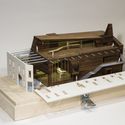
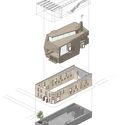
LTL Architects (Lewis.Tsurumaki.Lewis) has been selected as the winner of the Telluride Transfer Warehouse competition, beating out finalist entries from NADAAA and Gluckman Tang. The competition sought schemes for the adaptive reuse and transformation of the National Historic Landmark-listed warehouse in Telluride, Colorado into “an architectural and cultural landmark that provides contemporary, public art space that deepens and expands the cultural life of Telluride.”




.jpg?1528243827 "Courtesy of CRÈME Architecture and Design")


















.jpg?1501783920&format=webp&width=640&height=580)
.jpg?1501783945 "Courtesy of Penda")
.jpg?1501783890 "Courtesy of Penda")
.jpg?1501783772 "Courtesy of Penda")

.jpg?1501783920)