The year 2021 has been a turbulent one –coronavirus rages on, and the design and construction industries have been forced to keep adapting two years into a global pandemic. As virtual methods of working and communicating continue to be tweaked and honed, a plethora of virtual events has meant that architectural discourse outside the western canon and Eurocentric gaze, in a small way, has been able to claim space front and center in the global architectural conversation.
Ethical practice spans all parts of architecture. From intersectionality and labor to the climate crisis, a designer must work with a range of conditions and contexts that inform the built environment and the process of its creation. Across cultures, policies and climates, architecture is as much functional and aesthetic as it is political, social, economic, and ecological. By addressing the ethics of practice, designers can reimagine the discipline's impact and who it serves.
In this week's reprint, author Andrés Duany presents a series of statements from today's architectural world. He considers that these understandings are the product of our times, a direct reaction and a consequence of the observed patterns.
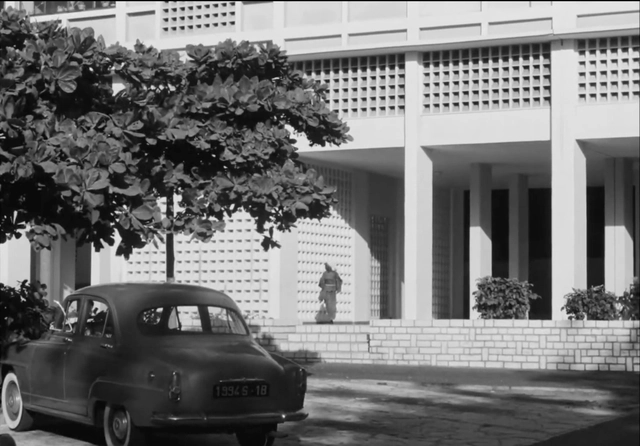
When examining the world of African cinema, there are few names more prominent than that of Senegalese director Ousmane Sembène. His films ‘La Noire de…’ and ‘Mandabi’, released in 1966 and 1968 respectively, are films that tell evocative stories on the legacies of colonialism, identity, and immigration. And whilst these two films are relatively slow-spaced, ‘slice-of-life stories, they also offer a valuable spatial critique of the setting where the films are based, providing a helpful framework to understand the intricacies of the post-colonial African city, and the contrast between the African and European metropolises.
What is an architecture critic? And what makes a critic in the 21st century? Throughout history, critics were the select few who were chosen to describe and evaluate architecture while we waited for their rave reviews or disappointments before we validated our own opinions. Their thoughts and words became design canon and heavy-handedly shaped our profession. This mindset and culture only further contributed to the idea that architecture is an “elitist” practice where a few set the rules and the rest must learn them. While architecture will always have named critics, just as other forms of art and culture have theirs, there’s recently been a push for architecture to transform itself into a profession that designs for the masses and is equally critiqued by the masses.
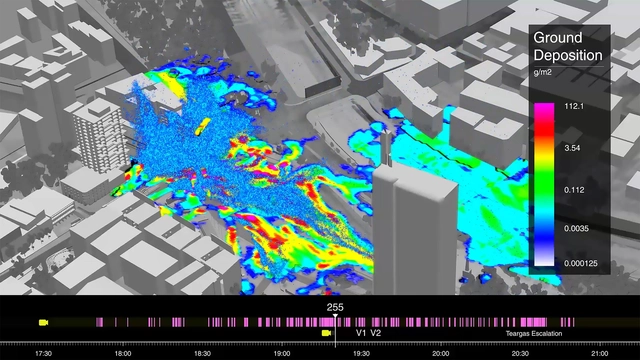
Analysis of tear gas levels in Plaza Italia/Plaza Dignidad (Santiago, Chile) based on footage from Galeria Cima. Image Courtesy of Forensic Architecture
On October 18, 2019, a 4-cent increase on Santiago's Metro fare caused an uproar on the streets of the Chilean capital. The citizens' anger escalated quickly, leading to demands of immediate structural changes in the Chilean economic and social system. Alongside the people's call for change, daily clashes between protesters and the police led to excessive use of tear gas by the latter across the country.
Even though the use of tear gas is banned in warfare since 1925, police worldwide are allowed to use it for the sole purpose of scattering protesters, as had happened in Chile. The most iconic example can be seen in Plaza Dignidad (Dignity Square), previously known as Plaza Italia ahead of the social outbreak that erupted in the country: everyday, a camera records the activities around the iconic roundabout, capturing the constant and excessive use of lachrymatory gas every Friday.
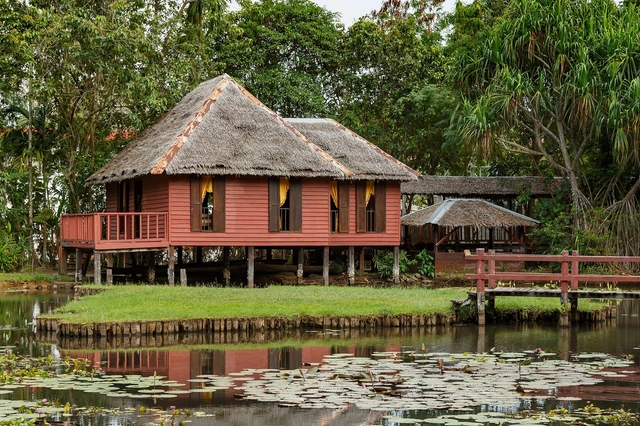
When we talk about vernacular architecture, we’re talking about an architectural style specific to a region – architecture that relies on the use of local knowledge and materials to construct buildings. It’s the Beehive Houses of Harran in Turkey, to the traditional Malay Houses found throughout southeast Asia. The vernacular architecture of various places continues to be a source of inspiration for contemporary architects, as they look to create sustainable architectural responses well-suited for their context.
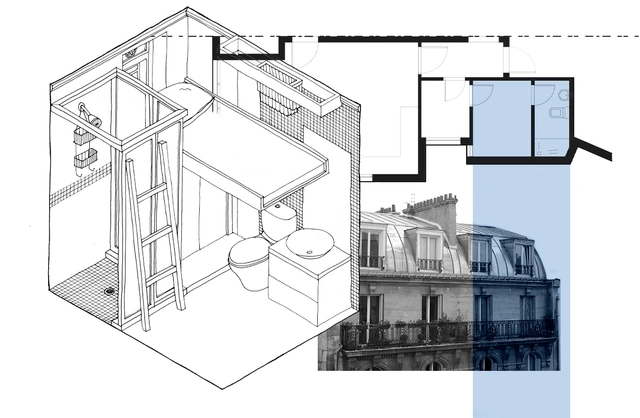
Looking through interior images of houses, we often see grand bedrooms with an influx of natural lighting. We see inviting open-space living rooms, lush terraces, and kitchens with high-end equipment and refined finishes. But what we don't see is that behind these sleek walls are small neglected bedrooms without proper ventilation, natural lighting, or space to move around, dedicated to those who cater to the entire household.
The disparate spatial configuration and "colonial" approach to the living conditions of servants and foreign laborers have existed long before the rise of congested cities and micro-apartments. Household owners, or at least a good sum of them, have always felt that domestic workers needed and deserved less space to reside in, not just in terms of spatial area, but in terms of necessary living conditions for a better, more comfortable life.
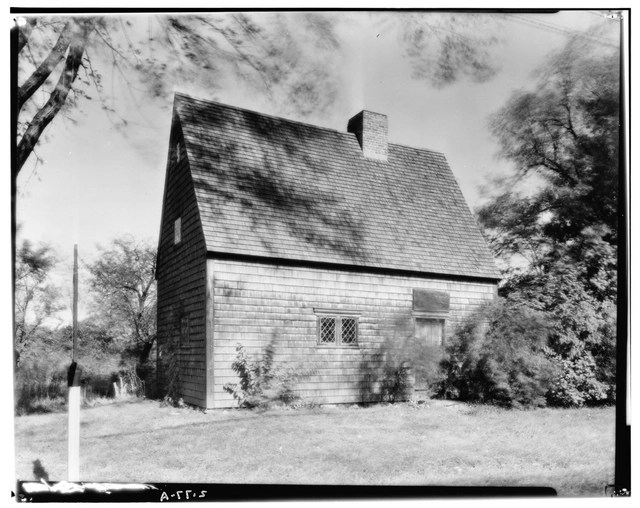
The Peak House, Main Street, Medfield, Norfolk County. Image Courtesy of Library of Congress HABS MASS
There is an architecture of the migrant. It is survivalist, built with what is available, made as quickly as possible, with safety as its core value. Americans romanticize that architecture as “Colonial”: simple timber buildings, with symmetric beginnings, infinite additions, and adaptations. But “Colonial” architecture is not what was built first by the immigrants to a fully foreign land 400 years ago. Like all migrant housing, time made it temporary and forgotten.
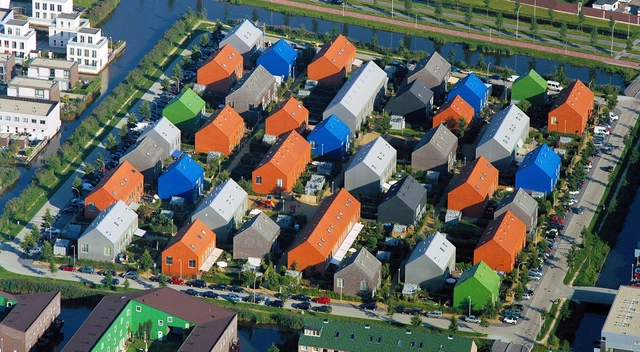
In this week's reprint, author Walter Jaegerhaus explores the U.S. housing challenge, drawing a timeline of the evolution of different architectural solutions, from around the world. Seeking to "inspire designers today to create new housing options", and hoping "that the U.S can again embrace its experimental origins and try out new ideas and methods", the article highlights examples from Europe and the Americas.
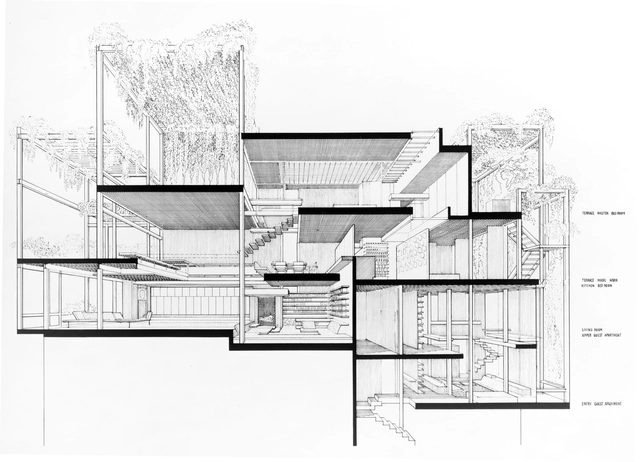
Paul Rudolph, Rudolph Apartment at 23 Beekman Place, New York (1977-1997). Perspective Section, 1997. Digitized drawing | 4732 x 3416 px. The Paul Rudolph Archive, Library of Congress, Print and Photograph Division, LC-USZ62-123771. The cut shows the complexity of the space that Timothy Rohan describes as exemplary of Rudolph's approach to the private domain.
A growing number of theorists and practitioners have been discussing the impact of gender and race on the profession and theory of architecture. Issues linked to the relationship between the built environment, sexual orientation, and gender identity, however, remain particularly understudied, perhaps because of their relative invisibility and less clearly identifiable discriminatory consequences. Moreover, they are also completely neglected by design theory in the Francophone world. This article partially remedies the situation.
Architecture can be many things, also queer. Alongside many other transgressing words that carry different meanings and perspectives, this term triggers new insights into society and questions how we create architecture and urban planning projects, including their programs and activities. If there is any statement about how architecture should be done, if there is any conviction about what it represents, we wish here to avoid knowing what it is and be able to question its traditions to broaden the profession, its meanings, and social representation.
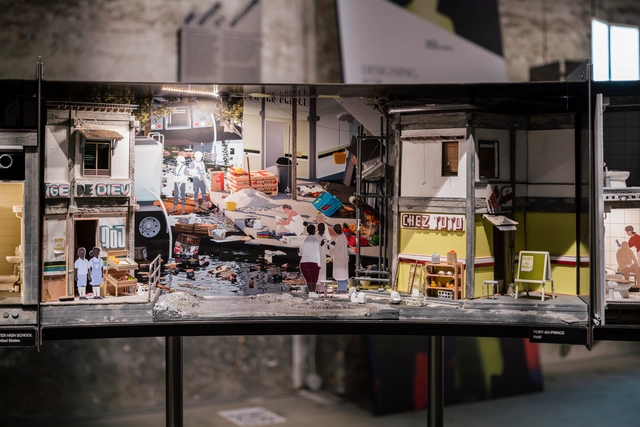
"When we enter the restroom, we are never alone. Instead, we are entangled in a network of bodies, infrastructures, ecosystems, cultural norms, and regulations". Although restrooms are often overlooked facilities that cater to the needs of individuals, they are, however, spaces where gender, religion, race, hygiene, health, and the economy are defined and expressed. For the 17th International Architecture Exhibition at La Biennale di Venezia, Matilde Cassani, Ignacio G. Galán, Iván L. Munuera, and Joel Sanders designed two pavilions that exhibit how restrooms are political architectures, serving as battlegrounds for the world's disputes.
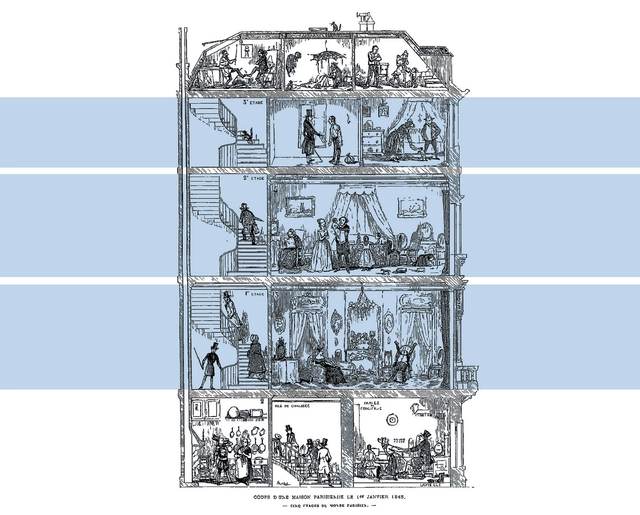
The introduction of new techniques and materials, along with innovations in indoor plumbing systems, resulting from the industrial revolution, paved the way for vertical living. Investigating specifically a period of time where a flux of population was driven to cities, and social class divisions were being questioned, this article looks back at the evolution of the house plan in Europe between 1760 and 1939.
Tackling the transformation of the housing unit during the industrial revolution all the way to the interwar period, this feature highlights four prominent examples that rethought traditional layouts and responded to the challenges of their time. Still influential today, the mentioned models, restored for use, happen to be part of the 21st-century urban fabric. Located in London, Paris, Amsterdam, and Moscow, the plans showcase the ever-changing interior wellbeing standards, directly linked to a broader metamorphosis, equalizing and providing for growing urban populations. Discover the evolution of living units from the Back to Back Houses to the Garden Cities of England; the Haussmannien Block, a Vertical Living for a Modern Bourgeoisie; the Extension of Amsterdam, from Alcove Housing to Social Housing Blocks; and the Transition Type House in Russia.
As income inequality has widened in recent years, the role of philanthropy has been called into question. Is charitable giving by wealthy individuals and powerful corporations always a positive force, or is that connection to wealth and power an inevitable compromise? Whose agenda does philanthropic giving really benefit, the grantees or the granters? These are complicated questions. But truly enlightened giving is a transformative force. It can not only fund worthy causes but if properly timed can sow the seeds of social change.
American 19th-century sanitation engineer George E. Waring, Jr. was a miasmaist. He believed in the miasma theory, which holds that toxic vapors traveled through damp soil, rotted vegetation, and pools of standing water. These toxic vapors were understood to emanate from the Earth and interact with the atmosphere and cause disease in American cities.
According to Catherine Seavitt Nordenson, ASLA, a professor of landscape architecture at the Bernard & Anne Spitzer School of Architecture at the City College of New York, Waring was a “marginal figure,” but he had interesting ideas about how to “modify the climate to improve health.” In a virtual lecture hosted by the Harvard Graduate School of Design, Seavitt Nordenson said Waring was incorrect about the mechanisms for spreading disease —he didn’t understand the concept of vectors, like mosquitoes— but his drainage and sanitation solutions were “surprisingly successful.” A year into the coronavirus pandemic, it’s worth revisiting Waring’s ideas about the connections between the Earth, atmosphere, disease — and the maintenance of public spaces.
https://www.archdaily.com/958954/the-miasma-theory-was-wrong-but-led-to-smart-sanitationJared Green
This article was originally published on Common Edge as "Kate Wagner on McMansion Hell, Criticism, and Her Love of Cycling."
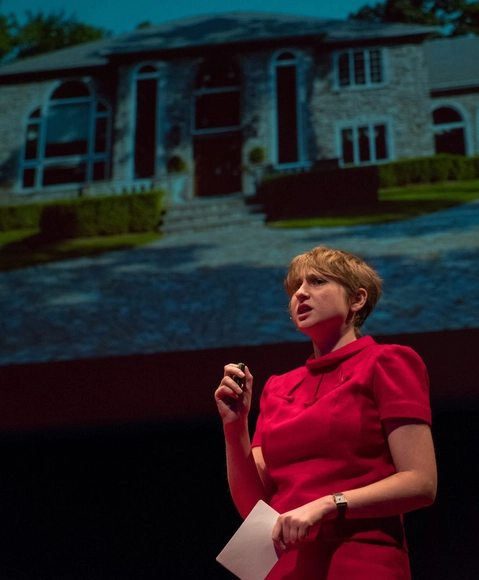
Contrary to movie myth, there is no such thing as an overnight sensation. The moment when a cultural presence bursts upon the scene, seemingly fully formed, is almost always preceded by unwitnessed years of DIY training and single-minded obsession. Such is the case for Kate Wagner, who broke the architectural internet in 2016 with the introduction of McMansion Hell, a sharp and hilarious skewering of the bloated American home, in all its garish and desperate striving. A year later, the real estate listing site Zillow served the then-23-year-old Wagner with a cease-and-desist letter, claiming that her use of photographs violated copyright (even though they didn’t own the photographs either!). It was a clumsy move, resulting in an eventual corporate about-face and scads of free publicity for McMansion Hell.
My mother is a psychologist, so our family talks a lot about emotion. More specifically, we discuss the experience of emotion, because, as she likes to remind me and my sisters, “We don’t think our feelings—we feel them, in our bodies.” According to my mother, it’s this experience of emotion that gives our lives a sense of meaning and vitality; as a result, her work isn’t about intellectual insight or abstract theories, but rather about giving her patients a new experience of themselves in the world.
















.jpg?1626777875 "Drawing by Tings Chak for the How to Make Space exhibition (2016). Image © Tings Chak")










.jpg "Residential houses \"Eigen Haard\", Spaarndammerplantsoen, Amsterdam, Original state, 1915. Image Courtesy of Wikimedia")