

Liminal spaces are everywhere, both literally, and as a popular topic of intrigue on Reddit and other image-sharing platforms. Posting photographs of empty dilapidated spaces followed by collective reminiscing of childhood experiences is proving to be a popular activity these days. At one time or another, the spaces depicted in these eerie photos seemed like a good idea, a useful solution to the problem of providing shelter for crowds in the act of movement or commerce. Architecture had specific terms for these spaces too and defined them through theories that explained their role in our culture. In this video, architectural professor Stewart Hicks presents how architects think about liminal spaces, what goes into them, why they exist, and why some architects and artists still work to produce their effect.
Theory and History: The Latest Architecture and News
The Architecture of Liminal Spaces
The Religion of the City: Cars, Mass Transit and Coronavirus
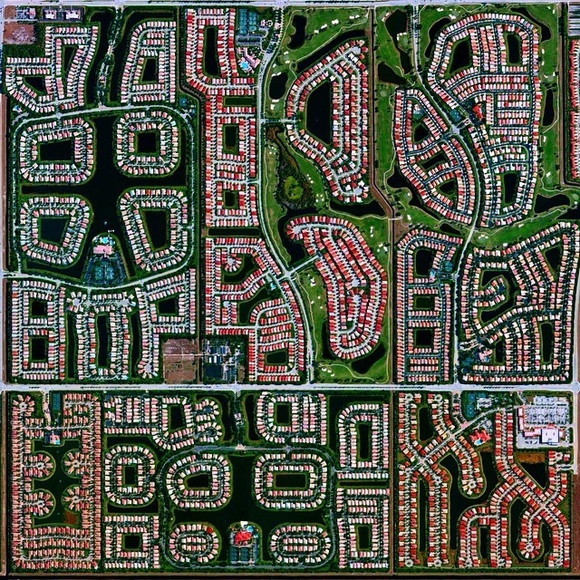
Religion is a uniquely human reality. As are cities. As we emerge from our burrows of sequestration, the silent cities and places of worship will become human again, versus the present sad memory of what they once were.
We will recover from another human reality, the pandemic and when we do we will be forced to address some questions. Before this century, the automobile was once seen as the way Americans could create a new reality: a huge middle class that could control its life by using the freedom that cars gave them to go where they wanted, when they wanted, and to live where they wanted. Before this latest change of sequestration, that vision of what cars meant to our culture was changing —especially in cities.
Architecture and the Environmental Impact of Artificial Complexity

This article was originally published on Common Edge.
There is an astonishing degree of complexity, order, and beauty in the natural world. Even so, and especially within the realm of living things, nothing is more complex than it needs to be to sustain its existence. Every aspect of the system serves a purpose. If it does not, the unneeded component eventually ceases to exist in future generations. Even with these constraints of resource and energy efficiency, we find boundless beauty and harmony in the natural world. Contrast nature’s “just the right amount of complexity” to the way many architects design buildings today. While nature is only as complex as it needs to be, architects and designers add excessive and inessential complexity to their buildings and landscapes when none is warranted.

Endless “Sustainable” Growth is an Oxymoron

This article was originally published on Common Edge
In a Common Edge article, I briefly discussed a concept that I call the “Triple Bottom Lie,” which posits that more people, plus more consumption by each person, plus an economic system completely dependent on the aforementioned items, can just keep working forever, without consequences. Historically, the United States has accepted the economic shibboleth of endless growth because it reduced class conflict; a rising tide (supposedly) lifted all boats, rafts and yachts included. We are, however, approaching the limits of growth, from both a resource standpoint (we’re running out of raw materials) and a technological standpoint (our inventions are progressively less revolutionary).
Assault on a Sacred Place

This article was originally published on Common Edge.
For most people, calling a place “sacred” designates it as an important location, one usually associated with spirituality. It might be the setting for religious rituals (the sacred space of a church, synagogue, or mosque), a spot where some event described as “miraculous” has occurred (such as the reported sighting of the Virgin Mary in Lourdes, France, which became a pilgrimage site), or a place which held the body of deity (think of the Church of the Holy Sepulchre in Jerusalem, built upon what is believed the be the tomb of Jesus Christ).
'Cyberpunk 2077' Is an Architecture Critique With Nothing to Say
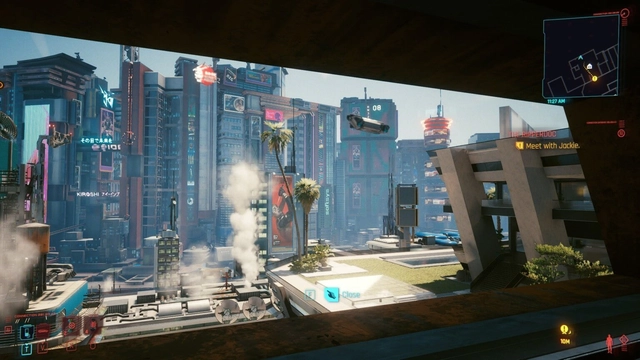
I know what you are wondering and the answer is medium and circumcised. These are just a couple of characteristics that play a part in determining the outcome of Cyberpunk 2077, the most anticipated video game release of 2020 (and possibly ever) by CD Projekt RED. As a player, you experience the main storyline through a genderfluid avatar named V. The game’s namesake stems from a science fiction genre that at its core presents a dystopian hyper-capitalist society intended as a reflective critique of contemporary life—think Philip K. Dick’s work or Ernest Cline’s Ready Player One novel. There are plenty of well-documented issues pertaining to the game, from its perpetuation of techno-orientalism in science fiction to a buggy release resulting in too much attention on the phallic options described above. The game’s criticism of contemporary culture mostly falls flat but inadvertently it has some scathing things to say about architecture.

The Work of Architecture in the Age of Mechanical Reproduction
This article was originally published on Common Edge.
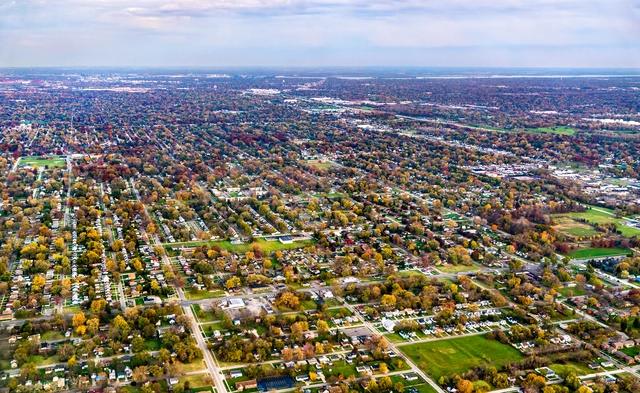
I attended graduate school, in geography, in Tucson, Arizona, United States, in the late 1990s. Tucson draws fame from a number of things, including its Mexican-American heritage, its chimichangas, its sky islands, and its abundant population of saguaro cacti.
2020: The End of the 20th Century in Architecture
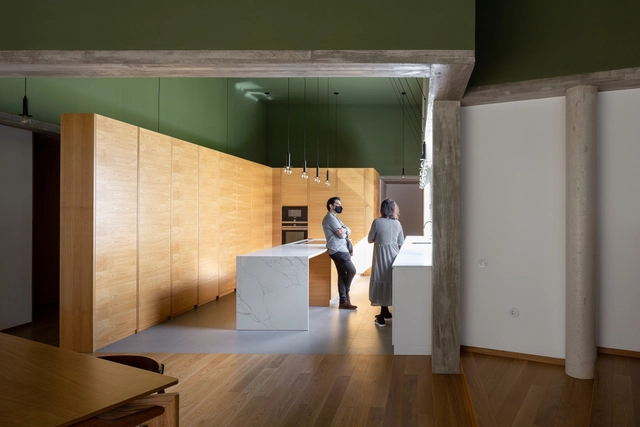
Every December talking heads (or screens) trumpet “Everything Has Changed”. But this year it is true. Imminent inoculations may bring back human contact, but the Coronavirus Year has changed us.
I think 2020 ended the 20th Century in architecture. Architecture never leads in pivotal periods. Modernism was birthed by a Western World leaving monarchies and diving into the Industrial Revolution: it caused neither.
Why Do We Keep Building Waiting Rooms?
This article was originally published on Common Edge.
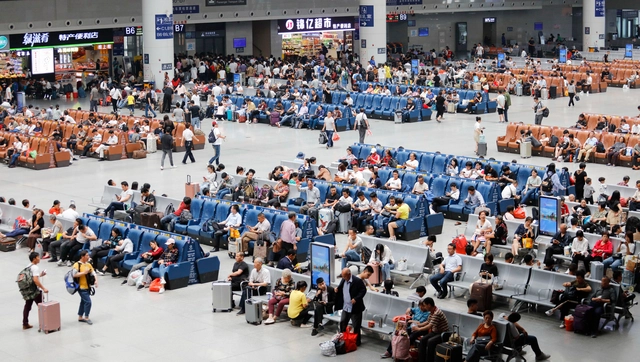
Pretty much everyone hates waiting rooms. Here are four statistics about them from a survey administered by Software Advice, an Austin, Texas-based consultation group: 80% of respondents said being told the accurate wait time would either completely or somewhat minimize their frustration; 40% said they would be willing to see another physician if it meant a shorter waiting time; 20% would be willing to pay an extra fee for quicker service; and 97%—virtually all of us!—are frustrated by wait times. And now, waiting rooms, in addition to being some of the dreariest places on earth, have become one of the easiest places in the world to get sick.
The Boundless Banality of Beige: A Rant
This article was originally published on Common Edge
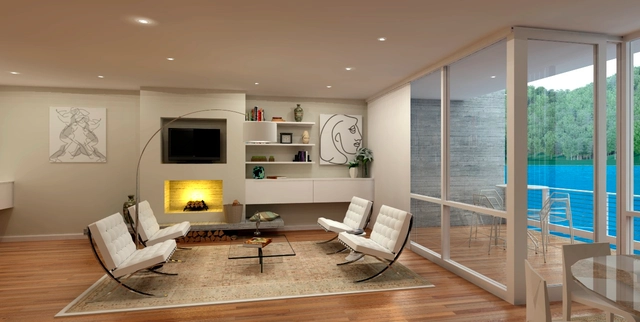
I am tired of design magazines and paint companies trying to sell me on dull “neutral” colors. They claim ”Beige Is Back,” that there is a historical elegance and calming effect to monochromatic off-whites. I don’t buy it. A minimalistic approach to color in modern buildings and interiors doesn’t relax me—it puts me to sleep. When I awake, I am angry. The historical notion that bleached Greco-Roman temples represent beauty is a myth. The ancients never rendered their structures, interiors, and ornament without color. Their architecture was vividly polychromatic.
The Nine-Step Architectural Beauty Detox Plan
This article was originally published on Common Edge.
In 1755, Francesco Algarotti, disgusted with what opera had become, wrote An Essay On The Opera in which he called for its simplification. For Algarotti, opera had degenerated into a vehicle for soloists to grandstand with endless improvisations overshadowing the music and ignoring the drama. Even the drama had lost the plot with mythological characters in extraordinary and complex situations. Algarotti saw drama as being the essence of opera and wanted the emphasis restored to it, with everything else secondary. Christoph Willibald Gluck and his librettist, Ranieri de’ Calzabigi, were the first to make it work with their 1762 opera Orfeo ed Euridice. It had characters and drama people could relate to, music that could be remembered and lyrics and a plot that could be understood. It’s regarded as the first truly modern opera.
"The Truth is in The Tension of Possibilities”: In conversation with Eric Owen Moss
_EOMA.jpg?1602512835&format=webp&width=640&height=580)
Even though Eric Owen Moss’ buildings are easy to spot it is hard to categorize them. They constitute a clash of forms and surfaces that collide, break, contort, superimpose onto themselves, bend, split, melt, and explode seemingly out of control –all to avoid being subscribed to anything that may even remotely evoke a design methodology of any kind.
_EOMA_(2).jpg?1602512668 "Beehive / Eric Owen Moss Architects. Image © EOMA")
_EOMA_(2).jpg?1602515413 "Samitaur Tower / Eric Owen Moss Architects. Image © EOMA")
_EOMA_(3).jpg?1602515825 "Umbrella / Eric Owen Moss Architects. Image © EOMA")
_EOMA_(2).jpg?1602516512 "Waffle / Eric Owen Moss Architects. Image © EOMA")
_EOMA.jpg?1602512835)
Decoration Deserves to Be Celebrated for What It Is, Rather Than Dismissed for What It Isn’t
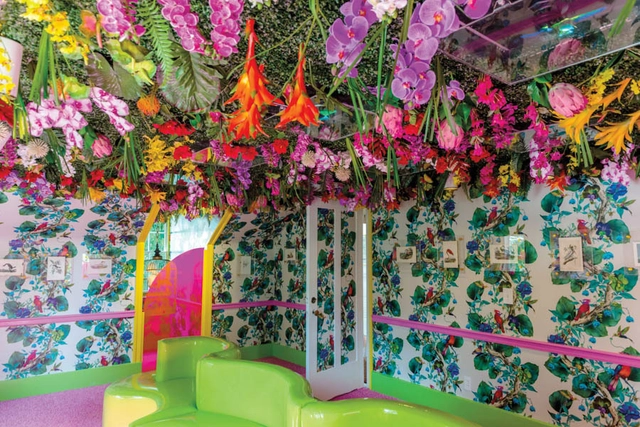
Beginning with the moral indignation expressed in Adolf Loos’s 1910 lecture “Ornament and Crime” and Le Corbusier’s 1925 The Decorative Art of Today, decoration has been attacked from every possible angle. Driven by the heroic male architect, Modernist dictates of good design—functionalism, truth to materials, purity of form—quickly took over and continue to be the dominant ideology today in the way architecture and interiors are taught and practiced. If Modern architecture was rational, masculine, and structural, then decoration was considered emotional, feminine, and shallow. Or, according to Loos, it was flat-out degenerate.

Carlos García Vázquez: "The Modern Urbanism Has Rediscovered Traditional Cities"
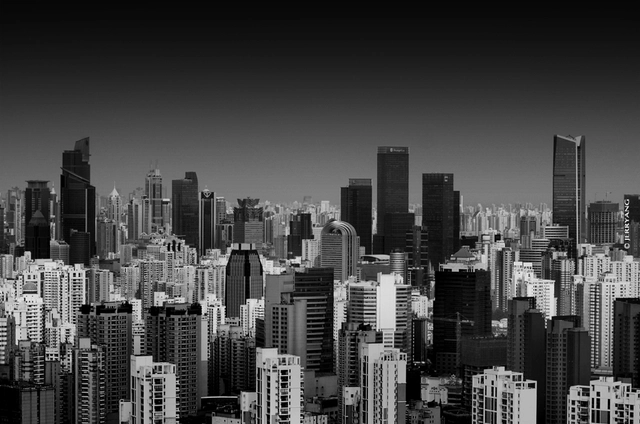
Three years ago, in the wake of the release of his book Theories and History of the Modern City ("Teorías e Historia de la Ciudad Contemporánea", 2016, Editorial Gustavo Gili), we sat down with the author, Carlos García Vázquez, to discuss this complex and "uncertain creature' that is the modern city, focusing on the three categories that define cities today: Metropolis, Megalopolis, and Metapolis.
Based on an analysis of those "who have traditionally led the way in the planning of spaces" (sociologists, historians, and architects), the book illustrates the social, economic, and political forces that, in service to their own agendas, drive the planning, transformation, exploitation, and development of cities. In 120 years, urban centers have transformed from places where "people died from the city" to bastions of personal development and economic prosperity; however, the question remains —have cities really triumphed?
"Yes", says García Vásquez, "but we have paid dearly for it."




Modern Architects Stink at Lying. Luckily, That’s Fixable
This article was originally published on Common Edge.
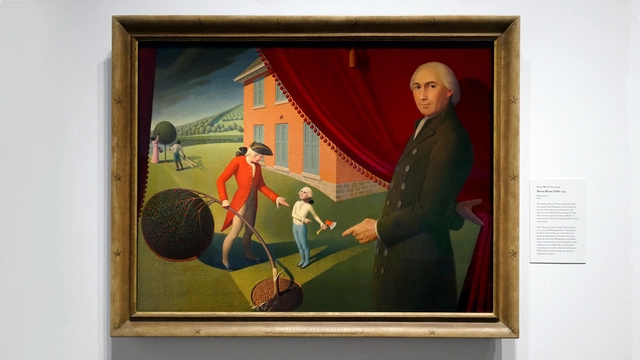
Apart from dressing like an undertaker, wearing black-rimmed circular glasses, and driving Swedish cars, modern architects’ most conspicuous trait is their aesthetic honesty, which is dangerous. Sincerity leaves little room for imagination.
Futuristic Architecture of the 70s: Photographs of a Modern World with a Twist of Science Fiction
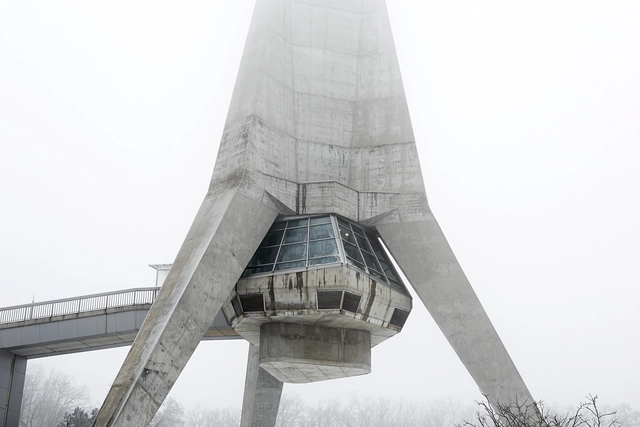




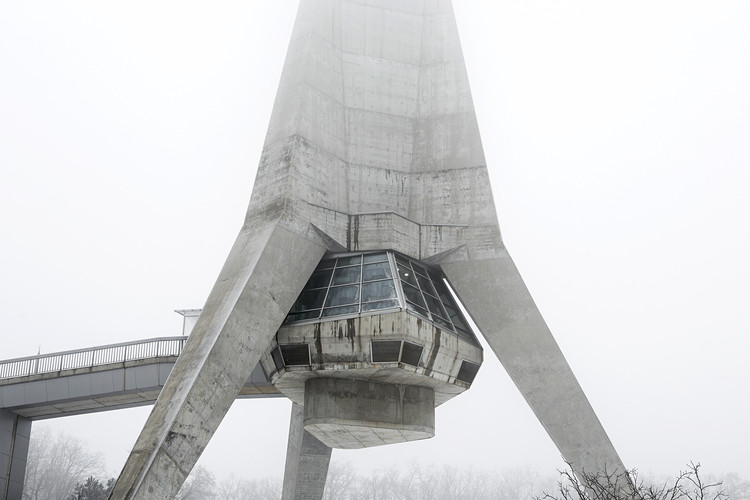
The Manifesto of Futurism, written by Italian poet Filippo Tommaso Marinetti in 1909, was the rallying cry for the avant-garde movement driven by the writers, musicians, artists, and even architects (among them Antonio Sant'Elia) in the early 20th century. After the manifesto's publication, Futurism quickly came to the forefront of public conscience and opened the way for many other cutting edge movements in the art world and beyond.
While the movement would undergo a significant decline in the years following World War II, it reinvented itself decades later during the Space Age, when faith in technology and industry were at a fever-pitch and the world's powers were racing to put humans on the Moon. All of a sudden, humanity had a new cultural panorama that inspired every facet of society--from musicians, to scientists, to architects. With the combination of engineering and art, not to mention the bountiful scientific achievements of the time, works of architecture turned into works of science fiction.
SPACE10 Explores the Future of Digital Design in Architecture
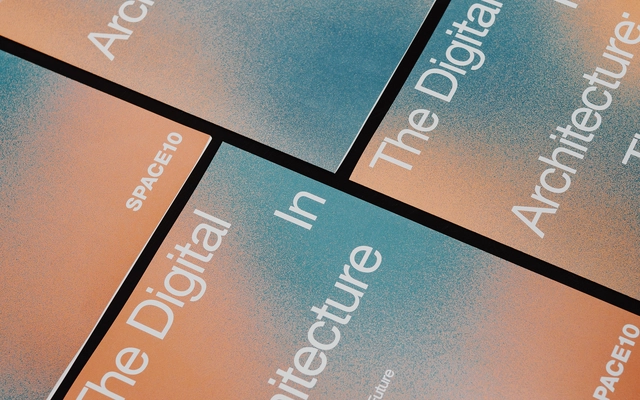
New digital advancements and technologies are redefining how we design. Looking at how these tools are becoming more ubiquitous and pervasive, IKEA's research and design lab SPACE10 published The Digital in Architecture report to explore the impact of digital technology and its larger movements. Authored by architecture theorist Mollie Claypool, the report illustrates these changes through data research, concepts, and visualisation by Pentagram.


How Architectural Theory Distances People from Design
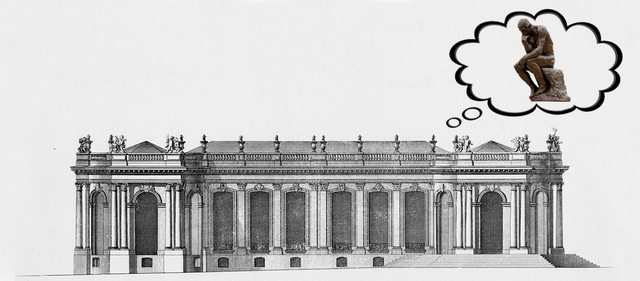
This article was originally published on Common Edge as "How Architectural 'Theory' Disconnects the Profession from the Public."
Whatever the form—personal, theoretical, scholarly—architects frequently veer into the philosophical terrain when defending otherwise subjective design decisions. Personally, this may be justifiable. But professionally, this reliance on quasi-philosophical spin is one of the fundamental ways architecture differs from other practical pillars of society, such as law, finance or medicine. Those disciplines are based on structures of knowledge (precedent or code, economics, and science, respectively) that mediate between professional decisions and subjective judgement.
