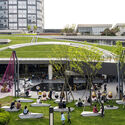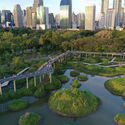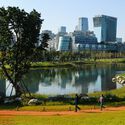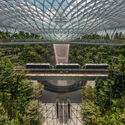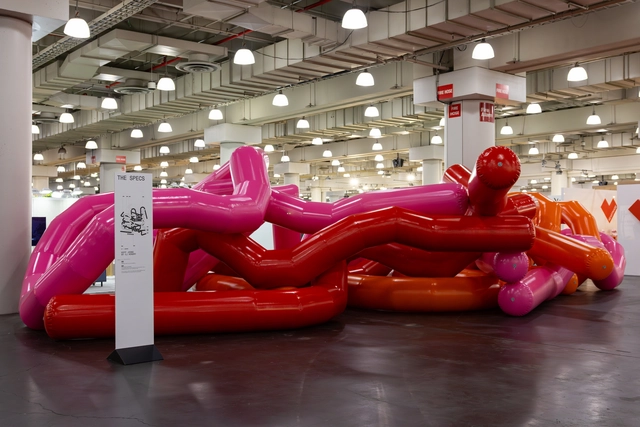
The apple of every athlete's eye, the Olympic Games direct the gaze of the world onto one host city every two years, showcasing the best that sport has to offer across both summer and winter events. In a haze of feel-good anticipation, the general buzz around the city before during the four week stretch is palpable, with tourists, media and athletes alike generating contributing to the fervour. With almost an almost exclusively positive public response (the majority of Olympic bids are met with 70% approval or higher), the Games become an opportunity for a nation to showcases their culture and all it has to offer. At first glance, it's an opportunity you'd be a fool to miss.
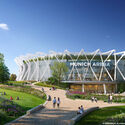
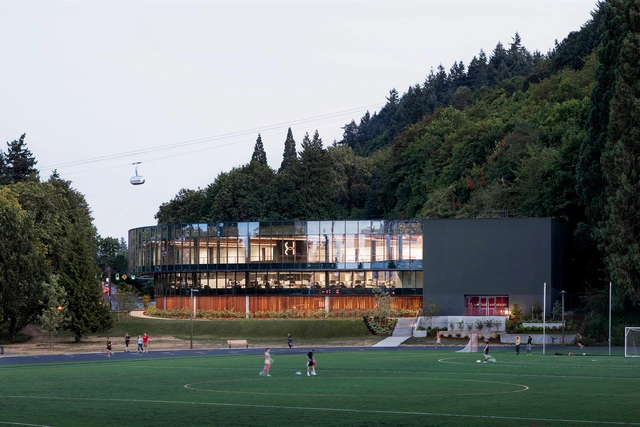
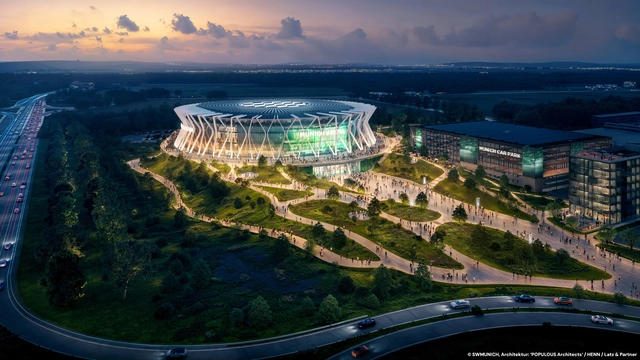
Yet as the dust settles, these ‘lucky’ host cities are often left with structures that lack the relevance and function of their initial, fleeting lives. Empty aquatics centers, derelict running tracks and rarely-used stadiums have become as much a trademark of the Games as the Rings, with the structural maintenance and social implications burdening former hosts for years to come. In recent years, fewer cities have been taking part in the bidding process, suggesting that the impact of the Games is beginning to catch up with the excitement. As many as 12 cities contended for the honor of hosting the 2004 games; only two were put forward for 2024/28.
A beautifully delicate design by ingenhoven architects, in cooperation with architectus, has bested series of internationally acclaimed architects to design Sydney’s tallest residential tower at 505-523 George Street. The 79-storey skyscraper will reach 270m, and include several uses, ranging from high-quality living and retail to hotel and leisure. The designers hope the tower will be “a profoundly visible landmark standing for an economical, environmental and socially sustainable, future-oriented development”.
New renders have been released of Henning Larsen’s “luxurious hideaway in the Georgian mountains” after construction started on the 25000m², 135 room hotel earlier this year. The new Agobili Hotel is located at the Abastumani spa resort in Georgia, which itself has been a health retreat for both the Tsar family and general public alike. The new building hopes “to create a story about the magnificent place it inhabits.”
MIT Mass Timber Design, a cross-disciplinary design workshop at the Massachusetts Institute of Technology, have developed a building prototype that aims to tackle the world’s growing energy crisis, “one of the biggest challenges of the 21st century.” Extensively using the wood-based building design and construction technology mass timber - a method growing in popularity within North America - the project utilizes the “efficiency, speed, precision and versatility” of prefabricated timber construction elements to realize a multi-functional, sustainable building. The longhouse typology, often one of the first permanent structures of a civilization, is a common across the world, but in adapting its construction to face modern-day issues, the team hopes to create a space that “builds upon this rich cultural icon.”
Humphreys and Partners, a Dallas-based architecture firm, presented a vision of future residential living at the 2018 International Builders’ Show earlier this year. Tackling current issues of affordable housing, sustainable design and how technology is changing the way we live, their futuristic vision Pier 2: Apartment of the Future consists of two soaring skyscrapers on the Manhattan waterfront.
At a time when engineers, designers, and builders must find solutions for a resource-constrained environment, new wood technology, materials, and science are accelerating efforts to enhance safety and structural performance.
International Building Code requires all building systems, regardless of materials used, to perform to the same level of health and safety standards. These codes have long recognized wood’s performance capabilities and allow its use in a wide range of low- to mid-rise residential and non-residential building types. Moreover, wood often surpasses steel and concrete in terms of strength, durability, fire safety, seismic performance, and sustainability – among other qualities.
A design for a portable, sustainable 250 square foot house is no tall order. But back in June, online design magazine, Volzero, put $3200 USD on the line for designers to honor this request through their Tiny House Design Competition.
Interior program requirements included: Living Area | Sleeping Area for 2 | Cooking and Dining Area | Toilet | Workspace.
Around the world, creatives worked to conquer the puzzle of maximum usable space with a minimum footprint. Tiny houses were born. The jury consisted of five principals of different design firms: Abraham Cota Parades, Andrew Patterson, Didier Ryan, Md.Rafiq Azam and Sameep Padora. In addition to filling the basic needs of the competition, winning projects display a strong concept, and unique personality.
Videos
Site-wide pEUI Analysis using Autodesk Insight: helps identify outliers that could possibly impact the site’s energy consumption the greatest.. Image Courtesy of Dekker/Perich/Sabatini
Dekker/Perich/Sabatini (D/P/S) has made a strategic business decision, one that architecture firms are starting to adopt as a means to help them achieve their own sustainability goals and drive more business. With the implementation of a Building Performance Analysis (BPA) team and equipped with time-saving design tools, D/P/S has been leveraging building information modelling (BIM) for energy analysis. Since joining the AIA 2030 Commitment last year, the firm has already analyzed and reported nearly 1 million square feet in new construction projects.
A country known for economic dependency on its rich oil deposits, Norway is now looking toward the future of energy production: net-positive architecture. Taking the lead in this initiative, developer Emil Eriksrød has commissioned American-Norwegian firm Snøhetta to design Norway’s first energy positive building, Powerhouse Telemark, a 6,500 square meter (70,000 square foot) office building located in the tiny Norwegian town of Porsgrunn, home to just 35,000 people. When completed, it will be the world’s northernmost plus-energy building.
Local children play with a scale model of the school site
Building Trust are happy to announce that we will be working alongside We Yone Child Foundation to design and build a new hall space for a school that we have been working on for the last 2 years. Building Trust have a number of sustainable design and build projects around the World in 2016, ranging from schools and housing to wildlife conservation and healthcare.
We are offering a hands on participatory workshop where you will gain experience in sustainable building techniques and understand more about humanitarian design while building worthwhile projects that will have a huge benefit to the local community. You will gain an insight into a number of building techniques and architectural styles.
Building Trust are happy to announce that we will be working alongside We Yone Child Foundation to design and build a new hall space for a school that we have been working on for the last 2 years. Building Trust have a number of sustainable design and build projects around the World in 2016, ranging from schools and housing to wildlife conservation and healthcare.
We are offering a hands on participatory workshop where you will gain experience in sustainable building techniques and understand more about humanitarian design while building worthwhile projects that will have a huge benefit to the local community. You will gain an insight into a number of building techniques and architectural styles.
Since infrastructure is the embodiment of long-term investments, its impact in determining the organization of flows extends well into the future, both for developed and developing countries. Whereas the former are confronted with the need to maintain and renew highways, electrical grids, sewage systems, and the like, the latter are scrambling to meet the needs of their own expanding populations. In both cases, massive investments for retrofitting or for new infrastructure are key to sustaining the human habitat. This topic: “Infrastructure Space” will be the focus of the 5th International Forum for Sustainable Construction in Detroit, USA from April 7 to April 9, 2016.
Please join us for the opening of Structures of Coastal Resilience: Designing for Climate Change!
The devastation caused by Hurricane Sandy in October of 2012 has highlighted the vulnerability of urban coastal areas to the effects of catastrophic storms and climate change. Coastal communities must adapt planning strategies to mitigate the risk posed by these natural hazards.
Structures of Coastal Resilience (SCR) matches the latest science with urban and landscape design to propose actionable solutions for buffering against storms. Structures of Coastal Resilience (SCR) is a Rockefeller Foundation-supported project dedicated to studying and proposing resilient designs for urban coastal
The 2015 Architecture at ZeroCompetition has launched, challenging students and designers to develop 'family-style residential units' for the Mission Bay Campus of the University of CaliforniaSan Francisco. Now in its fifth year, the competition calls for designs that produce "at least as much energy as [they] use over a year," excluding the embodied energy of building materials and transportation of people and materials to and from the site. Entrants must be able to demonstrate that their designs can be reasonably expected to meet a zero net energy goal over a prolonged period of time. The competition is open to student and professional individuals and teams, with up to $25,000 in prize money to be won. Interested parties have until August 28 to register and submissions are due September 25 at 1PM PST. Read more about the competition at Architecture at Zero's website and check out the winners from last year here.
Ten projects have been named the top examples of sustainable and ecological design by the AIA and its Committee on the Environment (COTE) for the year 2015. Now in its 19th edition, the COTE Top Ten Awards program recognizes projects that adhere to the highest integration of natural systems and technology to produce spaces that positively impact their surroundings and minimize their environmental footprints.
All of the projects will be honored at the 2015 AIA National Convention and Design Exposition in Atlanta. See this year's top ten sustainable designs, after the break.
Imagine a future in which all the Earth's divisions are removed: countries abolished, borders dissolved, and governments overthrown. Such is the version of planet Earth for which "Civilization 0.000", the 2013 master's thesis project by Dimo Ivanov of RWTH Aachen University, is designed. Envisioning a future free of "unnatural division" and where the earth's resources are measured and meted out according to human need, the project proposes a series of interlinked skyscrapers or "0.000 Units" that harness local earth resources. Each of the units assumes one of 6 key functions: living space, education, resource management, production, energy storage, and electricity generation. Functions are determined by the environment in which the units are sited.