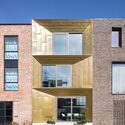
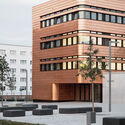
Bradbury Works / [Y/N] Studio. Image Courtesy of [Y/N] Studio
In the contemporary context, global warming has marked a turning point in the way we think about architecture. We are witnessing record temperatures on our planet and a challenging panorama in many large cities, characterized by heatwaves and, in some cases, more severe winters. These circumstances have triggered a cycle in which the demand for heating and cooling systems increases, which, in turn, translates into higher energy and operating costs for buildings.
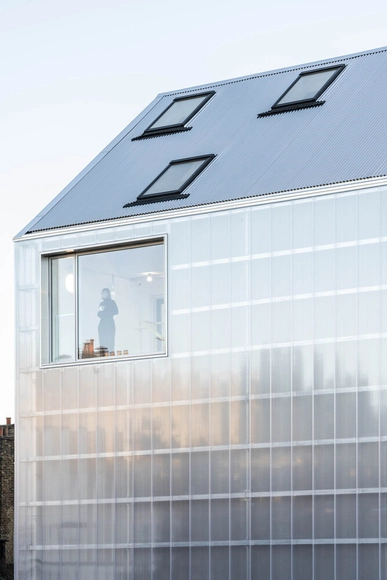
Given this situation, it becomes imperative to design energy-efficient buildings to reduce both the environmental impact and the associated costs. One of the strategies to achieve this is to properly plan the facade, which, serving a function similar to the building's skin, can help reduce the energy required for heating and cooling. In this context, the polycarbonate panels developed by Rodeca contribute to the energy efficiency of buildings, in addition to their lightweight, slender construction, and translucent aesthetics.
https://www.archdaily.com/1009134/ecological-lightweight-and-slender-energy-efficient-architecture-with-translucent-polycarbonateEnrique Tovar
Representing a fusion of innovation and convenience, a smart home can be defined as an environment in which one or more devices are connected and can be controlled remotely, either through a smartphone or voice commands. Automation, or home automation, is an advanced technology that has become increasingly accessible and popular. It enables tasks ranging from efficiently controlling lighting and room temperature to managing security devices, entertainment systems, and voice-activated personal assistants. Smart homes empower residents with continuous and user-friendly control over their environment. This dynamic synergy of automation and connectivity not only promotes efficiency and resource conservation but also opens new horizons in customization and comfort, envisioning a future where homes adapt to the needs and preferences of their occupants, making life simpler and more enjoyable. However, these systems often require the installation of new cables and wiring to build the necessary infrastructure, as well as the hiring of highly specialized labor, which can often make their implementation impractical.
Architecture is a unique field that combines equally constant aesthetic and functional needs, while immersed in dynamic technological environments. At this juncture, design processes and buildings are becoming increasingly intricate, requiring architects to manage projects efficiently while fostering multidisciplinary and multi-level collaboration throughout workflows. Additionally, the new technologies and tools we employ in the process must evolve at the same pace —sometimes even faster— by embracing aspects such as sustainability and efficiency, all while keeping an eye on the future.
The tools available in the multidisciplinary architectural environment have evolved significantly quickly. Both students and experienced architects have now nearly completely transitioned from manual methods to computer-aided drafting software. Today, we find ourselves immersed in the era of architecture driven by technologies such as Building Information Modeling (BIM), artificial intelligence, and digital processes. At the same time, the fundamentals of BIM and its historical background trace back to the early days of computing, research, and new technologies, which sparked a rapid evolution within the AEC industry and among its professionals.
https://www.archdaily.com/1008860/bim-and-the-future-of-architecture-accelerating-design-processes-with-archicad-27Enrique Tovar
Today, most architects are used to the complex workflow of using multiple tools during the design process. These traditional legacy tools can be bulky and slow, hamper creativity, and often do not talk to each other nor let architects collaborate with their teams. This limits their ability to design, as they spend most of their time getting 3D models BIM-ready.
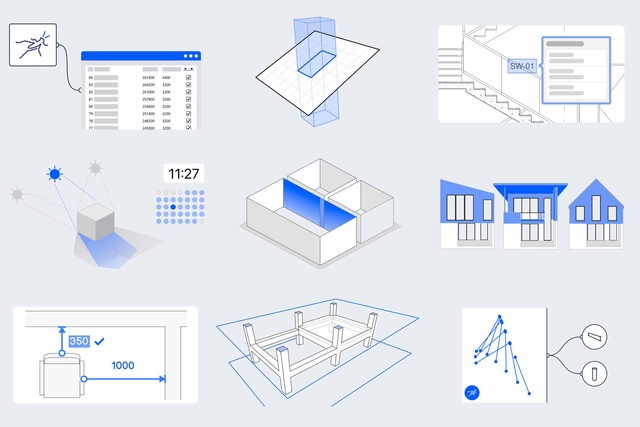
Snaptrude is aiming to solve these issues by establishing itself as a powerful, browser-based, collaborative 3D design tool. It combines smart, parametric modeling, live building information, easy real-time collaboration and strong interoperability with BIM tools like Revit. Below, a comprehensive list of how these features can make 3D modeling easier.
Frank Lloyd Wright first came up with the concept of the open-plan office in 1906, in the Larkin Building in Buffalo, New York, United States. The innovative nature of this approach, at the beginning of the 20th century, contrasted with the norm of closed offices and probably stunned those who first used it. Fast-forwarding to the 1950s, the concept of an open-plan office –Bürolandschaft or Office landscape– originated in Germany, with the objective of eliminating spatial hierarchy through shared spaces. The architects strategically designed the office layout to improve communication and teamwork, removing solid barriers and replacing rows of desks with work areas that were organized based on functions and workflows, with a mentality aligned with the precepts of the time, especially related to the European post-war reconstruction effort.
Collaboration challenges happen in any construction project; with so many stakeholders and disciplines needing to be heard, agreeing on something and making it happen can be mired in delays, misalignment, and frustration. For architects, one of the greatest challenges involves dealing with inconsistent or lengthy inter-team workflow processes, overburdened staff and worries over litigation risks. It results in duplications, needless delays, and unclear communications, all of which risk the most important asset any architecture firm has: its reputation.
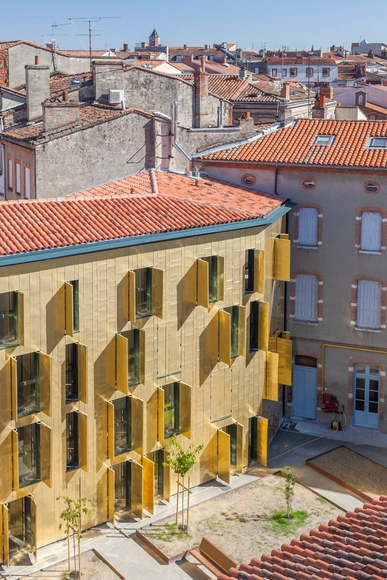
Few building materials stand the test of time as well as copper. Unlike other materials that have been replaced over the years –either due to lack of longevity, sustainability issues, or simple aesthetic preferences– copper can continue to be present in a huge variety of applications and its appeal has evolved over the years. Whether in façades and key building elements or in detailing and accessories, it continues to be a solid favorite for architects, designers and the public in general.
‘Carbon2Business’ utilization project at Lägerdorf cement plant, Germany. Image Courtesy of Holcim
We live in an increasingly urbanized world. Housing, hospitals, schools, and roads –the foundations of everyday life– require strong, durable materials. The AEC (Architecture, Engineering, and Construction) industry therefore relies heavily on cement, the main component in concrete, to build these elements. Yet for architects, the versatility and resistance of concrete don’t always go hand in hand with sustainability credentials.
Brick beams have been widely used in construction due to their strength, durability, and aesthetic appeal. By embedding steel reinforcing bars into a series of bricks arranged in a specific pattern, these elements form horizontal load-bearing structures that distribute the weight and forces that act on a building. However, it is difficult to find brick beams with excessively large spans, in order to avoid long-term structural problems. Instead, they mostly come in the form of simple lintels, which can be easier to handle.
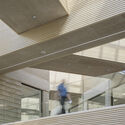
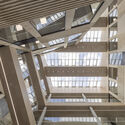
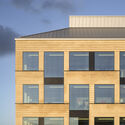
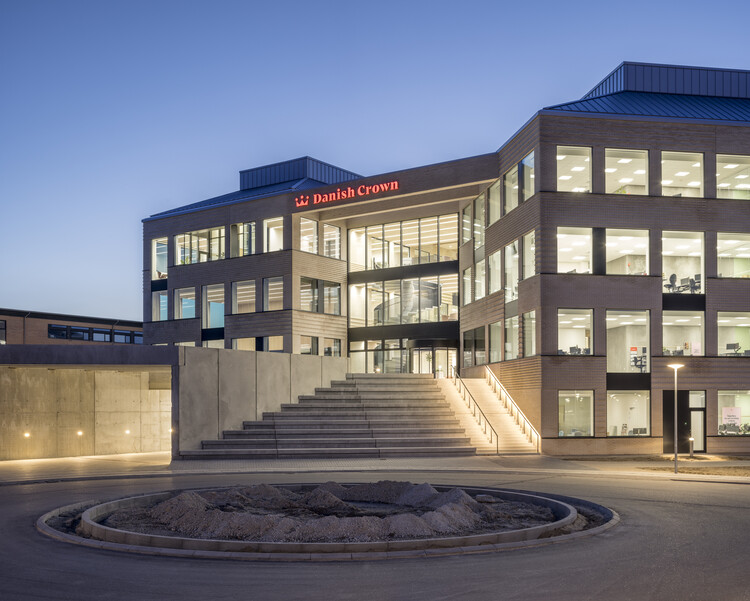
With a length of 16.2 meters and an impressive clear span of 15.8 meters, CEBRA architects have collaborated with the Randers Tegl group, the largest brick supplier in Scandinavia, to complete the construction of probably the longest brick beam to date. This exterior beam is accompanied by a 13-meter-span interior "sister" beam and is located above the main entrance to the Danish Crown's new headquarters in Randers, Denmark, extending freely between two of the building's wings. The longest beam is made up of almost 4,200 bricks – its height is made up of 25 rows of bricks, equivalent to 1.6 meters, and its edge consists of 4 bricks.
The third edition of the Paradyż Designers competition is now open for submissions with a new international scope. The competition will focus on the use of TRI-D sintered stone to create modern, innovative spaces. This year's jury will be led by Jürgen Mayer H., who together with the rest of the jury will revise the entries by designers, architects and art students in several categories concerning space designing using TRI-D sintered stones. The prizes amount to EUR 40,000 and include a trip to Salone del Mobile in Milan, all of which is organized by Polish tile manufacturer Ceramika Paradyż.
For an industry that contributes 6 per cent to the global GDP, the fainting voice of the Architecture, Engineering and Construction (AEC) industry is something to ponder. The global AEC market was reported at USD 8.9 billion in 2022 and is anticipated to reach USD 16.5 billion by 2030. However, pessimism is rampant across the industry. Professionals oblivious of their options and the industry's trajectory are in a vicious cycle where the lack of access to awareness and opportunities limits their growth. While statistics forecast an optimistic prophecy, there’s a flip side to it.
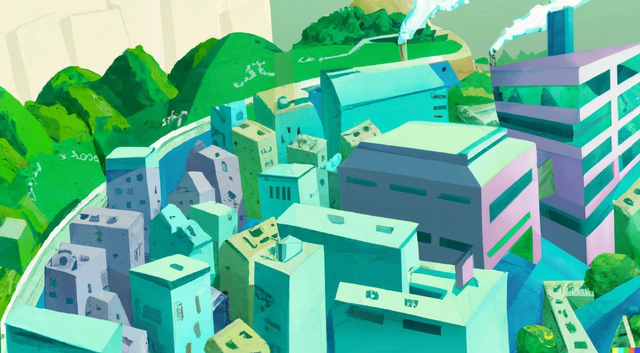
Image created using AI under the prompt: An expressive illustration of an urban environment with a lush landscape that exemplifies the decarbonization of architecture. Image via Via DALL.E 2
Architecture encompasses multiple processes, starting with identifying needs and transforming them into habitable structures through thoughtful design. Historically, construction-related processes like resource extraction and end-of-life disposal were often overlooked. However, it is essential to recognize that buildings have a lifecycle with significant impacts on carbon emissions. Emphasizing sustainable practices is vital to minimize our ecological footprint and positively impact the planet.
https://www.archdaily.com/1004300/how-to-reduce-the-carbon-footprint-through-architecture-three-approaches-across-the-building-lifecycleEnrique Tovar
There’s something about the saturated hues of blossoming springtime flowers and the fiery, warm tones of a sunset descending upon a cityscape that brings us joy. Humans crave color. In fact, we’ve been fascinated by them since the beginning of our existence. So much so that everything from the color of our clothes to the brightly illuminated pixels on this screen is an attempt to recreate –and enhance– the vibrant shades present in nature, finding in them a source of inspiration and vitality. Our brains are wired to link colors with sensations and experiences: the lush greens of a forest evoke feelings of tranquility and renewal, while the deep blues of the ocean stir a sense of mystery and adventure. It is this ability to elicit emotion that makes colors an invaluable tool for architects and designers –and which also explains why trends are moving away from the once-reigning neutral minimalism towards a more maximalist aesthetic that embraces pops of color, dimension and playful texture.
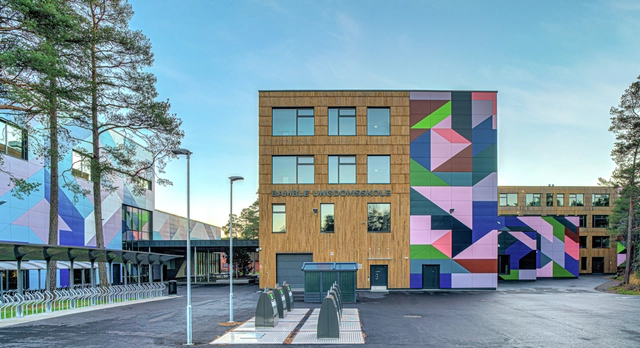
Façade colors are closely linked to place identity and help influence the surroundings and inhabitants of an area; they make it easier to safeguard and correct the use of color in urban areas. During the launch of their new color collection, STENI worked in collaboration with Scandinavia's leading expert in color and architecture, Kine Angelo, Associate Professor at NTNU, Department of Architecture and Technology, who has been working with color for over 12 years.
As urban areas around the world continue to experience population growth and increasing demand for housing, the land available for development is becoming both more limited and expensive. In large urban centers, many people deliberately choose the convenience and efficiency of compact living spaces in exchange for the benefits of city life, such as proximity to work, amenities, and cultural attractions. For others, however, the need to live in small spaces is a reality imposed by circumstances. In order to make construction feasible and increase urban density, builders and developers end up significantly reducing the size of rooms in homes, occasionally compromising the quality of life of those who live there. This has led to the adoption of various creative strategies to improve the efficiency of reduced interior spaces and provide greater comfort for occupants.
Water is a fundamental resource that sustains life, underpins agriculture, and fuels industry worldwide. However, water scarcity is becoming an increasingly pressing issue around the globe. Factors such as climate change, rapid urbanization, and industrial expansion exacerbate this situation. Among these contributing elements, water leakage remains an often underestimated and deprioritized aspect of water wastage.
In March 2021, ACO and AIT-Dialog successfully launched a virtual tour through the seven continents of the world - inviting architects, urban planners, engineers and landscape architects to become part of "beyond.aco | architecture across continents". Now the journey continues: join them at their next live event on 15 November 2023 at 5 p.m. (CET) for a set of inspiring lectures. The focus is on responsible architecture in times of global change and climate challenges. Renowned architects and experts from different parts of the world will discuss various topics and examine the issue from ecological, social, societal and economic perspectives.
In the ever-evolving world of architectural visualization, Chaos Vantage is emerging as a valuable tool for architects, designers, and creative professionals who want to get a fresh, photorealistic perspective on their V-Ray projects in real-time. So, why should professionals consider exploring Chaos Vantage, in addition to the tools that already exist? This article will delve into its advantages, particularly in the realms of real-time, super-fast rendering, and photorealism.