While mass timber and off-site construction remain in the foreground, the associated digital technologies for architects have had a quieter evolution. Aiming to bring these issues to the architectural forefront, QWEB (Quebec Wood Export Bureau) is now expanding its Offsite Wood BIM initiative by joining the non-profit BC Wood Specialties Association.
Why is this east/west alliance great news for AEC professionals? BC Wood will share its range of timber systems with the Offsite Wood BIM platform, improving the representation of timber in the BIM market, as is currently the case with other structural materials. Because the wood industry is closely linked to specific geographic regions, this collaboration will quadruple the number of wood types available on the platform by 2024. By including detailed digital descriptions of these systems in the Revit modeling environment, industry professionals will be able to work with wood more effectively and efficiently in their projects.
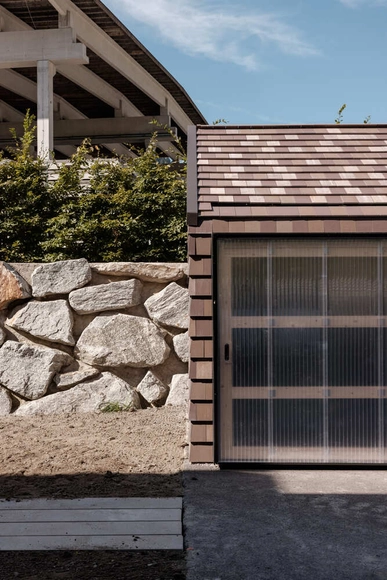
pixel application. Image Courtesy of Rieder Group / Florian Voggeneder
Nowadays, the concepts of reducing waste and upcycling have experienced a remarkable expansion in various fields of architecture, driven by the need to change the paradigm of consumption habits in both society and industry. This wave not only responds to sustainable approaches but has also demonstrated significant benefits in economic terms. Today, the transformation of various resources, from excavated earth to agro-waste and plastics, is being carried out to create new materials, thus consolidating the efficiency and feasibility of more environmentally friendly practices.
Within this context, technology and data have contributed significantly to a better understanding of materials and to exploring new processing methods. In this regard, artificial intelligence has become a valuable ally. In addition, innovations in software have made it possible to maximize the potential of what was previously considered waste. Correspondingly, Rieder has introduced a product innovation named pixel, aimed at minimizing waste in the production of facade elements constructed from glass fiber-reinforced concrete.
https://www.archdaily.com/1012597/transforming-waste-into-pixels-of-glassfiber-reinforced-concreteEnrique Tovar
Gold Medal 2020 XIV Edition Italian Prize Sustainable Architecture / HOME*: Humanitarian and (un) Ordinary Machine for Emergency. Image Courtesy of International Prize for Sustainable Architecture
The Italian Prize for Sustainable Architecture is part of the International Prize for Sustainable Architecture, founded and promoted since 2003 by Fassa S.r.l. (registered holder of the trademark “Fassa Bortolo”) and the Department of Architecture of the University of Ferrara. The Prize aims to reward and promote valuable architectural projects that are environmentally conscious and sustainable, minimizing anthropogenic impact and improving the resilience of buildings and cities towards current and future natural events and climate change, including through the reuse of existing structures.
The Paradyż Designers Competition is an opportunity for architects, interior designers, and students studying in art- and architecture-related fields to envision and design modern spaces with large-format sintered stone. Now in its 3rd edition, this international competition includes a prize pool of €42,000, including a trip to the Salone Internazionale del Mobile Furniture Fair in Milan, and is judged by renowned members of the architecture and design fields.
As we confront the critical reality of climate change, the construction industry stands at a pivotal point. With the industry responsible for nearly 40% of global carbon emissions and substantial material waste, a shift towards sustainable practices is imperative. In the case of Europe, adherence to the Paris Agreement and the ambitious European Green Deal guide the sustainability trajectory. European cities, with their rich historical architectures blended with modern infrastructures, face unique challenges in sustainable urban development, making the integration of eco-friendly practices essential.
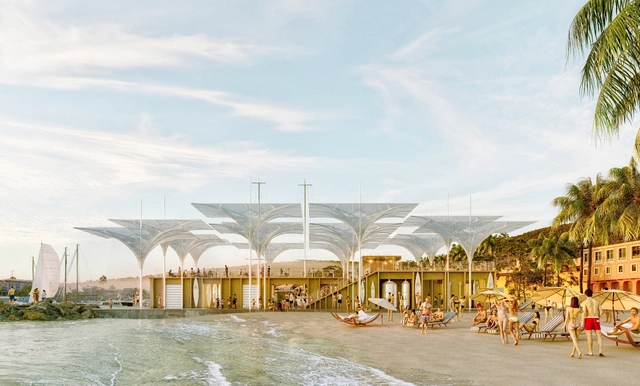
Organized by Monaco Marina Management, the Monaco Smart & Sustainable Marina Rendezvousaims to propose innovative solutions and encourage their application towards the development of virtuous marinas. This initiative stands out for connecting marinas, architects, innovators, yachting professionals, investors, officials and policymakers, to promote the development of eco-responsible, efficient and attractive marinas in the eco-transition drive underway for yachting destinations. For this third edition, a beach club design competition was launched, with the participation of 14 international professional studios and 51 students who presented a total of 43 projects to the jury members chaired by Jean-Michel Wilmotte from Wilmotte & Associés.
Hotel renovations today transcend mere improvements in guest comfort or alignment with prevailing design trends. A major demand currently facing the industry is the need to respond to the growing wave of environmental awareness and embrace sustainable development objectives. The requirement to address sustainability is driven by a growing social awareness of environmental issues. Guests and stakeholders are increasingly advocating for sustainably certified structures, achieved through eco-friendly installations and innovative solutions, such as green roofs, eco-friendly materials, and innovative facades. This sustainability-driven shift benefits the environment and promises long-term savings in water and energy costs for hotels. Specifically in the case of hotels, improving the efficiency of hot water equipment can make a large difference in hotel management, as this generally represents a huge expense and waste of energy.
The International VELUX Award for Students of Architecture returns in 2024, offering students the opportunity to innovate the concept of daylight in the built environment. The award has grown considerably since its launch and attracts competitors from all around the world, spanning 800 schools, 130 countries and amassing over 6,000 projects to date. The total prize money amounts to 30,000 euros.
The sun’s influence on human life encompasses multiple dimensions, from biological and developmental aspects to religious-mythological connotations in civilizations such as the Egyptians and Romans. Moreover, this influence extends to its use as a natural resource within the realm of science. In scientific pursuits, the continuous search to harness the sun as an energy source has been a constant throughout the years. Within this context, the discovery of the photovoltaic effect and its application have paved the way in the history of solar panels, starting from the first observations of Becquerel to the initial prototypes of Charles Fritts in the 19th century.
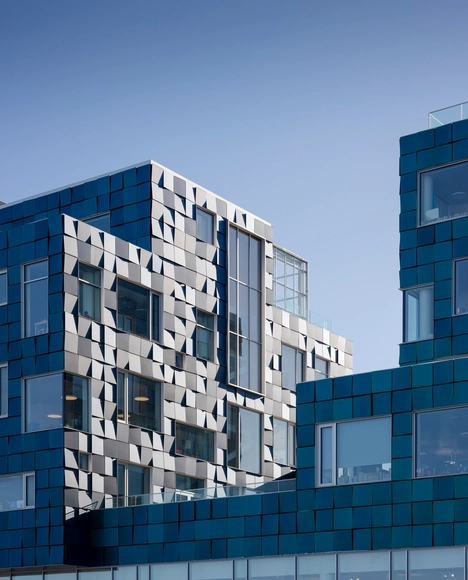
Nowadays, the energy obtained from the sun through devices such as solar panels has become one of the most widely used sources in regions like North America and Europe, contributing to the efforts for a complete transition to clean energy. The momentum in this transition has motivated the development of new technologies, such as SolarLab facade systems, that challenge the preconceived idea of what a solar panel looks like and where it can be installed. These systems converge with architecture to integrate them as aesthetic elements, serving as cladding for both retrofit projects and new buildings.
https://www.archdaily.com/1011349/from-new-buildings-to-retrofit-projects-solar-facade-systems-for-a-circular-and-low-carbon-architectureEnrique Tovar
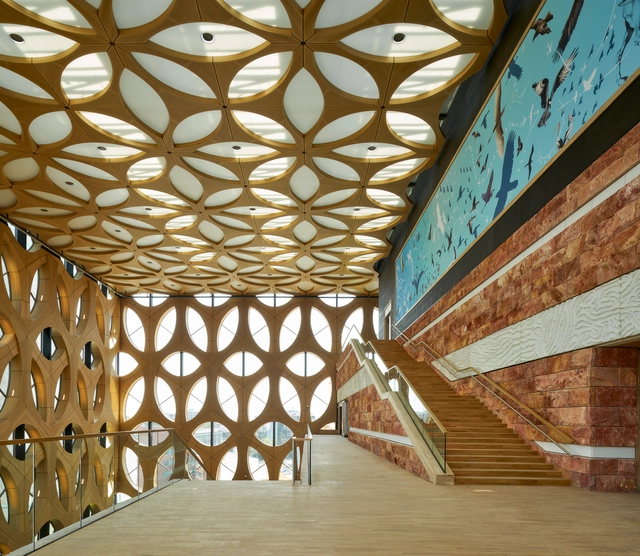
Naturalis Leiden - Naturalis Biodiversity Center, Netherlands | Fastmount™ Panel Mounting. Image Cortesia de Fastmount
Highly desirable in contemporary projects, seamless surfaces symbolize the search for a unified and uninterrupted visual experience, without any noticeable gaps or interruptions. This simple and clean aesthetic demands meticulous attention to detail, emphasizing precision in craftsmanship and execution to achieve an immaculate and flawless finish.
It can feel risky to change careers. This was the case with Romi, who switched from a customer service position to architecture a couple of years ago.
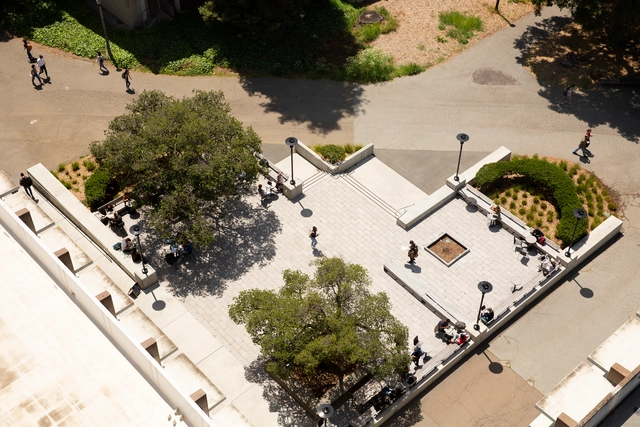
“I was working in customer service for a health tech company, but I was ready to move into a more creative field after years of creating art in my free time.” She was interested in architecture but was not quite certain whether this would be the right choice for her. Then she learned from a friend about the Summer Programs at the College of Environmental Design at UC Berkeley, where she could experience what architecture school was like and learn more about career options in the field. She decided to try it out.
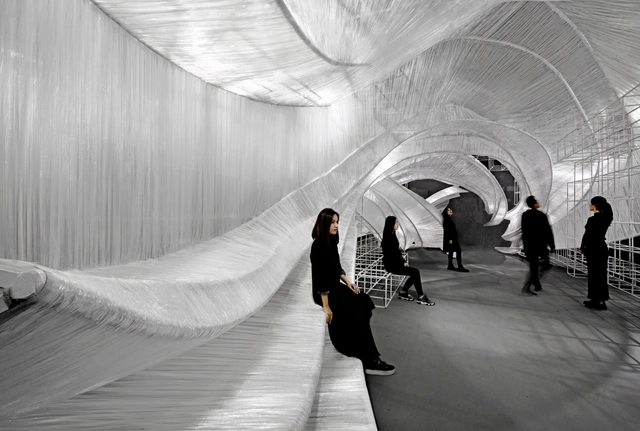
PONE Transparent Shell Exhibition Space by Golden Ho. Image Courtesy of A' Design Award & Competition
Created to offer insights into the state of the design industry, World Design Rankings (WDR) serves as a valuable resource by highlighting the creative strengths, weaknesses, and opportunities of different countries. Its methodology is based on classifying all countries according to the number of designers who have received the A' Design Award between the years 2010 and 2024.
Including the 2022-2023 period, China secured the top position among 114 countries, boasting an impressive tally of 110 Platinum Design Awards globally. This announcement underscores China's enduring influence and excellence in the world of design. The top positions were also claimed by the USA, Japan, Italy, Hong Kong, Great Britain, Taiwan, Turkey, Germany, and Portugal.
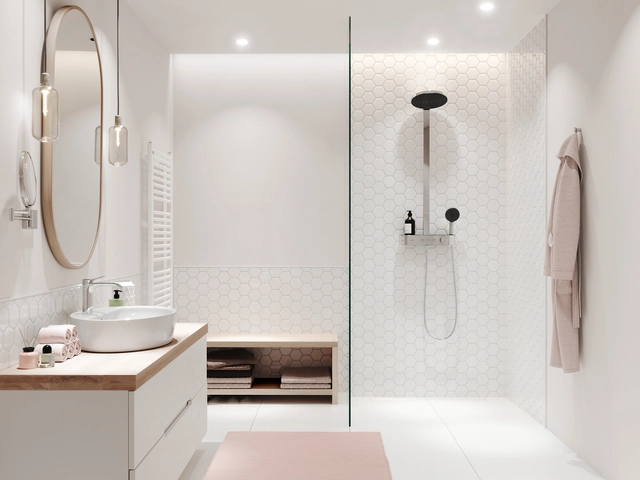
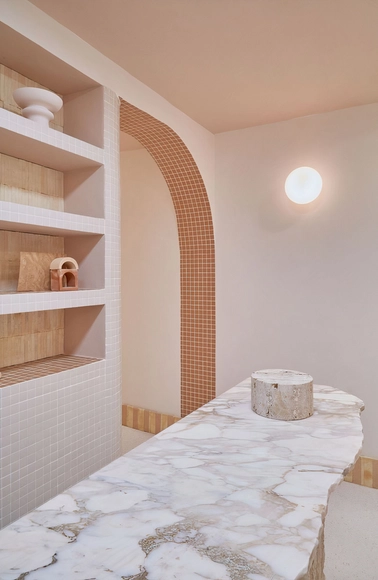
Aiming to balance the calm and uniformity of minimalism with the tactile appeal of raw, textured materials, ceramics emerge as a versatile medium to bridge the gap between sterile spaces and those that might become overwhelming. Whether incorporating large formats or small mosaics, or embracing organic or geometric aesthetics, the diverse range of ceramic options enables the infusion of character into spaces while maintaining a sense of order and cohesion. But it is not a simple task. In the pursuit of this harmonious blend, we explore specific types of ceramic cladding that have been effectively applied in architectural projects, enriching the visual language of minimalism while grading its complexity with precision.
Our buildings become symbolic of the times we live in, reflecting the spirit of a given era, attending to different needs, lifestyles and functions. “Architecture should speak of its time and place, but yearn for timelessness,” says one of the most prominent architects of our time, Frank Gehry. For architectural innovators, exploring new technological potentials and envisioning ways to enrich people’s lives have long been driving forces, shaping responses to contemporary challenges. Today, sustainability stands as a key challenge, adding new dimensions to the debate, bringing together form, function, the responsible choice of materials and long-term thinking. Adapting to these demands has never held more significance.
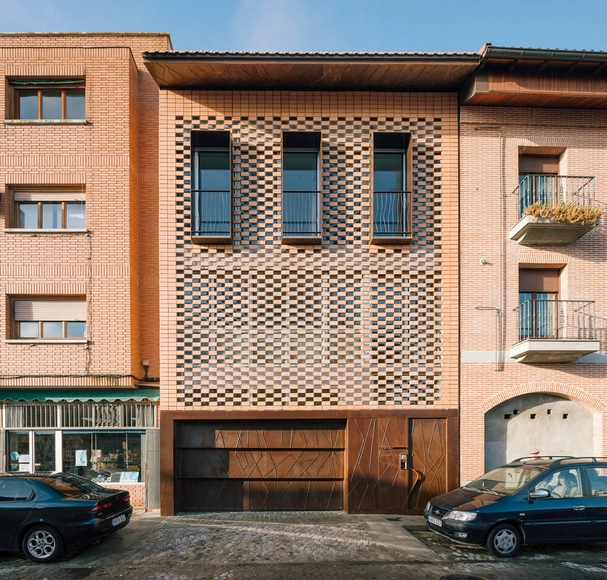
The duality of sunlight in the field of architectural design presents fascinating contrasts, especially when addressing the question of how to interact with it through the built environment and the materials that define architecture. The sun's influence in this discipline has become an essential part of the cultural heritage of some countries, as evidenced by Spanish architecture, where the interaction with sunlight manifests through elements such as lattices. These lattices are recognizable on the facades of buildings from the Middle Ages, exemplified by structures like the Alhambra, to 20th-century constructions such as Casa Gomis, considered historical monuments.
The facade, being the skin of the building, is the architectural component that is usually directly exposed to sunlight. Based on this premise, we seek to establish a dialogue between openness to the environment and the need for protection, thus creating a synergy between functionality and aesthetics. In this context, sunscreen facades have been developed through various approaches, standing out for their ability to address this design condition. For this reason, we have selected solar control solutions from Spanish brands, distinguished by their technical characteristics and materiality through various approaches.
https://www.archdaily.com/1010864/sunscreen-facades-from-ceramic-textile-systems-to-double-skin-glassEnrique Tovar
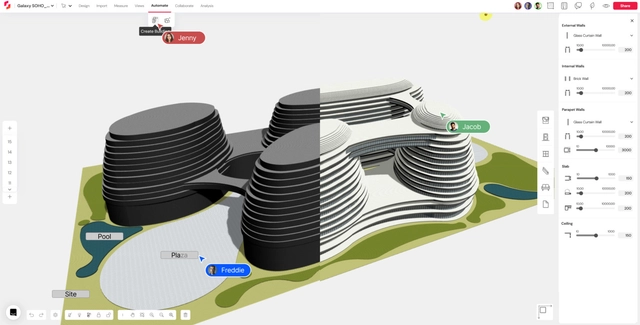
Transforming a conceptual massing model to BIM with Snaptrude’s automated workflows. Image Courtesy of Snaptrude
In the ever-changing world of design and construction, the tools at architects’ disposal have remained the same for decades. With its ability to deeply understand how architects design, Snaptrude has emerged as a collaborative 3D building design tool that incorporates smart, parametric modeling, live building information, easy real-time collaboration, and offers strong interoperability with other BIM tools like Revit.
By analyzing its wide variety of features, we showcase how Snaptrude empowers the design process to operate faster, smarter, and more collaboratively.
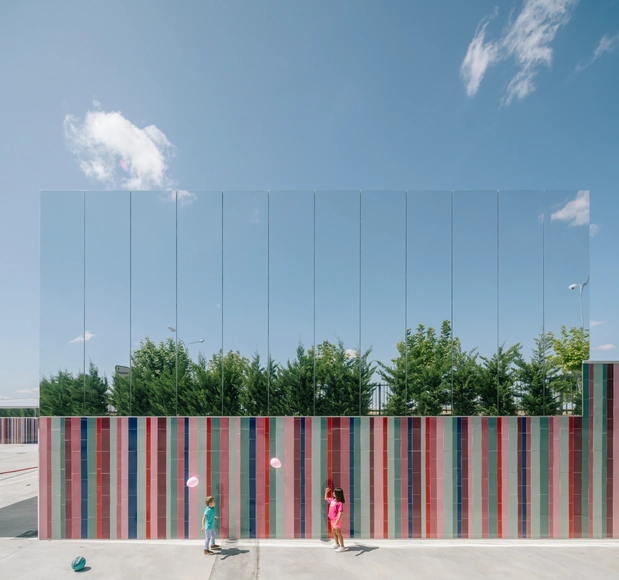
The Almost Invisible School / ABLM arquitectos. Image Cortesia de ABLM arquitectos
The referential of movement, which describes the variation in an object's position and velocity according to the observer's perspective, is one of the fundamental concepts of physics. This idea not only influences the understanding of movement in physical systems but can also be analogously applied in other areas, such as architecture, where the different perspectives of users can shape their experiences and interactions with built space. Each person brings cultural, emotional, and physical baggage, resulting in unique architectural interactions, similar to an observer's interpretation of a motion reference.
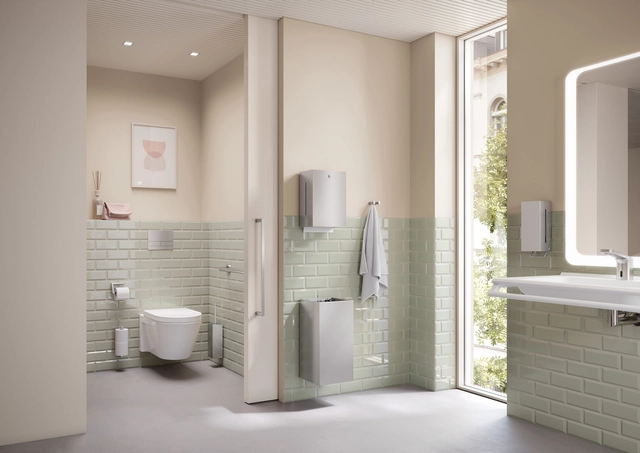
The world's population is undergoing a significant demographic transformation, with an increasingly larger portion of people reaching older ages. This has prompted governments to implement public policies aimed at promoting the well-being of the growing number of elderly individuals worldwide. Alongside this trend, there is a need to address special needs that extend beyond just the elderly population and encompass various age groups. Advancements in medical science have enabled many people with disabilities or special needs to lead fuller and more independent lives, contributing to a more inclusive society. This progress also places a crucial responsibility on architects and designers, who must create built environments that are genuinely inclusive, and capable of accommodating a wide diversity of individuals with specific medical needs and varying levels of mobility. This underscores the fundamental importance of universal design and accessibility principles.