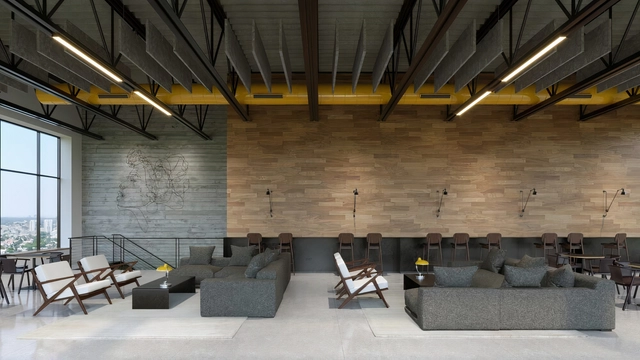
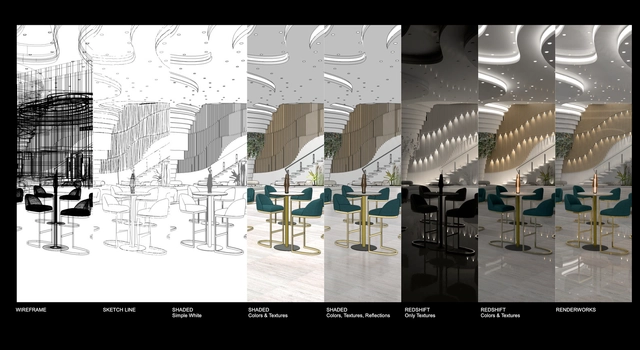
In the ever-evolving landscape of technology and creativity, staying at the forefront is imperative. During its recent Chaos Unboxed Live virtual keynote, participants such as CEO Christian Lang and Co-founder and Head of Innovation Vladimir “Vlado” Koylazov showcased a plethora of advancements poised to redefine the creative process.
At the heart of Chaos’ strategy lies a dedication to three fundamental principles: accelerating creativity, delivering fully interconnected solutions, and ensuring accessibility across platforms. Through seamless integration and cutting-edge tools, Chaos can empower architects and artists alike, revolutionizing industries and shaping the future of design.
The announcements during the keynote laid out innovations that can redefine the realm of visualization — and beyond.
Flat and polished surfaces tend to evoke feelings of coldness and sterility, while raw, natural materials can create a sense of warmth and connection. Textures can trigger memories and emotions, connecting us to past experiences and the sense of touch. In the seminal book "The Eyes of the Skin", Juhani Pallasmaa emphasizes the importance of sensory perception in architecture and objects beyond sight, particularly the role of touch and texture in shaping our experience. According to Pallasmaa, contemporary culture, influenced by technology and visual media, has overemphasized the visual aspect of spaces, neglecting other senses, especially touch, which is vital for understanding and appreciating the surrounding environment.
“We’re on the verge of one of the biggest revolutions that we’re going to face in the industry,” warns German Otto Bodenbender, Design Technology Manager at BIG Barcelona and Professor of ZIGURAT Institute of Technology.
First, it was theCAD revolution, with the introduction of computers; then it was the turn of BIM methodology, with new processes and workflows; and now, when many professionals haven’t yet gotten used to all those changes, we have AI. This is not just affecting how we do things, but is revolutionizing the entire lifespan of construction processes, introducing new computational capacities in every single aspect of architecture, construction, and engineering.
The manipulation and combination of materials are ongoing pursuits in architecture. This has not only broadened the possibilities for construction but also enabled the creation of distinctive shapes and aesthetics by using the same materiality. An example of this is Portland cement, an essential element in the mixture of water and aggregates that make concrete, which allows the creation of both load-bearing and decorative elements. In parallel, as a result of the exploration of innovative materials, fiber cement emerged (invented by Ludwig Hatschek) at the end of the 19th century, combining Portland cement, mineral-based materials, and cellulose fibers.
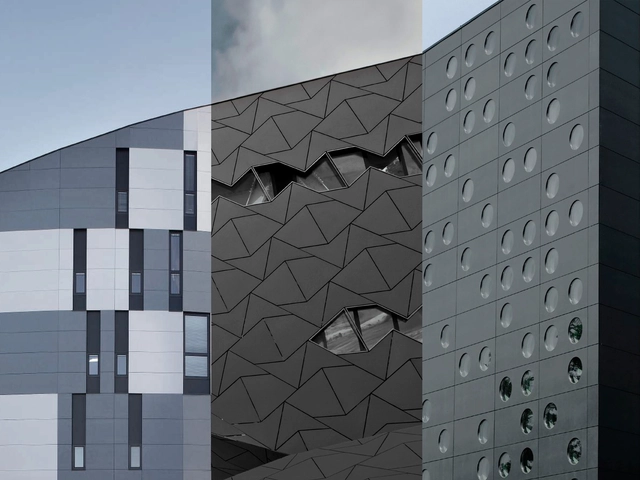
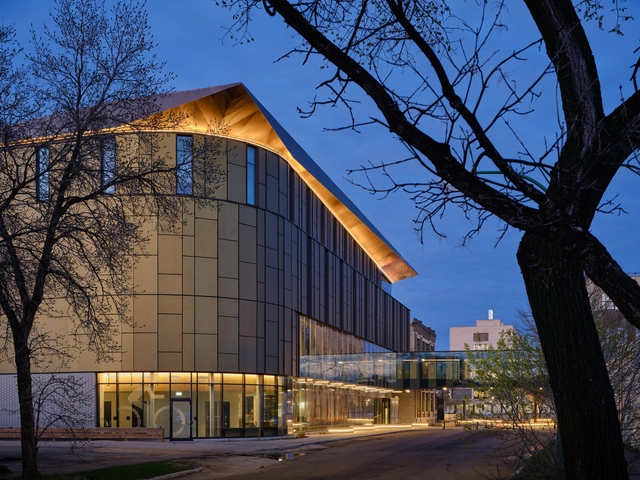
Nowadays, fiber cement —distinguished by its key technical qualities of slenderness, lightness, durability, and flexible aesthetics— has stood out in various applications associated with design, ranging from furnishings to facade systems. It is in the latter where it has adopted notable expressions due to its textures, incombustibility, rain resistance, and malleability. For this reason, we have developed a design guide that addresses the use of fiber cement, exploring the principles that should be considered when designing the facade, regarding its materiality, dimensions, layout, details, and special applications.
https://www.archdaily.com/1011851/design-guide-working-with-fiber-cement-facadesEnrique Tovar
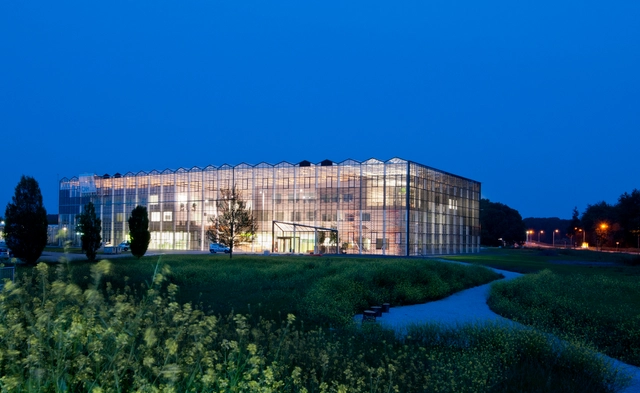
Greenhouses are elegant and ingenious structures that incorporate simplicity in design while creating light-filled spaces that shape indoor climates. With walls and roofs composed mainly of transparent or translucent materials, these structures harness solar energy to create a controlled environment. As advances in materials and environmental management progress, they can seamlessly be integrated into architectural designs, offering innovative solutions that blend functionality with aesthetics. Beyond their original role in plant cultivation, they have evolved into projects that emphasize sustainability, education, and conservation. At their core, they offer experiences of exploration and discovery, showcasing the intricate relationship between sunlight, plants, and indoor environments.
Polyvinyl chloride (PVC) plastic –commonly known as vinyl– is everywhere. In fact, chances are you are sitting close to (or on) something containing PVC in some way, shape or form. It’s used in packaging, automobile parts, children’s toys, clothing, accessories, wires, furniture, medical supplies and hundreds of other everyday items. This year alone, global production exceeded 51 million metric tons, solidifying its rank as the third-most produced plastic in the world. It is particularly in the architecture, engineering and construction industry that the material stands unchallenged, accounting for 60-70% of its total consumption. So much so that it has indisputably become the most used plastic for building materials worldwide, often found in pipes, fittings, flooring, roofing, window profiles and more. It’s not hard to understand why: PVC is durable, highly versatile, cost-effective and easy to maintain. But nothing comes without a cost, they say…
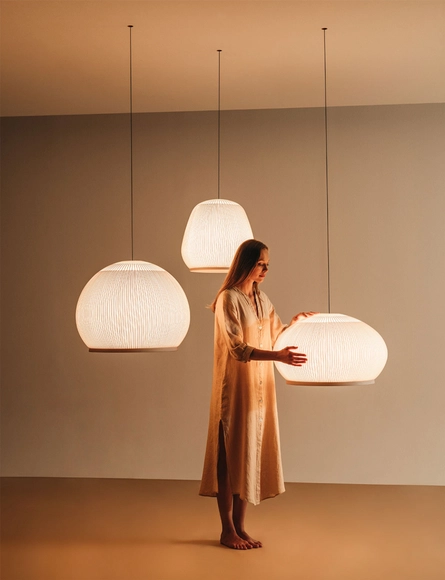
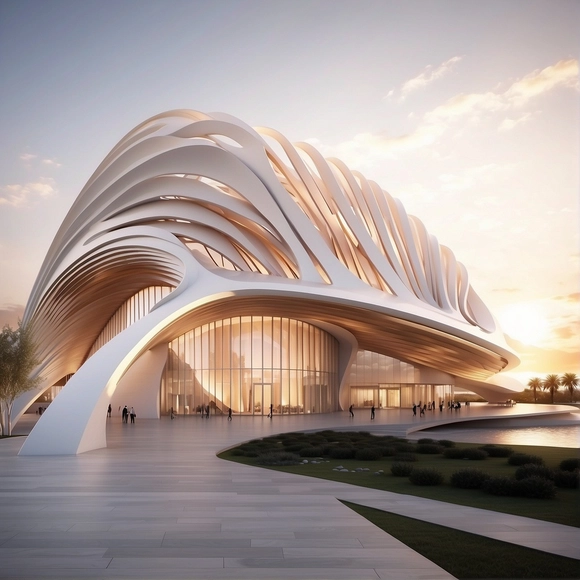
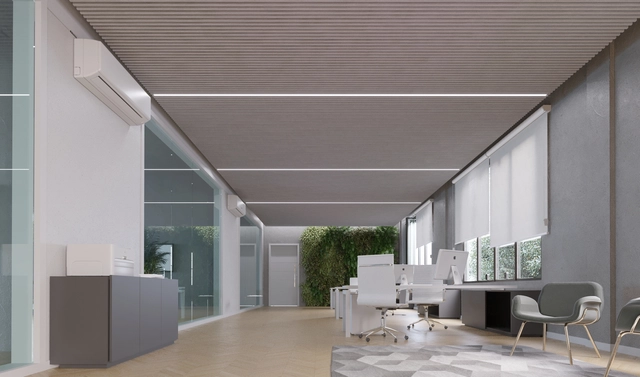
As we observe closely spaced parallel lines at a specific angle, we may be deceived by the illusion of a continuous or three-dimensional surface, although they are, in fact, individual lines. This phenomenon arises from the brain's natural tendency to simplify and seek visual patterns, interpreting the proximity of the lines as indicative of a unified ceiling. This illusion is often exploited in suspended ceiling architecture, where successive slats, when viewed at an angle, create the impression of a solid ceiling. This approach not only reduces the use of materials and keeps the infrastructure above the ceiling accessible, but also provides more surfaces for noise absorption, significantly improving the acoustic environment.
If you were to make a list of requirements for your design software, an ability to be both efficient and accurate would certainly make an appearance. It may even make your top five. In order to cater to these demands, software developers are constantly striving to make their products more effective for their customers. In the case of Vectorworks, which was built to deliver absolute creative expression and maximum efficiency, this is no different. Below, we outline four main ways the software can be used by architects and designers.
Courtesy of Hollaender Manufacturing Co – Cincinnati, OH
Architectural design is a discipline that spans a wide range of scales, from macro scales involving the design of master plans or large urban complexes to micro scales, where it focuses on specific elements such as fixtures and fittings. Regardless of scale, careful attention to the design of each component of the built environment plays a critical role in how people experience architecture.
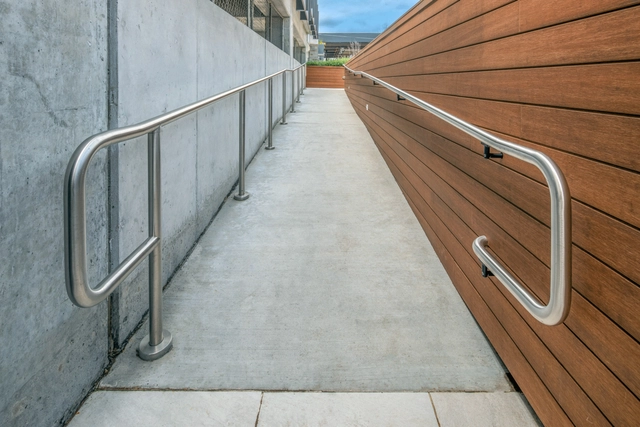
At the architectural micro-scale, railings and handrails play specific roles but are often confusing. While railings are designed to enclose spaces and prevent falls, handrails function as support elements, offering orientation and stability to avoid accidents and injuries. It is in the latter aspect that a stronger connection to accessibility becomes evident. For this reason, it is essential to have handrails, wall railings, and assist railings that meet ADA standards, such as those developed by Hollaender Manufacturing Co. These elements adapt to various design conditions, facilitating the movement of individuals who may encounter barriers in the physical environment.
https://www.archdaily.com/1010525/handrails-and-accessibility-101-ensuring-safe-usage-in-architectural-projectsEnrique Tovar
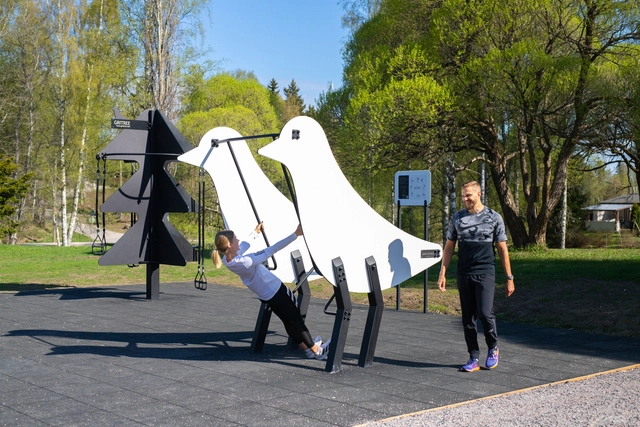
In modern-day urban environments, green spaces such as gardens, home yards and public parks are becoming increasingly important to provide balance to our day-to-day lives. In the case of playgrounds, which are key public spaces for children, the question arises: if we make playgrounds for children to spend time and play in, why shouldn’t we extend this idea to serve adults as well? Adults need to be present in playgrounds, accompanying their children, so why not extend these areas to become interesting and inclusive for adults too?
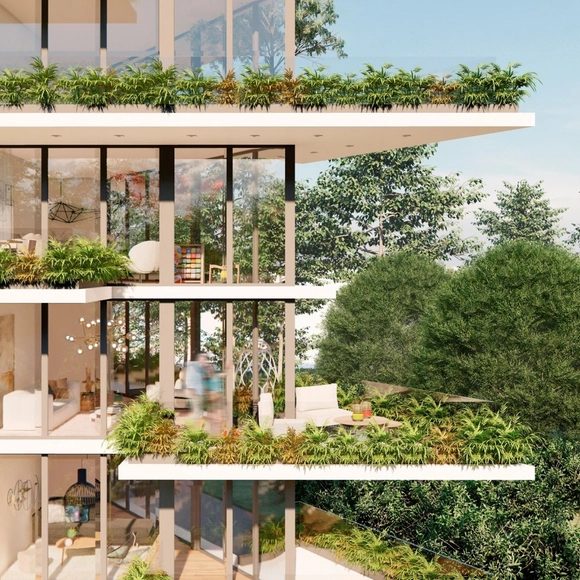
Promenade Residential Building by Natalia Ottonello / Guevara Ottonello Architects, 2022. Image Courtesy of A' Design Awards & Competition
"Born out of the desire to underline the best designs and well-designed products," the A' Design Awards recognize excellent and original talent from across the globe. Both a major achievement for designers and a source of inspiration for award-winning architects, brands, and design agencies, the Awards are open to contestants from every country. Registration for the A' Design Award & Competition 2023-2024 period is now in the "Last Call for Entries" stage. Register and upload your design here.
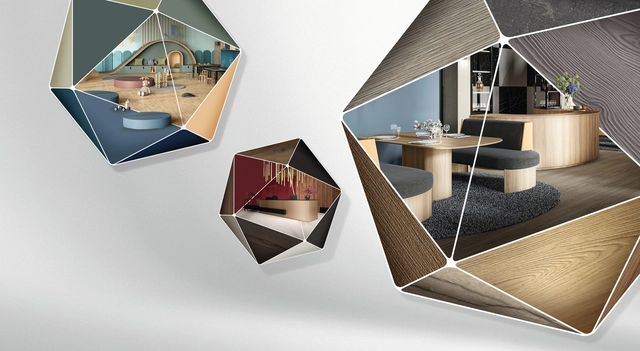
Nowadays, the cycles of change around society and architecture have generated new urban models, emerging technologies, and design trends that underline the need for constant adaptability in all areas. In this context, aspects such as flexibility, reliability, and simplicity emerge as distinctive elements, both in architecture and in the components that constitute it, including materials. This is why lines such as the EGGER Decorative Collection 24+, crafted from wood-derived materials, seek to redefine concepts through a rolling series, updated at most every two years. This dynamic enables a more agile response to new trends, influences, and product innovations that arise in the built environment.
https://www.archdaily.com/1012771/from-wood-stone-steel-and-uni-colors-a-decorative-collection-for-fast-moving-trendsEnrique Tovar
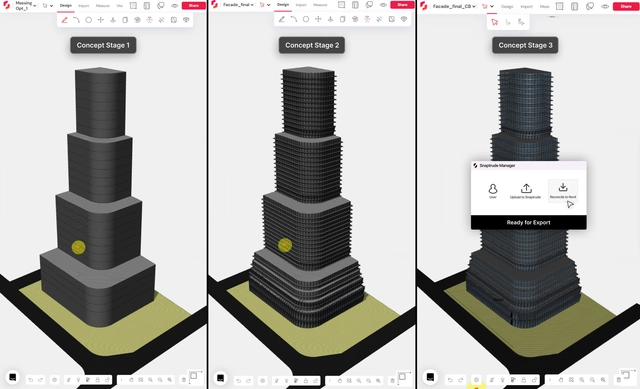
In any architectural design project, the transition from conceptual design to schematic design typically marks the evolution from broad ideas and massing studies to more detailed and refined planning. While this transition may seem straightforward, architects often find themselves facing a bottleneck that complicates the seamless flow of the creative process- particularly due to siloed tools and workflows.
During initial feasibility studies, conceptual surface modeling tools provide fertile ground for shaping spaces and manipulating forms. They allow for quick iterations and facilitate building the essence of the design. However, these models lack the inherent data understood by BIM software like Revit and ArchiCAD. As a result, eventually transitioning to such BIM tools for further detailing leads architects to face a series of technical limitations and rework.
The influence of design on our physical and mental health has been largely explored in various contexts, ranging from spatial configuration to furniture. The topic has gained notoriety due to the growing awareness of human well-being, especially in recent times. An example of this bond between design and health is the emergence of concepts such as Neuroarchitecture, which seeks to understand the built environment’s potential in our brain. Another case that illustrates this approach, this time in furniture design, is the Paimio Sanatorium, where Alvar Aalto designed the tuberculosis sanatorium and all its furnishings. The chair created for the patient’s lounge —the Paimio Chair— facilitated their breathing due to its shape and the inclination of the backrest.
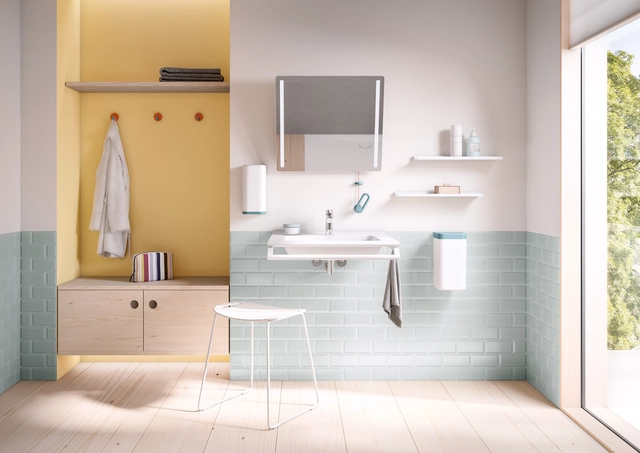
These approaches are examples of how design can be applied in a specific way to enhance people's well-being through gestures like spatial organization, color and shapes, thereby promoting architecture that contributes to health, care, and recovery, In this context, and as a result of explorations in this field, HEWI has developed ICONIC, infusing emotionally appealing color concepts for its design icon, the 477/801 barrier-free sanitary range. An essential element of this range's design was the concept of "healing architecture" within healthcareand daycare buildings and its influence on not just the physical and mental well-being of patients but also the welfare of other users, such as relatives and staff.
https://www.archdaily.com/1012377/healing-architecture-for-care-and-recovery-iconic-design-with-colorful-conceptsEnrique Tovar
Cortesia de SolarLab, Photo by doublespacephoto.com
Autonomy and freedom during the design process are invaluable resources for architects, especially when defining a volume and choosing materials, systems, and solutions for a building. The flexibility of these elements must not only promote their harmonious integration within a structure but, above all, allow architects to incorporate them without the need to change their initial concepts. This design freedom becomes even more crucial in the context of facades, specifically in building-integrated photovoltaic (BIPV) facades. This is due to the unique challenge of incorporating the energy capture function into the design of the building envelope, simultaneously demanding adaptation to the designer's aesthetic preferences and effective performance, as well as the entire infrastructure for capturing and transporting energy.
While mass timber and off-site construction remain in the foreground, the associated digital technologies for architects have had a quieter evolution. Aiming to bring these issues to the architectural forefront, QWEB (Quebec Wood Export Bureau) is now expanding its Offsite Wood BIM initiative by joining the non-profit BC Wood Specialties Association.
Why is this east/west alliance great news for AEC professionals? BC Wood will share its range of timber systems with the Offsite Wood BIM platform, improving the representation of timber in the BIM market, as is currently the case with other structural materials. Because the wood industry is closely linked to specific geographic regions, this collaboration will quadruple the number of wood types available on the platform by 2024. By including detailed digital descriptions of these systems in the Revit modeling environment, industry professionals will be able to work with wood more effectively and efficiently in their projects.
pixel application. Image Courtesy of Rieder Group / Florian Voggeneder
Nowadays, the concepts of reducing waste and upcycling have experienced a remarkable expansion in various fields of architecture, driven by the need to change the paradigm of consumption habits in both society and industry. This wave not only responds to sustainable approaches but has also demonstrated significant benefits in economic terms. Today, the transformation of various resources, from excavated earth to agro-waste and plastics, is being carried out to create new materials, thus consolidating the efficiency and feasibility of more environmentally friendly practices.
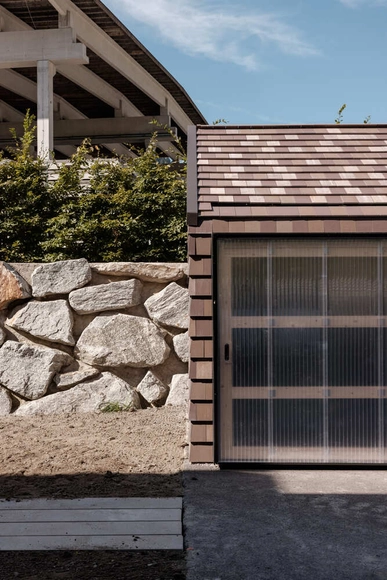
Within this context, technology and data have contributed significantly to a better understanding of materials and to exploring new processing methods. In this regard, artificial intelligence has become a valuable ally. In addition, innovations in software have made it possible to maximize the potential of what was previously considered waste. Correspondingly, Rieder has introduced a product innovation named pixel, aimed at minimizing waste in the production of facade elements constructed from glass fiber-reinforced concrete.
https://www.archdaily.com/1012597/transforming-waste-into-pixels-of-glassfiber-reinforced-concreteEnrique Tovar