

-
Architects: Coop Himmelb(l)au
- Area: 80000 m²
- Year: 2016
-
Professionals: AG Licht, B+G Ingenieure Bollinger + Grohmann GmbH, Davis Langdon & Seah
.jpg?1479921093&format=webp&width=640&height=580)
Aedas have recently won two international competitions to design international airport buildings: the Shenzhen Airport Satellite Concourse and Hong Kong International Airport Third Runway Passenger Building.
In recent years, Aedas have emerged as a leader in airport design, as they are also currently working on the Hong Kong International Airport Terminal 2 Expansion, and have previously worked on Hong Kong International Airport Midfield Concourse and North Satellite Concourse. With the two newly-won projects, Aedas hopes to reinforce their strength and growing influence in airport design.

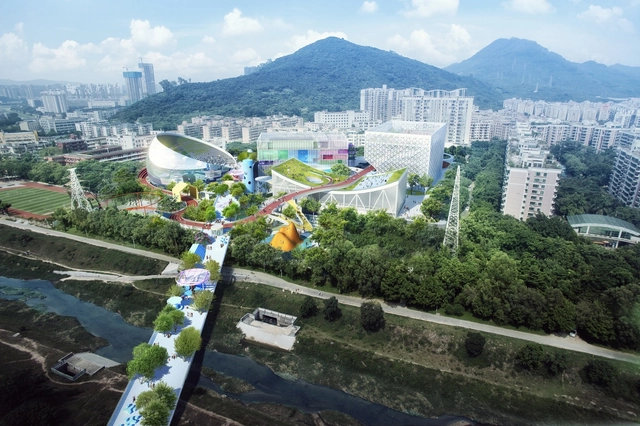
MVRDV and Zhubo Architecture Design have won a competition to design the Xili Sports and Cultural Centre in Shenzhen, China. The new experience center will consist of four distinct volumes housing a theater, a basketball and badminton arena, a multi-function arena and a swimming pool, as it seeks to “transform the lives of the different generations of people living nearby, through offering a more humanistic model for sports and culture.”


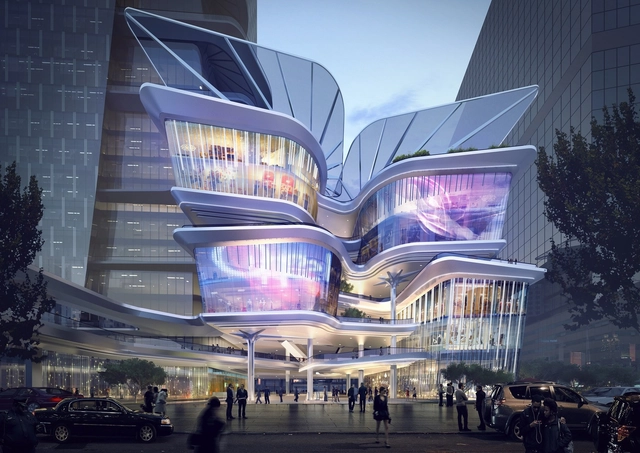
A department store in Shenzhen, China, is currently undergoing a major transformation into what the architect describes as an "a new sustainable and iconic design for the city." Designed by Aedas, the Shenzhen Luoho Friendship Trading Centre will include a new skyscraper and a "vibrant and porous" 7-story retail podium. Integrated landscaping and green balconies turn the development into an "urban oasis" in the heart of the city.
.jpg?1472437212&format=webp&width=640&height=580)
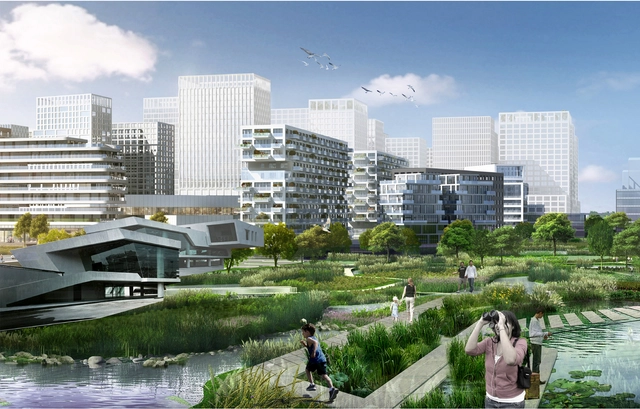
Foreign leading firm MLA+ and local leading firm the China Academy of Urban Planning and Design, in collaboration with Felixx Landscape Architects & Planners and the Shenzhen Municipal Design & Research Institute, have won first prize in the urban design competition for the regeneration of an area along the G107 highway in the Bao’an district of Shenzhen, China.
Located on both aspects of the G107, the one- to two-kilometer piece of land forms a 53-square-kilometer area for the new plan, which will redevelop a fragmented industrial landscape created by the highway and Shenzhen’s identity as a former “Factory of the World” city.
_cropped.jpg?1470272808&format=webp&width=640&height=580)
Highways have been operating in largely the same way since the early twentieth century. In the Bao'an District in Shenzhen, China, rapid urbanization and industrialization within the built environment is not mirrored in its infrastructural spine, the G107 highway. In order to investigate the possibilities for this strip and its adjacent areas, a visionary open competition was organized earlier this year. A team lead by Avoid Obvious Architects (AOA) and TETRA Architects and Planners presented a redefinition of the highway typology, with a system complex enough to properly service the rich productivity it is connecting.
AOA and TETRA's new G107 is a multi-modal transport system, focused on allowing futuristic modes of transport as it is on implementing cutting edge levels of sustainability. Also referred to by the consortium as an "organic highway," the proposition aims to foster and connect a network of "green manufacturing," with the strategic vision of making Bao'an a carbon neutral city by 2045.

The Urban Design Plus is a PostGrad program. Applicants must already posses either an undergraduate or graduate degree. We are open to people with a diverse backgrounds that relate to the formation of our urban places – including architects, urban planners, landscape architects, economists, artists, sociologists, etc.


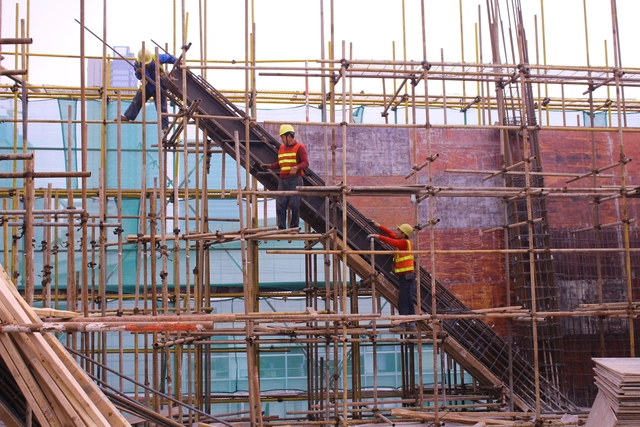
A new cultural center designed by Mecanoo, located in the Longgang district of Shenzhen, China is currently under construction and is set to top out by end-April. With the goal of revitalizing an existing park-square, the new complex includes a variety of programs such as a bookshop, an art museum, a youth center, and a science center. The nearly 100,000 square-meter building is set to open to the public in 2018.

Bao’an District, located in west of Shenzhen, adjacent to Pearl River Estuary in the west and bordered with Dongguan in the north, as well as in the golden corridor connecting Guangdong and Hong Kong and the heartland for development backbone of Great Pearl River Delta, is featured by advantageous geographical location. Taking National Highway G107, Bao’an Avenue and Metro Line 1 as the skeleton, the Golden Development Zone is one of the three major zones in the overall spatial structure of “three zones, two hearts, two cities and one valley” delimited by Bao’an Comprehensive Plan, with a total length of about 30km.
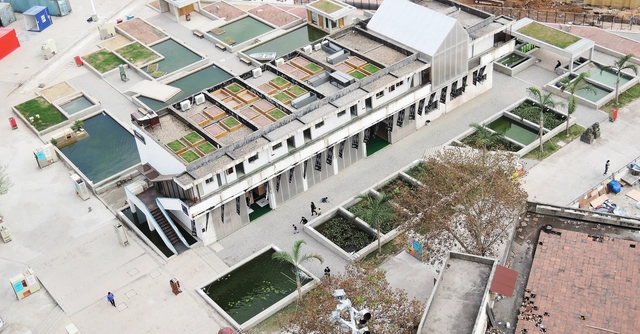
The Urbanism\Architecture Bi-City Biennale (UABB) in Shenzhen finished in February, but at least one element of it lives on. Floating Fields, a project by Thomas Chung, Associate Professor of Architecture at the Chinese University of Hong Kong, was installed at the UABB site at the Dacheng Flour Mills in Shekhou as a demonstration of a concept to return agriculture to the Shenzhen's bay with floating agricultural fields. The project, which forms the major landscape piece at the Biennale, received the Biennale Organising Committee Award at the event's closing ceremony.
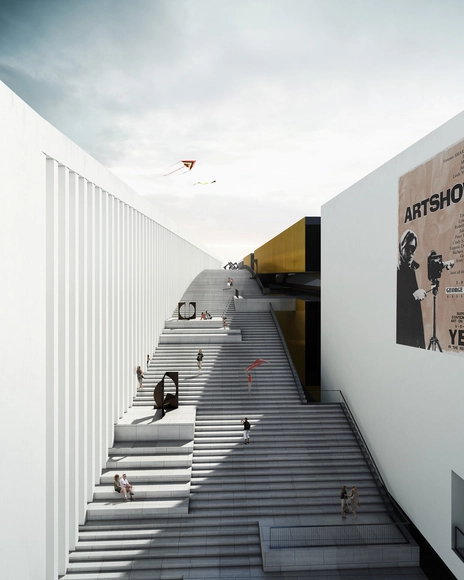
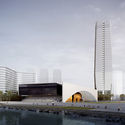
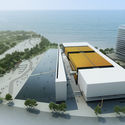
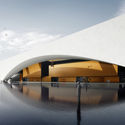
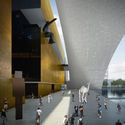
Beijing Institute of Architectural Design's (BIAD) 2A2 Design Department has unveiled their proposal for the Culture and Arts Center serving the newly developed Shekou Sea World area in Shenzhen. The design takes a rare attempt to optimize the interaction between commercial and cultural spaces, by taking advantage of the surrounding seascape.
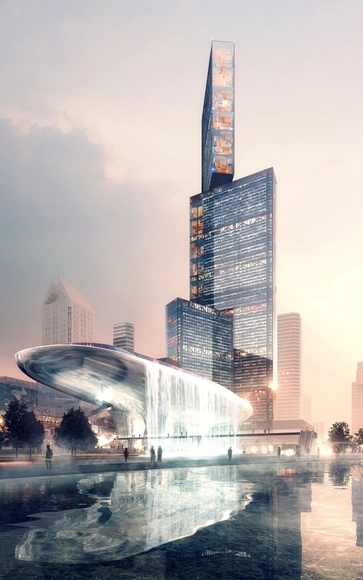
British firm PLP has unveiled their design for a large complex at the heart of the Pearl River Delta in China. The master plan comprises four buildings: the Platform for Contemporary Arts, the Lizhi Park Tower, the Concourse, and the Nexus - a 600-meter tall office and hotel tower that will be the masterplan's centerpiece and the region's tallest skyscraper.
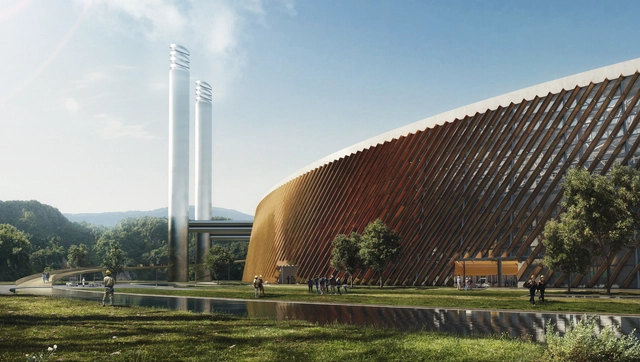
Schmidt Hammer Lassen Architects and Gottlieb Paludan Architects have won an international competition to design the world's largest waste-to-energy plant on the outskirts of Shenzhen, China. The new "Shenzhen East Waste-to-Energy Plan will be capable of incinerating 5000 tonnes of waste per day - "one third of the waste generated by Shenzhen's 20 million inhabitants every year," according to the team. In addition to incinerating waste and generating power, the plant will serve as a place to teach residents about its purpose.


.jpg?1472436928 "© Zhang Xuetao")
.jpg?1472437628 "© Zhang Xuetao")
.jpg?1472436914 "© Zhang Xuetao")
.jpg?1472438105 "© Zhang Xuetao")
.jpg?1472437212)


_cropped.jpg?1470272808)



.jpg?1458115005&format=webp&width=640&height=580)
.jpg?1458115529 "© Kevin Ho")
.jpg?1458114193 "© Kevin Ho")
.jpg?1458114850 "© Kevin Ho")
.jpg?1458114592 "© Kevin Ho")
.jpg?1458115005)