Samuel Ludwig

BROWSE ALL FROM THIS PHOTOGRAPHER HERE

The Long Table as a Spatial Protocol: Designing Conditions for Gathering and Pause

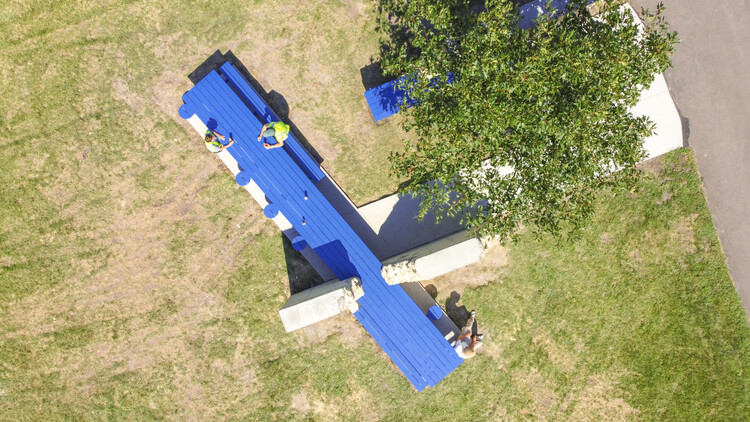
A long table can sit almost anywhere and still do the same work. It can stretch beneath a market canopy, run along a school dining hall, or occupy the center of a shared living room, and it immediately changes the room's temperature.

That is why the long table is less an object than a spatial instrument. It does not guarantee a connection, and it rarely looks "inclusive" by default. Instead, it sets conditions: a shared edge, a common rhythm of arrival, a field of mutual visibility, or a rule that turns eating into a scene with others. Food studies describe this practice as commensality, the act of eating together and the social order it can create, reinforce, or contest. But what matters here is not a specific dimension or the table's function, but the way a long surface holds difference, conversation, and silence; intimacy and distance; the decision to join and the right to hesitate.

The Long Table as a Spatial Protocol: Designing Conditions for Gathering and Pause - More Images+ 22

Navigating Boundaries: The Architectural Legacy of Lighthouses

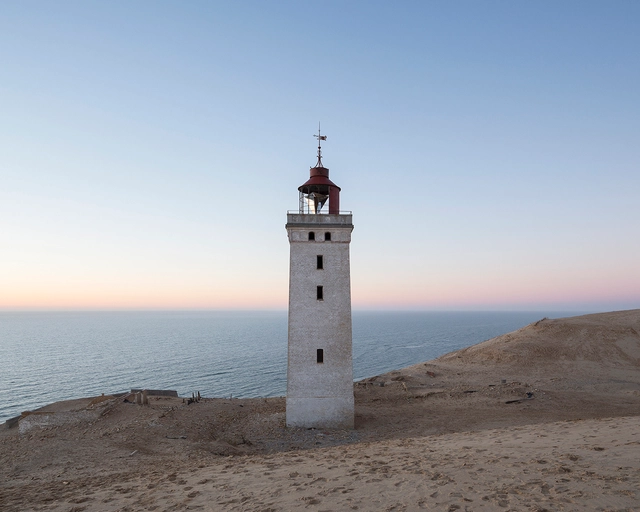
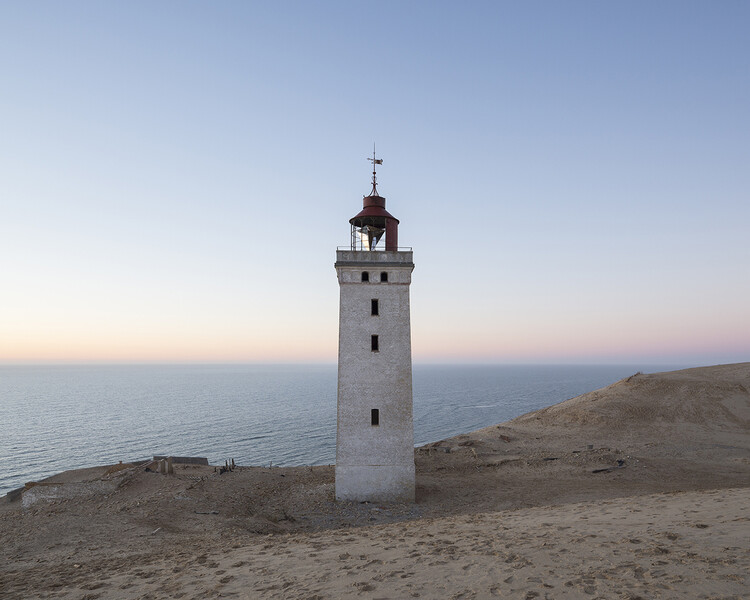
Lighthouses have stood along the margins of continents and islands for centuries as points of light in vast maritime territories. Rising in solitude from rocky cliffs, reefs, and headlands, these towers were tools for navigation and instruments of spatial clarity, shaping coastlines and marking the boundary between land and sea. Built to guide, warn, and locate, they constituted a global network of visibility long before the advent of digital mapping. Yet as maritime technologies evolved, many of these structures lost their original purpose. The typology, once essential, now stands at the edge of obsolescence. What remains is not merely an architectural relic, but a powerful spatial form — resilient, symbolic, and increasingly open to reinterpretation.

Navigating Boundaries: The Architectural Legacy of Lighthouses - More Images+ 26

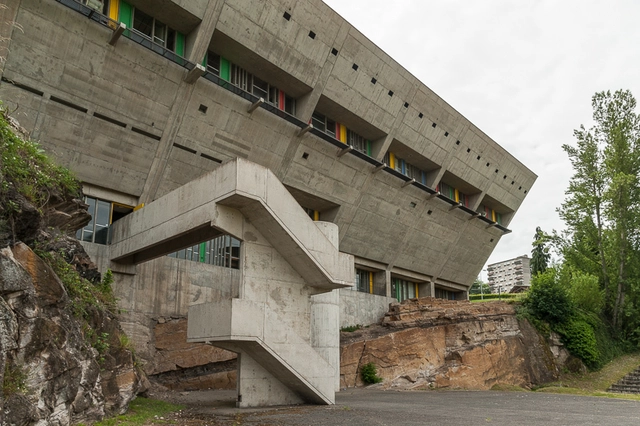
Architecture Guide: 24 Must-See Le Corbusier Works

Le Corbusier was a pioneer of the Modernist Movement in architecture. Throughout his career, he undertook an array of projects all around the world. See below for 17 of his works that have been named World Heritage Sites by UNESCO, as well as many more of his other popular pieces. Hopefully, someday you get to go and see them yourself!

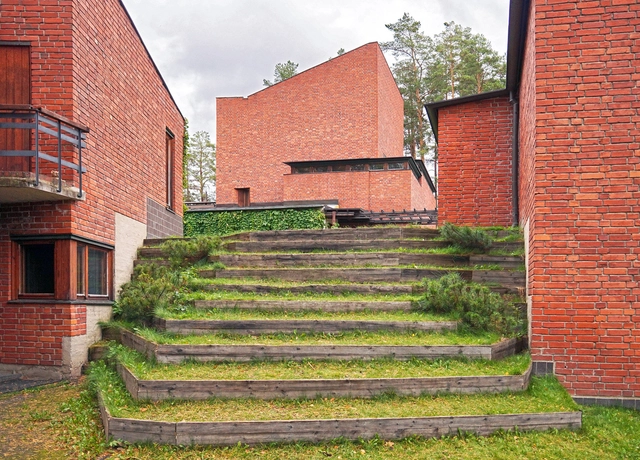
Architecture Guide: 20 Must-See Works by Alvar Aalto

Finnish architect Alvar Aalto was a pioneer of modern architecture and design, especially in his use of organic, naturally derived materials. When he decided to embark on a career as an architect, he traveled to Helsinki, the only place where he could find academic training in the profession. His journey did not end there, however, as his work can be seen around the world. Here, we have mapped out 20 of his most notable works that must be seen up close and in-person to truly be appreciated.

Alvar Aalto and the Use of Timber: From Stools to Ceilings and Structures

Subscriber Access | 

Many describe the work of Alvar Aalto as an embodiment of the concept of Gesamtkunstwerk (a total work of art), where architecture, design, and art merge into one. The Finnish architect is a pioneer in the so-called organic strand of modern architecture in the early 20th century and has strongly influenced what we know today as Scandinavian architecture. According to a description on the MoMA website: "his work reflected a deep desire to humanize architecture through an unorthodox handling of shapes and materials that was rational and intuitive." Its methods of bringing natural light into buildings are extolled and studied repeatedly until today. But throughout Aalto's career, wood has always been present and taken many different forms. From structures to ceilings to stools, Alvar Aalto brought this natural material to the fore.

Possibilities of Forms for Molding Exposed Concrete

Peter Zumthor, in one of his most emblematic works, gives concrete an almost sacred dimension. The work in question is the small Bruder Klaus Field Chapel, located in a small village in Germany, a construction that is both robust and sensitive. Built with white cement, which was mixed with stones and sand from the region, the chapel is composed of 24 layers of concrete that were poured day after day by local labor, and compressed in an unusual way. The building's flat and smooth exterior contrasts with its interior, which was initially made of inclined wooden logs forming a triangular void. To remove these internal forms, the logs were set on fire in a controlled process, reducing them to ash and creating a carbonized interior that varied between black and gray and retained the texture of the negatives of the logs. The result is a masterpiece of architecture, a space for reflection and transformation, in which the same material appears in diametrically opposing ways.

Possibilities of Forms for Molding Exposed Concrete - More Images+ 12

Spotlight: Peter Zumthor

Subscriber Access | 
Spotlight: Peter Zumthor - Image 10 of 4
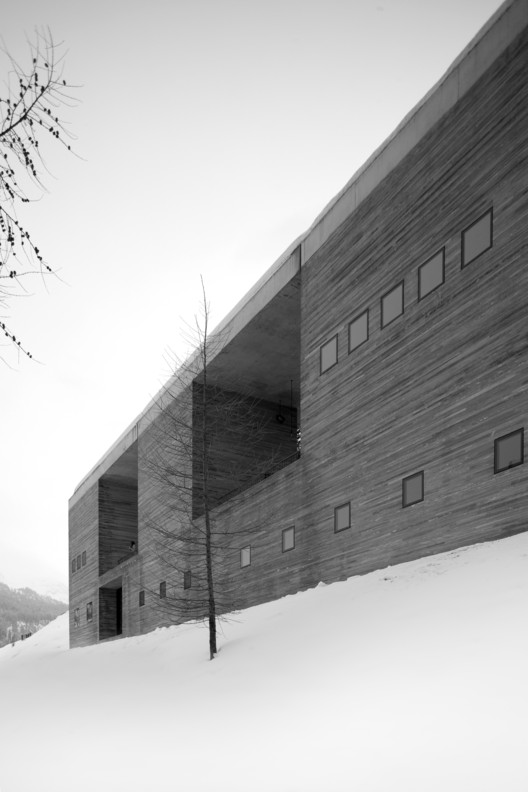
The Therme Vals. Image © Fernando Guerra | FG+SG

Known for his sensuous materiality and attention to place, 2009 Pritzker Laureate Peter Zumthor (born April 26, 1943) is one the most revered architects of the 21st century. Shooting to fame on the back of The Therme Vals and Kunsthaus Bregenz, completed just a year apart in 1996 and 1997, his work privileges the experiential qualities of individual buildings over the technological, cultural and theoretical focus often favored by his contemporaries.

Spotlight: Peter Zumthor - More Images+ 11

Is It Possible to Recycle Concrete?

Having been utilized as early as the Roman era in buildings of almost every scale, it is almost impossible to think of a building that does not have at least one concrete element. In fact, it is the most widely used construction material in the world, due to its versatility, resistance, ease of handling, accessibility, aesthetics, and other factors. At the same time, its manufacture is also one of the main polluters in the atmosphere, mainly due to the fact that the cement industry emits around 8% of all global emissions of carbon dioxide (CO2).

In addition to its intensive production, concrete is an extremely rigid material, heavy and composed of cement, water, stone, and sand. Thus, would it be possible to continue to use concrete sustainably after demolition, eliminating its disposal as mere waste and overloading landfills?

Spotlight: Álvaro Siza

One of the most highly regarded architects of his generation, Portugese architect Álvaro Siza (born 25 June 1933) is known for his sculptural works that have been described as "poetic modernism." When he was awarded the Pritzker Prize in 1992, Siza was credited as being a successor of early modernists: the jury citation describes how "his shapes, molded by light, have a deceptive simplicity about them; they are honest."

Spotlight: Álvaro Siza - More Images+ 10

The Top Creative Cities and Countries of 2018 According to Airbnb

As 2018 draws to a close, accommodation website Airbnb has dived into their data to reveal the most creative cities and countries from the year. Based on the percentage of hosts who are in the creative industries, the list builds on a previous survey by Airbnb which found that one in 10 Airbnb hosts and one in three Experience hosts identify as members of the creative community.

Read on below for the list of top creative countries and cities according to the new Airbnb study. For architects already planning a New Year’s getaway, check out an article we published of ten projects previously featured by ArchDaily, now available for booking through Airbnb.

Best Small Chapel Architecture & Design

Subscriber Access | 
 Best Small Chapel Architecture & Design - Image 20 of 4
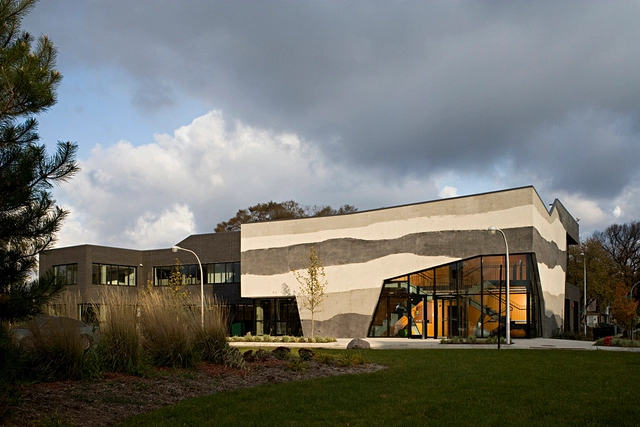
© Samuel Ludwig

 Best Small Chapel Architecture & Design - More Images+ 27

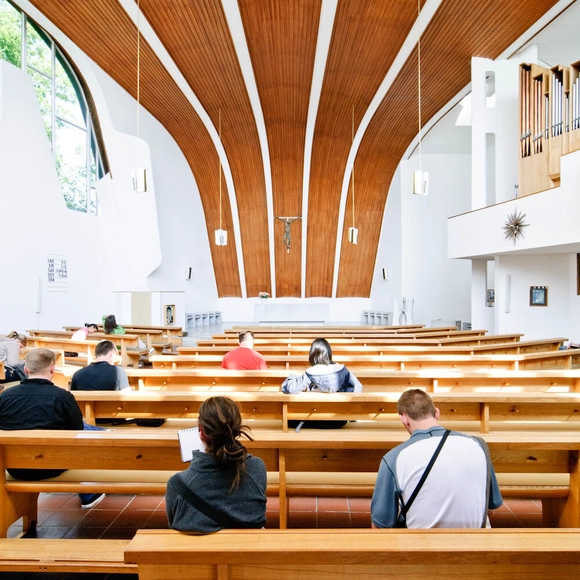
This week we’ve selected the best chapels previously published on our site. They reveal different ways of designing a small and sacred space. For inspiration on how to create these atmospheres, integrate different materials, and make proper use of light, we present 32 remarkable examples.

Supreme Court Justice Stephen Breyer: "To Understand a Building, Go There, Open your Eyes, and Look!"

Six years ago Susan Szenasy and I had the honor of interviewing Supreme Court Justice Stephen Breyer for Metropolis magazine. While he was a federal appeals judge in Boston, Breyer played a key role in shepherding the design and construction of the John Joseph Moakley United State Courthouse, designed by Pei Cobb Freed & Partners. In 2011 Justice Breyer joined the jury of the Pritzker Prize. Given his long involvement with architecture, I thought it would be fun to catch up with him. So, on the final day of court before breaking for the summer recess, I talked to Justice Breyer about his experience as a design client, how to create good government buildings, and why public architecture matters.

AD Classics: Yale University Art Gallery / Louis Kahn

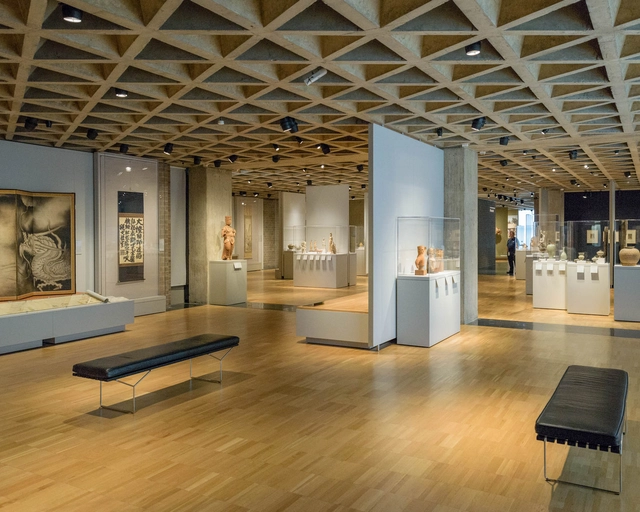
Yale University’s School of Architecture was in the midst of pedagogical upheaval when Louis Kahn joined the faculty in 1947. With skyscraper architect George Howe as dean and modernists like Kahn, Philip Johnson, and Josef Albers as lecturers, the post-war years at Yale trended away from the school’s Beaux-Arts lineage towards the avant-garde. And so, when the consolidation of the university’s art, architecture, and art history departments in 1950 demanded a new building, a modernist structure was the natural choice to concretize an instructional and stylistic departure from historicism.[1] Completed in 1953, Louis Kahn’s Yale University Art Gallery building would provide flexible gallery, classroom, and office space for the changing school; at the same time, Kahn’s first significant commission signaled a breakthrough in his own architectural career—a career now among the most celebrated of the second half of the twentieth century.

AD Classics: Yale University Art Gallery / Louis Kahn - More Images+ 11

Spotlight: Frank Gehry

Internationally acclaimed architect Frank Gehry (born 28 February 1929) has been headlining architectural news platforms since he established his Los Angeles practice in 1962 and remodeled his home in Santa Monica. Notorious for his expressive use of form (and its-sometimes inflationary effect on project budgets), Gehry is best known for the Guggenheim Museum in Bilbao, which fellow architect Philip Johnson once dubbed “the greatest building of our time.”

Spotlight: Frank Gehry - More Images+ 14

Spotlight: Alvar Aalto

As one of the key figures of midcentury Modernism and perhaps Finland's most celebrated architect, Alvar Aalto (3 February 1898 – 11 May 1976) was known for his humanistic approach to Modernism. For his characteristically Finnish take on architecture, Aalto has become a key reference point for architecture in the Nordic countries, and his commitment to creating a total work of art left many examples of his design genius not only in buildings but also in their interior features, including furniture, lamps, and glassware design.

Spotlight: Alvar Aalto - More Images+ 15

10 Hard-To-Reach Masterpieces And How To Get There

Visiting architectural masterpieces by the greats can often feel like a pilgrimage of sorts, especially when they are far away and hard to find. Not everyone takes the time to visit these buildings when traveling, which makes getting there all the more special. With weird opening hours, hard-to-reach locations and elusive tours we thought we’d show a selection from our archives of masterpieces (modernist to contemporary) and what it takes to make it through their doors. Don’t forget your camera! 

Why Are Alexander Calder Sculptures So Overused in Architecture Renders?

Why Are Alexander Calder Sculptures So Overused in Architecture Renders? - Image 1 of 4
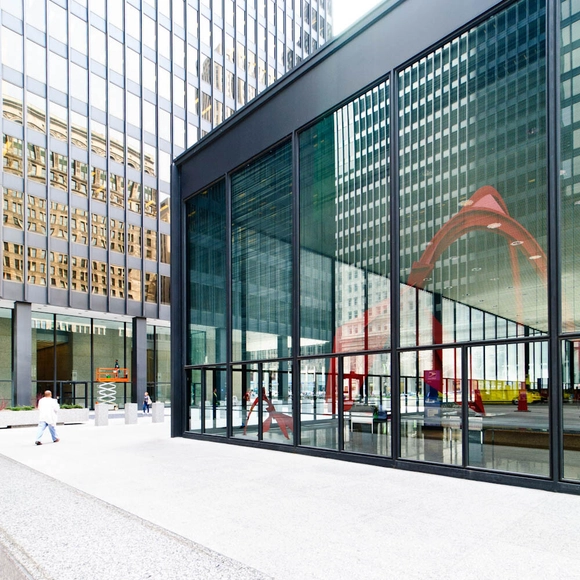
OMA, Park Grove Condos, Miami, featuring Calder’s Flamingo, 1973. The work is actually installed in Federal Plaza in Chicago. Image Courtesy of OMA

This article was originally published by The Architect's Newspaper as "Rendering LOL: How architects are absurdly using Calder sculptures."

Why do so many architects use Alexander Calder sculptures in their renderings, even when the works have nothing to do with the institution or project depicted? The Calder Foundation has been tracking this phenomenon, and the results are featured in the images for this article.

A new exhibition at the Whitney Museum in New York explores mobiles—kinetic sculptures in which carefully balanced components reveal their own unique systems of movement—created by American sculptor Alexander Calder from 1930 until 1968, eight years before his death.

Why Are Alexander Calder Sculptures So Overused in Architecture Renders? - More Images+ 10

Art or Architecture? 13 Projects That Blur The Boundary

Subscriber Access | 

Whether architecture is a form of art or not has often been a controversial topic of conversation within the architecture world. If one goes by the general definition of the word "art," architecture could potentially fit within the umbrella term: "the expression or application of human creative skill and imagination, typically in a visual form such as painting or sculpture, producing works to be appreciated primarily for their beauty or emotional power." As anyone involved in the architectural discipline probably knows, there is an abundance of varying definitions of the word "architecture," so whether its primary purpose is to achieve beauty or to organize space is evidently up for discussion.

Ask Jay A. Pritzker, founder of the Pritzker Prize, and he may say that "architecture is intended to transcend the simple need for shelter and security by becoming an expression of artistry." Ask The Guardian's Jonathan Jones and he may tell you that "architecture is the art we all encounter most often, most intimately, yet precisely because it is functional and necessary to life, it's hard to be clear about where the 'art' in a building begins." But this ambiguity is part of what makes the field of architecture challenging and exciting. To celebrate this complicated aspect of architecture, below we have collected a list of just some of the works that could be seen as art, architecture or both, depending on who’s looking, to provide some context to those blurry boundaries.

Art or Architecture? 13 Projects That Blur The Boundary - More Images+ 9