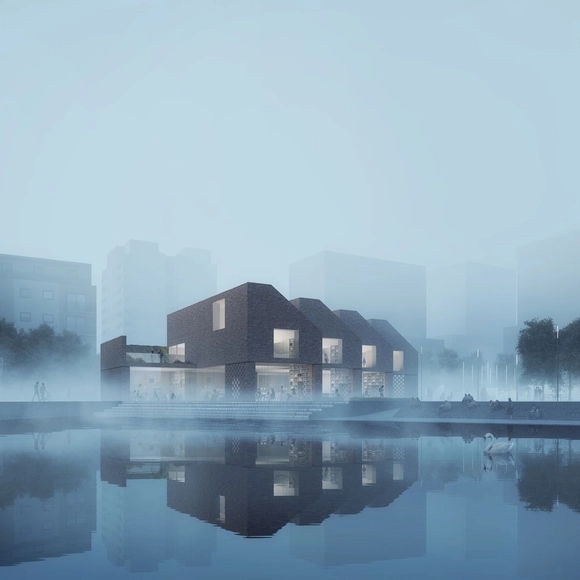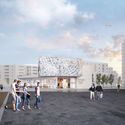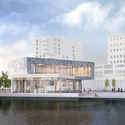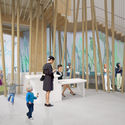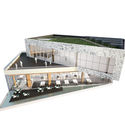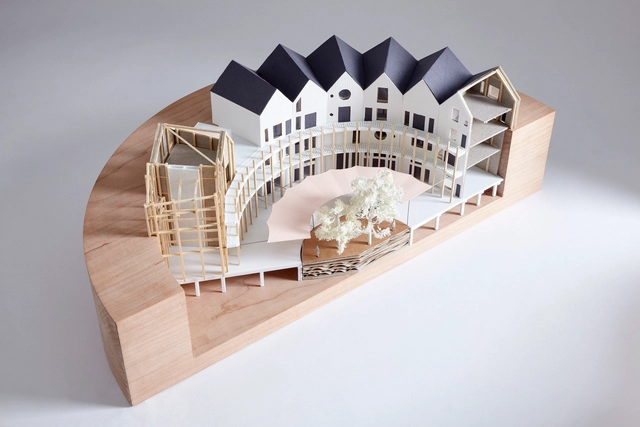
Reiulf Ramstad Arkitekter’s proposal embraces the waterfront nature of the site by introducing a stepped, sawtoothed building that interacts with the water in a way similar to the old brick factories of East London and the palaces of the upper Thames. Reflections from the water could pass through the high-transparency glass walls of the library, connecting visitors with the Southmere Lake even when indoors
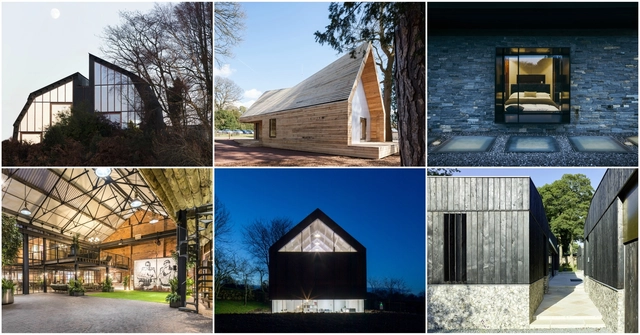
James Macdonald Wright and Niall Maxwell’s reimagining of the English country house, “Caring Wood,” has been selected as the 2017 RIBA House of the Year, bestowed annually by the Royal Institute of British Architects (RIBA) to the “best new house or house extension designed by an architect in the UK.”
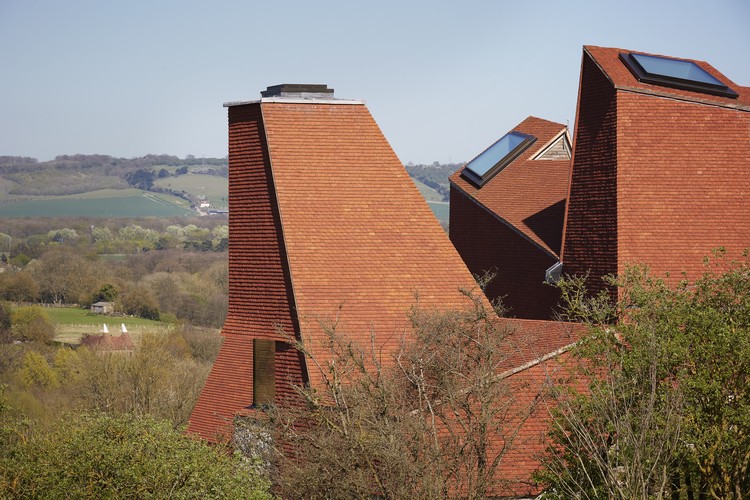
Inspired by the traditional ‘oast houses’ – agricultural buildings used for kilning hops – found in the county of Kent, the house was lauded by the jury for its celebrating of local building crafts and traditions, including the use of handmade peg clay tiles, locally quarried ragstone and coppiced chestnut shingles.
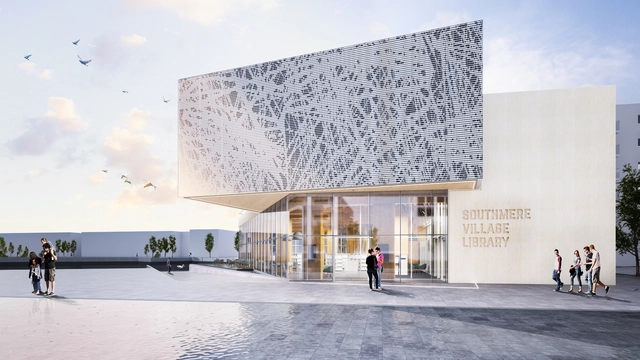
The Royal Institute of British Architects has announced London-based firm Bisset Adams as the winners of the RIBA Competition to design a new state-of-the-art library and civic space in the southeast London suburb of Thamesmead.
Selected from a shortlist that included Architecture 00, Adam Khan Architects, Keith Williams Architects and Reiulf Ramstad Arkitekter, the winning proposal was lauded for its flexibility and iconic design, as well as its connection to the adjacent Southmere Lake and surrounding neighborhood. The new facility will accommodate a contemporary library, learning space, and civic spaces such as health and wellbeing programs.
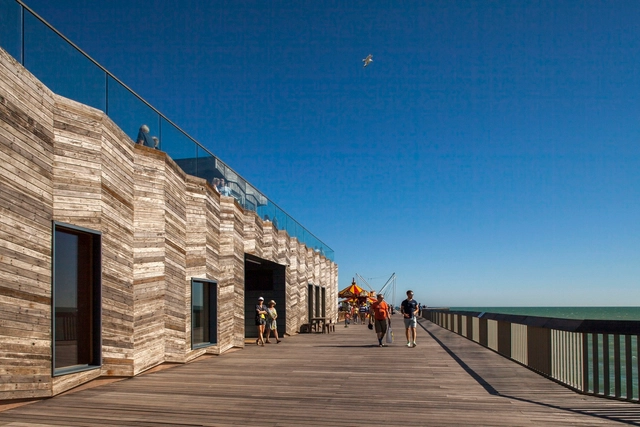
"Hastings Pier is a masterpiece in regeneration and inspiration. The architects and local community have transformed a neglected wreck into a stunning, flexible new pier to delight and inspire visitors and local people alike," said RIBA President and Stirling Prize jury chair Ben Derbyshire.
Earlier today, the UK Prime Minister Theresa May made her closing speech at the Conservative Party Conference in Manchester. In a speech which focused on the fallout of Brexit and the economy, May devoted considerable attention to the issue of the UK housing market, announcing a plan to add £2 billion to the government's existing £7 billion affordable housing fund—a fund which local governments, private housebuilders, and housing associations can apply to for grants to subsidize construction of affordable housing.
However, the Royal Institute of British Architects (RIBA) has strongly criticized the government's proposal, arguing that £2 billion will not be nearly enough to address the scale of the problem—by most estimates, the country is falling short of housing demand by hundreds of thousands of units annually, and house prices are increasingly out of reach for the young and the poor. In response, the RIBA argues for a much greater investment in social housing, highlighting its recent decision to award its Gold Medal to 20th Century social housing architect Neave Brown and stating that "we need a concerted program of public investment in new social housing across the country and that means spending a lot more than was announced today." Read on for RIBA President Ben Derbyshire's full statement:
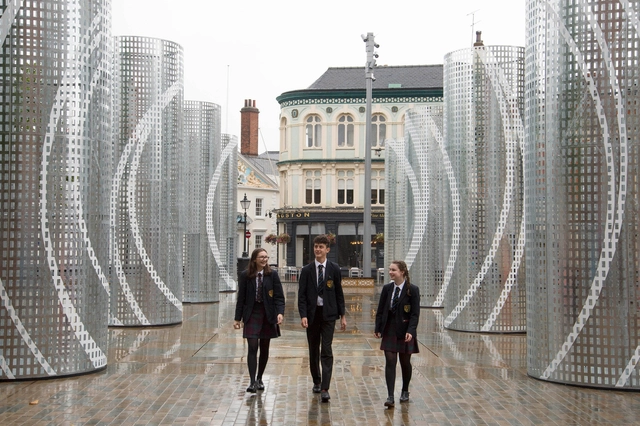
A Hall for Hull with "Trois Points de Vue" by Chilean practice Pezo von Ellrichshausen and Swiss artist Felice Varini has been unveiled in the British city of Hull. Jointly commissioned by the Royal Institute of British Architects (RIBA) and Hull UK City of Culture 2017, the "monumental" outdoor installation has "transformed" Trinity Square [Hull] with sixteen galvanized-steel columns, arranged in a grid formation in front of Hull Minster, to form a new civic room for the city.
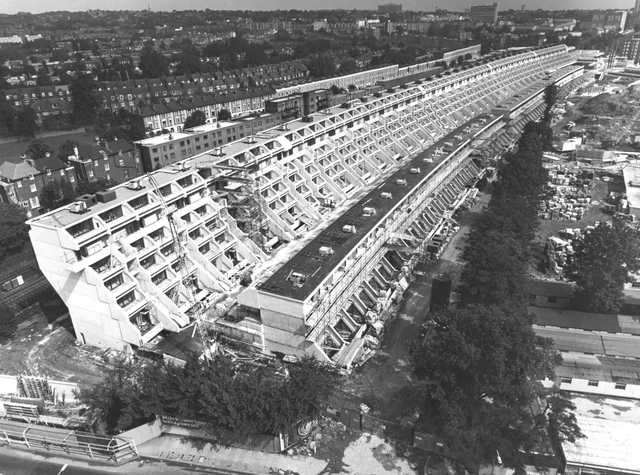
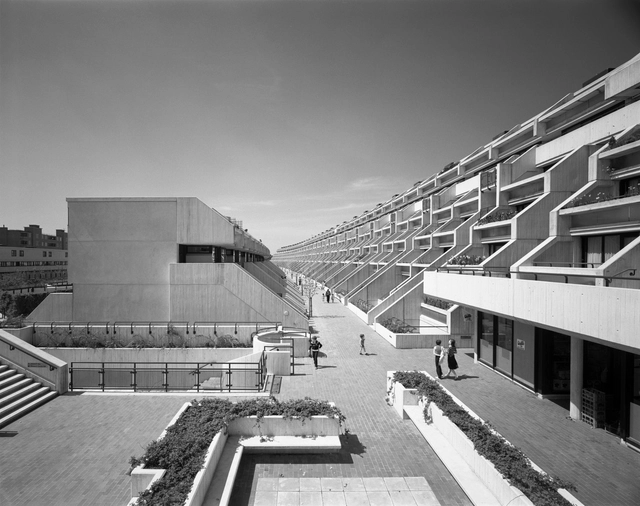
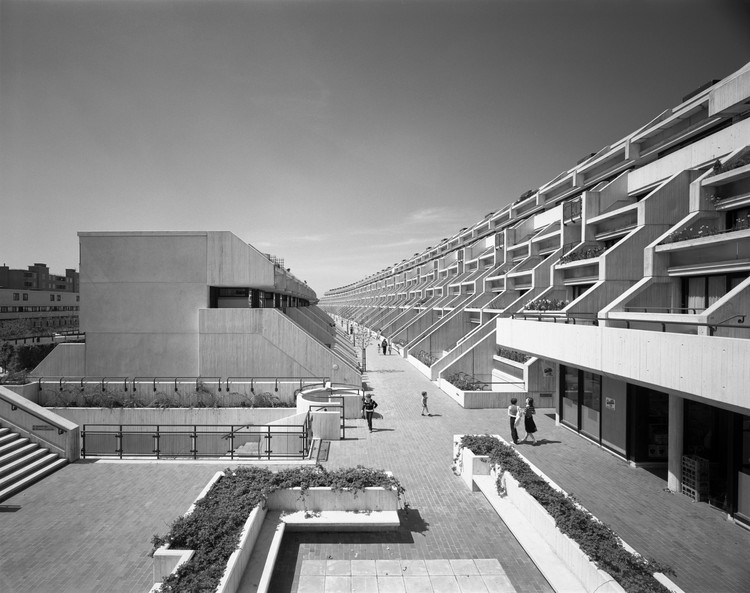
The Royal Institute of British Architects (RIBA) has awarded its 2018 Royal Gold Medal to London-based artist and architect Neave Brown, a revered Modernist architect best known for his visionary Alexandra Road housing estate. Built by London's Camden Council in the 1970s the 500-home estate is, in Brown's own words, a "piece of city" containing shops, workshops, a community centre, a special needs school and children’s centre, a care home for young people with learning difficulties, and a 16,000sqm public park.
The medal is awarded in recognition of a lifetime’s work and is approved personally by Her Majesty Queen Elizabeth II. It is given to a person, or group of people, who have had a significant influence "either directly or indirectly on the advancement of architecture." The medal is being presented earlier than usual—in 2017 rather than 2018—owing to Brown's poor health.
The Royal Institute of British Architects (RIBA) has announced the shortlist of 6 projects competing for the Stephen Lawrence Prize. Now in its 20th year, the prize is the highest honor in the UK awarded to projects with a construction budget of less than £1 million.
Wayne McGregor CBE, Elizabeth Diller, Joshua Bolchover
The Royal Institute of British Architects (RIBA) is delighted to announce the second edition of the RIBA International Prize, the highly prestigious award for the world’s best new building.
Now open for entries, the RIBA International Prize will be awarded to a building which exemplifies design excellence, architectural ambition and delivers meaningful social impact. The prize is open to any qualified architect in the world, for a building of any size, type or budget. Entries close on 17 October 2017.
The Royal Institute of British Architects (RIBA) and Hull UK City of Culture 2017 have jointly commissioned Chile-based architects Pezo von Ellrichshausen and Swiss artist Felice Varini to design an ambitious temporary outdoor structure in the historic heart of Hull, a port city on the country's east coast. The project, which is part of the Hull 2017 "Look Up" programme of public art installations, will "transform Trinity Square with sixteen galvanized steel columns arranged in a grid formation in front of Hull Minister to highlight the symmetry of its façade."
https://www.archdaily.com/877941/pezo-von-ellrichshausen-and-felice-varini-unveil-designs-for-a-civic-installation-in-hull-2017-uk-city-of-cultureAD Editorial Team
The Destruction of the Temple of Solomon, by Maarten van Heemskerck. From Freemasonry and the Enlightenment, by James Stevens Curl (Public Domain). Image
In a world in which the "happy" architectural image feels all-pervasive, the British architect and academic Dr. Timothy Brittain-Catlin reveals its darker side suggesting why, and how, we might come to celebrate it. You can read Brittain-Catlin's essays on British postmodernism here, and on colorful architecture, here.
"Contemporary buildings celebrate openness, light and free-flowing movement," says the President of the Royal Institute of British Architects (RIBA) in the March 2017 issue of the Institute’s journal. This is what at my school we call an "announcement", rather than a statement of fact. Indeed, all architects and architecture students hear these words all the time. But are they true? Should they be?
For a discipline that thinks of itself as learned, scholarly research eludes the architectural profession. This is a long standing problem. “Failure,” John Ruskin wrote in his 1848 introduction to The Seven Lamps of Architecture, “is less frequently attributable to either insufficiency of means or impatience of labor, than to a confused understanding of the thing actually to be done.”
Roughly 150 years later, Harry Nilsson—surely singing to architects—opined in his song, Joy that if you’re unable to find the answer to a question, you may not have a question worth asking (and probably don’t have a problem worth solving). In between Ruskin and rock and roll, is William Peña, the author of the architectural programming guide, Problem Seeking, who nearly a half-century ago wrote that “you can’t solve a problem unless you know what it is.”
The 2017 winner of the UK’s most prestigious architecture award, the Stirling Prize, will be announced on October 31. Leading up to the main event, The Royal Institute of British Architects (RIBA) has released its list of the six shortlisted buildings, a collection that has left many critics scratching their heads. What the list left out seems to be as noteworthy as what was included, and while critics’ opinions on individual buildings differ, they seem mostly united in finding the overall list uninspiring and underwhelming. Read on to find out what they had to say.
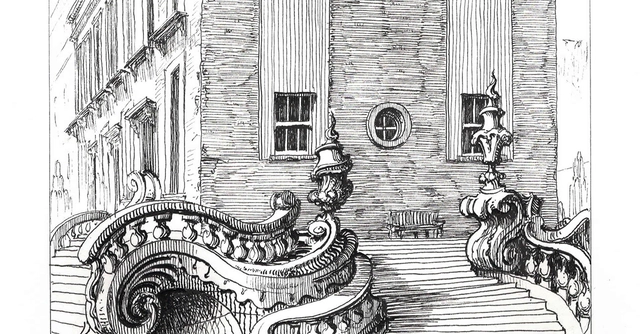
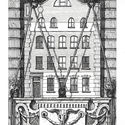
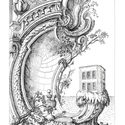
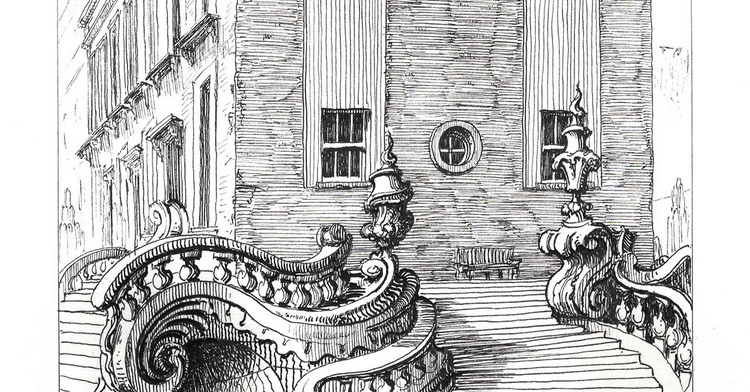
Detail: 132-135 Sewardstone Road, Victoria Park E2 9JQ. Ink on Paper, 21 x 14 cm. Copyright Pablo Bronstein, 2017. Courtesy Herald St, London and Galeria Franco Noero, Turin. Image Courtesy of RIBA
A new exhibition of commissioned work by artist Pablo Bronstein at London's Royal Institute of British Architects (RIBA) will explore "ubiquitous" neo-Georgian developments as exemplar of a British vernacular. The show—Pablo Bronstein: Conservatism, or The Long Reign of Pseudo-Georgian Architecture—will feature fifty new drawings of buildings constructed during the second half of the 20th Century in "an ostensibly neo-Georgian style." These will be presented alongside historical Georgian and neo-Georgian material chosen by Bronstein from the RIBA’s collections.
Architecture, as both a profession and the built environment, currently finds itself at a crossroads in trying to adapt to a world in constant flux. Cities and its people face continuous socio-economic, political and environmental change on a daily basis, prompting a necessary rethink in the evolution of sustainableurbanization. With a focus on housing, society and cultural heritage, RIBA’s International Conference, Change in the City, aims to offer insight into the “New Urban Agenda” and how architects can play an interdisciplinary role in future urban development.
Speaking in an interview ahead of the conference, Norman Foster is a strong advocate for a careful consideration of what aspects of urban life need to be prioritized when designing cities of the future. For an increasingly global society, Foster stresses the need for architecture to surpass buildings and tackle its greatest obstacle – global warming, honing in on its roots and factors involved to create viable urban solutions.
https://www.archdaily.com/875169/norman-foster-stresses-the-importance-of-interdisciplinary-architecture-in-creating-future-citiesOsman Bari
The Royal Institute of British Architects (RIBA) has released an official statement on design for fire safety following the tragic Grenfell Tower fire on June 14. The causes and aftermath of the catastrophic fire, which ravaged 27 storeys of the council estate in the London borough of North Kensington are currently under investigation, with a team of 250+ working on operations including recovering and identifying victims (the death toll has risen to 80+) according to recent reports from the BBC and the Met Police. The aluminium-composite cladding Reynobond PE - identified as one of the main reasons for the fire’s spread up the building’s façade has sparked outrage over failed safety regulations and debate over the lack of responsibility behind the building’s (and many others) construction overall. Further fire safety tests revealed the cladding to be present in up to 60 similar council estates with more being urged to submit samples for testing.
For a quick summary, we’ve covered some key points from each of the 3 sections addressed RIBA's statement below:
The Royal Institute of British Architects' (RIBA) new national architecture center, RIBA North, will open this week (June 17th) in Liverpool as part of the Mann Island project – a complex of waterfront buildings designed by Broadway Malyan and completed in 2013. At the core of the launch of the Institute's largest national outpost will sit an exhibition, located in the new City Gallery, exploring Liverpool’s "long, often maverick, history of architectural ambition, its willingness to take risks and consider audacious [architectural] schemes."