Walk the Talk—A talk and tour about “missing middle” housing in Austin
Walk the Talk—A talk and tour for people interested in learning more about “missing middle” housing in Austin. Join us for a panel discussion and self-guided tour of "missing middle" housing types—such as duplexes, fourplexes, courtyard housing, and accessory dwelling units—in the Blackland and Cherrywood neighborhoods. Our expert panel represents varied perspectives on the subject. After a Q&A session, participants can easily bike or walk to the missing middle sites in the neighborhood. We welcome you to join the conversation!
With ideas ranging from floating homes to new mega-cities, New London Architecture has revealed 100 proposals to address the housing crisis in London. The ideas will be on display as part of the New Ideas for Housing exhibition at the NLA Galleries in the Building Centre in London. After an open ideas competition announced June 2015, over 200 entries from 16 different countries were received. Of the 100 shortlisted projects 10 finalists will be selected and have the opportunity to work with the Greater London Authority to implement their ideas. Read more about the entries and exhibit after the break.
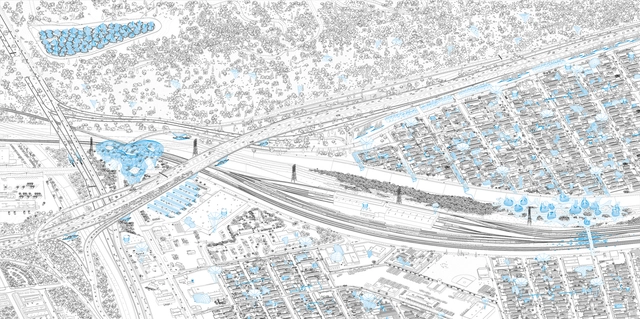
Lorcan O’Herlihy Architects (LOHA) has designed a speculative system of interventions for the Los Angeles River that “examines the relationship between urbanization and water use to develop new models of densification that recognize and tap into existing ecological and infrastructural patterns.” Called WATERshed, the design is part of the A+D Museum’s ongoing “Shelter: Rethinking How We Live in Los Angeles” exhibition that explores new typologies of housing in Los Angeles.
With their model for urban regeneration, LOHA hopes to address issues like the ongoing California drought, as well as the United Nation’s prediction that by 2030, nearly half of the world’s population will be living in areas of high water stress. Thus, the plan utilizes the Los Angeles River as a resource for water use and management in order to provide a path for sustainable growth in Los Angeles, and an example for other cities.
At ArchDaily, we believe it's important to keep our readers up to date on all the most interesting developments in architecture. Sometimes, we will present ideas and projects with a critical eye; however, in many cases we simply present ideas neutrally in the hope that it will spark some discussion or critical response within the profession. Recently, a series of connected news articles about proposals for high-rise shipping-container housing provoked just such a response from Mark Hogan, principle at San Francisco-based firm OpenScope. Originally posted on his blog Markasaurus here's his reasoning for why, contrary to the hype, "shipping containers are not a 'solution' for mass housing."
What’s wrong with shipping container buildings? Nothing, if they’re used for the right purpose. For a temporary facility, where an owner desires the shipping container aesthetic, they can be a good fit (look, I’ve even done a container project!). For sites where on-site construction is not feasible or desirable, fitting a container out in the factory can be a sensible option, even though you’ll still have to do things like pour foundations on site. It probably won’t save you any money over conventional construction (and very well might cost more), but it can solve some other problems.
The place where containers really don’t make any sense is housing. I know you’ve seen all the proposals, often done with an humanitarian angle (building slum housing, housing for refugees etc) that promise a factory-built "solution" to the housing "problem" but often positioned as a luxury product as well.
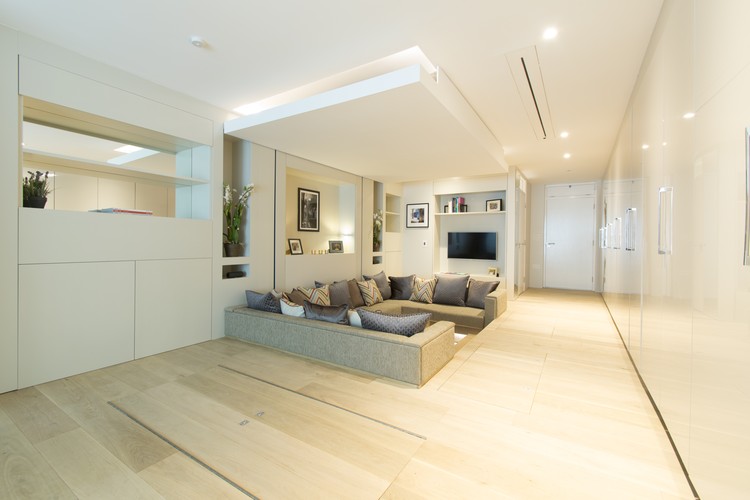
With the cost of space rising in city centres everywhere, YO! Home by Simon Woodroffe provides a possible solution – a transformable, modular living space. Acting as a reinvention of the traditional studio apartment, YO! Home is a 40 square metre living space with movable features to create the impression of a much bigger home. Read more about this London apartment project after the break.
Living Anatomy installation detail, with a photograph from Lacaton & Vassal's "Mulhouse Social Housing" in the background.
On Monday, August 24, the Harvard Graduate School of Design opened its main Fall 2015 exhibition Living Anatomy: An Exhibition About Housing. Focusing on the past 50 years, the mixed-media exhibition features both built and academic work and showcases innovative approaches and solutions to housing in contexts around the world.
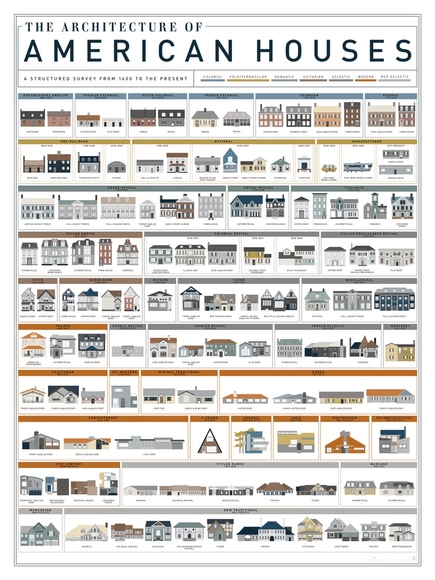
From 17th century Postmedieval English homes to the “McMansions" of the 90s, check out Pop Chart Lab's structured survey of 121 North American homes from the past 400 years. Sorted into seven major categories and 40 subdivisions, the comprehensive diagram highlights the morphology of homes throughout the US.
Each print is signed and numbered by the artists, much like the Brooklyn-based company's popular "Schematic of Structures" poster that features mankind's 90 greatest architectural achievements.
In a recent article for The Observer, Rowan Moore discusses what he describes as the "quiet revolution in British housing." In compiling a list of practices and collectives from the recent past and present, he has created a compendium of people and organisations who he believes are creating exemplary dwellings in the UK. Noting that the British housing stock is not necessarily in the best shape (a symptom of the 1970s), Moore ultimately offers an optimistic message tinged with words of caution.
The AHK Kundu Villas, a collection of homes by GAD Architecture, has recently been shortlisted for the World Architecture Festival (WAF) for Future Residential projects. The project, comprising 17 large, 56 medium and 50 small housing units, is sited next to a tourism zone in Antalaya on the Mediterranean coast of southwestern Turkey. Designed with sustainability in mind, the project makes use of resources available on the site.
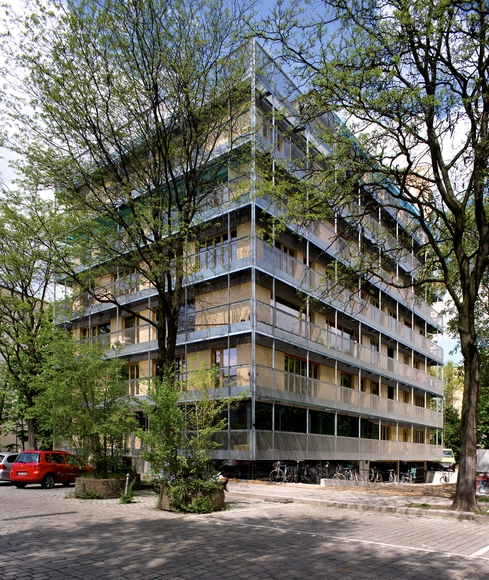
The latest episode of KCRW's podcast, “Design and Architecture” (DnA), explores whether the Baugruppen, a co-housing model in Berlin, could work in Los Angeles. Produced by Frances Anderton and Caroline Chamberlain, the episode looks at how LA residents and Berliners have approached the same problem of affordable living space. The Baugruppen (“building groups”) are communities of homes where you can choose who to live with and share the development costs. After visiting R50, a Baugruppe complex by firms Heide & Von Beckerath and IFAU, co-principals Christoph Schmidt and Verena von Beckerath explained the process of collaborative design that came with building the 19 households of R50. Listen to the whole podcast here.
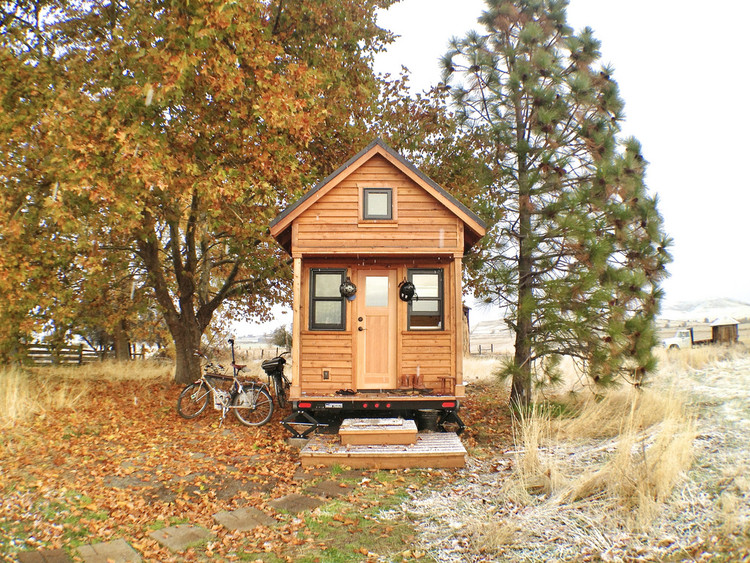
One of the many problems with being deeply engaged in a niche subject such as architecture is that you can easily lose sight of what a "normal" person's perspective is on a topic. Through experience, we often assume that a rising trend that we notice on a daily basis has passed completely unnoticed by the general populace, and it's usually difficult to see when a topic has reached the critical mass to become a genuine social phenomenon. So imagine my surprise when I saw a joke about an architectural trend on a popular webcomic. Two months ago, Toothpaste For Dinner published an image of a character smugly telling his friend "that's cool... my Tiny House is a lot smaller, of course" as they tower over a comically small abode. Suddenly it became clear to me that the Tiny House movement was not just a curiosity for architects.
This realization leads to a number of questions: why are Tiny Houses such a big deal? What promise do they hold for society? And is there anything the movement is failing to address? These questions led me to conclude that, for better or worse, the Tiny House movement might just be the closest thing we have right now to a utopian housing solution - and if that's true, then the movement has a big task on its hands.
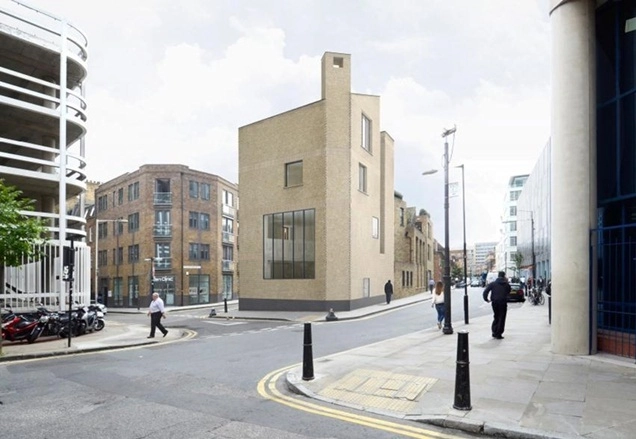
When news spread of Tracey Emin's plans to demolish a disused 1920s building in London's East End neighborhood, residents immediately objected. The artist, known for her conservation work in the area, has commissioned David Chipperfield to design a minimalist flat and studio on the site. However, despite the planning application's claim that the design will "greatly contribute to the character and appearance of the conservation area," the opposition isn't convinced.
“Tracey Emin is at present the owner of a locally listed building that is part of a historic streetscape of variety and charm,” said Save Britain's Heritage director Clem Cecil, who labeled Chipperfield's design "angular and blank." “She has done great conservation work with her other buildings nearby and this building deserves the same treatment.
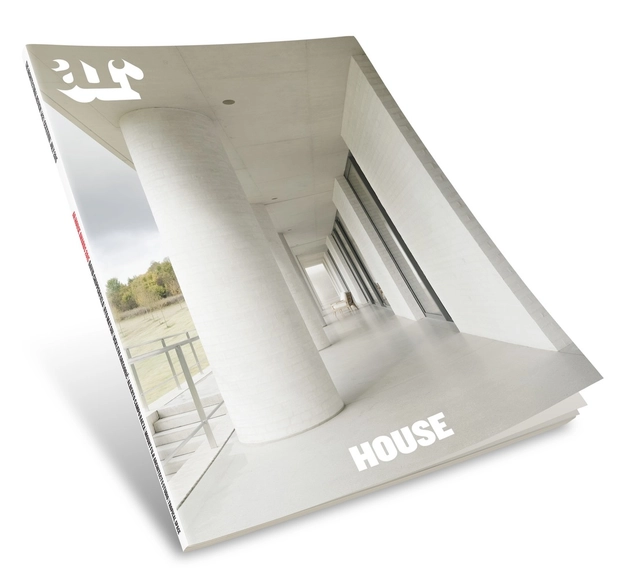
ArchDaily is continuing our partnership with The Architectural Review, bringing you short introductions to the themes of the magazine’s monthly editions. In this introduction to the July 2015 issue, AR editor Christine Murray takes on "the most pressing issue of our time," the global housing crisis, asking "why don’t we shelter the homeless in empty housing? This crisis seems nonsensical when the postwar housing crisis was solved so efficiently."
The architect-designed home is a desirable commodity, that Modernist minimalist bungalow, all steel and glass with a large sofa, the Case Study House complete with swimming pool, MacBook Air and stunning view.
But there was once a different kind of architect-designed home, for people in need of shelter, not investments – and it’s sorely required now. Housing is the most pressing issue of our time, with one in every 122 people in the world either a refugee, internally displaced or seeking asylum – a record high, according to a UN report. Yet cash-strapped states do nothing, build nothing. They stand eyes averted, hands in their pockets.
The UK is in the midst of a housing crisis, the intricacies of which were detailed by Rowan Moore earlier this year. For decades the typical British housing stock has been of relatively poor quality, proliferated by developer-led consortiums and characterised by ruthless cost-efficiency for maximum profit. From this formula comes nothing but a monotony of off-the-shelf constructions which have, over time, become a national benchmark. These houses – often built of brick, boxy in form, and using as little space in the facade for openings – are commonly dark, spatially inadequate, and far below the standards that should be being aimed for. It’s like living in a well-appointed cave.
Details have been released on a new residential project designed by ODA Architecture at Brooklyn Bridge Park in New York. Occupying two waterfront sites in the Pier 6 uplands development area, the project will include two10,000-square-foot buildings focused on affordable housing, community development and preserving the surrounding parkland.
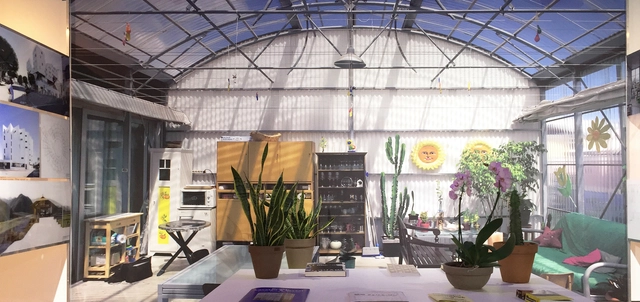
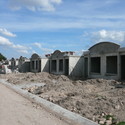
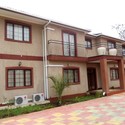
Design Indaba, in collaboration with the C-City Design Museum in Kerkrade, the Netherlands, has selected Hennie Botes’ “Moladi” for their new exhibit: “Design For A Better World | Innovations For People.” The exhibit aims to raise awareness of the significance of design by selecting projects relevant to current issues worldwide. Based out of Port Elizabeth, South Africa, Moladi has provided a solution to the problem of affordable housing since 1986.
Learn more about the construction system and its benefits for affordable housing projects after the break.





















_Nick_Kane_6.jpg?1439884712&format=webp&width=640&height=580)


















.jpg?1434392431&format=webp&width=640&height=580)
.jpg?1434392465 "Courtesy of Moladi")
.jpg?1434392454 "Courtesy of Moladi")
.jpg?1434392431)