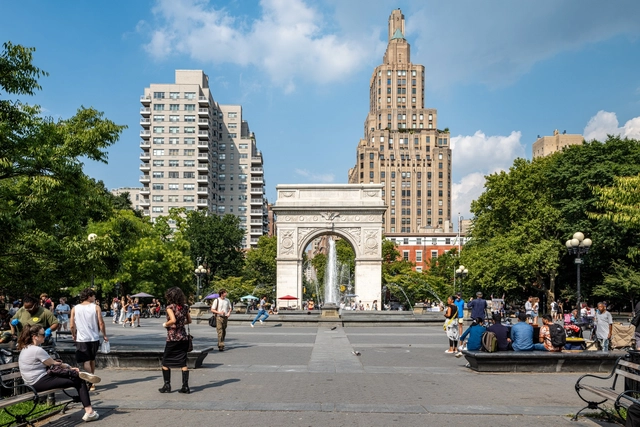
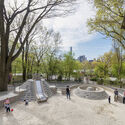
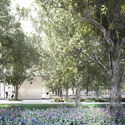
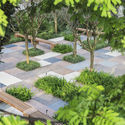
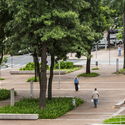
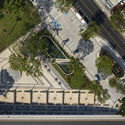
Washington Square Park, New York, NY, 2024. Photo by Barrett Doherty, courtesy The Cultural Landscape Foundation
Protests, civil disobedience, and dissent are not only a defining part of our shared history since the colonial era, they also continue to the present day on campuses, at political conventions, and elsewhere. In this context, some historic marches, sit-ins, and other actions are enshrined in our collective narrative, while others have faded from memory; however, the cultural landscapes that served as stages where these events occurred still exist. These places are the focus of Landslide 2024: Demonstration Grounds and a portal for re-engaging with the stories of little-known or even forgotten events that were pivotal in USA history. The thirteen different sites across the country, represented in the new report and digital exhibition from The Cultural Landscape Foundation (TCLF), touch on events that shaped individuals and sparked movements.
In celebration of Urban October, a month dedicated to recognizing the significance of innovative urban spaces, this curated selection presents 8 conceptual projects that demonstrate the transformative potential of public spaces. These projects, submitted by the ArchDaily community, showcase the myriad ways public spaces can enhance cultural identity, community interaction, and environmental quality. Conceptual projects and competition entries serve as a platform for architectural experimentation, challenging the norms and sparking discussions about the future of urban landscapes. From rural settings to layered historical squares or small-scale urban interventions, the designs engage with their contexts, aiming to improve the experience of residents and visitors, highlight the histories of the space, and ensure accessibility for all.
Each month, ArchDaily's editors select a collection of conceptual projects centered around a theme or program, submitted to ArchDaily. These projects are developed by small and large-scale architecture offices from around the world and submitted openly to the ArchDaily platform, thus forming a worldwide community of practitioners sharing their work, be it purely conceptual, a competition entry, or an early-stage design phase. Submissions are open to everybody. If you wish to contribute, send in your work by following the instructions here.
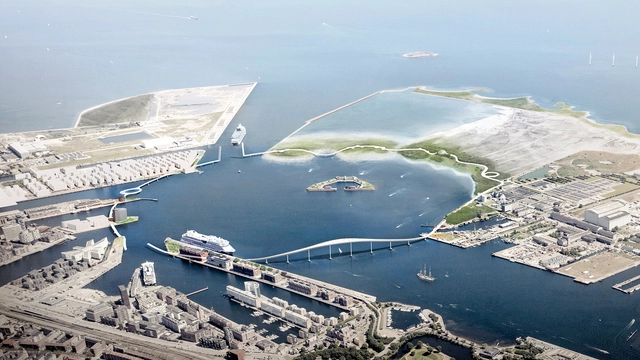
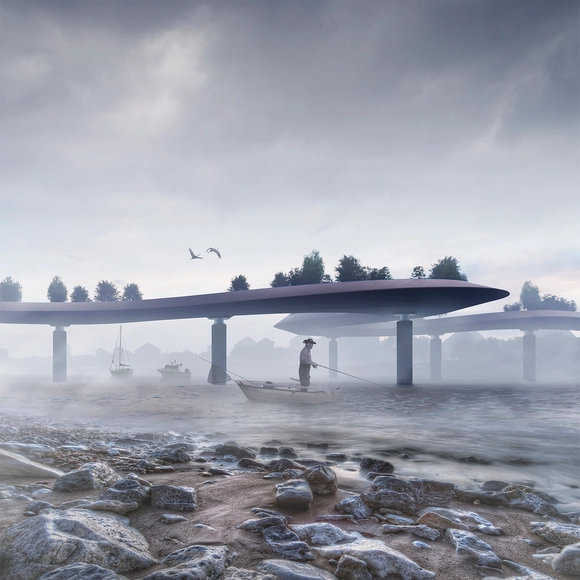
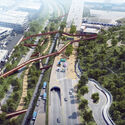
The Copenhagen Harbour Ring – “Kronløbsringen” / Third Nature. Image Courtesy of JJO By Tredje Natur
Through urban renewal projects, architects, urban planners, and designers can infuse new life into dilapidated urban landscapes by upgrading the infrastructure, introducing new functions into the urban fabric, and reimagining the character of open public spaces. These types of projects present interest due to their dual character: on the one side they offer an opportunity for reimagining the potential of the city, but the areas they affect are already well-ingrained within the urban fabric, raising challenges of integration and contextual adaptation.
This week's curated selection of Best Unbuilt Architecture highlights projects submitted by the ArchDaily community that enhance functionality, aesthetics, and sustainability of urban areas while respecting and embracing the existing fabric of the city. From a residential neighborhood that prioritizes self-sufficiency and circularity in the Netherlands, to a highway ramp transformed into productive spaces in California, United States, or a new elevated path designed to alleviate urban congestion in the harbor of Copenhagen, his selection features projects that highlight the ever-changing character of our cities. Featuring projects from both emerging and established architectural offices such as Benthem Crouwel Architects, Space&Matter, and Vincent Callebaut Architectures, the projects demonstrate the variety of approaches needed to adapt urban environments to the needs of their residents.
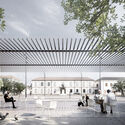
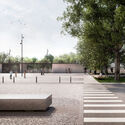
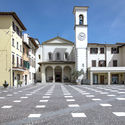
Ghisellini Architects, in collaboration with Lucrezia Alemanno and Paolo Beniamino De Vizzi has unveiled the redevelopment and complete redesign project for the new Piazza Francesca Cabrini in Livraga, Italy. Located about 45 kilometers southeast of Milan, the municipality of Livraga set out to transform the currently degraded public space and transform it into an attractive gathering place with site-specific environmental and landscaping features. Construction is expected to begin in August 2023 and is scheduled for competition in 2024.
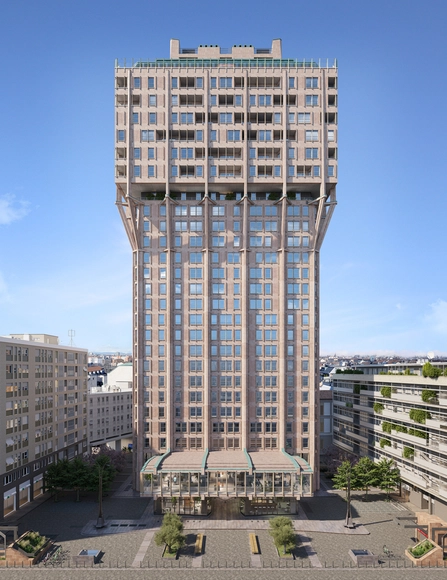
Torre Velasca, the renowned 1950s skyscraper by BBPR in Milan, Italy, is currently undergoing an extensive renovation process led by Asti Architetti and developed by Hines. After completing the work on the facades and with the extensive restoration of the interiors under way, the office has made public the project for the redesign of the Piazza Velasca, the square surrounding the tower. By turning it into a meeting and social gathering place, the architects hope to restore the status of the complex as a symbol of Milan’s architectural heritage. Pedestrian access to the building, and the renovation of previously disused adjacent spaces will open up the area for public access and will restore the original meaning of “piazza,” or square. The project is scheduled for completion by early 2024.
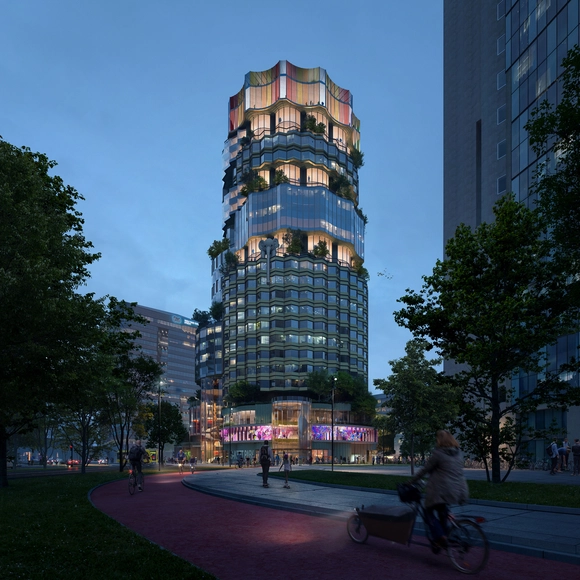
Heatherwick Studio and Barcode Architects have been selected to design a new hub for culture, work and leisure in the Jaarbeursplein central square in Utrecht, Netherlands. The project aims to respond to the city’s diverse population and to bring a sense of warmth and fun to the square, according to the architects. Nicknamed Oopen, the building’s design integrates a colorful collection of cylinders that stand out against the backdrop of the neighborhood. The team has partnered with Edge, a sustainable real estate development company, to help bring the vision to life. Construction is set to start in 2025 and the building will be delivered in 2028.
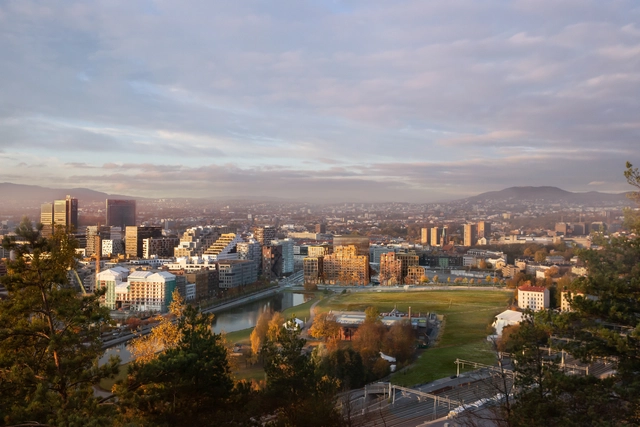
Norwegian architecture offices A-lab and LPO revealed the plan to develop the last remaining plot in Bispevika, part of the Fjord City, a large-scale waterfront urban renewal project in the center of Oslo, Norway. The intervention strengthens the connection between the historic medieval city of Oslo to the new Fjord City while also introducing cultural, creative, and commercial activities to the area. The project comprises five buildings forming a quarter. The proposed massing and height take a contextual approach as they are reduced toward important local monuments such as the baroque residence “Ladegården” with its baroque garden “Barokkhagen." The project is developed by Oslo S Utvikling (OSU), the same client behind the Barcode project, and in collaboration with landscape architects SLA.
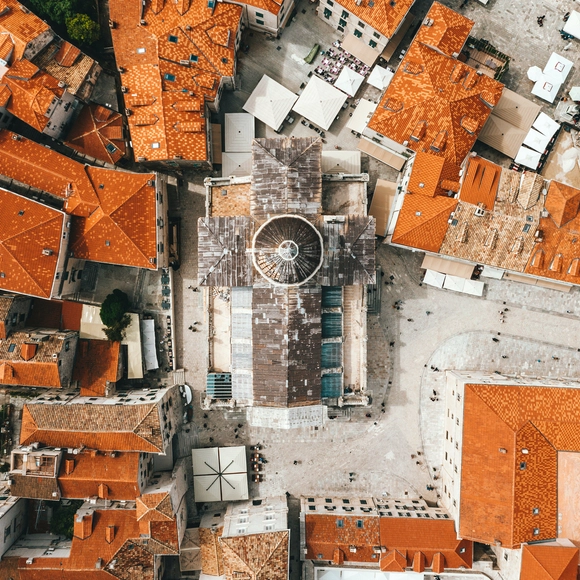
Dubrovnik, Croatia. Drone photo by @spencerdavisphoto
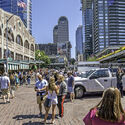
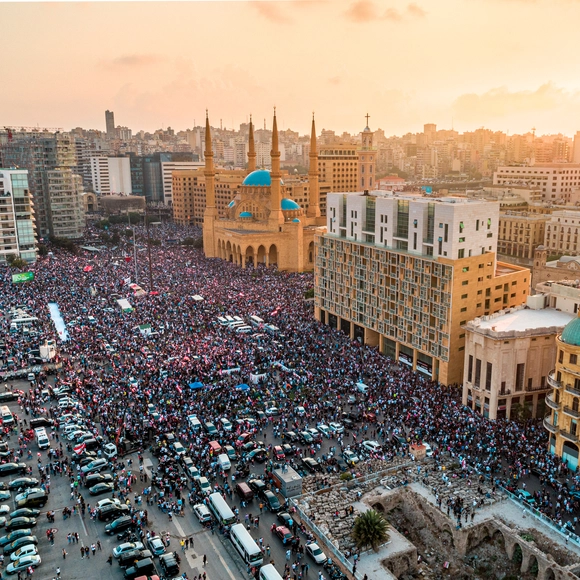
Some of the most characteristic features of city squares are related to the presence of people in the space and the purposes they are given, such as places for socializing, sports, tourism, and demonstrations. These different uses, often not foreseen in the project, are closely associated with the ground level, where people can walk around and experience the space. Viewed from an aerial perspective, on the other hand, squares can reveal other aspects related to their architectural design and their placement in the urban context.
In parallel with the restoration works underway at the Notre Dame de Paris cathedral, the city of Paris has launched a design competition to redevelop the cathedral’s surroundings. On June 27, the jury announced the team led by landscape designer Bas Smets as the winner of the competition. The project, planned to start in 2024, will reimagine the square and the underground parking spaces beneath it, including the archeological crypt, the Jean XXIII square located behind the cathedral, the Seine riverbanks, and the adjacent streets. This extensive project aims to bring Parisians back to the heart of Paris and welcome the 12 million visitors coming each year in better conditions.
Snøhetta won the competition to redesign the Eliel and Asema Square in Helsinki, a public space neighbouring the city’s historic railway station, into a vibrant central hub. Developed together with Finnish practices Davidsson Tarkela Oy and WSP, the proposal aims to contribute to Helsinki’s strategy to increase green mobility by reconnecting the urban fabric to the rail station and framing a “porous new city block” that would foster a more diverse array of indoor and outdoor activities.
The Graceful Dancer - New Yongxin Old City’s Entertainment District. Image Courtesy of Estúdio Leonardo Zanatta
This week's curated selection of Best Unbuilt Architecture highlights public spaces and buildings submitted by the ArchDaily Community. From bridges to squares, from parks to markets and train stations, this article explores the various kinds of public infrastructure that support the urban fabric, showcasing distinct approaches worldwide.
Featuring a bridge that doubles as a garden in China, the redevelopment of public spaces to meet contemporary needs in Montenegro and the Czech Republic, or a pier park in New York, the round-up spans various scales, from single architectural objects to urban strategies, to masterplans. The following projects reveal the ideas that shape public spaces and amenities in different contexts, illustrating diverse approaches towards what constitutes the backbone of the urban fabric.
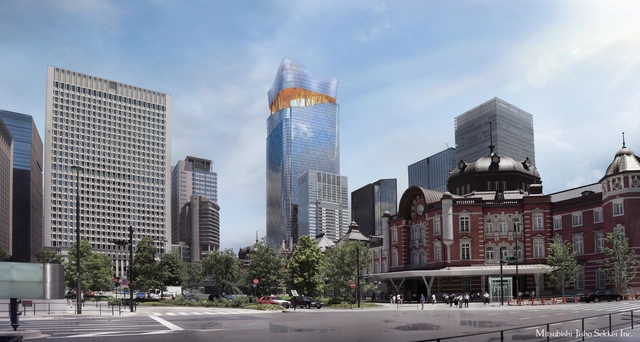
Sou Fujimoto Architects has unveiled its design for the top part of the tallest skyscraper in Japan“Torch Tower” in Tokyo, collaborating mainly with Mitsubishi Jisho Sekkei, Inc. Standing tall at 390m, the highrise building planned to be ready by 2028, takes on a large plaza at around 300m, generating a space for people.
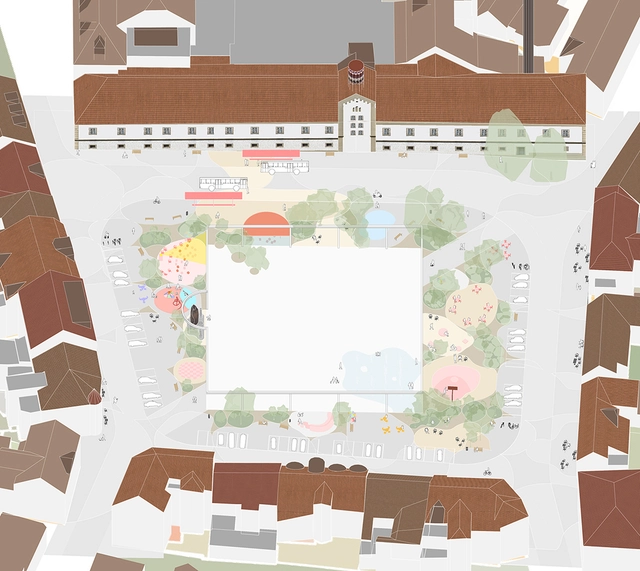
Zbraslav Square . Image Courtesy of Architects for Urbanity
Recognizing the importance of international contests in pushing forward inventive concepts and design, ArchDaily has put together a curated selection of Best Unbuilt Architecture featuring competition entries from around the globe. Submitted by our readers, these projects include winning proposals, honorable mentions, and recognized admissions.
In this week’s article, urban interventions take the lead with multiple square designs and infrastructural elements. On the cultural level, projects underlined include Museums in Iran and Norway, a National Concert hall in Lithuania, and a Mosque in Turkey. For the civic category, the functions highlighted comprise a new city hall for a South Korean district and an Indian community development center for at-risk women. Finally, other programs involve a rural school in Haiti, a tourist center in China, and a housing complex in Prague.
"Landscaping is the only artistic expression that includes all five human senses," says Benedito Abbud in his book Creating Landscapes – a guide to Working in Landscape Architecture. While architecture works mainly with sight and touch, landscaping also embraces smell, hearing and taste, "which provides a rich sensorial experience, by combining the most diverse and full perception experiences. The more a garden can sharpen all the senses, the better it fulfills its role."
"Public space" is a legal terminology that tackles the notion of land ownership, suggesting that this type of parcel does not belong to anyone in particular, but to the state itself. Open, free, accessible to all, and financed by public money, these spaces are not only the results of planning, but the consequences of the public practices they hold. Actually, people define how public space is used and what it means.
Protests - powerful political tools for change - from the March on Washington in 1963, the Arab Spring in the early 2000s to recent Black Lives Matter Movements, are altering the world. In times like these, while people still need to "take their issues to the streets" to be heard and seen, public spaces have resurfaced as a topic of discussion.
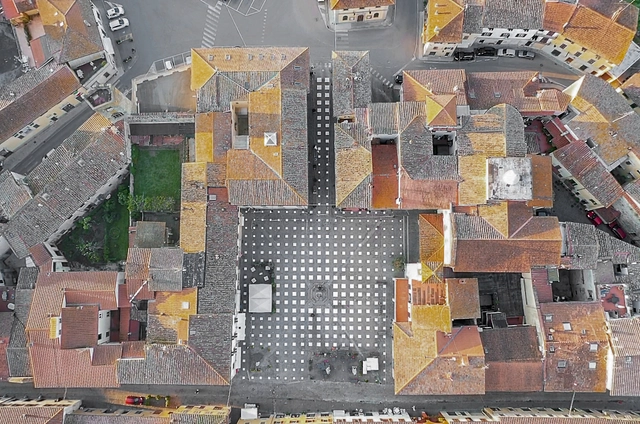
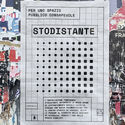
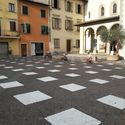
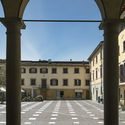
As architects around the world reimagine public spaces in the midst of the coronavirus, Italian architecture firm Caret Studio has envisioned the “StoDistante” installation. Searching to reconcile people with the outdoors, and allowing theses spaces to reopen safely while respecting the social distancing measures, Caret Studio created a temporary installation that reflects our current situation.
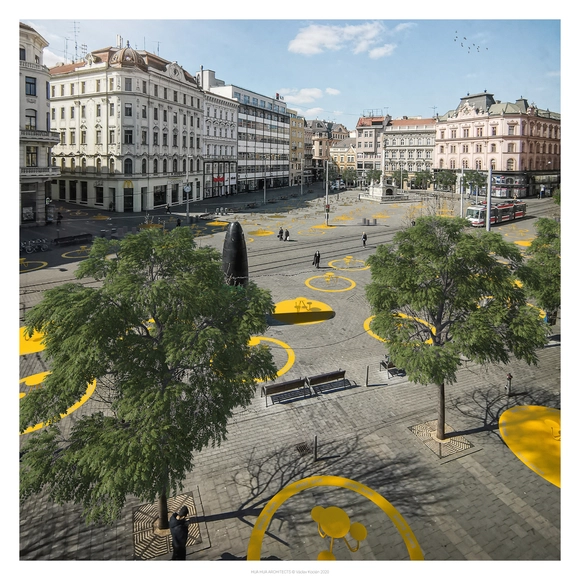
HUA HUA Architects has imagined a proposal that can reconcile people and public spaces, post Covid-19. The Gastro Safe Zone program aims to awaken stagnant gastronomic businesses by regulating outside eating and ensuring the required social distancing measures. The first prototype has been already installed in the streets of Brno in the Czech Republic.