Now that the effects of climate change are visible and indisputable, consumers are more environmentally conscious than ever. In fact, as a United Nations 2021 study suggests, 85% of them reveal that sustainability plays a key role when making their purchase decisions, motivating businesses and manufacturers to respond accordingly. This explains the rising demand for electric vehicles and products made of renewable or recyclable materials. However, architecture – and especially traditional housing – seems to be several steps behind compared to other industries. Although there are numerous efforts to move towards a greener built environment, the way most buildings are made today continues to be outdated, creating tremendous amounts of waste and significantly contributing to the global carbon footprint.
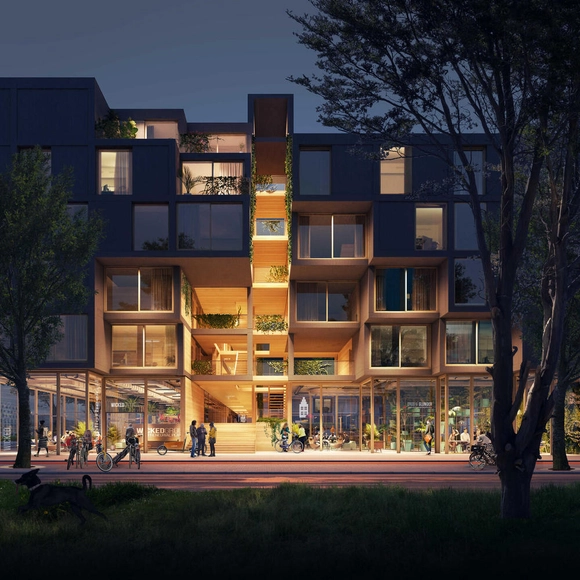
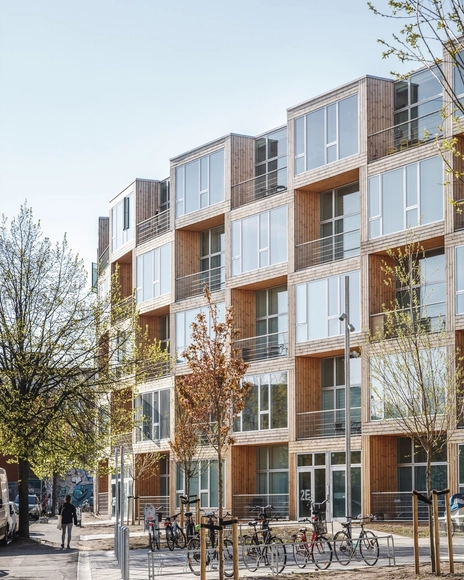
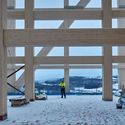
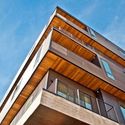
The first wooden housing modules of Juf Nienke, a new circular prefabricated timber housing project by SeARCH, RAU, and DS landscape architects, has been installed in Amsterdam. The project will feature 61 rental homes made entirely of wood, and will sit at the entrance of Centrumeiland, a newly raised piece of land on Lake IJmeer that features 1500 housing units. It is set to be one of the most sustainable apartment buildings in the Netherlands, incorporating an innovative cross-laminated timber construction and utilizing recycled materials.
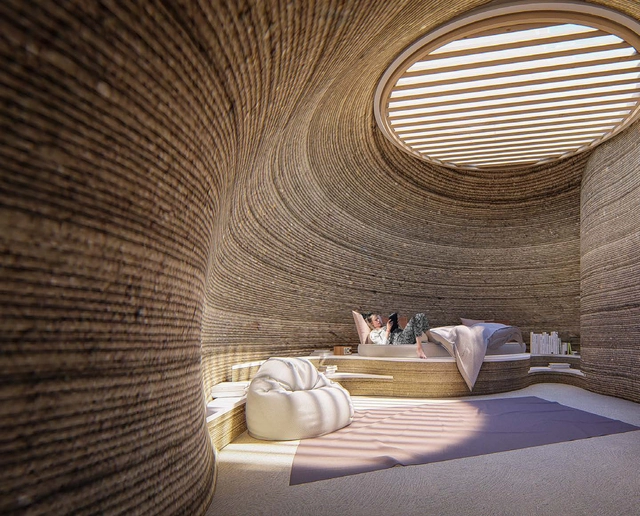
TECLA, 3D Printed Habitat by WASP and Mario Cucinella Architects. Image Courtesy of WASP
Jorge Drexler sings, in one of his songs, that “we always look at the river, contemplating the other riverbank”. Beyond understanding everything that was done, looking back at the past year can serve to get some clues about the future. This 2021, we published more than 160 articles in the Materials & Products section, covering a wide range of topics. From complex concepts such as 4D printing or very little processed materials such as hempcrete and bamboo, drawing a retrospective of the covered themes and understanding what interested our readers the most is an interesting exercise to foreshadow some trends in the future of the construction field. Looking at our most viewed articles, three large themes are evident: 3D printing, pre-fabrication, and interior renovation. Below, we present a compilation of each topic, reflecting on what we can dare to say about the trends in the construction industry that should consolidate in 2022.
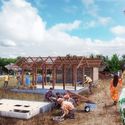
It is difficult to find someone who never played LEGO as a child. What if, like LEGO's, we thought of buildings as great assembling games? U-Build is a modular wooden construction system developed by Studio Bark to be easy to build, pleasant to inhabit, and simple to deconstruct at the end of its useful life. The system removes many of the difficulties associated with traditional construction, enabling individuals and communities to build their own homes and buildings. The system uses precision CNC machining to create a kit of parts, allowing the structure of the building to be assembled by people with limited skills and experience, using only simple hand tools.
The concept of prefabrication in construction corresponds to elements, parts or entire buildings produced in a factory and transported to a construction site for a quick installation. This represents numerous advantages over traditional construction methods, such as speed, precision in execution, efficiency, cleanliness of the work and, in many cases, cost. Considering that housing is a primary human need, using industrial methods for the construction of affordable and good quality housing has always interested architects, whether to house growing urban populations or for temporary or emergency settlements, on the most diverse scales. After many attempts throughout history, the question remains whether the popularization of prefabrication in the construction field can be a solution to provide greater equity in access to housing.
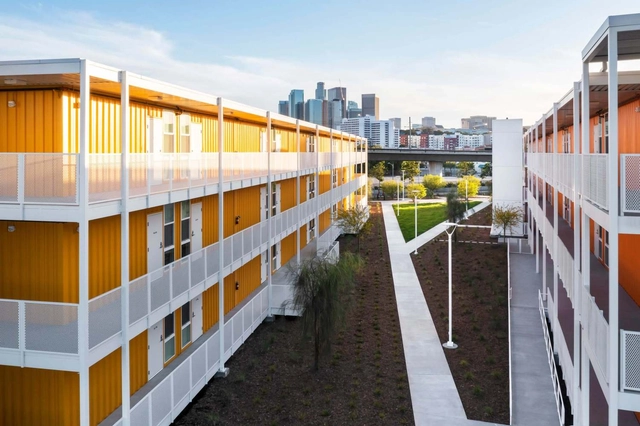
The Hilda L. Solis Care First Village (HSCFV), a large-scale interim housing project providing a wide range of amenities for both the unhoused and those in transition, recently opened in Downtown Los Angeles.
Architecture is a long-standing profession, one that has produced the iconic landmarks we admire around the world, monuments which we revere around the world, and played a part in establishing the organisation of the cities we live in today. This description, however, is architecture in the traditional sense - and there are numerous examples of individuals and firms who have strayed away from traditional architectural practice, either through delving into adjacent fields or 'disrupting' the field with the harnessing of new technologies.
Industrial architecture usually requires fast installation, low-maintenance components, and flexible spaces that can be used for different purposes. Therefore, modular solutions are very common in this type of construction, also adding a powerful visual language to the building.
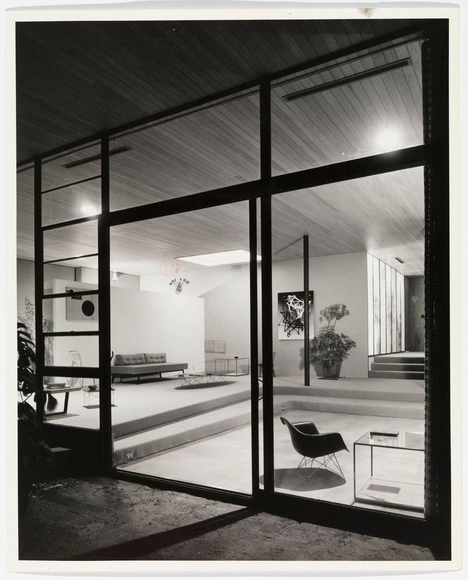
The Case Study Houses (1945-1966), sponsored by the Arts & Architecture Magazine and immortalized by Julius Shulman’s iconic black-and-white photographs, may be some of the most famous examples of modern American architecture in history. Designed to address the postwar housing crisis with quick construction and inexpensive materials, while simultaneously embracing the tenets of modernist design and advanced contemporary technology, the Case Study Houses were molded by their central focus on materials and structural design. While each of the homes were designed by different architects for a range of clients, these shared aims unified the many case study homes around several core aesthetic and structural strategies: open plans, simple volumes, panoramic windows, steel frames, and more. Although some of the Case Study Houses’ materials and strategies would become outdated in the following decades, these unique products and features would come to define a historic era of architectural design in the United States.
https://www.archdaily.com/961900/how-did-materials-shape-the-case-study-housesLilly Cao
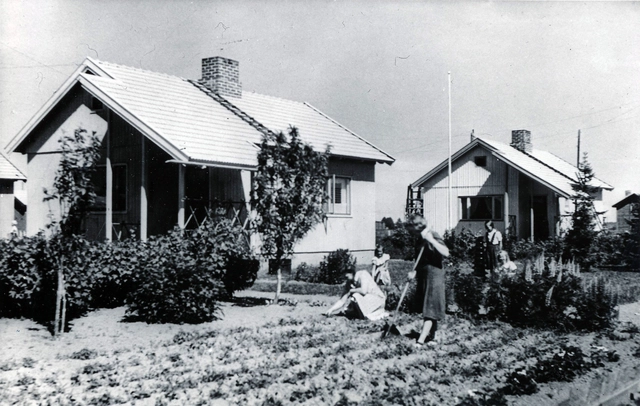
For the 17th International Architecture Exhibition of La Biennale di Venezia, Finland's Pavilion revisits a moment in local history when a refugee crisis led to new ways of building and a reconfiguration of domestic space, which ended up influencing different places around the world. Titled New Standards, the exhibition curated by Laura Berger, Philip Tidwell and Kristo Vesikansa presents the story of Puutalo Oy, an industrial enterprise specialized in prefabricated wooden buildings that set new standards for residential design in the 20th century and created Finland's most widespread architectural export.
Prefabrication is not a new concept for architects, but its usage is evidently on the rise. With today’s limited spatial capacity and need for cost efficiency, the industrial strategy of architectural production has shifted towards an all-around-efficient approach, in some cases assembling projects in a matter of days or weeks [1][2].
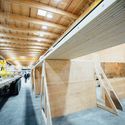
Prefabricated wood components, used in both wooden frames and mass timber constructions, have helped solve many design and engineering challenges. In addition to material and time efficiency, reduced waste, and cost control [1][2], prefabricated wood elements offer the advantages of high performing and energy efficient passive designs [3].
In the Genesis flood narrative, Noah built an ark after a call from God, who decided to flood and destroy all life on Earth due to the misbehavior of humanity. Only Noah's family and a couple representatives of each species of animals could enter the huge vessel and save themselves. In the bible, the ark is described in the exact measurements of 300 cubits in length by 50 cubits in width by 30 cubits in height. This was a unit used at the time based on the length of the forearm, measured from the tip of the middle finger to the elbow. A Dutchman who has devoted himself to building a replica of Noah's Ark, without success in finding a correspondingly accurate value in the metric system, used his own body measurements as a module. Modulation in architecture means adapting the project to a defined measurement based usually on a specific dimension or material. Whether it is a meter, a brick, a tile, or a container, it serves to guide the design process and make it more efficient and sustainable.
As our cities continue to grow and expand rapidly, there has been an increasing demand for architects and craftsmen to build houses more cost-efficiently under tight deadlines. Modular architecture has been introduced as a concept which involves assembling multiple pre-fabricated modules on site to create a working unit. By joining similar elements together in various ways, modular architecture allows for more flexibilities in design and standardized repair.
Emergencies include a variety of contemporary scenarios ranging from natural disasters to extreme poverty or isolation due to social and political conflicts. In all cases, the disruption of normality and the requirement of basic needs for maintaining a decent quality of life become the basis for finding quick and efficient alternatives to respond to this type of urgency.
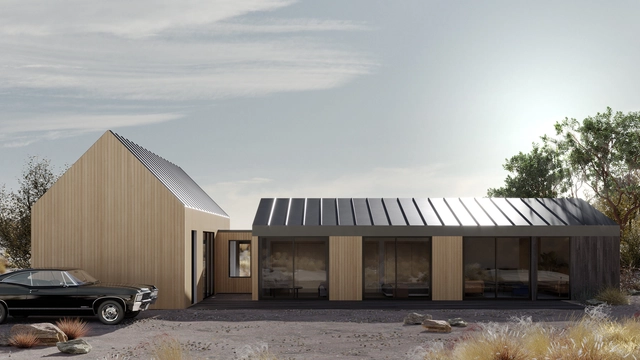
Prefabricated residential design and construction company Plant Prefab has unveiled three new LivingHome designs. The new designs, which range from a farmhouse-style structure to a modernist townhouse designed for The Los Angeles CIty Small Lot Ordinance (SLO) zoning, are all created by Plant Prefab’s in-house design team, the Plant Design Studio.
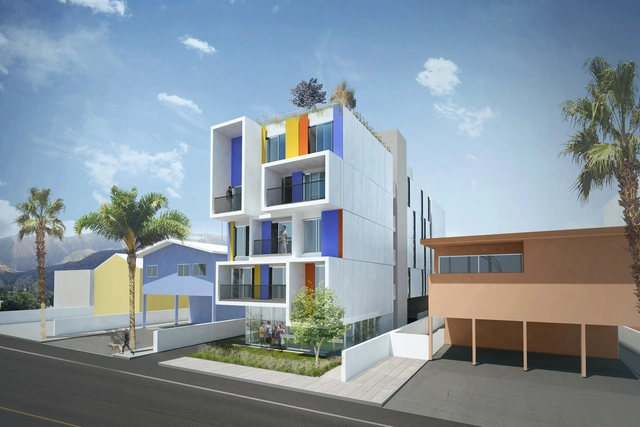
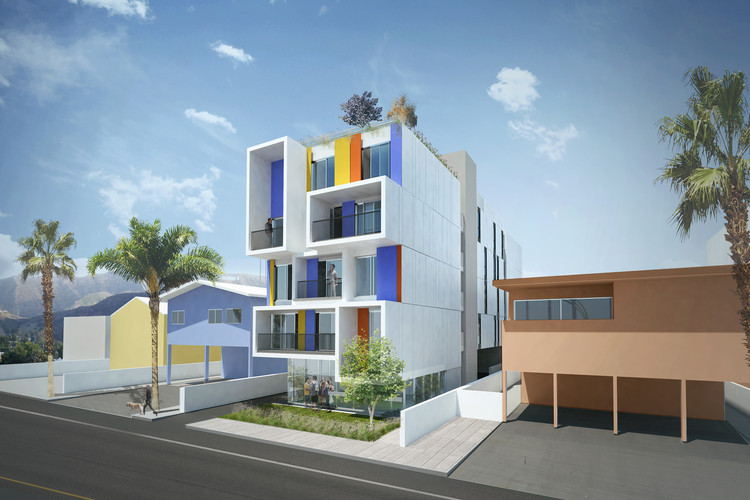
Brooks + Scarpa and Plant Prefab have developed a new toolkit to address housing shortages. Scalable as an infill solution, the Nest toolkit can be configured in multiple ways using site types and typical lot sizes, or a combination of them. The toolkit was made to address LA’s shortage of supportive housing for the homeless and provide flexibility to meet the needs of a particular site, neighborhood, and bed count.

















.jpg?1588864578)