Videos
Gerbert Rappaport. Director. Image from the movie Cherry Town (Cheryomushki) 1963.
Flying Panels - How Concrete Panels Changed the World is a new ArkDes exhibition designed by Note Design Studio and curated by Pedro Ignacio Alonso and Hugo Palmarola - authors of the Monolith Controversies exhibition, the winner of the Silver Lion award at the 14th Venice Architecture Biennale in 2014.
It brings together a series models and material as posters, paintings, films, toys, cartoons and opera sets are gathered to reflect on how concrete panels influenced culture for the construction of a new society.
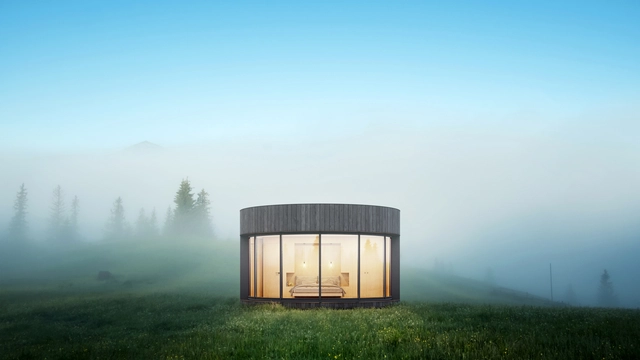
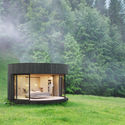
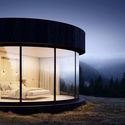
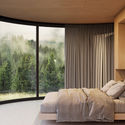
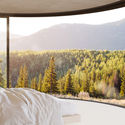
French manufacturer Lumicene has unveiled a new minimalist prefab dwelling unit made to connect with nature. Called LumiPod, the curved structure is designed around a 5m diameter window that can slide along rails and open to the outdoors. Made to celebrate connections to nature, the 180 square foot prefab unit includes a bedroom, toilet and shower area. LumiPods are designed to be delivered anywhere in the world.
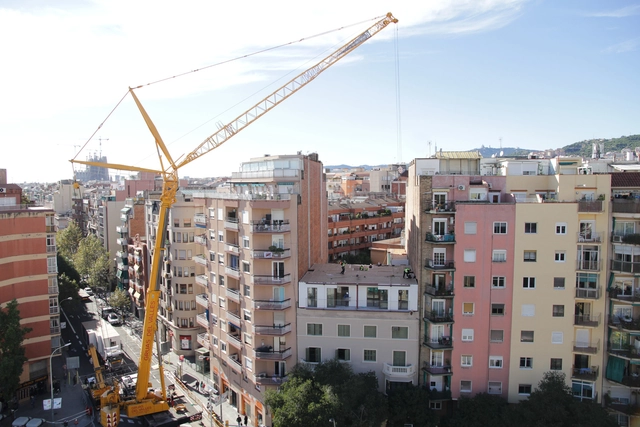
La Casa por el Tejado, a company that specializes in adding floors to old buildings, duplicated both the living spaces and the number of floors of an apartment building on Avenida Meridiana in the El Clot neighborhood of Barcelona. The new residences were built off-site in 12-weeks time and in accordance with the building's original dimensions and characteristics.
“Modular” isn’t a construction product; it’s a construction process. This is according to Tom Hardiman, executive director of the Modular Building Institute (MBI), whose members include more than 350 companies involved in the manufacturing and distribution of modular buildings, including multifamily homes.
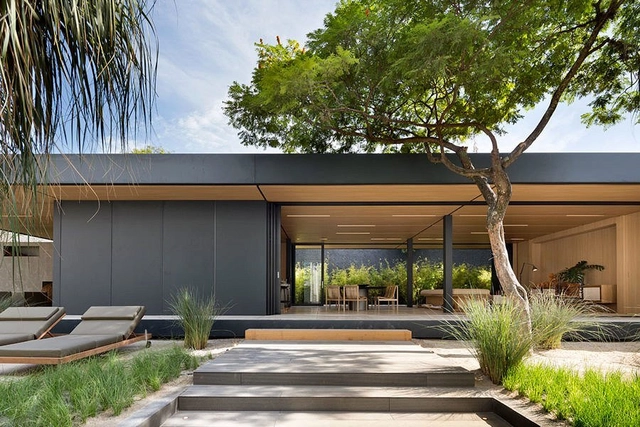
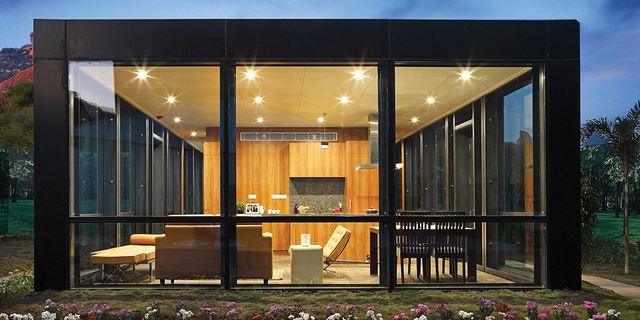
Brazilian startup SysHaus, in partnership with architect Arthur Casas, developed a project of sustainable, smart homes that are ready in half the time of other pre-fab works. The startup project, specializing in high-end real estate, is made only of pieces of recycled materials, such as aluminum and MDF. In addition, the house does not produce waste or wastewater.
Great school design is more than just a good piece of architecture. Particularly in vulnerable areas with poor public infrastructure, schools symbolize the role of the state and education as a transforming agent for social improvement. They can also become areas for community life, sports, courses, among other uses. Unfortunately, these projects do not always receive the attention they deserve.
Schools require diverse and complex programs and flows, therefore, developing an educational project is one of the greatest challenges for architects. Due to the economy, rationalization, and speed of work, Brazil's largest portion of school projects are designed from prefabricated concrete elements with rigid modulations and, in rare cases, steel. But what may seem to limit at first, can actually become an exercise in structural creativity.
In an attempt to elucidate the systems used to materialize these projects, we've selected a compilation of seven prefabricated schools in plan and section to create incredible spaces for learning.
On October 1, 1908, Ford launched its first model car in the American market, the Ford T, starting the automotive industry and establishing new paths for industrialization. Inspired by the manufacturing systems of weapons and sewing machines, in 1913, Henry Ford revolutionized production with the first moving assembly line to produce the Model T; a simple, safe, reliable and cheap car.
The price decreased over time as production became more efficient. The Model T cost $850 in its first year and, as the manufacturing process became more efficient, it decreased to $290 in 1927, the last year it was produced. Industrialization led to optimized costs, time, and logistics.
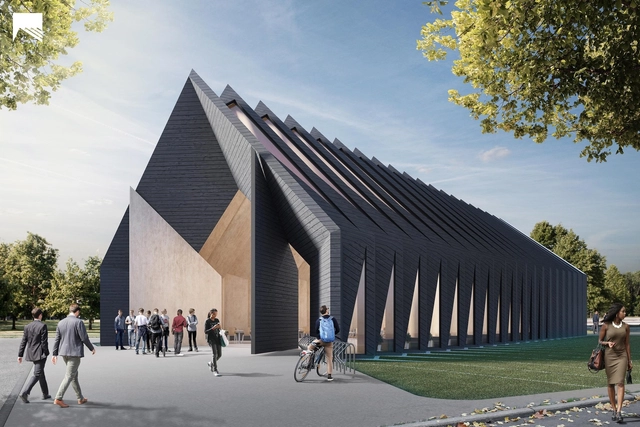
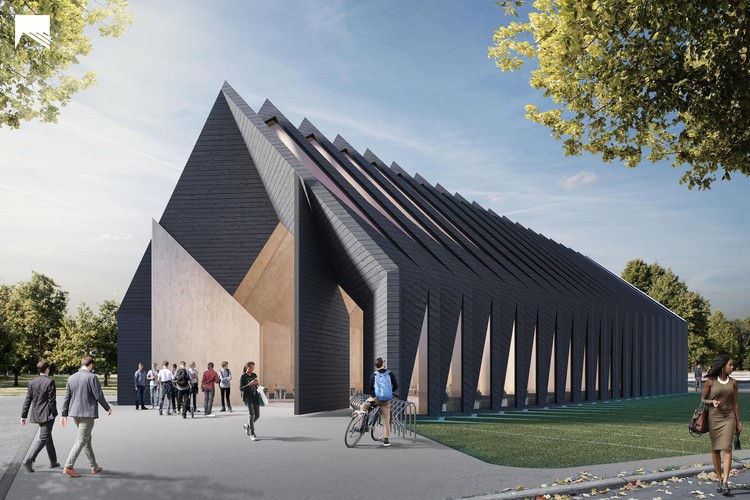
MIT Mass Timber Design, a cross-disciplinary design workshop at the Massachusetts Institute of Technology, have developed a building prototype that aims to tackle the world’s growing energy crisis, “one of the biggest challenges of the 21st century.” Extensively using the wood-based building design and construction technology mass timber - a method growing in popularity within North America - the project utilizes the “efficiency, speed, precision and versatility” of prefabricated timber construction elements to realize a multi-functional, sustainable building. The longhouse typology, often one of the first permanent structures of a civilization, is a common across the world, but in adapting its construction to face modern-day issues, the team hopes to create a space that “builds upon this rich cultural icon.”
At KEF Infra One—a prefabrication plant outside of Krishnagiri, India—houses, cafeterias, and hospitals roll off an assembly line, as do the premade doors, windows, bathroom fixtures, and furniture to be installed within them. It’s a one-stop shop that makes building a house as easy as buying the food, dishes, and cookware for a family dinner in one fell swoop at Target.
The demands on infrastructure in India are huge. Given the country’s decentralization and its building trades’ reliance on manual labor, this level of modular building integration has been a far-off dream across all sectors. KEF Infra says it’s the only such facility in the world, integrating design, engineering, and fabrication to assemble building kits that provide far more than four walls and a roof, right out of the box.
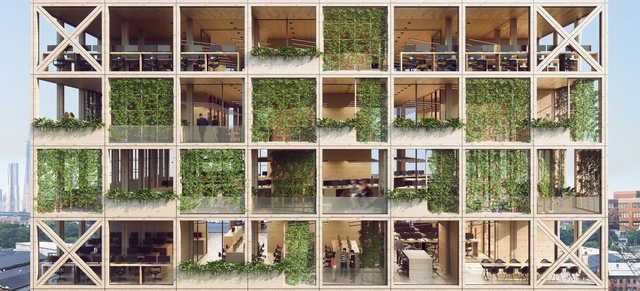
Recently shortlisted for the 2018 Design Challenge "Design the Next-Generation Facade" by Metals in Construction Magazine, this "Pixel Facade" system is an adaptive, scalable and repeatable building system that can be applied to various building typologies. The system draws inspiration from our innate desire for nature, also known as "biophilia." The "Pixel Facade" system merges a contemporary office environment with biophilic environments to create the next generation of office design.
Studio Gang has released details of their proposed condominiumtower in Downtown Brooklyn, New York City. “11 Hoyt” has been designed with an emphasis on nature and community-building, responding to a lack of comfortable outdoor space in Brooklyn through the creation of an “outdoor-indoor environment."
The Studio Gang scheme, designed in collaboration with Hill West Architects, reclaims a former parking garage site in a rapidly-densifying area, where the population has increased by 40% in twenty years. 11 Hoyt is set to transform the site into an elevated green podium anchored by a 770,000-square-foot (71,000-square-meter) residential tower featuring a “scalloped” façade.
https://www.archdaily.com/892945/studio-gang-unveils-images-of-rippling-condominium-tower-in-brooklyn-new-yorkNiall Patrick Walsh
Videos
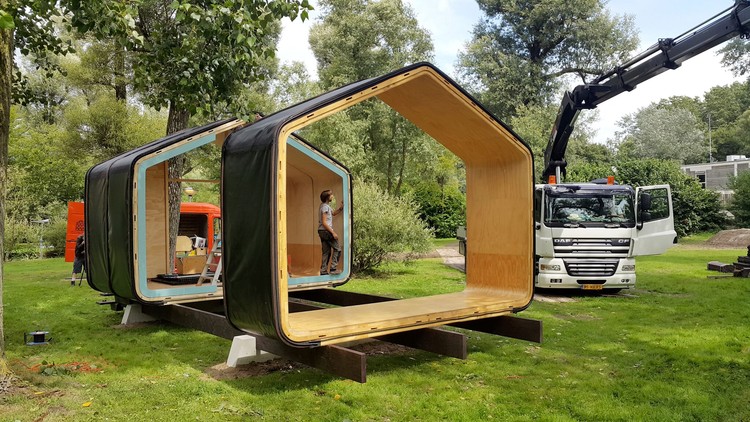
Under Construction. Photo Courtesy of Yvonne Witte
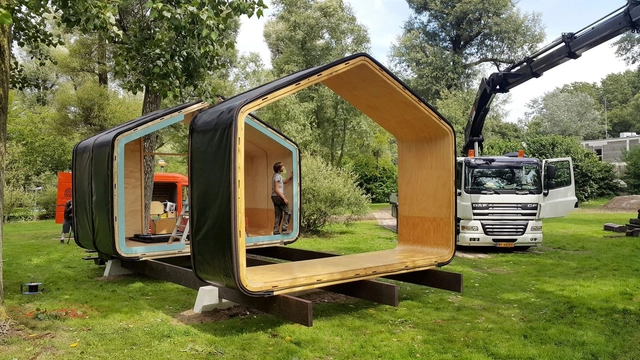
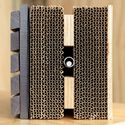
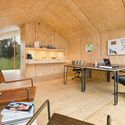
Designed and developed by Fiction Factory, a company of creative makers from Amsterdam, Wikkelhouse loosely translates to ‘wrapped house.' This sustainable modular house is uniquely created with cardboard as its main building material and is customizable in its size and function.
Seeking to connect the traditions of carpentry and the prefabrication industry, Chilean practice abarca+palma have developed a modular house proposal made up of 10 different types of module, capable of forming 5 different house layouts.
The house is constructed in pine wood—using composite beams and pillars—with prefabricated SIP panels.
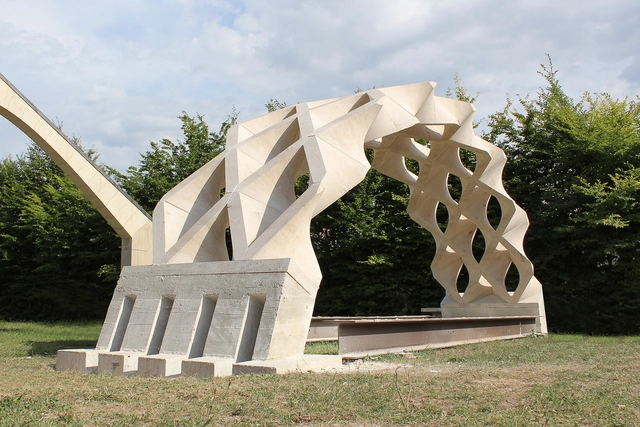
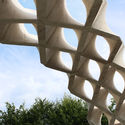
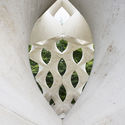
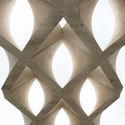
Italy-based New Fundamentals Research Group recently designed and built a full-scale prototype of an experimental barrel-vaulted stone structure for SNBR, a French company that specializes in cutting-edge stone construction. The structure is named Hypar Vault in a reference to the geometry of its constituent blocks; it uses two types of prefabricated stone modules—one type is the mirror image of the other—whose designs are based on the hypar (hyperbolic paraboloid), one of the only "doubly-ruled" surfaces in geometry. The use of these configurations allowed the vault to be constructed with almost zero wasted stone.
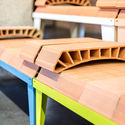
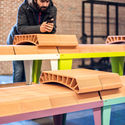
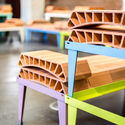
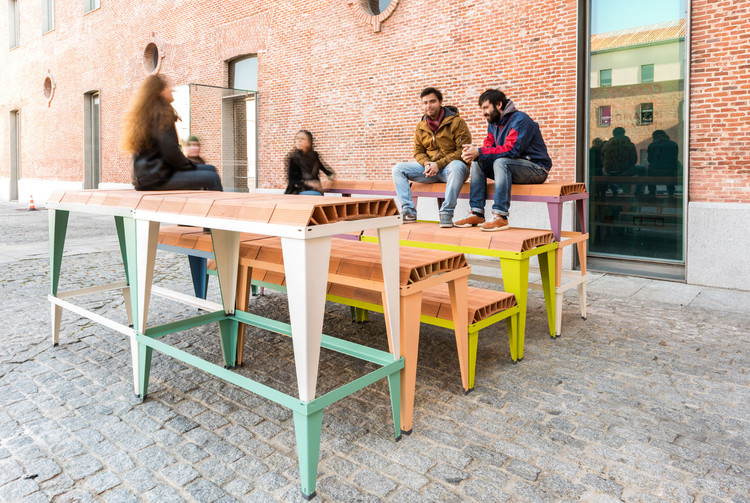
In 1855 the German machinery manufacturer Carl Schlickeysen issued the patent he had recently created, the "Universal Patent Brickmaking machine", the first machine created to manufacture bricks by extrusión as an industrial process.
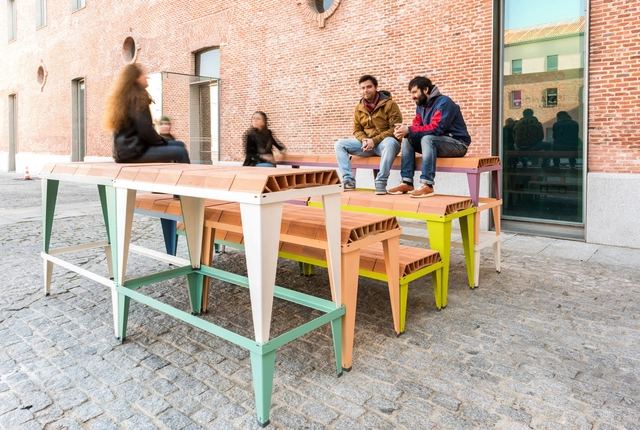
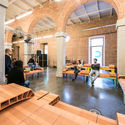
SCHLICKEYSEN is a modular furniture system based on two types of modular metal supports and standard-sized ceramic curved vaults. All kinds of settings can be configured from the combination of these three elements; picnic tables, continuous benches, grandstands, topographies, and many more typologies can be achieved by just stacking the metal supports and using the ceramic vaults as a horizontal supporting surface.
[In New York] there’s this math problem: 1.8 million small households and only one million suitable apartments. – Mimi Hoang, principal of nArchitects
Last year, nArchitectsreleased a trailer that teased the development of their winning adAPT NYC entry, Carmel Place (formerly known as My Micro NY). The competition sought to address the need for small household apartments in New York City. Now in a newly released video, the full story of the city’s tallest modular tower comes together in smooth timelapse to a dainty piano soundtrack.
Vancouver-based Leckie Studio Architecture + Design has founded the Backcountry Hut Company to bring affordable recreation structures to outdoor enthusiasts. Inspired by IKEA's philosophy of providing superior design at a moderate price point, the prefabricated hut prototype aims to embody the company's four cornerstones: function, quality, sustainability, and value.
_1963..jpg?1571935874&format=webp&width=640&height=580)

















_smaller.jpg?1475205786&format=webp&width=640&height=580)


_smaller.jpg?1475205786)