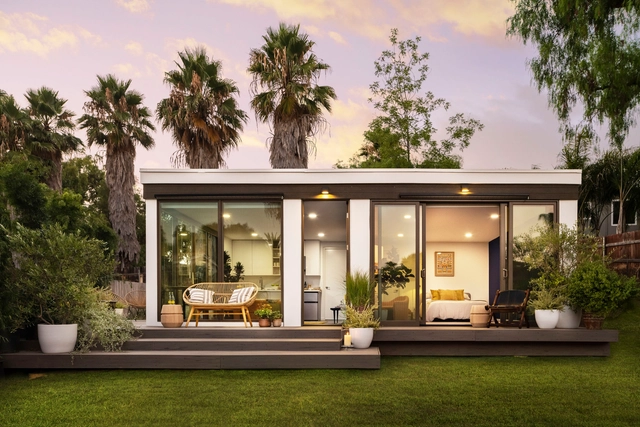
Housing is a diverse architectural typology whose configuration is determined not only by those who design it but also by the use of those who live in it. Therefore, homes are fundamentally adaptable structures that evolve in line with their time and users, undergoing constant changes manifested in the ways of living. The house conceived today will not be the same as the one built tomorrow, so it becomes necessary to maintain a critical and profound approach to the role it plays in the built environment.
In this sense, modular architecture has consistently presented itself as a dynamic design strategy that has revolutionized housing, developing versatile solutions for sustainable spaces and construction practices. Thus, modular housing has been fertile ground for exploring and deepening ways of inhabiting space and addressing human needs. From the prefabricated catalog houses of the 19th century to the post-World War II housing boom, its evolution reflects both past proposals and the exploration of new concepts for the future.
https://www.archdaily.com/1015545/how-can-modular-design-be-used-to-revolutionize-housing-architectureEnrique Tovar
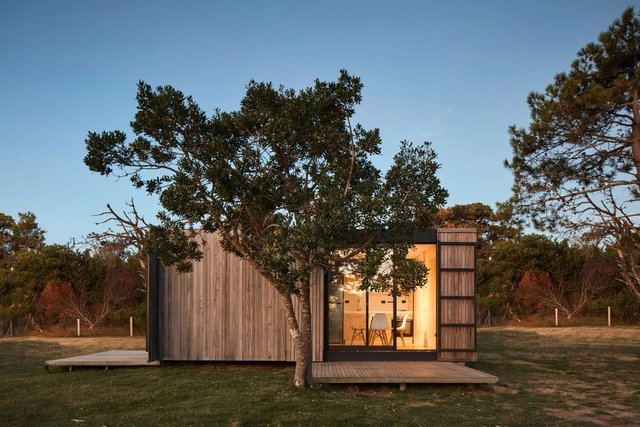
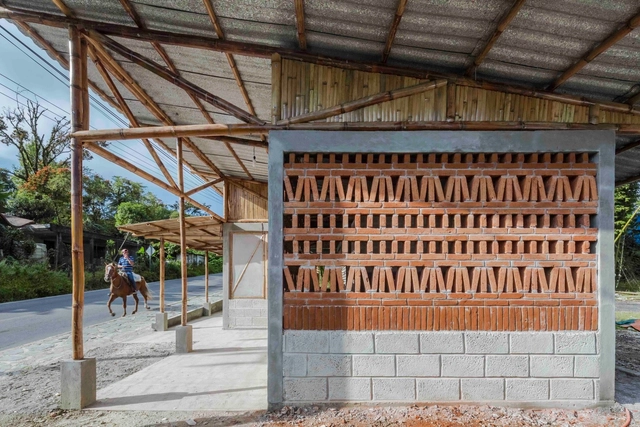
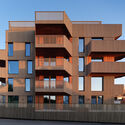
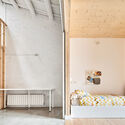
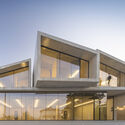
El Tume House / abarca+palma. Courtesy of abarca+palma
The current demands of the industry lead architects to design based on construction solutions that accelerate processes without compromising quality, while reducing waste and dependence on intensive labor. Among these options, SIP panels stand out as a modular alternative that combines thermal and acoustic insulation with speed and construction precision.
Named after their acronym, SIP panels are self-supporting elements consisting of a rigid foam core sandwiched between two structural claddings, typically OSB boards. Strong yet lightweight, these panels are manufactured under strict factory controls and transported to the construction site, facilitating the rapid assembly of floors, walls, and ceilings, while creating an airtight thermal and acoustic envelope. The thickness of the panel depends on the combined thickness of its components, and its weight typically does not exceed 20 kg per square meter.
In a constant search to find new ways to reduce costs and construction times, modular architecture emerges as an opportunity to implement various methods, technologies, and techniques to design livable spaces using separate repetitive elements such as modules. As Tom Hardiman, executive director of the Modular Building Institute (MBI), maintains, "Modular" is not about a construction product but rather a construction process.
No longer relegated to the domain of temporary structures or utilitarian living, modular housing is increasingly gaining traction. Prefabricated homes are disrupting the architecture industry with their efficient construction, predictable costs, and reduced environmental impact. Modular housing is rooted in the idea of quick replication and standardization. In a world that prioritizes customization, how might modular housing meet the needs of diverse individuals?
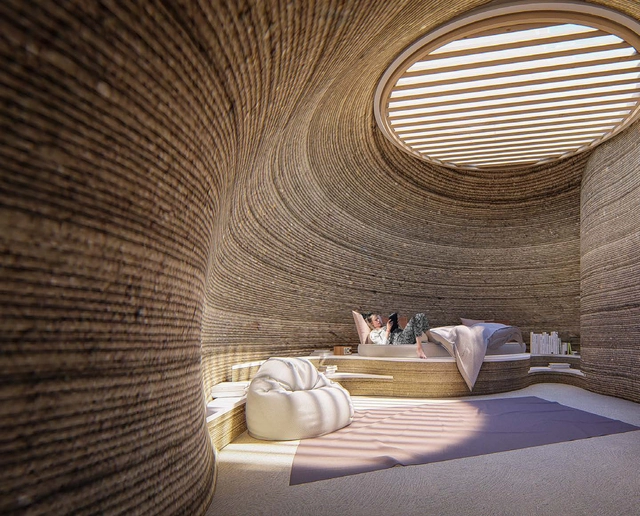
As construction materials costs increase, builders and developers are seeking alternatives to traditional home construction methods to address housing shortages. In response, an expanding construction technology field is the 3D printing sector. This technology promises quicker, cheaper construction and the potential to extrude local and recycled materials. However, due to the slow-changing nature of the construction industry, a radical shift involving large-scale 3D-printing machines on-site and a complete overhaul of the construction process seems unlikely shortly.
Prefabricated 3D printing modular housing offers a compelling solution, providing the benefits of 3D printing advancements while leveraging standard construction machinery and labor. In off-site 3D-printed construction, there is no need to transport massive 3D-printing machines on-site. Instead, components are printed in a controlled environment and then assembled on-site. These types of 3D-printed residential modular kits of parts are already being manufactured and are attracting significant investment.
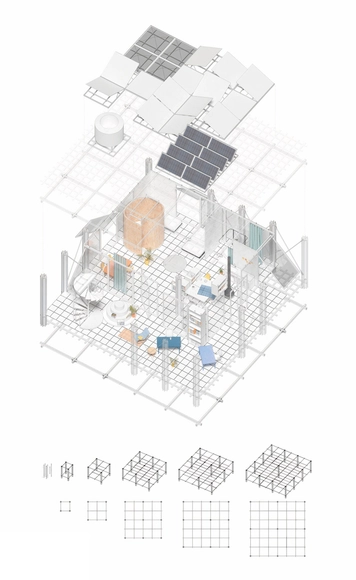
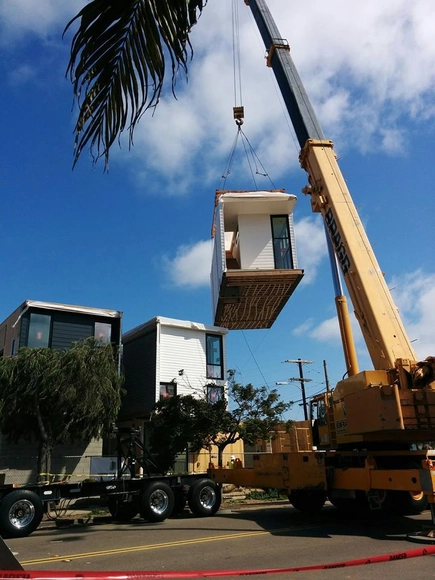
Modular homes are houses either partially or fully constructed in a factory. This process involves creating a series of three-dimensional 'modules' delivered to a site in a predetermined spatial pattern and assembled into a complete product. These homes have become popular solutions to housing crises as they can be produced 50% faster and emit half as much pollution.
However, the locality of the materials used is a significant factor that gives homes their character. It conveys a sense of place, culture, construction history, and local craftsmanship. This raises questions about its role in modular housing: Can local materials be used in the factory production of homes? Can they be combined with a modular framework and temporary connections? What are the limitations of building modular homes in the local contexts of the Global South?
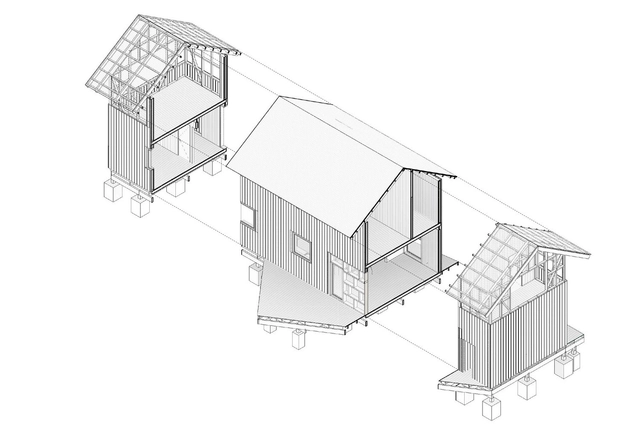
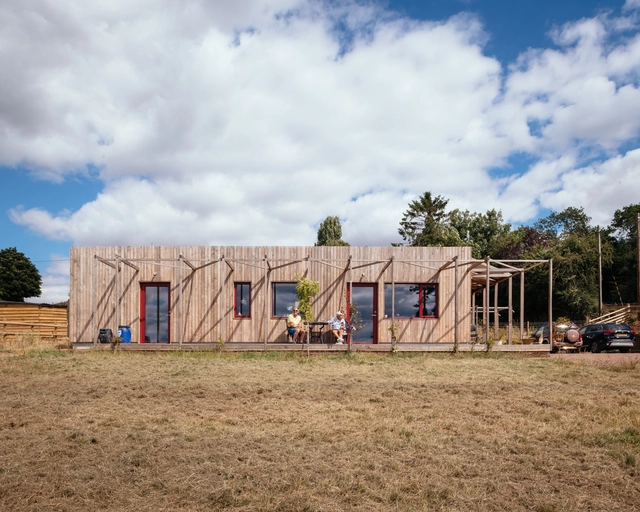
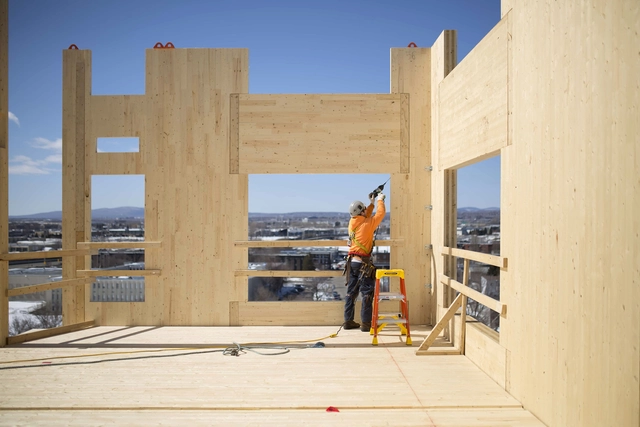
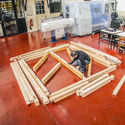
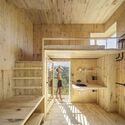
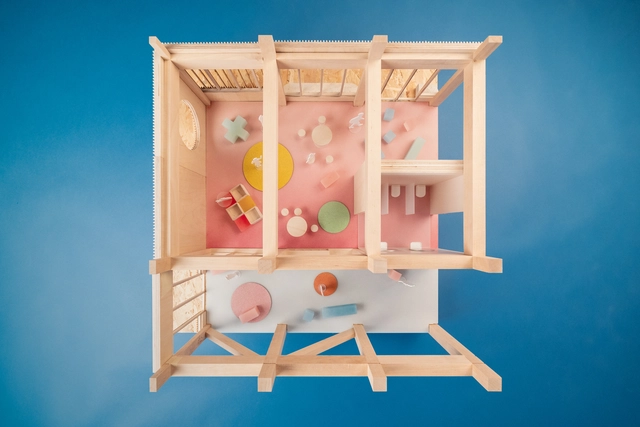
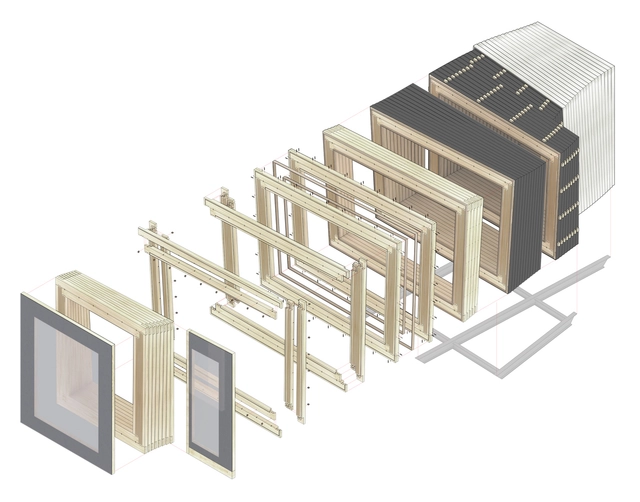
A few years ago, the architects at Studio Bark, in collaboration with Structure Workshop and Cut and Construct, began to develop the idea of a circular kit of parts designed so that anyone with reasonable DIY skills could build their own structure. This is U-Build, a modular system made of wood panels crafted with the precision of a computer-controlled cutting machine (CNC). The panels are delivered to the construction site in a compact box, ready to be assembled, stacked, and screwed to shape the walls, floors, and ceilings. Only a few tools are needed, such as a rubber mallet, a drill, a tape measure, and a level.
While this system allows the construction of various types of buildings, its high level of customization finds particular utility and effectiveness in housing projects of all scales. From a tiny house for a couple opting for simplicity to an off-grid cabin in the woods, a Georgian cottage extension, and a 3-bedroom efficiency home, U-Build has brought extraordinary prefabricated wooden homes to life.
Brick beams have been widely used in construction due to their strength, durability, and aesthetic appeal. By embedding steel reinforcing bars into a series of bricks arranged in a specific pattern, these elements form horizontal load-bearing structures that distribute the weight and forces that act on a building. However, it is difficult to find brick beams with excessively large spans, in order to avoid long-term structural problems. Instead, they mostly come in the form of simple lintels, which can be easier to handle.
With a length of 16.2 meters and an impressive clear span of 15.8 meters, CEBRA architects have collaborated with the Randers Tegl group, the largest brick supplier in Scandinavia, to complete the construction of probably the longest brick beam to date. This exterior beam is accompanied by a 13-meter-span interior "sister" beam and is located above the main entrance to the Danish Crown's new headquarters in Randers, Denmark, extending freely between two of the building's wings. The longest beam is made up of almost 4,200 bricks – its height is made up of 25 rows of bricks, equivalent to 1.6 meters, and its edge consists of 4 bricks.
Housing is a fundamental aspect of architecture, providing shelter, which is essential for everyone. In urban environments, addressing the housing challenge is both urgent and complex. Social housing initiatives aim to provide a substantial portion of the population with access to this fundamental architectural concept: a home.
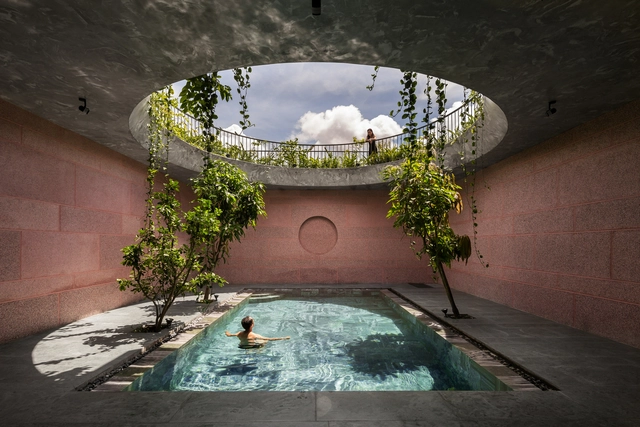
Designer pools bring status to luxury homes and five-star hospitality spaces. But adding the cooling, calming, energizing, and environmental benefits of a hyper-local water body to a residence can far outweigh the cost of installation. With a range of long- and short-term landscaping options possible, meanwhile, luxury is available, whatever the budget.
Most pools are built below ground to retain unobstructed visuals above. While all in-ground pools start off the same way – with excavation, then connecting the plumbing and filtration systems – the main difference is in the construction of the pool’s basin. The simplest and quickest method is to lower a pre-fabricated reinforced plastic pool or pre-cast concrete basin into the cavity, before connecting the pipework and backfilling the recess with sand. But this is only suitable for off-the-shelf pools with simple geometries. In order to make the most efficient use of all available space, bespoke pool shapes and sizes are best achieved by pouring or spraying concrete into a rebar or timber frame.
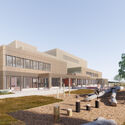
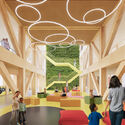
As part of the Circlewood consortium, OMA’s David Gianotten and Michel den Otter have developed a modular system to build schools that can adapt and transform throughout their lifecycle. The system was selected by the City of Amsterdam to be employed to build multiple schools in the coming ten years, as part of the Innovation Partnership School Buildings program. The citywide initiative aims to build nine to thirty “high-quality, flexible, and sustainable” schools as a way to contribute to the city’s goal of becoming fully circular by 2050.
As every professional in the building industry knows, construction can be a costly and endlessly time-consuming endeavor. Delays are almost more frequent than on-time construction, and can be induced by extensive bureaucratic requirements, weather and other unexpected circumstances, inadequate planning, too few personnel, or a whole host of other causes. Lengthy construction projects can also negatively impact public perception of a project even before it has been built, especially if the projects experience delays or inconvenience those who live or work close to the building site. Moreover, some projects simply need to be built along a faster timeline than is typically feasible for a traditional construction project. Thankfully, there exists a solution for those seeking to drastically reduce construction times: modular construction.
https://www.archdaily.com/949219/why-choose-modular-constructionLilly Cao
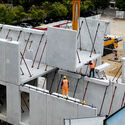
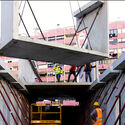
The precast and prefabricated elements made of concrete (such as slabs, pillars, beams and walls) are part of the constructive process known as modular construction. A construction methodology carried out in stages, based on the standardization of the parts that make up the building, with its modules produced on an assembly line, transported and assembled to shape the architecture.
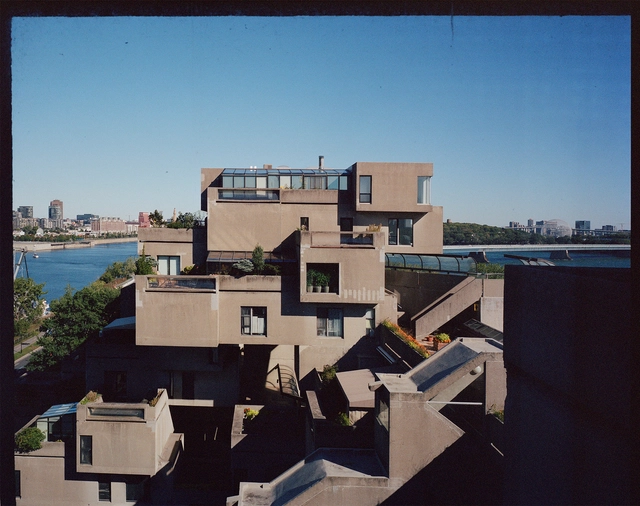
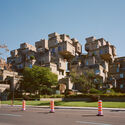
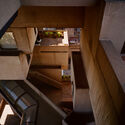
Habitat 67, designed by the Israeli-Canadian architect Moshe Safdie as the Canadian Pavilion for the World Exposition of 1967, was originally intended as an experimental solution for high-quality housing in dense urban environments. Safdie explored the possibilities of prefabricated modular units to reduce housing costs and allow for a new housing typology that could integrate the qualities of a suburban home into an urban high-rise.
Reflecting on the project’s significance in “A look back at habitat ’67” Safdie stated that “Habitat ‘67 is really two ideas in one. One is about prefabrication, and the other is about rethinking apartment-building design in the new paradigm.” [1]
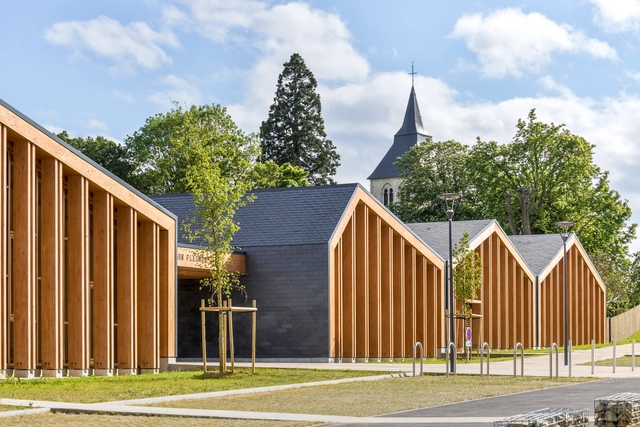
IBA Timber Prototype House / ICD University of Stuttgart. Image Courtesy of ICD University of Stuttgart
While the traditional image of the cabin is one of a rustic wooden home located far away from any trace of society, architects have been experimenting with these conventions alongside newer material and technological considerations to push the boundaries of the ‘cabin’ today. Whether it is by reimagining the aesthetics of the cabin, utilizing advanced fabrication techniques to modernize the rustic, or even reconfiguring the log cabin for the city setting, architects and designers have utterly transformed traditional cabin architecture for a more contemporary existence. Below, we consider 10 innovative cabins that achieve this transformation through experiments with different materials and construction technologies. While each explore different strategies and functions, many share similarities in their use of prefabrication systems, their dedication to sustainability, and their close attention to and optimization of specific material properties.
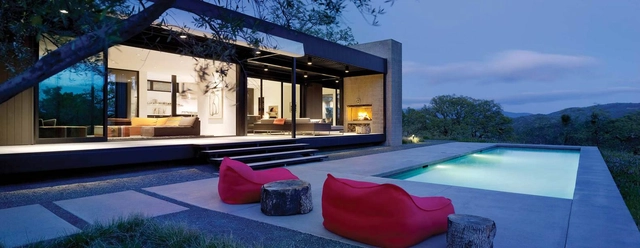
Marmol Radziner Gem. Image Courtesy of Western Window Systems
The benefits of prefabrication are by now well-documented: prefabricated construction is cheaper, faster, better for the environment, and more consistent than traditional forms of architectural construction. At the same time, it can be used for a wide range of unique designs, calculated to meet a client’s specific needs. To take advantage of these many benefits, however, the prefabrication systems and products themselves must meet a certain standard of quality and flexibility.
Below, we consider five architectural projects using custom glass windows and doors by Western Window Systems, each designed to maximize utility for prefabricated and modular construction logics. Beyond their suitability for prefabricated construction, these products also maximize views, aesthetics, and functionality, blurring the line between indoor and outdoor living.
https://www.archdaily.com/963662/glass-windows-and-doors-in-5-prefabricated-projectsLilly Cao
TECLA, 3D Printed Habitat by WASP and Mario Cucinella Architects. Image Courtesy of WASP
Jorge Drexler sings, in one of his songs, that “we always look at the river, contemplating the other riverbank”. Beyond understanding everything that was done, looking back at the past year can serve to get some clues about the future. This 2021, we published more than 160 articles in the Materials & Products section, covering a wide range of topics. From complex concepts such as 4D printing or very little processed materials such as hempcrete and bamboo, drawing a retrospective of the covered themes and understanding what interested our readers the most is an interesting exercise to foreshadow some trends in the future of the construction field. Looking at our most viewed articles, three large themes are evident: 3D printing, pre-fabrication, and interior renovation. Below, we present a compilation of each topic, reflecting on what we can dare to say about the trends in the construction industry that should consolidate in 2022.
It is difficult to find someone who never played LEGO as a child. What if, like LEGO's, we thought of buildings as great assembling games? U-Build is a modular wooden construction system developed by Studio Bark to be easy to build, pleasant to inhabit, and simple to deconstruct at the end of its useful life. The system removes many of the difficulties associated with traditional construction, enabling individuals and communities to build their own homes and buildings. The system uses precision CNC machining to create a kit of parts, allowing the structure of the building to be assembled by people with limited skills and experience, using only simple hand tools.