


Pavilion: The Latest Architecture and News
Zhulang Huagai: A Figure for the Nantou Urban Village / NADAAA + Cooper Union

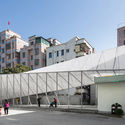
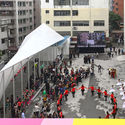
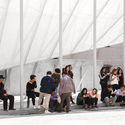

https://www.archdaily.com/889765/not-ready-zhulang-huagai-a-figure-for-the-nantou-urban-village-nadaaa-plus-cooper-union罗靖琳
Temporary Pavilion in Malaysia Aims to Raise Awareness of Bamboo as a Construction Material

The use of bamboo in construction is not yet widespread. This is the reason why Eleena Jamil proposes the use of this sustainable material in different configurations, resulting in a resistant, light and permeable structure.
The project, an urban pavilion in Malaysia built mainly with circular bamboo rings, explores the different possibilities of the linear material with a variety of measurements and links of joinery and strings.
https://www.archdaily.com/889273/permeable-bamboo-walls-for-an-urban-pavilion-in-malaysiaAD Editorial Team
Architecture as Experiential Marketing: The Surprisingly Bright Vantablack Olympic Pavilion in PyeongChang

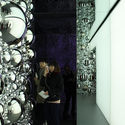
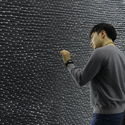
Much has been said about the darkest building in the world, designed by Asif Khan, for Hyundai's Winter Olympic pavilion this year. What’s more surprising about this blackest-of-black pavilion is really how bright it is inside. The imposing facade of Vantablack VBx2 encloses a series of radiant, playful rooms and the entire project is part of a joint effort by Hyundai and Asif Khan to use architecture and design principles to bring delight to Olympic visitors in Pyeongchang this year.


https://www.archdaily.com/888808/architecture-as-experiential-marketing-the-fascinating-hyundai-pavilion-designed-by-asif-khan-for-pyeongchang-2018Keshia Badalge
Architects Create Affordable "Exoskeleton" Pavilion With Modular Woods, Tie Straps and Sliding Joints
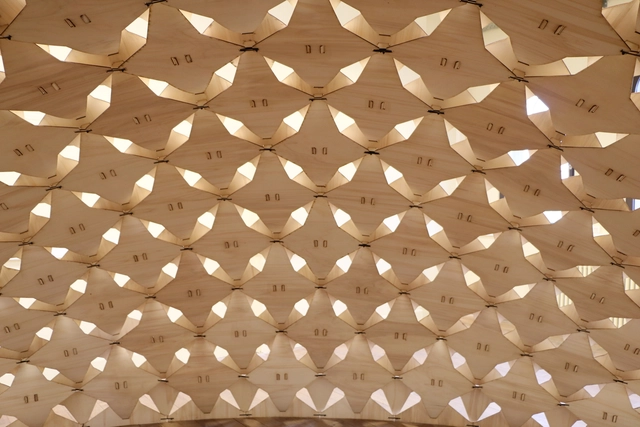
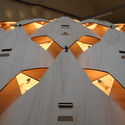
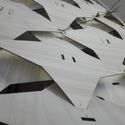
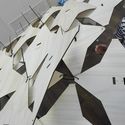
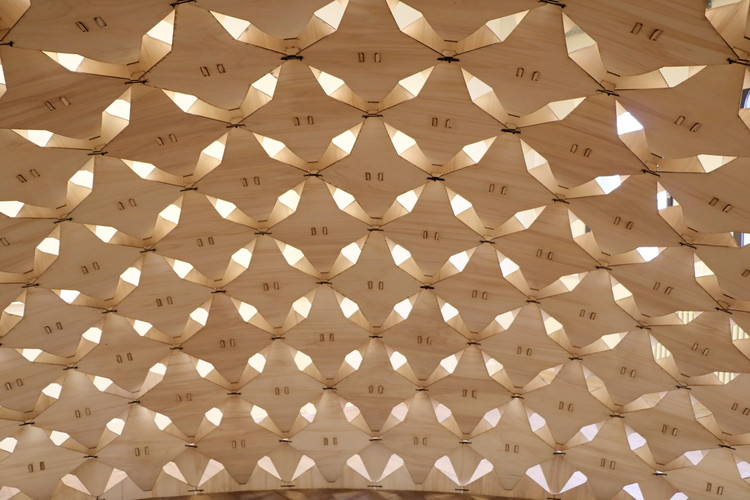
"Exoskeleton" is a pavilion that shows how Computer Aided Manufacturing can create rapid prototypes. This manufacturing process allows for real-scale construction and experimentation with limited resources.
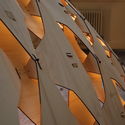
In this project, a system of modules, designed with different dimensions, is put together with simple joints without nails or screws. This allows for different surfaces to be formed and for the pieces to be rotated and assembled at various angles and heights.
https://www.archdaily.com/887326/digital-manufacturing-to-experience-real-scale-architecture-quickly-and-with-limited-resourcesAD Editorial Team
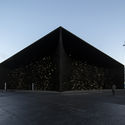
Asif Khan Unveils 'Darkest Building on Earth' For Winter Olympics Pavilion
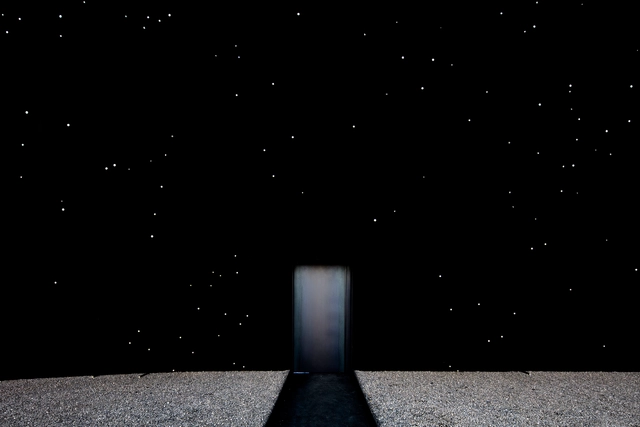
Asif Khan's Vantablack pavilion, the world's first super-black building, will open at the PyeongChang 2018 Opening Ceremony on 9 February 2018.
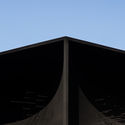
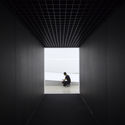
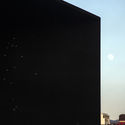
The Olympic pavilion is coated with Vantablack VBx2 carbon nanotubes and illuminated by thousands of tiny white light rods. These rods extend from the structure's parabolic super-black facade and create the illusion of a field of stars suspended in space. Looking at the building will be the closest experience to looking into space from a point on Earth.

https://www.archdaily.com/888607/asif-khan-unveils-darkest-building-on-earth-for-winter-olympics-pavilionKeshia Badalge
Call for entries MEDS Workshop 2018 - DiverCity
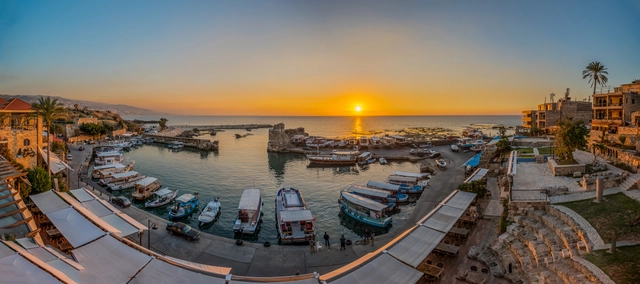
Update: The deadlines for this opportunity have been extended
- Call For tutors : Extended till January 28
- Call for participants : Ends on February 28
MEDS workshop “Meetings of Design Students” is an international workshop that takes part each summer in a different country, focusing on various issues, themes, topics and settings that will help any designer expand their expertise. It is a chance to get in touch with diverse approaches to design, different building techniques, traditions and skills. MEDS workshop is both practical and educational because it focuses not only on creative theoretical designs, but actually compels participants to execute these designs during the 2-week span of the workshop. You can apply to MEDS as a tutor or as a participant.
https://www.archdaily.com/887121/call-for-entries-meds-workshop-2018-divercityRene Submissions
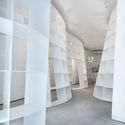
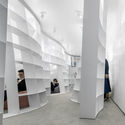
Enclave Book Pavilion / Aether Architects




https://www.archdaily.com/886589/enclave-book-pavilion-aether-architects舒岳康 - SHU Yuekang
Venice Biennale 2018: Danish Pavilion to Focus on the Power of Collaborative Innovation
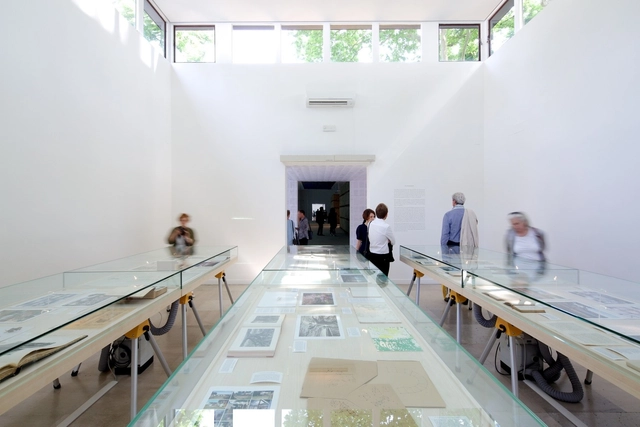
The Danish pavilion at the 2018 Venice Architecture Biennale will demonstrate the power of collaborative innovation through large-scale installations. Architect and Head of Institute of Architecture & Technology at The Royal Danish Academy of Fine Arts, Natalie Mossin was selected to be the Danish pavilion curator by several prestigious organizations including The Danish Architecture Centre, The Danish Ministry of Culture, Realdania and the Danish Arts Foundation.
https://www.archdaily.com/886614/venice-biennale-2018-danish-pavilion-to-focus-on-the-power-of-collaborative-innovationLindsey Leardi
Students use Complex Computer Analysis to Generate Seemingly Impossible Plastic Pavilion

Testing the limits of structural viability and computer-based modeling, the 2017 Komorebi Pavilion used thin sheets of polyethylene terephthalate (PETG) in a unique way to develop an ethereal, self-supporting enclosure. The pavilion is the result of a collaboration between architecture students at Harvard Graduate School of Design (GSD) and engineering researchers at the University of Tokyo.
https://www.archdaily.com/884916/students-use-complex-computer-analysis-to-generate-seemingly-impossible-plastic-pavilionTessa Forde
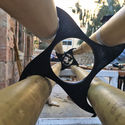
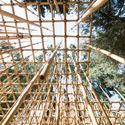
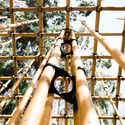
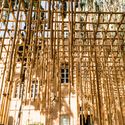
Students Build a Suspended Bamboo Pavilion With 3D Printed Joints

The Academy Bezalel students' bamboo project, in Jerusalem, is a proposal that approaches the construction in real scale and the experimentation with materials as an important driving force of architectural design.
The project, a suspended bamboo pavilion, can be reused with different configurations in different places with its joints made up of ropes and 3D printed pieces.

https://www.archdaily.com/884800/students-build-a-suspended-bamboo-pavilion-with-3d-printed-jointsArchDaily Team
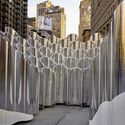
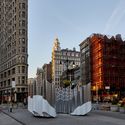
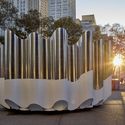
Future Expansion's 'Flatiron Reflection' Transforms Flatiron Public Plaza for the Holiday Season
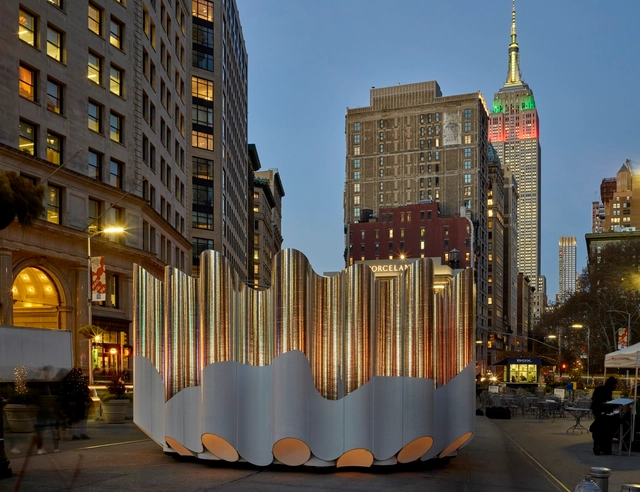
The winner of the fourth annual Flatiron Plaza Holiday Design Competition, ‘Flatiron Refelection’ by Brooklyn-based Future Expansion, has been unveiled in New York City.
Hosted by the Flatiron/23rd Street Partnership Business Improvement District (BID) and Van Alen Institute, the temporary installation will serve as the “highly-visible centerpiece” of the neighbourhood’s holiday season programming.


https://www.archdaily.com/885095/future-expansions-flatiron-reflection-transforms-flatiron-public-plaza-for-the-holiday-seasonPatrick Lynch
Verónica Arcos Designs Pop Up Radio for GAM Cultural Center in Santiago

Chilean architect Verónica Arcos has been invited to design a modular wood studio that was installed in the central courtyard of the Gabriela Mistral Cultural Center. The show was part of the Red Bull Radio Pop Up Santiago, a radio event that broadcasts eight hours a day of live conversation, musical selections and live shows in the search to spread what is now known as Chilean musical identity.
https://www.archdaily.com/884733/veronica-arcos-designs-pop-up-radio-for-gam-cultural-center-in-santiagoFernanda Amaro
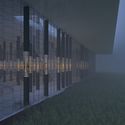
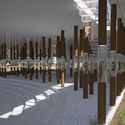
Museum Proposal Displays Floating Figurines in Corten Columns of Light

The Kharayeb Archaeological Museum (KAM) was designed by Shiogumo in the agricultural lands of the coastal village Kharayeb, in the south of Lebanon. The site-specific museum was commissioned to preserve and enhance the historical, cultural, and public significance by the directors of the archeological mission and site, Dr. Ida Oggiano (Istituto di Studi sul Mediterraneo Antico of CNR, Italy) and Dr. Wissam Khalil (Lebanese University).



https://www.archdaily.com/884561/museum-proposal-displays-floating-figurines-in-corten-columns-of-lightSamantha Buckley
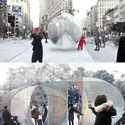
Future Expansion's "Flatiron Reflections" to Transform Flatiron Public Plaza For The Winter

The fourth annual Flatiron Public Plaza Holiday Design Competition winner has been announced--Flatiron Reflection by Future Expansion. In June 2017 non-profit groups Flatiron/23rd Street Partnership and Van Alen Institute invited ten design and architecture firms to submit proposals. “The initiative has become a valuable platform for launching new practices, a visible celebration of inventive, temporary designs that enliven public space during a chillier season, and an opportunity to understand how these spaces impact our minds and bodies” states David van der Leer, Executive Director of Van Alen Institute.
Of the ten design and architecture firms invited to submit proposals, Future Expansion with their Flatiron Reflection won the competition. Other participating firms include Annie Barrett, The Principals, Kyle May, Hive Public Space, Schaum Shieh, FIRM a.d. and Practice.


https://www.archdaily.com/882802/future-expansions-flatiron-reflections-to-transform-flatiron-public-plaza-for-the-winterSamantha Buckley
Germany's Newest Transportation Pavilion Features Dynamic Roof
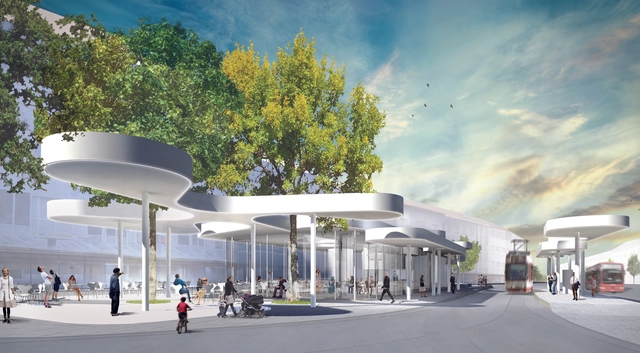
J. MAYER H., in partnership with Architekten, celebrated the groundbreaking ceremony for their competition-winning Pavillon am Ring Project in Freiburg, Germany. Located at the edge of Freiburg’s historic district, this new tram stop will feature a café and dynamic roof structure.
https://www.archdaily.com/881976/germanys-newest-transportation-pavilion-features-dynamic-roofLindsey Leardi
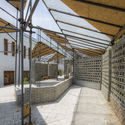
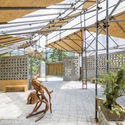
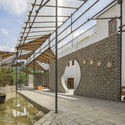
Temporary Workshop & Recreation Centre of Qianyi Farm / Big Smallness Studio + Wuhan ADAP Architects



-
Architects: Big Smallness Studio, Wuhan ADAP Architects
- Area: 272 m²
- Year: 2017
https://www.archdaily.com/882001/the-temporary-workshop-and-recreation-centre-of-qianyi-farm-big-smallness-studio-plus-wuhan-adap-architects罗靖琳
Materia Completes Concrete and Wood Pavilion for Design Week México 2017
_Jaime_Navarro_6.jpg?1507820280)
For the 9th edition of Design Week Mexico, emerging Mexican practice Materia has completed a architectural pavilion within Mexico City's largest public green space, Chapultepec Park. Commissioned by Design Week Mexico in collaboration with Museo Tamayo, the pavilion will serve as a major cultural attraction during the event from October 11th—15th, and beyond.
https://www.archdaily.com/881512/materia-completes-concrete-and-wood-pavilion-for-design-week-mexico-2017Karina Zatarain
Temporary Porcelain Clad Pavilion Addresses The Notion of Ornamentation in Architecture

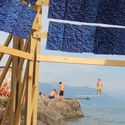
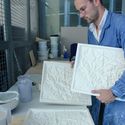
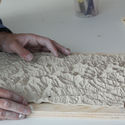
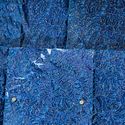
The Pavilion d’Eau, designed by EPFL architecture student Alexander Wolhoff, was constructed in Lake Geneva, Switzerland. The pavilion is a product of six months of research, prototyping, and coordination with different local and academic organizations done in conjunction with LHT3 labs. The exterior of the octagon pavilion has a structural aesthetic, while the interior -- only accessed by wading in the water -- is ornamental, clad in handmade ceramic tiles.
The UNESCO World Heritage Site municipality of Saint-Saphorin en Lavaux allowed for the temporary pavilion in the waters of Lake Geneva. The project is designed to touch the landscape lightly, not affecting the natural lake bed. The pavilion is comprised of materials including lake stones, wood, and porcelain tiles. To ensure a minimal and reversible impact on the site, the footings of the pavilion are made of seven gabions, metal cages filled with stones collected from the lake.

https://www.archdaily.com/880537/temporary-porcelain-clad-pavilion-addresses-the-notion-of-ornamentation-in-architectureAD Editorial Team