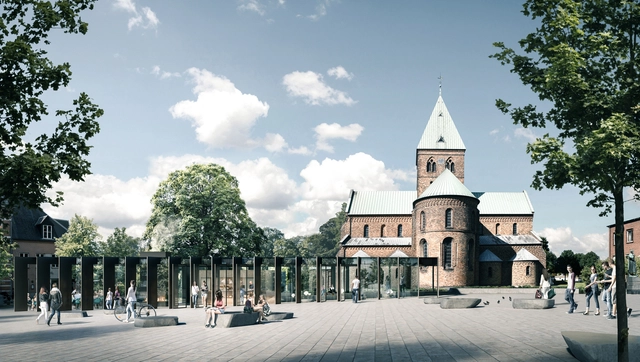
There is so much history in and around Ringsted Square, said Hvidesten. I am therefore delighted that the winning project gives us a pavilion that will not just integrate with the overall architecture of the square; it will also forge a link with history, retain a clear view of St. Bendt’s Church, and provide a new focal point of the square and its many functions, which will appeal to both young and old.
We are inviting young architects / final year students, to build the First Children’s Nature Play Pavilion at Red Soil Nature Play. This is a blind fold jury competition; the selected top 3 entries will be given natural space of 1500 sq.ft at Red Soil Site. You are left to your own imagination with sensitivity towards young children and nature. We will grant/ fund the project. Each Pavilion (selected entries) will be built periodically (one by one) and will amaze the young children for 3-4 months at Red Soil Nature Play.
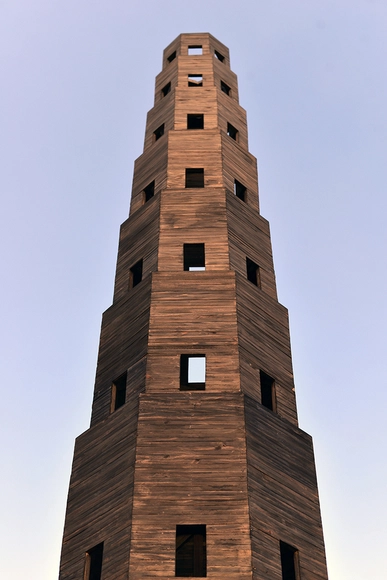
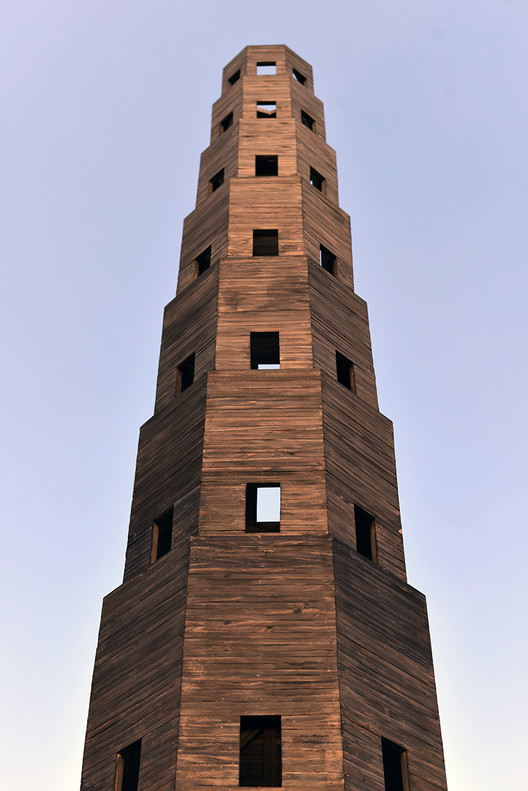
Chilean studio Pezo von Ellrichshausen has erected a temporary wooden tower of “an ambiguous” scale in the Jardin des Tuileries in Paris. Named the “Deci Pavilion,” the structure is made up of ten stacked octagonal wooden drums of decreasing size. While in reality only large enough to hold one visitor at a time, the column’s form and relationship to its surroundings give it the presence of a much larger structure.
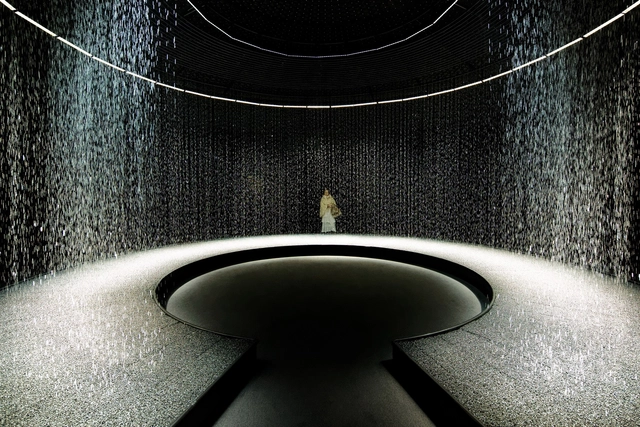
Throughout the past century, architecture's relationship with water has developed along a variety of different paths. With his “Fallingwater” house, for example, the American master Frank Lloyd Wright confronted the dramatic flow of water with strong horizontal lines to heighten the experience of nature. Since then, architecture's use of water has become more varied and complex. A space made almost purely of water emerged with Isamu Noguchi's design at the Osaka World Expo: glistening water appeared to fall from nowhere and glowed in the dark. Later with digitalization and fluid forms as design parameters, the focus shifted towards liquid architecture made of water and light. The interpretations have ranged from architectural forms modeled after literal drops of water, like Bernhard Franken´s visionary “Bubble” for BMW, to spectacular walk-in installations made of lines of water, transformed into pixels by light.
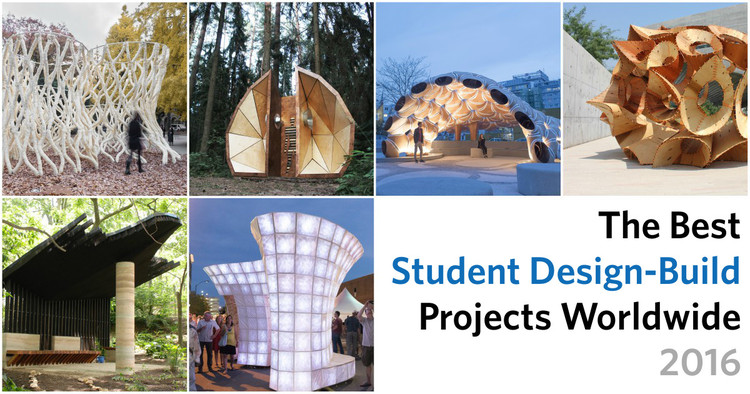
Last year, we asked the graduating students among the ArchDaily community to show us the design-build projects which they may have completed as part of their studies. The response we received was astonishing, and we were so impressed with the results that we simply had to do it again this year. So, two months ago we once again teamed up with ArchDaily Brasil andallfourArchDailyen Español sites to put out another call for submissions, and once again the response was overwhelming. Across over 100 submissions, the quality of the projects we received was so high that this year's results are bigger and better, containing 36 projects from 20 different countries. So, read on for the best student-built work from around the world in 2016.
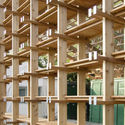
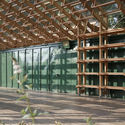
Students and architects from over 30 countries have constructed a “village” of 14 wooden structures at Hello Wood’s Project Village 2016. Founded in 2010 as an art camp for students in architecture, art and design disciplines, Hello Wood has since grown into an award-winning interior summer school program focused on creating design through collaborative methods and bringing together the principles of architecture, art, innovation and social impact. The Project Village, conceived just last year, pushes these ideals to their limit by challenging students, teachers and designers to work together to create a new architecture of community at Hello Wood’s rural campus in Csoromfolde, Hungary.
Continue reading to see all 14 projects with descriptions from the designers.
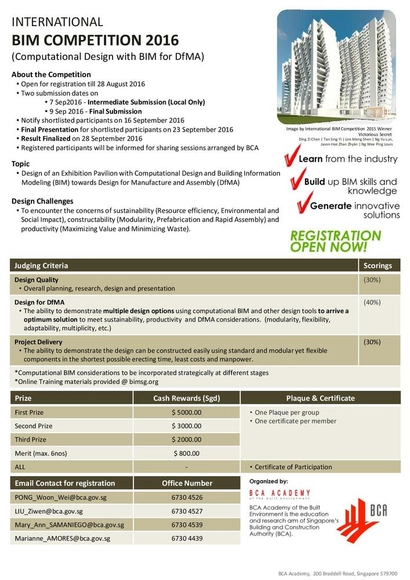
To raise awareness and built competency in using Computational design and BIM (Building Information Modeling) innovatively for Design for Manufacture and Assembly (DfMA) Open to all full-time students from a registered tertiary institution in their respective countries. $5000 - First Prize $3000 - Second Prize $2000 - Third Prize $800 - Merit
Hou de Sousa (Nancy Hou and Josh de Sousa) has completed construction on Raise/Raze and Sticks, two competition winners for temporary installations in Washington, DC and New York, respectively.
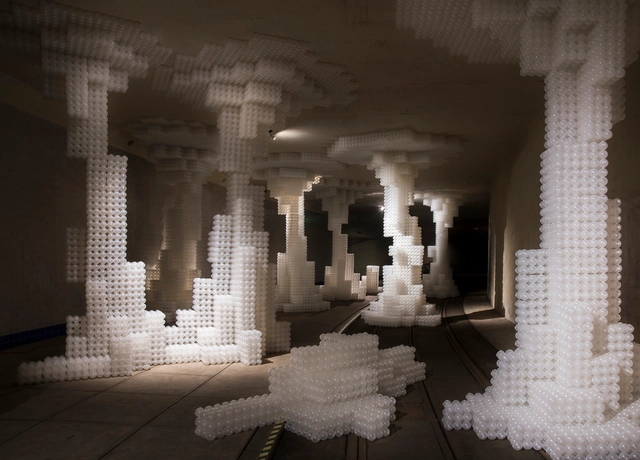
Through Raise/Raze, the firm reused plastic balls from Snarkitecture’s “The Beach” at the National Building Museum to create an installation in DC’s Dupont Underground, a contemporary arts and culture space repurposed from an abandoned trolley station. Raise/Raze opened on April 30, and closed on June 1.
Located at the Socrates Sculpture Park in Queens, New York, Sticks is a multi-purpose pavilion space made of standard dimension lumber and accented with scrap wood found on-site. The pavilion opened on July 9, and will close December 31.
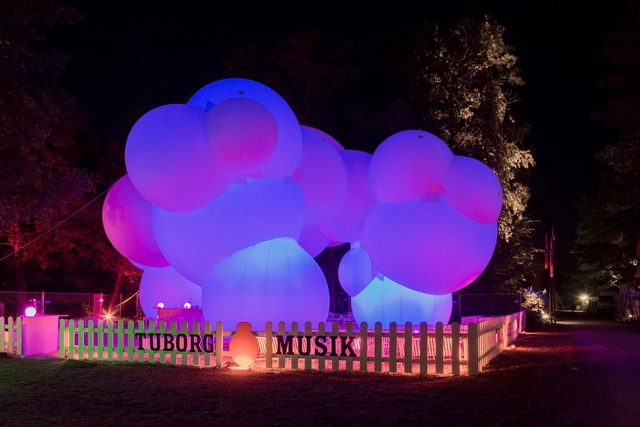
BIG Architects has designed an inflatable mobile pavilion to be displayed at three Danish events, including its original site at the Roskilde Festival 2016. Known as SKUM (Danish for foam), the structure met the challenge of creating an installation that has the ability to be both permanent and fully transportable by creating a whimsical, bubble-like form that can be blown up in just 7 minutes.
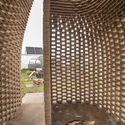
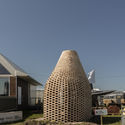
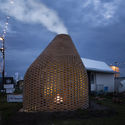
Architect Nguyen Hoa Hiep of a21 studio, in collaboration with Saigon architecture students, have created a cocoon-inspired pavilion. This exhibition is organized annually by Handhome.net in Vietnam in order to connect older generations of architects with students.
With its overblown rental market and the rising costs of tertiary education, London is turning from a city that welcomed creative individuals to one that locks them out. Boano Prišmontas believe that "creativity should not be linked to social status," and the way to counter this is through the creation of affordable spaces. As a response, they have created the "Minima Moralia"; a compact, modular steel frame assembly with infinite possibilities for customization.
Some of the projects featured in last year's article
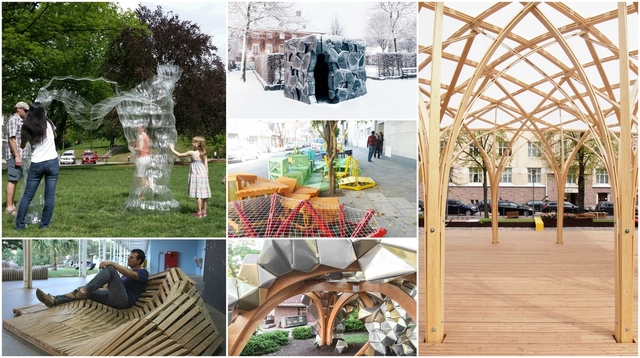
It's graduation time. As universities around the globe - or at least most in the Northern hemisphere, where over 80% of the world's universities are located - come to the end of the academic year, many university architecture studios have recently closed out the construction of pavilions, installations and other small educational projects. Last year at ArchDaily, with the help of our readers, we were able to round up some of the best pavilions, installations and experimental structures created by students from all over the world. The resulting article was among our most popular of the year, demonstrating people's huge appetite to see the work of the next generation of young architects.
That's why we're once again teaming up with allofArchDailyen Español,ArchDaily Brasil, and ArchDaily China, asking our readers to submit their projects, so that we can present the best work from graduating students worldwide. Read on to find out how you can take part.
This week, Museum Gardens became the host to the annual Triumph Pavilion, this year focusing on the concept of "energy." Five Line Projects' aptly titled "Energy Pavilion" takes a multi-faceted approach to the theme, addressing social sustainability, movement and the power of community. The pavilion presents a playful meeting place, designed to explore the impact of a single positive action on its surroundings.
On June 11th, the European Biennial of Contemporary Art, also known as Manifesta, began its 100-day stint in this edition's host city, Zurich, Switzerland. The festival's center-piece is a timber raft floating on Lake Zurich, known as the Pavilion of Reflections. The temporary structure was designed and realized by Studio Tom Emerson and a team of thirty students from ETH Zurich. Constructed primarily of timber, Christian Jankowski, curator of Manifesta 11, describes the exhibit “as a floating multi-functional platform with a giant LED screen, a stand for spectators, a swimming pool and a bar.”
Studioninedots have designed a new pavilion, “The TrueTalker,” to generate a space for open communication and storytelling. The pavilion is one of approximately fifty at Amsterdam's temporary Fab City, an initiative organised by Europe by People to promote self-sustaining, innovative cities. The project also comes as a reaction to Amsterdam hosting the European Union this spring, where rigid and official conversation will be scrutinised and recorded from every angle. In contrast, Studioninedots said that "The TrueTalker" creates a space where “everyone is invited to sit down, relax and share warming, unreasonable, crazy, unimaginable and hilarious ideas.”
"Woodokan" by Hajima Yoshida, Japan. Image via University of Southern California and the American Academy in China
The University of Southern California's American Academy in China (AAC) has announced the seven winning designs for the international Napavilion Competition. Entrants had to design prefabricated wood structures with the sole function of providing space for guests to nap in. The winning designs will be built at Jade Valley Winery outside of Xi’an in western China, with three to be completed in time for the Napavilion Festival in July.
Exterior Perspective Views. Image Courtesy of Konishi Gaffney Architects
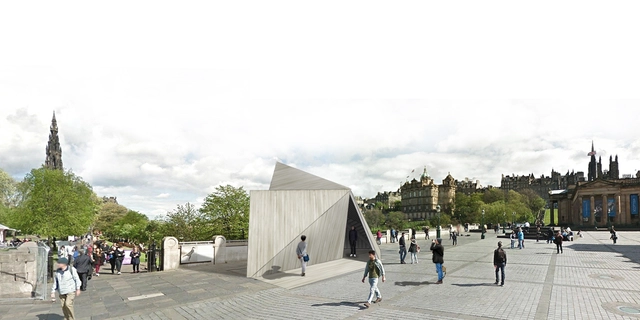
Edinburgh-based studio, Konishi Gaffney Architects, has won the competition to design a temporary pavilion for the Pop-Up Cities Expo. The Pop-Up Cities Expo is a headline event at Scotland’s Festival of Architecture, featuring pop-up pavilions at Mound Square from cities around Europe. Konishi Gaffney will be representing Edinburgh – the host of the expo - with their winning pavilion design.
Following a competition that received 286 entries from 26 of the 32 states of Mexico, 31 proposals have been selected to be presented at the Mexican Pavilion at the 2016 Venice Biennale. Narrating the “deep history of social participation in Mexico,” the exhibit, “Unfoldings and Assemblages,” will feature “architectures assembled from fragments, modules, relations, stories, tactics, technologies and construction strategies.” The exhibit will focus on work and experiences that can change, propagate and adapt, rather than closed systems or final products.
https://www.archdaily.com/787588/unfoldings-and-assemblages-mexicos-pavilion-at-the-2016-venice-biennaleArchDaily Team










.jpg?1473019568 "DIA 3D Jewelry Pavilion (Dessau International Architecture Graduate School). Image © Pavel Babienko")






.jpg?1465734933&format=webp&width=640&height=580)
.jpg?1465734808 "© Laurian Ghinitoiu")
.jpg?1465734849 "© Laurian Ghinitoiu")
.jpg?1465734925 "© Laurian Ghinitoiu")
.jpg?1465734980 "© Laurian Ghinitoiu")
.jpg?1465734933)



.gif?1461689986)