

-
Architects: Murray Legge Architecture
- Area: 5000 ft²
- Year: 2017
-
Manufacturers: Aguado Stone, Kichler, Napoleon


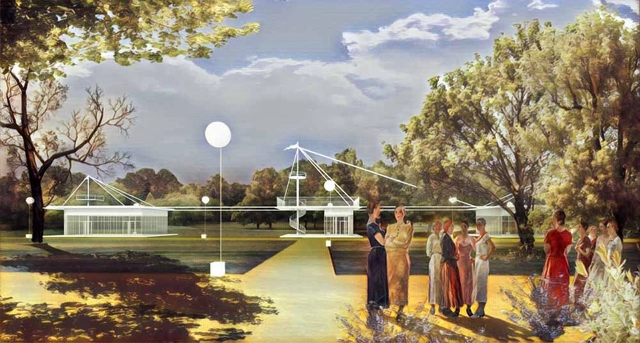
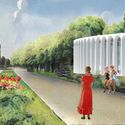
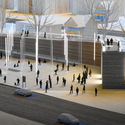
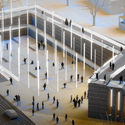
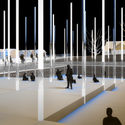
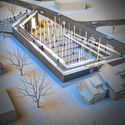
Kleinewelt Architekten in partnership with Citizenstudio / Gorozhane Group, created a re-design proposal for the Northern River Boat Station Park, also known as the Park of Five Seas, in Moscow. Built in the 1930’s, the current park is supposed to act as the city’s gateway to the five seas: the White, Baltic, Black, Azov, and Caspian Sea. However, the park is removed from city life and separates Moscow from it’s historic waterways.
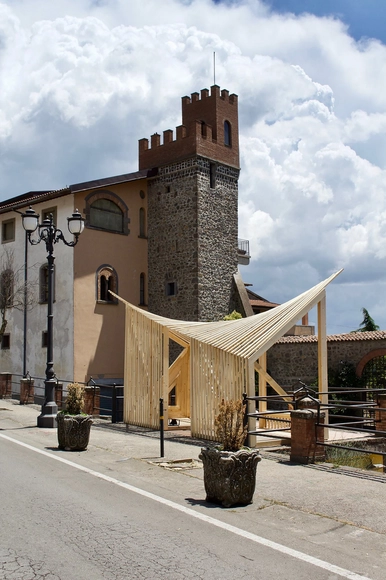
With the common goal across their portfolio of enhancing the landscape, Camposaz has designed a tourist information pavilion in Roccamonfina, Italy. The wood pavilion is sited just off of a pedestrian path, overlooking the adjacent public park with stunning views of the nearby mountains, a driver in the design.
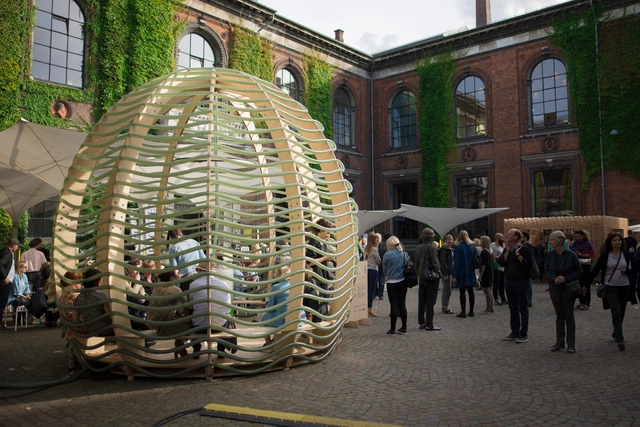
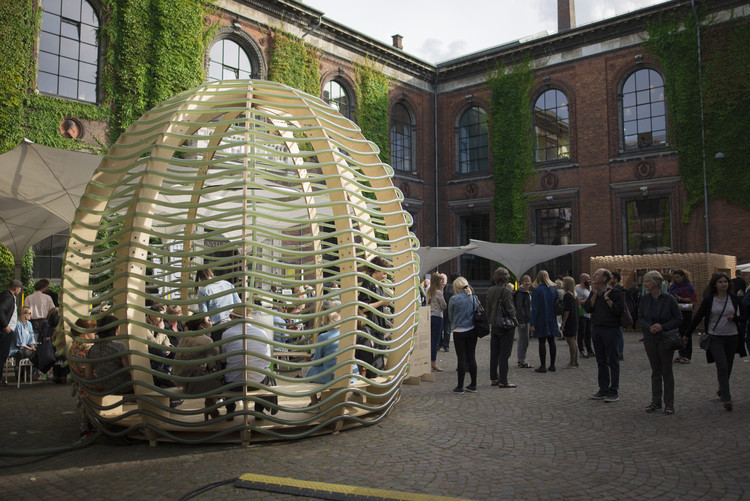
SPACE10's latest project displayed last week at Copenhagen's CHART art fair hosts the secret to combating malnutrition, greenhouse gases and ending deforestation - a pretty steep demand for a structure only four meters tall. The hero of this story is a microalgae that runs through the three hundred and twenty meters of tubing entwined around the pavilion.
IKEA's future living lab worked with bioengineer, Keenan Pinto and three architects, Aleksander Wadas, Rafal Wroblewski and Anna Stempniewicz to build a photobioreactor that facilitates the high production of microalgae that can be grown almost anywhere on the planet. During the three days of the fair, 450 liters of algae was grown as visitors got to experience the full extent of the neon green process.

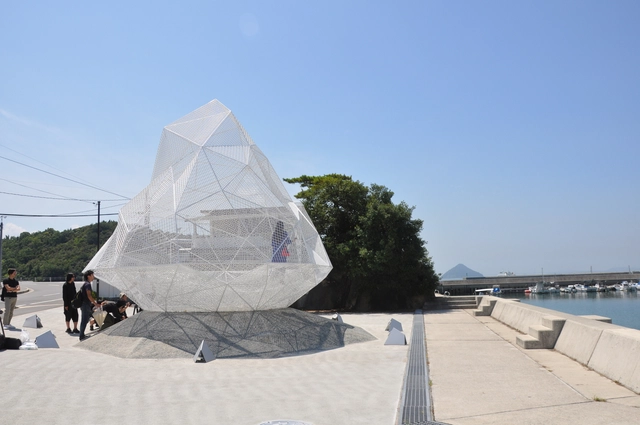
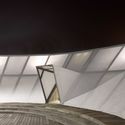
Located a few meters from the terminal of Naoshima, the Japanese island better known as the "Art Island", Sou Fujimoto's Pavilion appears as a translucent and lightweight diamond perched on the coastal edge of Kagawa, visible from SANAA's ferry terminal welcoming the visitors to the island.
The Naoshima Pavilion was part of the 2016 Setouchi Triennial. Fujimoto has created its structure with a white painted stainless steel framework, acting as a mesh that gives the polyhedron it's irregular shape and light appearance as if it was levitating from the ground.
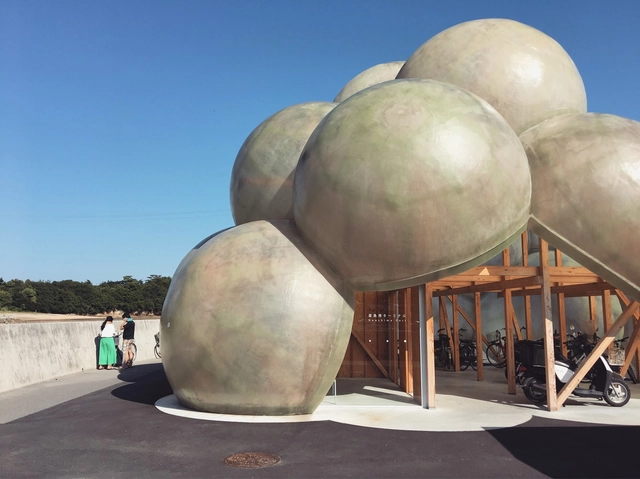
The cloud-shaped bicycle terminal on the island of Naoshima is SANAA's latest work. The pavilion is known for its impressive collection of outdoor art and contemporary architecture, with works by prominent exponents such as Yayoi Kusama and Tadao Ando.
.jpg?1502071782&format=webp&width=640&height=580)
A design by Ashari Architects for an architectural installation in Iran is a direct response to the need to reconnect with the senses. The project, a pavilion built from a cube that holds a suspended brick volume, shows the potential of the use of this material by creating distinct atmospheres.
Since the first Hello Wood Project Village debuted in 2015, architecture, art and design students from all over the world have gathered together each summer in Hungary to imagine and build structures using innovative wood construction techniques. With each passing year, the village has grown more complex, with new students using the decisions of their predecessors to inform and evolve subsequent designs.
The 2017 edition has brought this exercise to its logical summit – exploring how the settlement could actually be inhabited by its builders. In doing so, participants created a village center consisting of 7 new structures containing spaces for sleeping, bathing, cooking, eating, viewing lectures and celebrating. New infrastructure including a village well and future solar panels also contribute to the village’s accountability and help to shape the relationships between the village’s structures.
“As architects, we all have an idea of what the ideal village is like, but what makes this programme interesting is that, once we are confronted with the actual needs of a community, constraints of the terrain, or the opinion of your neighbour, you need to be open to adapt,” said Johanna Muszbek, curator of Project Village.
See the 7 projects with descriptions from the designers, after the break.
.gif?1499957974)
For the third year in a row, in June we asked our student readers to submit the design-build projects which they have recently worked on. And, for the third year in a row, the response we received was excellent. With hundreds of submissions to ArchDaily, ArchDaily Brasil and all four ArchDaily en Español sites, in 2017 our readers gave us more projects to choose from than ever before; we’ve narrowed this selection down to bring you the 34 best student design-build projects around the world from the past year.
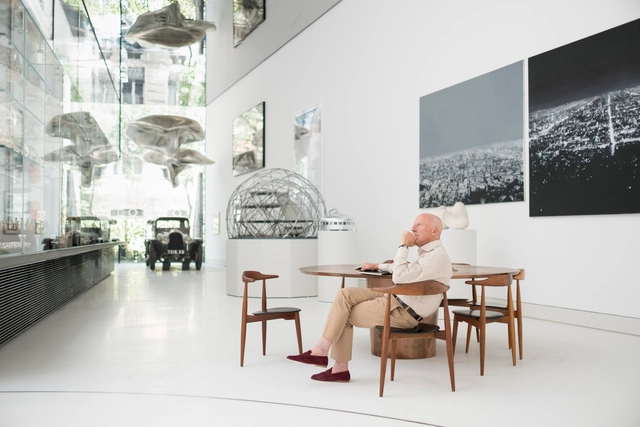
Earlier this month, the Norman Foster Foundation opened its doors in central Madrid. Inhabiting in an old residential palace, and having undergone extensive renovation works since, the Foundation have also constructed their own contemporary courtyard pavilion. Housing a treasure trove of artefacts from Lord Foster's personal collection, the structure—which is shaped like the wing of an aircraft—also exhibits a newly restored 1927 Avions Voisin C7 originally owned by Le Corbusier.

Cairo-based architect Mohamed Elgendy has won an international competition for the design of a new community pavilion in Roseville, Michigan. The Pavilion at Utica Junction competition, organized by the Roseville DDA, sought to attract proposals for a public pavilion on the site of an old tavern, creating a gathering space for residents and visitors to stage events, socialize, and play. The vision behind Elgendy’s winning scheme was for a dialogue between three elements – a plaza, a ramp, and an indoor pavilion.
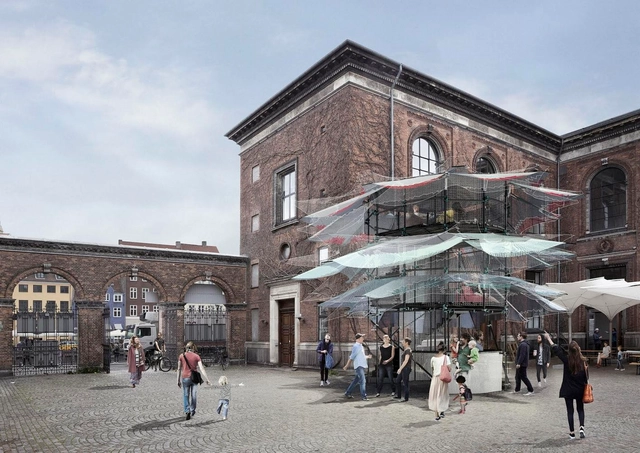
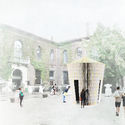
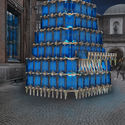
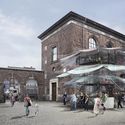
Calling for entries to design pavilions in line with notions of sustainable construction and fabrication methods, urbanization, and renewable materials, CHART ARCHITECTURE has announced the five finalists for its annual competition, addressing the theme ‘LIVING CITY’. Proposals included the use of IKEA bags, biogas reactors and solar energy amongst other innovative design solutions, judged by a jury headlined by Bjarke Ingels. The eventual winner will be awarded a mentorship program with a professional architect, a construction expert and a developer, intended to “support a young architect’s career as well as to promote cross-sector collaboration and networking.”
Here are the five finalists of the 2017 CHART ARCHITECTURE Competition:

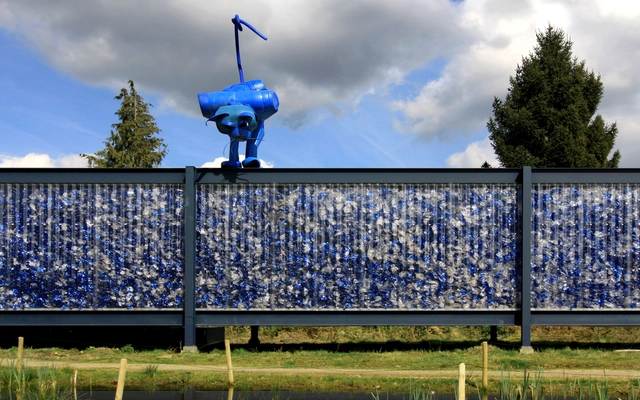
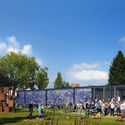
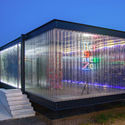
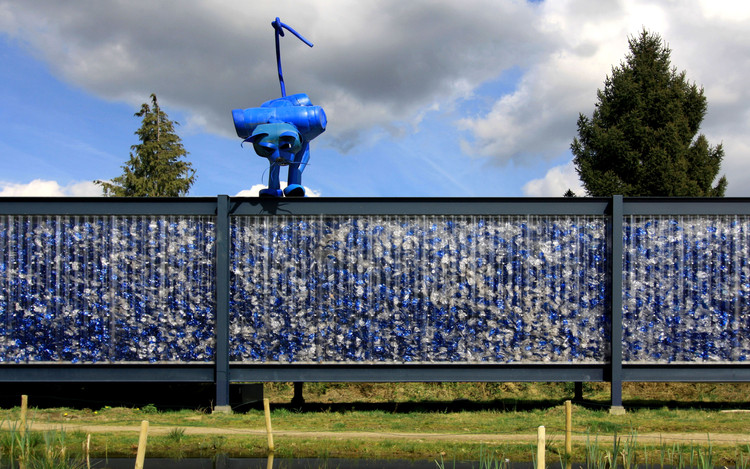
Project.DWG and LOOS.FM have unveiled their PET pavilion, a temporary structure in a community park in The Netherlands that focuses on issues of sustainable building, recycling, and waste by rethinking the ways that buildings are developed, built, and used. Specifically, the pavilion is a study of the use of plastic waste as a building material.
Using the elevated framework of Ludwig Mies van der Rohe’s Farnsworth House, the structure consists of two monumental slabs in a steel framework. “From floor to ceiling, double-walled transparent corrugated sheets hold over 40,000 plastic bottles,” with bottle caps attached to bottlenecks supporting the system.

.jpg?1485891056&format=webp&width=640&height=580)
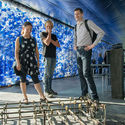
At Autodesk's 2016 conference in Las Vegas, a team from Autodesk's BUILD Space led by principal research engineer Andrew Payne collaborated with manufacturer Quarra Stone, engineers Simpson Gumpertz and Heger, and University of Michigan assistant professor Sean Ahlquist to unveil its new Generative Design Pavilion. The project is an exploration of materiality, with stalagmite stone forms that rise up from geometric floor panels to meet fabric that stretches down from a canopy above. The junction of textile and stone aims to emphasize the distinct behaviors of the two materials.















_(1).jpg?1485891189 "Courtesy of Quarra Stone")
.jpg?1485891118 "Courtesy of Quarra Stone")

.jpg?1485891081 "Courtesy of Quarra Stone")
.jpg?1485891056)