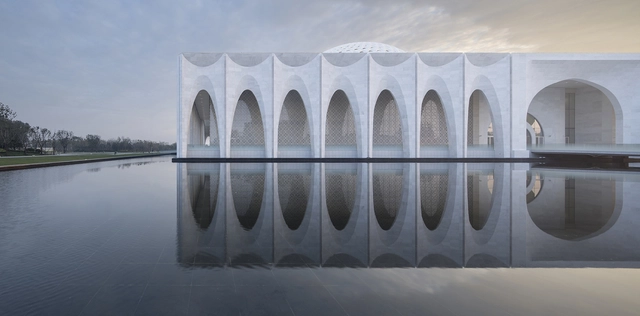
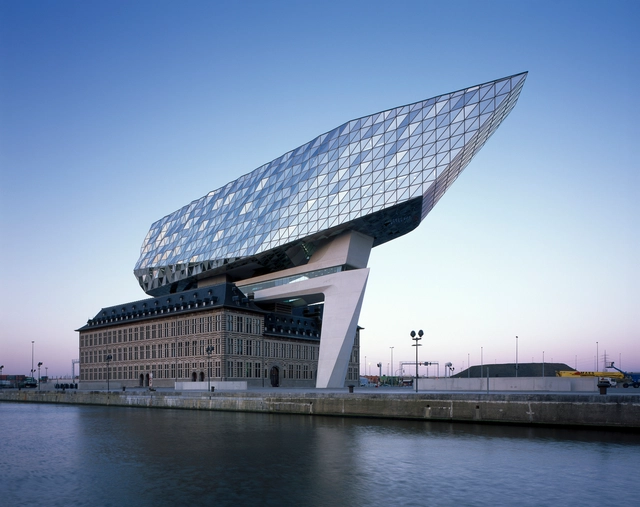
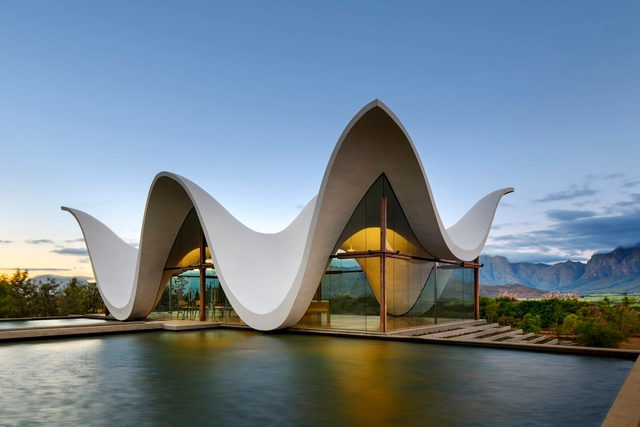
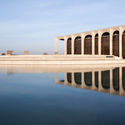
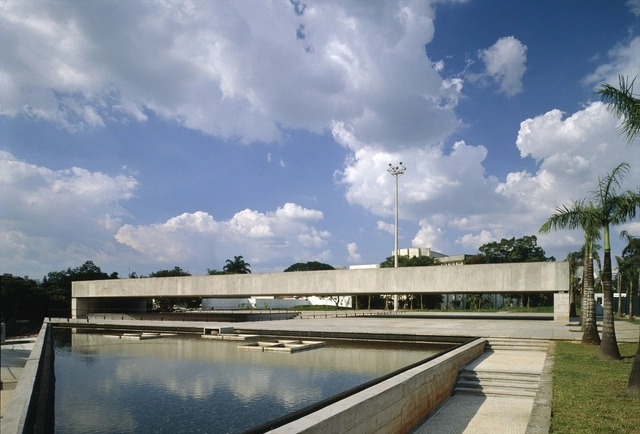
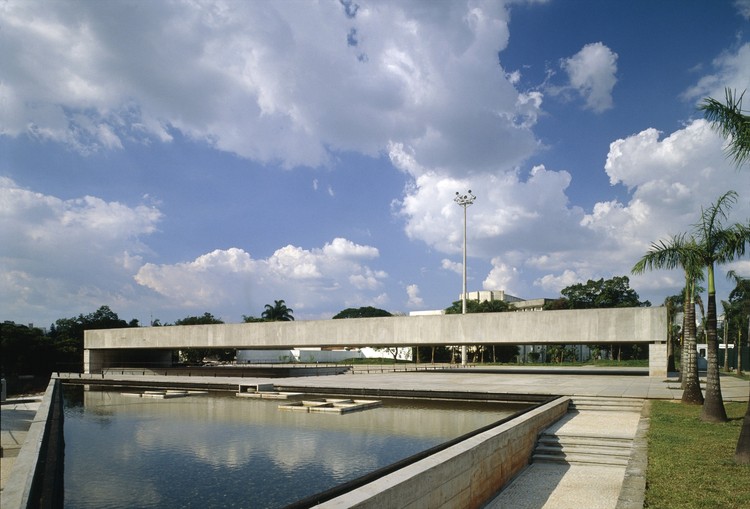
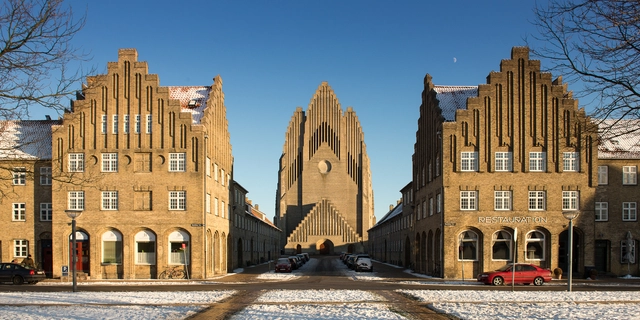
This week we have prepared a selection of photographs in which reflections in water is used as the main compositional element. In these images, the surface qualities of the water play a fundamental role in giving the composition its final effect—either acting as a perfect mirror or giving a diffuse touch. Below is a selection of 10 images from prominent photographers such as Lu Hengzhong, Yao Li, and Nico Saieh.
From the Fundación Arquia Blog, architect José Ramón Hernandez brings us an article that reflects on projects that can only be appreciated because of who they were created by. If it weren't for the fact that they bear the signature of their illustrious creator, they most likely would have gone completely unnoticed or even despised.
Let's think of a paper sheet. If we tried to stiffen it from its primary state, it couldn't support its own weight. However, if we bend it, the sheet achieves a new structural quality. The shells act in the same way. "You can't imagine a form that doesn't need a structure or a structure that doesn't have a form. Every form has a structure, and every structure has a form. Thus, you can't conceive a form without automatically conceiving a structure and vice versa". [1] The importance of the structural thought that culminates in the constructed object is then, taken by the relationship between form and structure. The shells arise from the association between concrete and steel and are structures whose continuous curved surfaces have a minimal thickness; thus they are widely used in roofs of large spans without intermediate supports.
In structural terms, they are efficient because they resist compression efforts and absorb at specific points on their surface, especially near the supports — small moments of flexion.
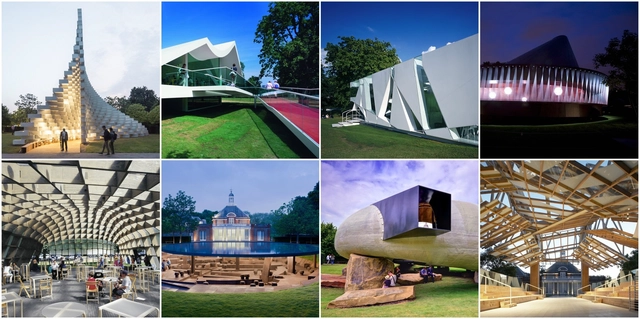
Lasting for close to two decades now, the annual Serpentine Gallery Pavilion Exhibition has become one of the most anticipated architectural events in London and for the global architecture community. Each of the previous eighteen pavilions have been thought-provoking, leaving an indelible mark and strong message to the architectural community. And even though each of the past pavilions are removed from the site after their short summer stints to occupy far-flung private estates, they continue to be shared through photographs, and in architectural lectures. With the launch of the 18th Pavilion, we take a look back at all the previous pavilions and their significance to the architecturally-minded public.
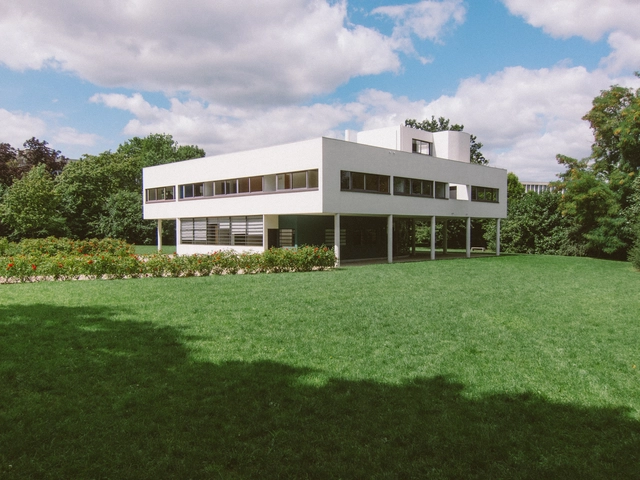
In the ambit of architecture, much of the twentieth century is marked by a production that reads, in general, as modern. The foundations of this work have been the subject of discussion for at least six decades, bringing together conflicting opinions about the true intention behind the modern gestalt.
In March 1972, an article in The Architectural Review proclaimed that this structure was “probably the best building in Paris since Le Corbusier’s Cité de Refuge for the Salvation Army.”[1] The article was, of course, referring to Brazilian architect Oscar Niemeyer’s first project in Europe: the FrenchCommunist Party Headquarters in Paris, France, built between 1967 and 1980. Having worked with Le Corbusier on the 1952 United Nations Building in New York and recently finished the National Congress as well as additional iconic government buildings in Brasilia, Niemeyer was no stranger to the intimate relationship between architecture and political power.[2]
For some practitioners of architecture, the insatiable desire to draw everything, from the largest to the smallest to take full control of the project, echoes the famous phrase uttered by Mies Van Der Rohe: "God is in the details." Similarly, designing furniture provides another creative outlet for in-depth exploration of human-scale works of architecture.
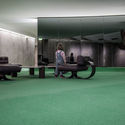
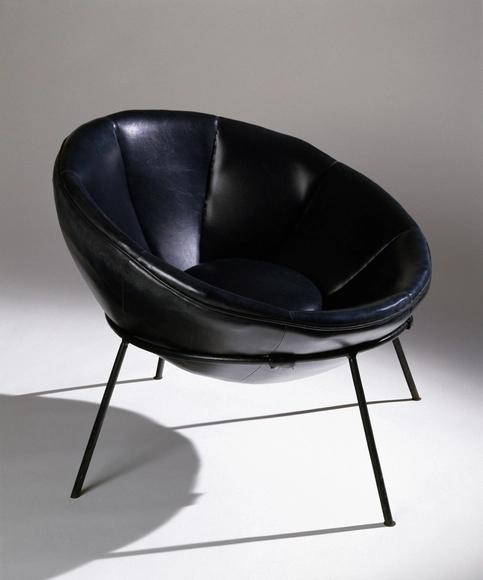
Throughout the history of the Brazilian Architecture, and especially since the modernist movement, architects not only became known for their building designs, but also for their detailed chairs and tables. Several of these pieces of furniture were initially designed for a specific project and then went into mass production due to their popularity.
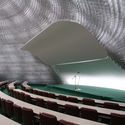
The name Niemeyer stands for one thing above all: curves. Whether undulating lines, soaring domes, or swooping pillars that repeat in perfect rhythm, his designs reject “the straight line, hard and inflexible, created by man” in favor of “the curved Universe of Einstein,” as he wrote in his 2000 memoir The Curves of Time. Indeed, a late interview with him was headlined “the architect who eradicated the straight line.”
But what happens to an artist who becomes wedded to a certain philosophy of form and pursues it exclusively for decades; does it become restrictive? I wonder whether Niemeyer ever questioned his monogamous dedication to the curve. Perhaps a certain restlessness drove the uncharacteristically sharp-edged plan of the Tel Aviv house he designed for hotel magnate Yekutiel Federmann—or perhaps it reflects the political and personal upheaval of the moment.
As a trailblazer of Brazilian Modernism, Oscar Niemeyer is celebrated for his bold, sinuous forms, and his use of the “the liberated, sensual curve.” Paul Goldberger described it best when he wrote that “Niemeyer didn’t compromise modernism’s utopian ideals, but when filtered through his sensibility, the stern, unforgiving rigor of so much European modernism became as smooth as Brazilian jazz.”
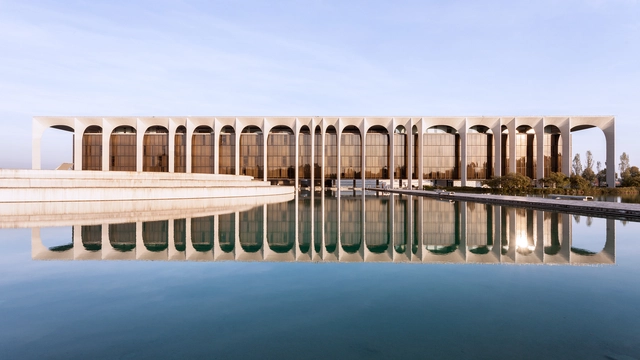
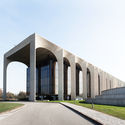
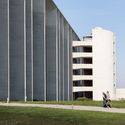
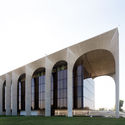
When Georgio Mondadori, chairman of the Italian publishing house Mondadori, commissioned Niemeyer to design the company’s new headquarters in 1968, he wanted the building to look like the Itamaraty Palace (also known as Palace of the Arches) in Brasília. Niemeyer agreed, but given his playful spirit, he deliberately deviated from the earlier design and proceeded to build what he would later identify as his favorite of the projects he completed in Europe. Read on to see a striking set of sixteen photographs of the Mondadori building by Milan-based photographer and visual artist Karina Castro, who was commissioned by Mondadori to capture their headquarters over 40 years after the building's completion.
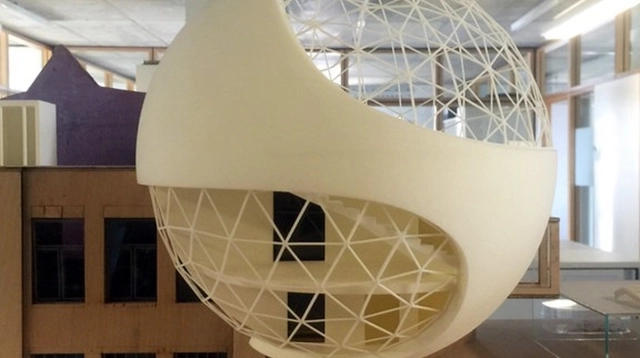
One of Brazilian architect Oscar Niemeyer’s final designs, a 12-meter-diameter glass and concrete sphere perched on the corner of a factory building, is set to be completed in Leipzig, Germany, reports Mitteldeutscher Rundfunk (Central German Broadcasting, MDR).
Courtesy of Flickr user Flemming Ibsen under CC BY-NC 2.0
Religion, in one form or another, has formed the core of human society for much of our history. It therefore stands to reason that religious architecture has found equal prominence in towns and cities across the globe. Faith carries different meanings for different peoples and cultures, resulting in a wide variety of approaches to the structures in which worship takes place: some favor sanctuaries, others places of education and community, while others place the greatest emphasis on nature itself. Indeed, many carry secondary importance as symbols of national power or cultural expression.
AD Classics are ArchDaily's continually updated collection of longer-form building studies of the world's most significant architectural projects. The collection of sacred spaces collated here invariably reveal one desire that remains constant across all faiths and cultures: shifting one’s gaze from the mundane and everyday and fixing it on the spiritual, the otherworldly, and the eternal.
Oscar Niemeyer’s modernist icon, the Niterói Contemporary Art Museum (MAC) in Brazil, recently played host to the Louis Vuitton 2017 Cruise Collection showing. The show coincided with the museum's 20th anniversary, marking its reopening after extensive renovation. The remarkable nature of the building has drawn crowds to the outlying site, across the Guarana Bay from Rio de Janeiro, since its inauguration in 1996. The convergence of the fashion community to the landmark shows its smaller scale Bilbao effect in force.
Petterson Dantas was born in Caicó, Brazil and has lived in Natal for 17 years. An architect and urban planner, he graduated from the Federal University of Rio Grande do Norte. His series "Ode to Oscar" illustrates important works of Oscar Niemeyer, depicting the contrasts and the beauty of the buildings designed by Brazil's most famous architect.
Read the description of the project and see the illustrations below.
A graduate of Argentina’s National University of Córdoba, Viramonte started photographing landscapes and small towns while traveling by bicycle through his country. Today, he is dedicated to architectural photography, and manages a Flickr account where you can see all of his work.
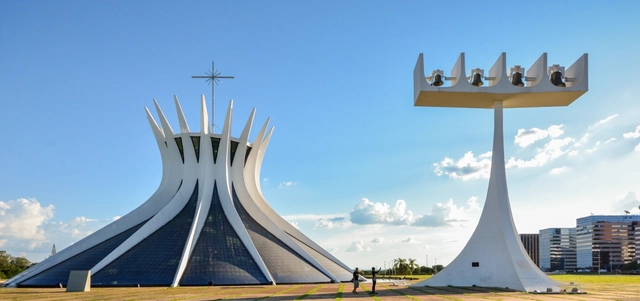
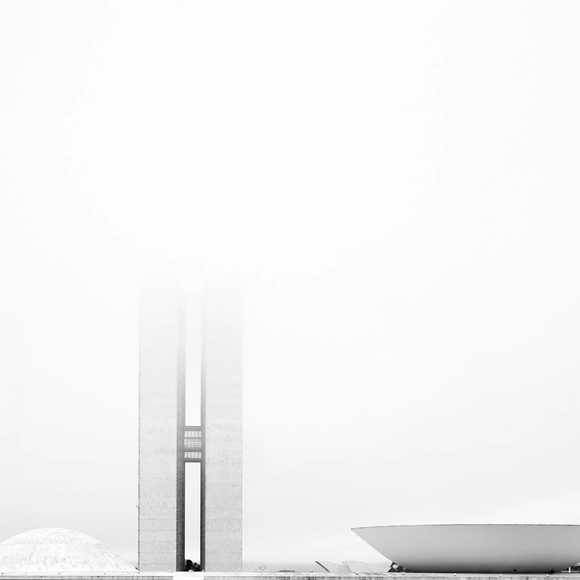
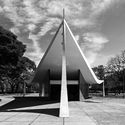
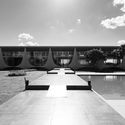
Architecture photographer Haruo Mikami has shared with us a series of black and white photographs of some of Oscar Niemeyer’s most important works in Brasília. From the Cathedral of Brasília to the Alvorada Palace and the National Congress, see some of the Brazilian architect’s most iconic works after the break.
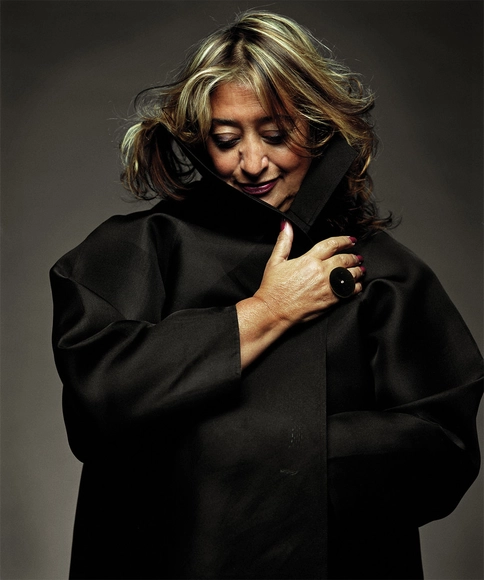
The first woman to receive the Pritzker Prize in 2004, Iraqi architect Zaha Hadid tells newspaper El País that she was fortunate as a child to have traveled with her parents and seen some of the world’s most impressive works of architecture and engineering feats.
Awed by the Mosque of Cordoba, Hadid says that the contrast between the darkness and the marble of the central church left a lasting impression, making this one of her favorite works to this day.
As an unavoidable art form, “architecture is one of humanity’s most visible and long-lasting forms of expression,” writes Complex Media. Within the past 150 years—the period of modern architecture—a distinct form of artistry has developed, significantly changing the way we look at the urban environments around us. To highlight some of the key figures in architecture over the past 150 years, Complex Media has created a list of “25 Architects You Should Know,” covering a range of icons including Zaha Hadid, Ieoh Ming Pei, Philip Johnson, Oscar Neimeyer, SOM, Daniel Libeskind, and more. Read the full list to learn more about each iconic architect, here.