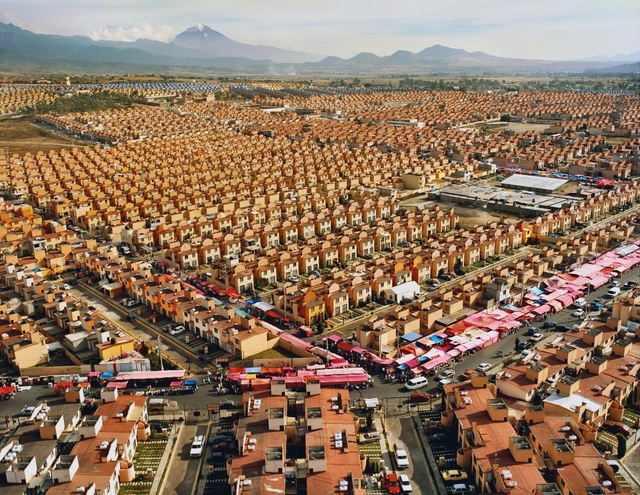
Livia Corona (b. Mexico, 1975; based in New York) / From the series: "Two Million Homes for Mexico / 47,547 Homes for Mexico Ixtapaluca, 2007 / Archival Chromogenic Print / 30 x 40 inches / Courtesy of the artist and Galeria Agustina Ferreyra, San Juan, Puerto Rico
Beyond the Supersquare brings together a select group of contemporary artists whose insightful work addresses the remnants of the Modern Movement in Latin America and the Caribbean. While the exhibition will address how Modernism defined a number of decisive aspects related to contemporary architecture, urbanism, and art in Latin America, this exhibition will also examine the larger political and social underpinnings of these cultural and environmental developments.
This article, published by Metropolis Magazine as "Behind the Living's "100% Organic" Pavilion for MoMA PS1", goes behind the plans for this year's MoMA PS1 Young Architects Program's winning design, "Hy-Fi" - looking at the compostable eco-bricks which make the design possible.
"It all starts on local farms with waste corn stalks," says Sam Harrington of Ecovative, who will help build this year’s winning entry for the MoMA PS1 Young Architect’s Program. Hy-Fi, designed by the New York-based firm The Living, will be made of bricks that are entirely organic and ultimately, compostable. A good chunk of that material is corn stalks, stained clay-red with an organic dye from Shabd Simon-Alexander and Audrey Louisere . The rest is mycelium—mushroom roots to you and me—that will hold the corn stalks together as they cohere into a molded shape. The technology, developed by Ecovative in 2007, has so far been used as a packaging material. "But we love the chance to try something bold, and that’s what PS1 is all about," Harrington says.
Read more about the bricks behind Hy-Fi after the break
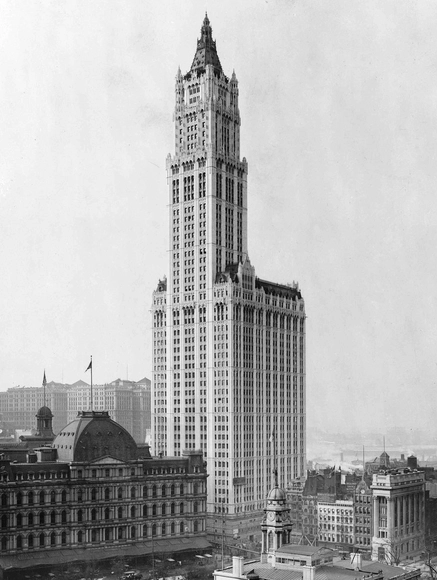
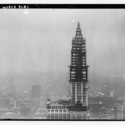
View of Woolworth Building and surrounding buildings (ca. 1913), via Wikimedia Commons
The Woolworth Building, an innovative and elegant early skyscraper completed in 1913, endures today as an iconic form on the New York City skyline. A historicist exterior sheaths a modern steel tower, embodying both the era’s modern spirit of progress and its hesitation to fully break from the past. Cass Gilbert, selected as the architect, believed the designer should “weave into the pattern of our own civilization the beauty that is our inheritance.”[1] An ornate monument to the growing economic dominance of New York City, the building was dubbed the “Cathedral of Commerce.”
The recent hire of temporary artistic director David Lan has indicated that plans for Ground Zero’s “world center for the performing arts” is moving forward in New York. The famed London director will work alongside Charcoalblue managing partner Andy Hayles to revise the original Frank Gehry-designed scheme which, according to the center’s president, was prematurely designed. This leaves Gehry’s involvement unclear, as the initial 1000-seat center will be abandoned for a scaled down, three-theater house that ranges from 150 to 550 seats. Competition for funding also remains an obstacle, in light of venues such as Diller Scofidio + Renfro’s 2017 Culture Shed. You can learn more about the center’s update here.
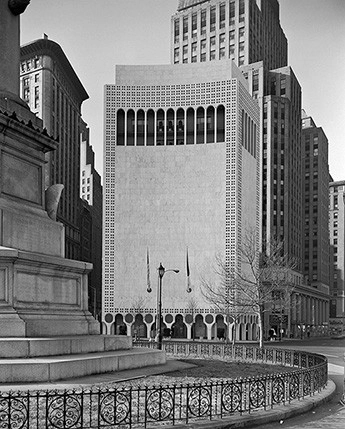
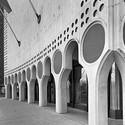
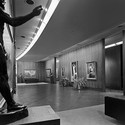
Located on a small and irregular shaped island at Columbus Circle, one of the busiest intersections in Manhattan, lies 2 Columbus Circle, formerly known as the Gallery of Modern Art. Famously described as a “die-cut Venetian palazzo on lollipops” by Ada Louise Huxtable, the New York Times architecture critic at the time, the 10-story poured concrete structure has been a source of consistent controversy and public response since the 1960s. Designed by Edward Durell Stone, an early proponent of American modern architecture, 2 Columbus Circle represents a turning point in his career. Uncharacteristic of Stone’s prior work, his use of ornament on an otherwise modern structure can be seen as an important precedent of the development of the soon-to-emerge Postmodern movement.
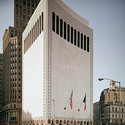
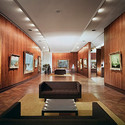
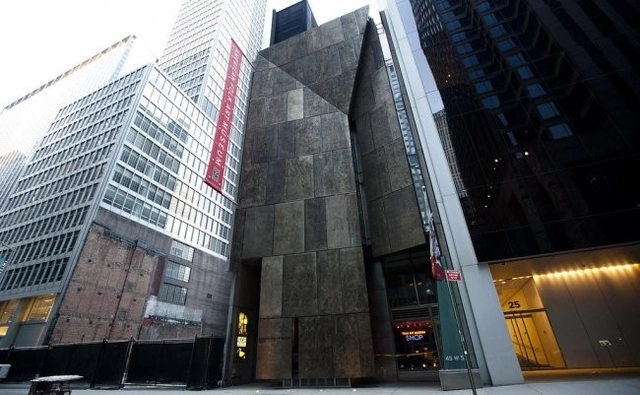
“We will take the facade down, piece by piece, and we will store it,” Glenn D. Lowry, the director of the Museum of Modern Art, said in an interview. “We have made no decision about what happens subsequently, other than the fact that we’ll have it and it will be preserved.”
3rd Prize ($1000): Make It! Grow It! / Song Deng and René Biberstein of Toronto, Canada
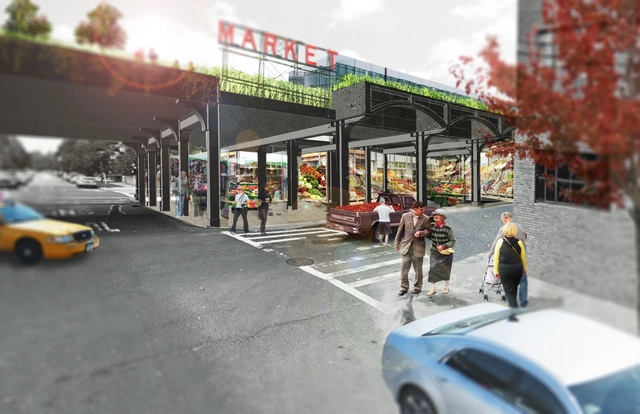
The Emerging New York Architects (ENYA) committee of the AIA New York Chapter has announced the winners of its 2014 biennial design ideas competition, QueensWay Connection: Elevating the Public Realm. In an effort to imagine the ways in which The Trust for Public Land and Friends of the Queensway could transform an abandoned railway in Central Queens into a vibrant urban greenway, entrants were challenged to design a vertical gateway for the elevated viaduct portion of a 3.5 mile stretch along the rail.
Of the 120 submitted proposals from 28 countries, the jury selected the following winners to represent the diverse array of ideas generated:
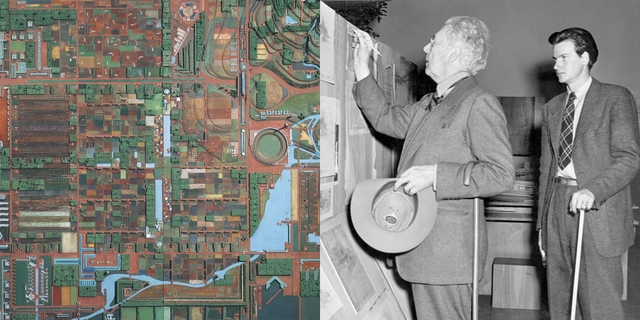
Frank Lloyd Wright. Broadacre City Project. 1934–35. Model: painted wood. The Frank Lloyd Wright Foundation Archives (The Museum of Modern Art | Avery Architectural & Fine Arts Library, Columbia University, New York); Frank Lloyd Wright and Eugene Masselink at the exhibition Frank Lloyd Wright, American Architect. November 13, 1940–January 5, 1941. The Museum of Modern Art Archives, New York. Photo by Soichi Sunami
Frank Lloyd Wright—perhaps the most influential American architect of the 20th century—was deeply ambivalent about cities. For decades, Wright was seen as the prophet of America's post-World War II suburban sprawl, yet the cities he imagined were also carefully planned, and very different from the disorganized landscapes that were often developed instead. Paradoxically, Wright was also a lifelong prophet of the race for height (think skyscrapers) that played, and continues to play, out around the world.
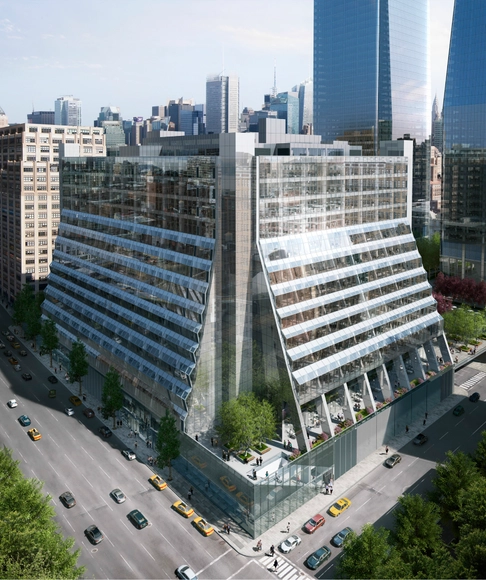
450 West 33rd Street / Rendering of building with completed renovations
Joshua Prince-Ramus of REX, together with Brookfield Properties unveiled today the $200 Million redevelopment of 450 West 33rd Street in New York. The 1.8 million-square-foot building will be integrated into the Manhattan West Development.
The architectural firm REX designed the redevelopment of Five Manhattan West, including a new pleated glass façade which will create floor‐to‐ceiling windows on every floor, maximizing daylight penetration while reducing solar gain through geometric 'self‐shading.' The interior program includes a redesigned lobby, upgraded and expanded elevators, and enhanced HVAC and other mechanical systems. New retail storefronts will provide a welcoming streetscape. The renovation is expected to be completed in 2016.
Raimund Abraham's last project, a "stunning" design for a building atop an unused NATO missile base in Hombroich, has been realized four years after the architect's death. At the time of his passing, Abraham was working on this project as part of a unique outdoor art complex close to Düsseldorf, Germany. A competition has now been announced to determine the future for the space which has become an "an integral part of Hombroich's cultural sphere."
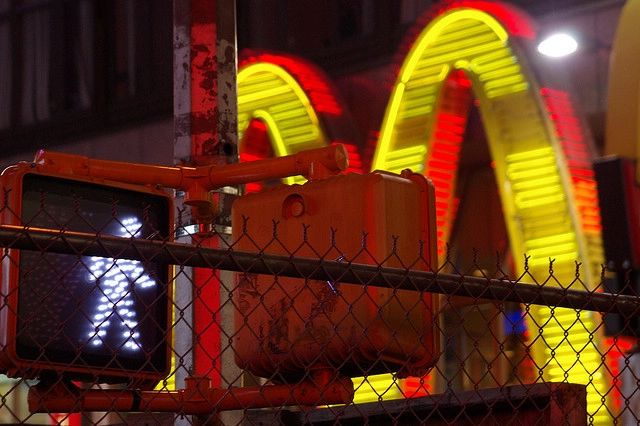
In an article for the New York Times, Michael Kimmelman gets to the bottom of an unusual local dispute: a McDonald's in Queens, New York is kicking out groups of elderly Koreans who are out-staying their 20-minute welcome (and who have no access to community spaces nearby). The story raises an important question: how can we design our cities with elder populations in mind (a generation on track to out-number all others in the next few years)? You can read this poignant tale in full here.
Long Island’s downtowns have more than 4,000 acres of surface area dedicated to parking lots. That’s roughly 6.5 square miles of prime real estate, a phenomenon quite common in most American cities. When necessary, these lots are often exchanged for a standard “set of concrete shelves” that share little to no connection with their surroundings. This leads to the question, why must parking garages be so monofunctional and, well, ugly?
To help solve this nationwide issue, the Long Island Index challenged four leading architectural firms to envision a more innovative way to free up surface lot space in four Long Island communities.
The challenges of sea-level rise cross boundaries of all sorts: geographic, political, social, economic. Proposed mitigation strategies will also necessarily shift and overlap. Here, we present five case studies from across the globe that offer intriguing ways—some operational, some philosophical—to address the threats associated with climate change. Drawing on a research initiative focused on vulnerabilities in Boston, a team at Sasaki Associates developed these additional design-strategy icons to illustrate the layered approaches. They are adaptable, the better to meet the unique demands of each coastal community.
The American Institute of America’s New York Chapter (AIANY) has selected six young, and “pioneering” firms as the winners of the 2014 New Practices New York portfolio competition. The award is designed “to recognize and promote” emerging practices that are less than a decade old and based within the five boroughs of New York City. As a result, each winner will be featured in an exhibition at the Center for Architecture from October 1, through January 15, 2015.
Without further ado, the 2014 New Practices New Yorkwinners are:
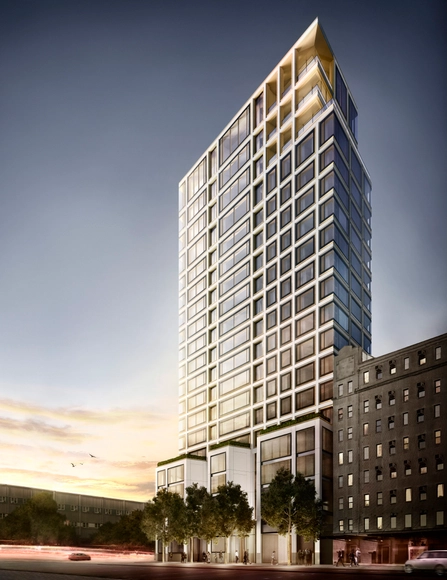
Foster + Partners has released new images of their revised, 19-story luxury condominium tower planned for West Chelsea in New York. Named after its address, 551 West 21st Street, the cast-concrete and glass structure plans to open its 44 residences, and three penthouses, to occupancy in the Fall of 2015.
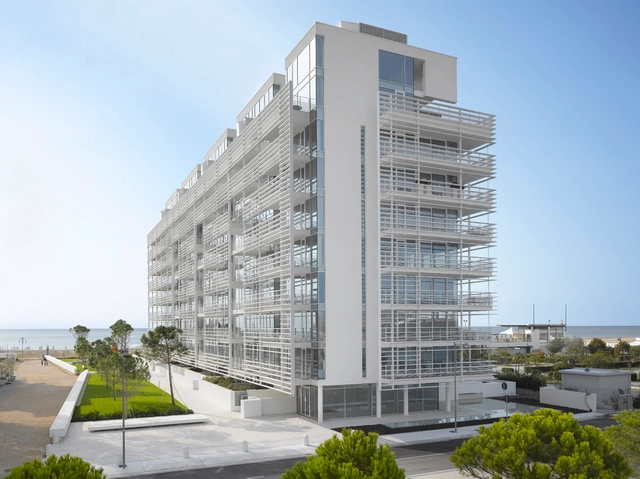
Richard Meier & Partners–Jesolo Lido Condominium, Jesolo, Italy | Photo: Roland Halbe
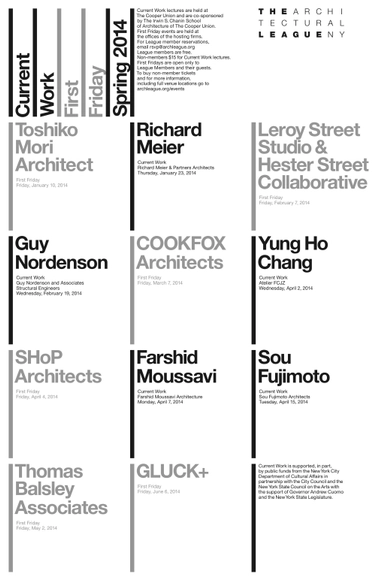
Each year The Architectural League in its Current Work program presents the work of significant international figures who powerfully influence contemporary architectural practice and shape the future of the built environment. Richard Meier will present his work in a public lecture to be followed by a conversation with a moderator and fellow partnersBernhard Karpf, Reynolds Logan, and Dukho Yeon in honor of fifty years of independent practice.



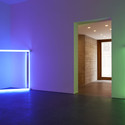
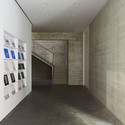
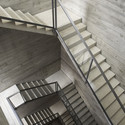

.jpg?1392090268 "Blue and yellow accents. Image © Aaron Sylvan")



.jpg?1391806773&format=webp&width=640&height=580)