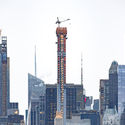
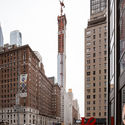
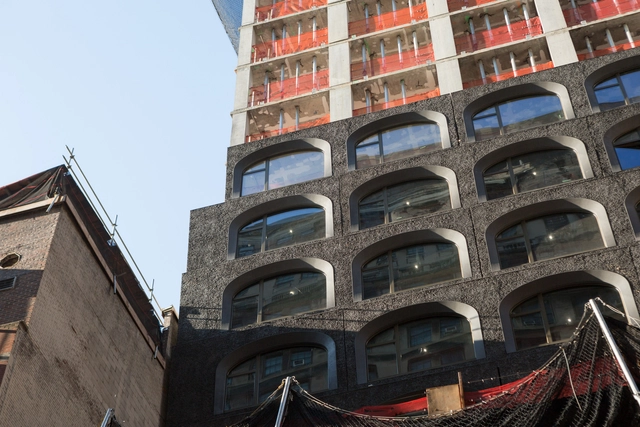
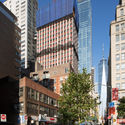
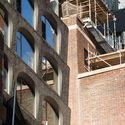
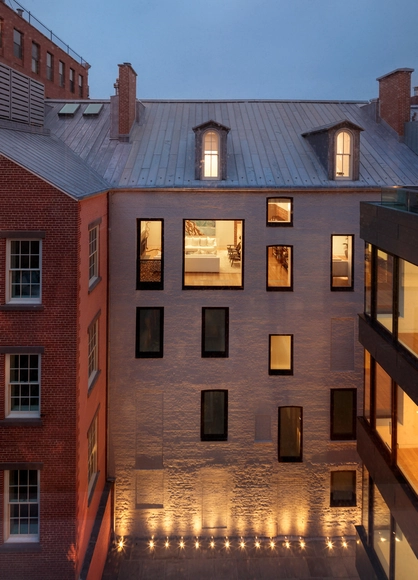
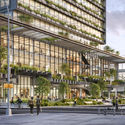
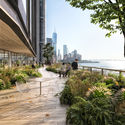
Adjaye Associates‘ 130 William Street residential tower in Lower Manhattan has begun installation of the building facade. As New York YIMBY reports, last week the hand-cast concrete arches started getting installed. Made to recall New York City’s historic fabric from the 19th and early 20th centuries, the facade was designed around an eclectic material and color palette. Once finished, the tower will include 244 new luxury condominiums in the Financial District.
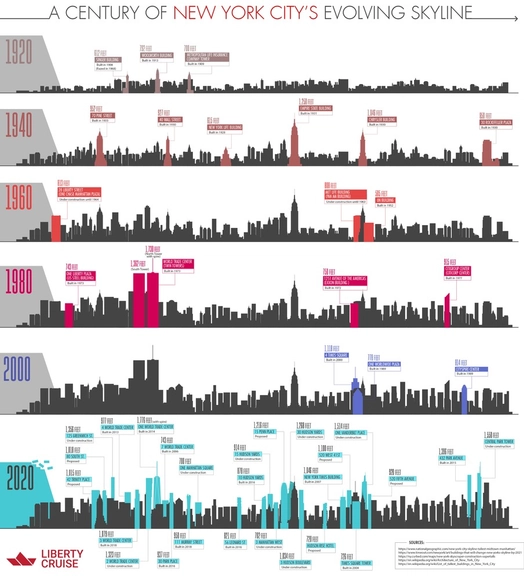
Manhattan is known for its iconic skyline, brimming with skyscrapers, high rises, and some of the most impressive architecture in the world. But it wasn’t always that way; it took hundreds of years for New York City to become the structurally diverse, world-famous city that it is today.
https://www.archdaily.com/904180/100-years-of-change-in-new-yorks-skyline-1920-2020AD Editorial Team
This article was originally published on July 22, 2016. To read the stories behind other celebrated architecture projects, visit our AD Classics section.
The New Museum is the product of a daring vision to establish a radical, politicized center for contemporary art in New York City. With the aim of distinguishing itself from the city’s existing art institutions through a focus on emerging artists, the museum’s name embodies its pioneering spirit. Over the two decades following its foundation in 1977, it gained a strong reputation for its bold artistic program, and eventually outgrew its inconspicuous home in a SoHo loft. Keen to establish a visual presence and to reach a wider audience, in 2003 the Japanese architectural firm SANAA was commissioned to design a dedicated home for the museum. The resulting structure, a stack of rectilinear boxes which tower over the Bowery, would be the first and, thus far, the only purpose-built contemporary art museum in New York City.[1]
This article was originally published on February 11, 2014. To read the stories behind other celebrated architecture projects, visit our AD Classics section.
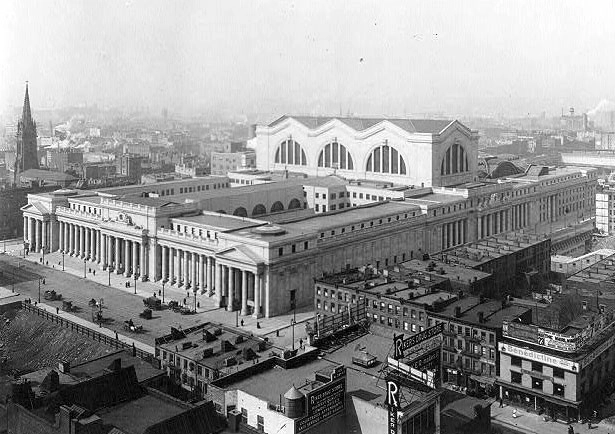
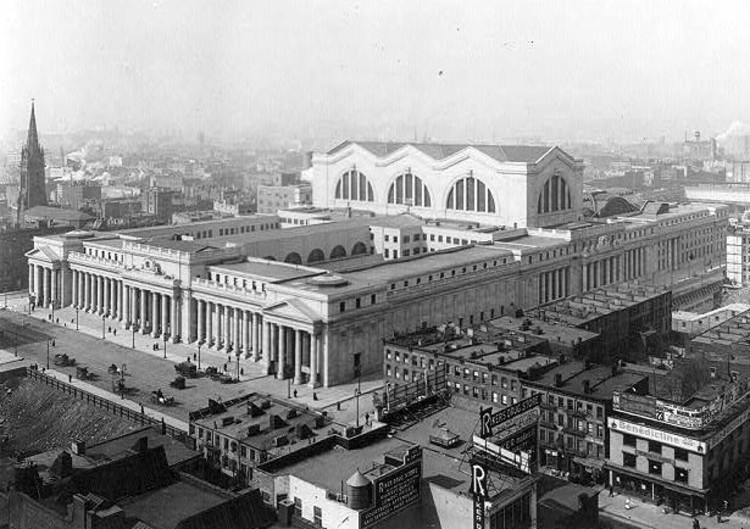
New York City’s original Pennsylvania Station was a monument to movement and an expression of American economic power. In 1902, the noted firm McKim, Mead and White was selected by the President of the Pennsylvania Railroad to design its Manhattan terminal. Completed in 1910, the gigantic steel and stone building covered four city blocks until its demolition in 1963, when it ceded to economic strains hardly fifty years after opening.
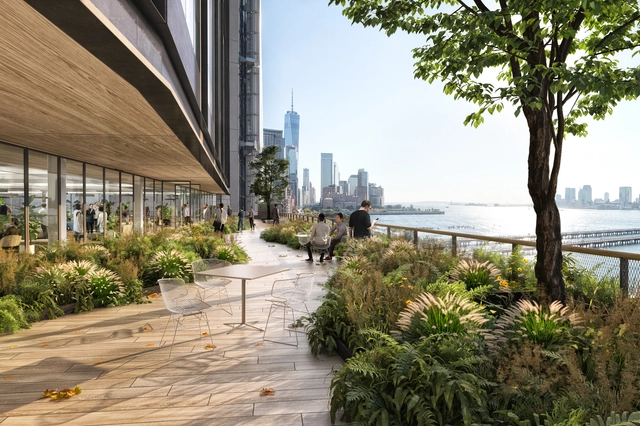
St. John’s Terminal. Image Courtesy of COOKFOX Architects
COOKFOX Architects and Oxford Properties have reimagined New York's St. John’s Terminal as a workplace of the future. The 1.3 million square foot proposal aims to connect the Hudson Square neighborhood to the waterfront at the end of The High Line. Combining outdoor space and greenery with 100,000 square-foot floor plates, the project reinterprets the industrial past of the former freight terminal. The project was created to shape how businesses innovate and create between Lower Manhattan and the waterfront.
Brooklyn Navy Yard. Image Courtesy of BNYDC and WXY
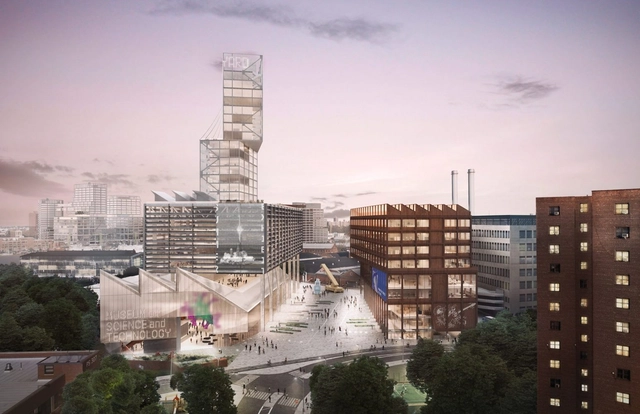
The New York firm WXY and the Brooklyn Navy Yard Development Corporation have proposed vertical manufacturing buildings in a new Navy Yard masterplan. A series of renderings show plans for the next phase of development, including high-rise structures with 5.1 million square feet of urban industrial space. The $2.5 billion masterplan was first announced in January 2018, and as Curbed NY reports, the master plan and rezoning calls for new manufacturing buildings, increased public access, and more educational programming.
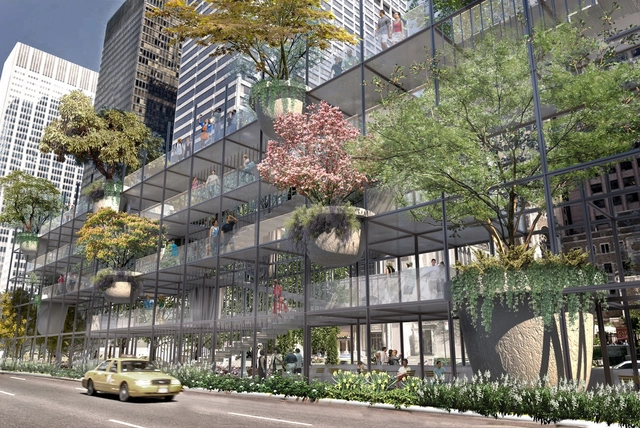
Studio JCW have created a proposal to revitalize the medians of Park Avenue in New York City. Founded by Chanon Wangkachonkait and Jaehong Chung, Studio JCW argues that Park Avenue’s medians have been a fixture on the boulevard for more than a century. Their Big Shelf proposal would create elevated public spaces within a grid structure for expanded programming. The design was made to echo the structural facades of surrounding skyscrapers and building grids.
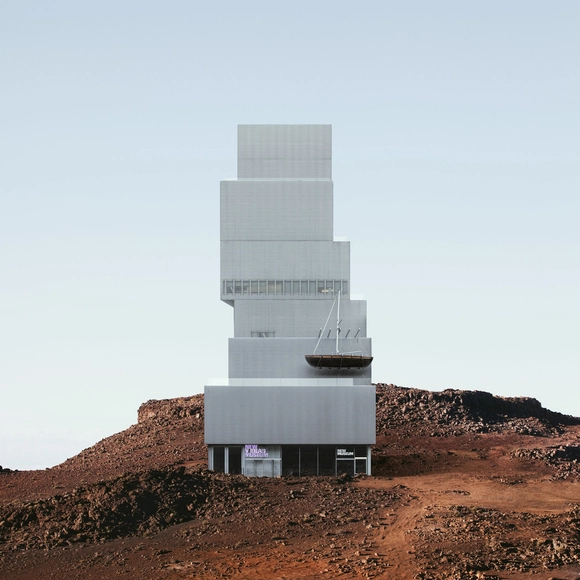
Architecture is all about context, either as a way to find harmony with it's surroundings or as a reaction against them. But what happens when you take context out of the picture entirely?
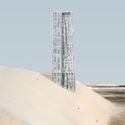
Designer Anton Reponnen, in his Misplaced photo series, has taken 11 of New York's most iconic landmarks, ranging from the Empire State Building to Renzo Piano's Whitney, and transplanted them in deserts, tundras, and plains. With the buildings placed in a "wrong" condition, viewers are challenged to evaluate the architecture in a different way. In Reponnen's eyes (and in the stories that accompany the images), each structure is as alive as we are, and their new location is mystery with motives to uncover.
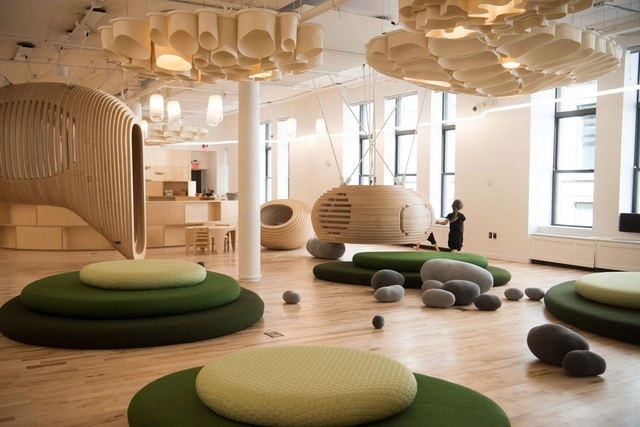
Bjarke Ingels Group has released new images of their WeGrow micro school in New York. As the first school design of the office-sharing brand WeWork, the project was designed to undo the compartmentalization often found in traditional school environments and reinforce the significance of engaging kids in an interactive environment. The design starts from the premise of a school universe at the level of the child. This first WeGrow project is now open in New York’s Chelsea neighborhood.
A New York City icon that once rivaled structures such as the Statue of Liberty and the Empire State Building, the World Trade Center, colloquially known as the Twin Towers, was one of the most recognized structures in history. Designed by Japanese-American architect Minoru Yamasaki, it held the title of Tallest Building in the World from 1972–1974. Up until its unfortunate demise, the WTC site was a major destination, accommodating 500,000 working people and 80,000 visitors on a typical weekday.
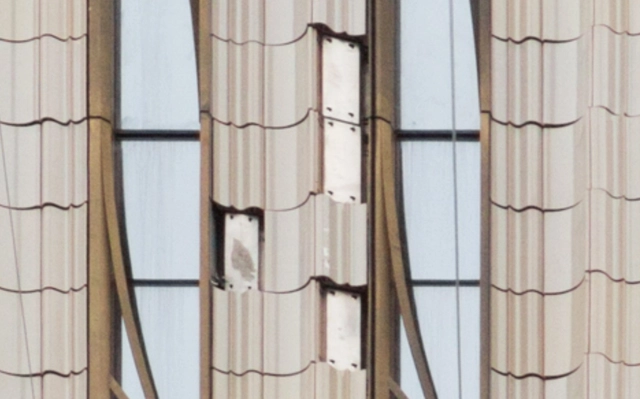
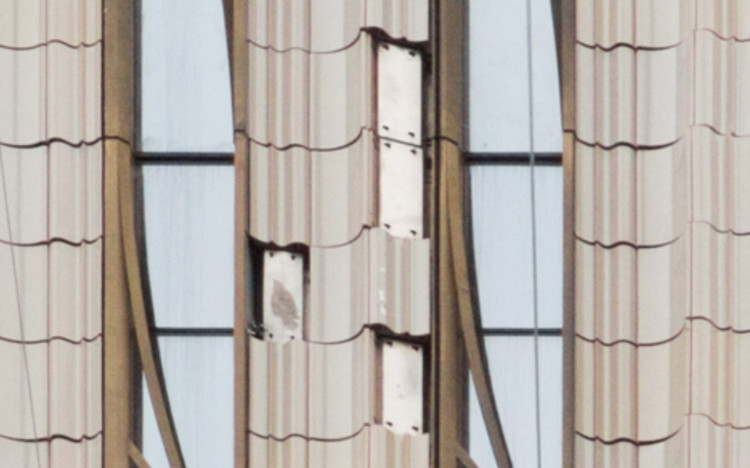
SHoP Architects' super-slender tower at 111 West 57th Street has reached supertall height, but the tower has begun missing pieces of its façade. As New York YIMBY revealed, sales have already started for the Manhattan skyscraper as new photographs show missing fragments of the terracotta façade. Located in Billionaire's Row just south of Central Park, the supertall is being created by JDS Development and Property Markets Group. The project aims to become an iconic terracotta skyscraper in Midtown as it passes its third setback.





.jpg?1463595741&format=webp&width=640&height=580)
.jpg?1463596013 "© Laurian Ghinitoiu")
.jpg?1463595919 "© Laurian Ghinitoiu")
.jpg?1463596094 "© Laurian Ghinitoiu")
.jpg?1463595878 "© Laurian Ghinitoiu")
.jpg?1463595741)






.jpg?1538547520&format=webp&width=640&height=580)
.jpg?1538547880 "© Albert Vecerka/Esto")

.jpg?1538547762 "© Albert Vecerka/Esto")
.jpg?1538547520)








.jpg?1537488742 "© Jeff-Goldberg")
.jpg?1537488821 "© Jeff-Goldberg")
.jpg?1537488754 "© Jeff-Goldberg")

_Dirk_Tacke__courtesy_of_adidas.jpg?1537765434&format=webp&width=640&height=580)
_Dirk_Tacke__courtesy_of_adidas.jpg?1537765455 "© Dirk Tacke, Courtesy of adidas")
_Dirk_Tacke__courtesy_of_adidas.jpg?1537765476 "© Dirk Tacke, Courtesy of adidas")
_Dirk_Tacke__courtesy_of_adidas.jpg?1537765498 "© Dirk Tacke, Courtesy of adidas")
_Dirk_Tacke__courtesy_of_adidas.jpg?1537765545 "© Dirk Tacke, Courtesy of adidas")
_Dirk_Tacke__courtesy_of_adidas.jpg?1537765434)