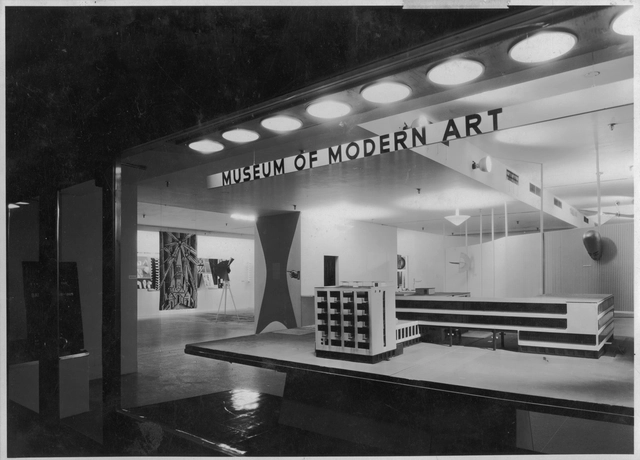
The Museum of Modern Art in New York (MoMA) has released an online archive of over 3,500 of the museum’s past exhibitions from its founding in 1929 to today. Free and available to the public, the database contains photographs, press releases, checklists, catalogues and lists of featured artists.
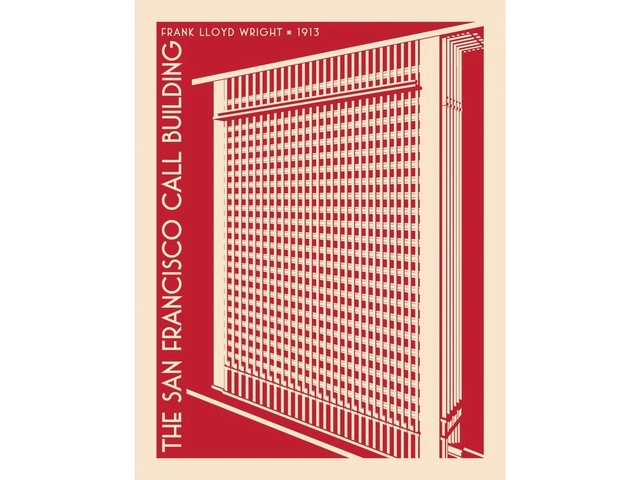
Today, the Museum of Modern Art in New York announced a major retrospective of Frank Lloyd Wright's work to be displayed in 2017, commemorating 150 years since the architect's birth. Opening next June, the exhibition will feature approximately 450 works spanning Wright’s career including architectural drawings, models, building fragments, films, television broadcasts, print media, furniture, tableware, textiles, paintings, photographs, and scrapbooks, along with several works that have rarely or never been shown publicly.
The Museum of Modern Art (MoMA) in New York has acquired all 16 films produced by directors Ila Bêka and Louise Lemoine. Their films, collectively titled “Living Architectures,” focus on the unseen inhabitants of famous buildings –housekeepers, window washers, concierges and more – fighting the long standing stereotype that architectural criticism is the sole domain of the intellectual elite. The collection, which is less than 10 years old, has remained in the spotlight for its contemporary commentary on architecture.
A Japanese Constellation: Toyo Ito, SANAA, and Beyond focuses on the work of architects and designers orbiting Pritzker Prize winners Toyo Ito and SANAA. MoMA’s first presentation dedicated solely to Japanese practitioners, the exhibition spotlights a small cluster of contemporary Japanese architects working within the larger field, exploring their formal inventiveness and close professional relationships to frame a radical model of practice in the 21st century.
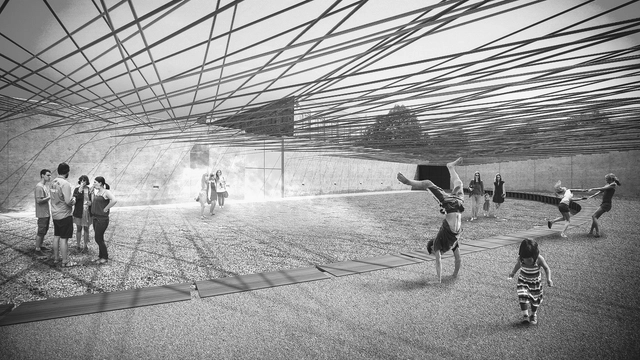
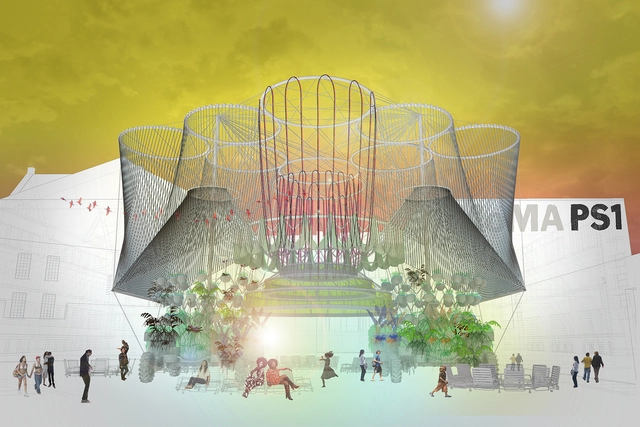
Mexico City-based Escobedo Soliz Studio has been named the winner of MoMA and MoMA PS1's annual Young Architects Program (YAP) in New York - now in its 17th edition. Selected over four other finalists, the winning project, Weaving the Courtyard is “neither an object nor a sculpture standing in the courtyard, but a series of simple, powerful actions that generate new and different atmospheres," says the architect. It will serve as a "temporary urban landscape" for the 2016 Warm Up summer music series in MoMA PS1’s outdoor courtyard.
"Weaving the Courtyard is a site-specific architectural intervention using the courtyard’s concrete walls to generate both sky and landscape, with embankments in which platforms of soil and water suggest the appearance of a unique topography," says MoMA.
MoMA P.S.1 has announced five finalists to compete in the 2016 Young Architects Program (YAP). Now in it’s 16th edition, the competition will challenge a group of emerging architects to design a temporary installation within the walls of the P.S.1 courtyard for MoMA’s annual summer “Warm-Up” series.
The Museum of Modern Art (MoMA) has appointed Sean Anderson as the new Associate Curator in the Department of Architecture and Design. Under the direction of Chief Curator Martino Stierli, Anderson will be responsible for "overseeing MoMA's Issues in Contemporary Architecture exhibition series, assisting in curatorial supervision of the Young Architects Program (YAP) both at MoMA PS1 and with international partners, and serving as the primary liaison to architecture communities both locally in New York as well as globally." His appointment is now effective.
In It’s A Wonderful Life the film’s protagonist George Bailey, facing a crisis of faith, is visited by his guardian angel, and shown an alternate reality where he doesn’t exist. The experience gives meaning to George’s life, showing him his own importance to others. With the increasing scale of design competitions these days, architectural “could-have-beens” are piling up in record numbers, and just as George Bailey's sense of self was restored by seeing his alternate reality, hypothesizing about alternative outcomes in architecture is a chance to reflect on our current architectural moment.
Today marks the one-year-anniversary of the opening of Phase 3 of the High Line. While New Yorkers and urbanists the world over have lauded the success of this industrial-utility-turned-urban-oasis, the park and the slew of other urban improvements it has inspired almost happened very differently. Although we have come to know and love the High Line of Diller Scofidio + Renfro and James Corner Field Operations, in the original ideas competition four finalists were chosen and the alternatives show stark contrasts in how things might have shaped up.
On this key date for one of the most crucial designs of this generation, we decided to look back at some of the most important competitions of the last century to see how things might have been different.
There is perhaps no better display of modern architecture’s historical victory than Jacque Tati’s film Playtime. In it, a futuristic Paris has left-for-dead the grand boulevards of Haussmann, in favor of endless grids of International Style offices. The old city is reduced to longing reflections of Sacré-Cœur and the Eiffel Tower in the glass of these shiny new monoliths. But the irony central to the film is that this construction is created through mere surface treatments, and as the narrative unfolds, cheap mass-production withers in a world where the veneer has triumphed over craftsmanship and polish. In short, Modernism hasn’t always been all it's cracked up to be.
In the Museum of Modern Art’s new exhibition, "Endless House: Intersections of Art and Architecture," the simplicities of mass-market modern homes are abolished by artists and architects who, in examples from the 1940s to the present, have chosen to use the dwelling as a platform for universal messages and as an arena for architectural experimentation. In the same way that photography freed painting from the terrestrial concerns of realism, the simplicity of modernism liberated artists and architects to subvert extant conventions of buildings.
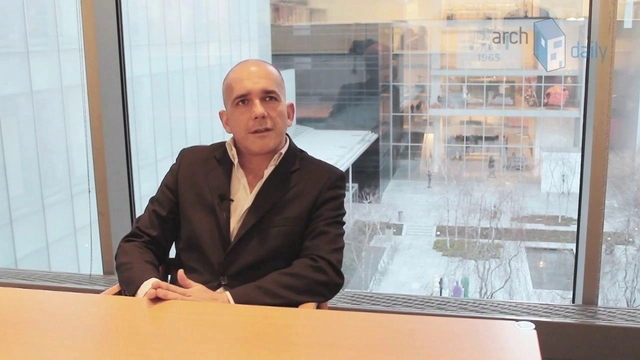
After serving as curator for the past three years at the Museum of Modern Art (MoMA) in New York, Portuguese architect Pedro Gadanho will be leaving his position to become the first artist director of the new Museum of Art, Architecture and Technology (MAAT) in Lisbon. Scheduled to open in the fall of 2016, the new MAAT museum will be responsible for the EDP Foundation's cultural program.
"Pedro Gadanho’s profile and international experience are essential to our ambitions for MAAT, making it a distinctive space of contemporary culture in Portugal", says António Mexia, CEO of EDP. Pedro Gadanho adds that "MAAT will be a cultural institution of the quality and breadth seen in major European cities, offering an exciting contemporary program at the intersection of art, architecture and technology."
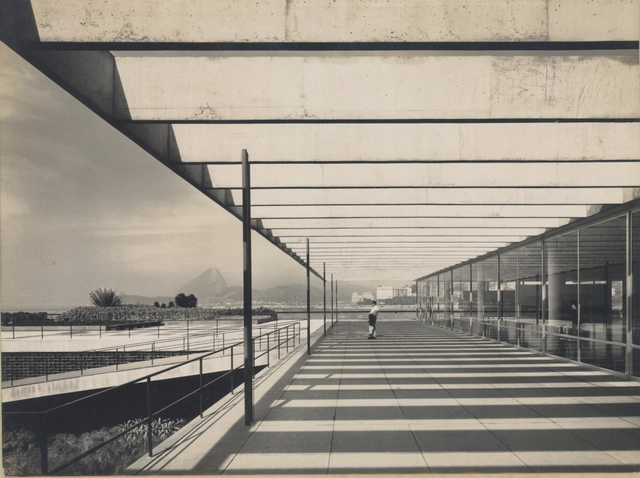
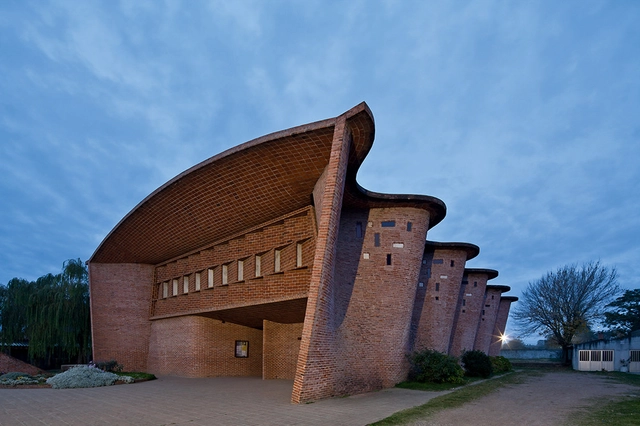
On display until July 19th, MoMA's exhibition "Latin America in Construction: Architecture 1955-1980" is an attempt to bring the architecture of this global region, and this time period, to a greater audience after decades of neglect by the architectural establishment. Curated by Barry Bergdoll, the exhibition effectively follows on from MoMA's last engagement with the topic of Latin American architecture, way back in 1955 with Henry-Russell Hitchcock's exhibition "Latin American Architecture Since 1945." In an intriguing interview, Bergdoll sits down with Metropolis Magazine to talk about why he is revisiting the topic after so many years (or, indeed, why MoMA took so long to do so), and explains his ambitions to elevate the featured works and to frame Latin America itself as "not simply as a place where the pupils of Le Corbusier went to build, but a place of origins of ideas." Read the full interview here.
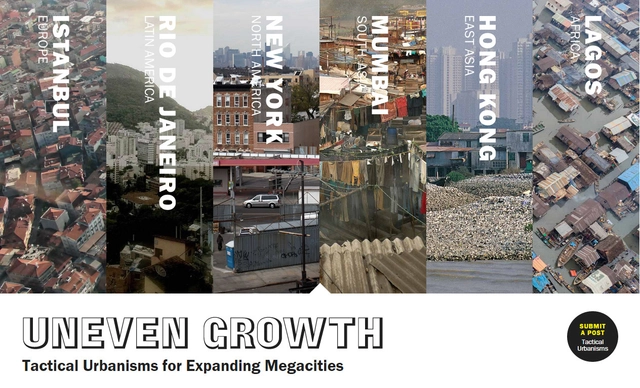
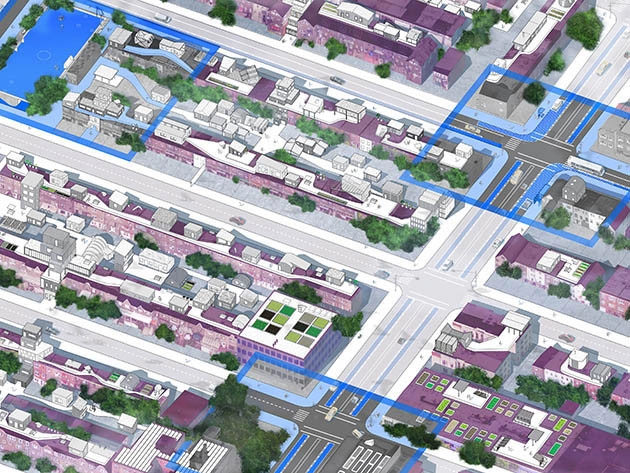
Along with rapid urban expansion comes uneven growth - one of the largest threats that face our society. Determined to combat this issue, the Museum of Modern Art (MoMA) sparked an international debate with the opening of Uneven Growth: Tactical Urbanisms for Expanding Megacities. The exhibition, a culmination of a 14-month initiative, highlights emergent modes of tactical urbanism from around the globe that offer ideas on how to mitigate inequality and preserve livability within an increasingly-expanding world.
Videos
Courtesy of Office for Political Innovation
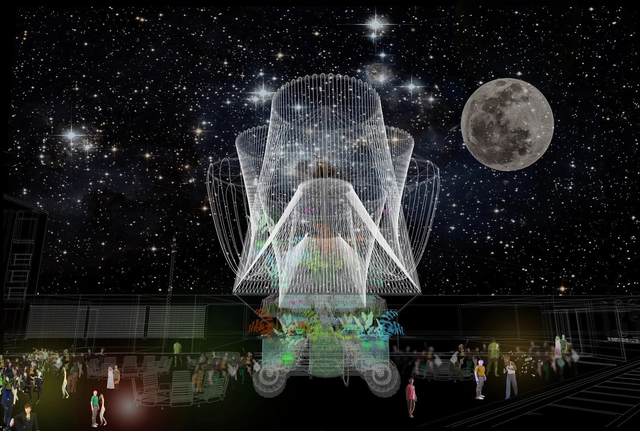
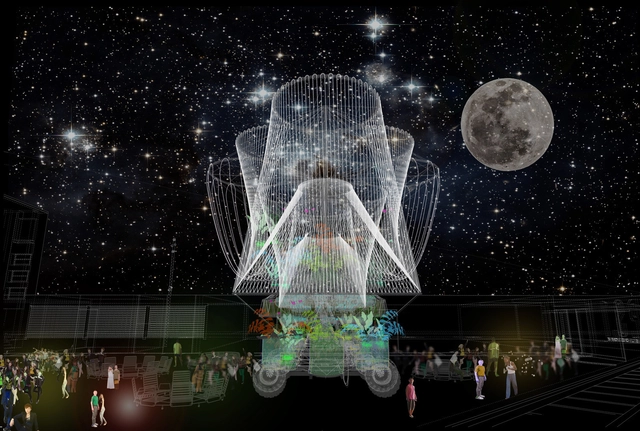
In the grand tradition of MoMA PS1's Young Architects Program winners, Andrés Jaque's plan for "COSMO" addresses an ecological need through installation architecture. While 2014's "Hy-Fi" by the living explored organic bricks and 2012's "Wendy" by HWKN addressed airborne pollution, Jaque has set his targets on something that is apparently much more political: water. This article, originally published by Metropolis Magazine as "The Politics of Water: Andrés Jaque on His 2015 MoMA PS1 YAP Winning Design," examines how Jaque hopes to turn his installation into a political talking point.
At first glance, Bill Gates’s robotic Janicki Omniprocessor and Andrés Jaque’s winning proposal for the 2015 MoMA PS1 Young Architects Program (YAP) share a similar goal—they each tackle the problem of global water scarcity, which has become exacerbated by climate change, political strife, and a host of other factors. But while the Omniprocessor looks like a cement factory in miniature, Jaque’s project melds its profoundly social objective—to change the way we understand contemporary water infrastructure—to an almost psychedelic aesthetic.
In 1955 the Museum of Modern Art staged Latin American Architecture since 1945, a landmark survey of modern architecture in Latin America. On the 60th anniversary of that important show, the Museum returns to the region to offer a complex overview of the positions, debates, and architectural creativity from Mexico and Cuba to the Southern Cone between 1955 and the early 1980s.
Andrés Jaque / Office for Political Innovation’s project COSMO has been selected by the Museum of Modern Art and MoMA PS1 as winner of Young Architects Program’s (YAP) 16th edition in New York. Scheduled to open in late June, just in time for MoMA PS1’s 2015 Warm Up summer music, COSMO will serve as a “moveable artifact” with a mission to provide clean water for the world’s population.
“This year’s proposal takes one of the Young Architects Program’s essential requirements - providing a water feature for leisure and fun - and highlights water itself as a scarce resource,” said Pedro Gadanho, Curator in MoMA’s Department of Architecture and Design. “Relying on off-the-shelf components from agro-industrial origin, an exuberant mobile architecture celebrates water-purification processes and turns their intricate visualization into an unusual backdrop for the Warm Up sessions.”
MoMA's largest-ever Latin American architecture exhibition will feature an official partnership with Instagram. The project invites the Instagram community to share their photos of buildings as part of the Latin America in Construction: Architecture 1955–1980 exhibition.
When it comes to discussing informal housing, it's usually cities in developing nations that take the spotlight - however, as revealed by SITU Studio's contribution to MoMA's Uneven Growth exhibition, issues of informal housing are indeed present in cities across the spectrum of development. In this interview, originally posted on Arup Connect as "Inequality and informality in New York," Sarah Wesseler speaks to SITU Studio principle Bradley Samuels about their unconventional proposal to address an issue that is frequently overlooked in New York city policy.
Uneven Growth: Tactical Urbanisms for Expanding Megacities, a newly opened exhibit at New York’s Museum of Modern Art, focuses on the complex relationship between urbanization and inequality. Over the 14-month period leading up to the launch, six interdisciplinary teams explored how these issues are playing out in different parts of the world, each developing an architectural response for a specific city.
Architecture firm SITU Studio (together with Cohabitation Strategies [CohStra]) was tasked with studying its home city, New York. (Arup transport planner Michael Amabile also consulted with the team.) We spoke with SITU principal Bradley Samuels about the project.