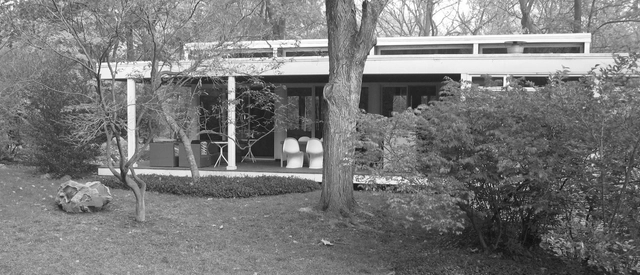
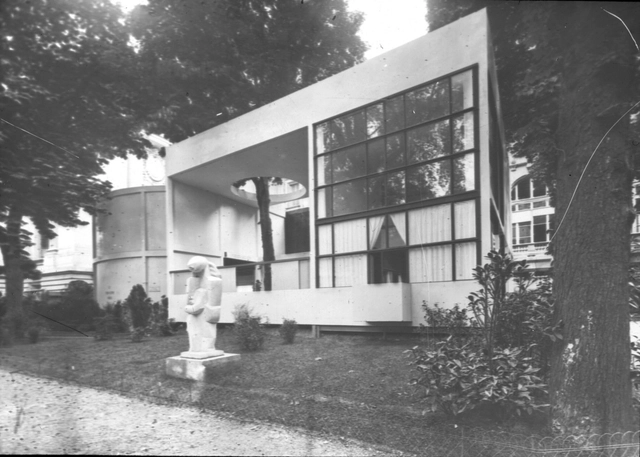
Elizabeth W Garber’s new book, Implosion: A Memoir of an Architect’s Daughter (She Writes Press), tells the story of growing up in a glass house, designed by her father, Woodie Garber, once called “Cincinnati’s most extreme, experimental, and creative Modernist architect.” The memoir, which will be released in June, focuses on a family caught in a collision between modern architecture, radical social change, and madness in the turbulent 1960s in Cincinnati. Recently I talked to Garber about the book, the strictures of Modernism, and why she couldn’t live in a glass house today.
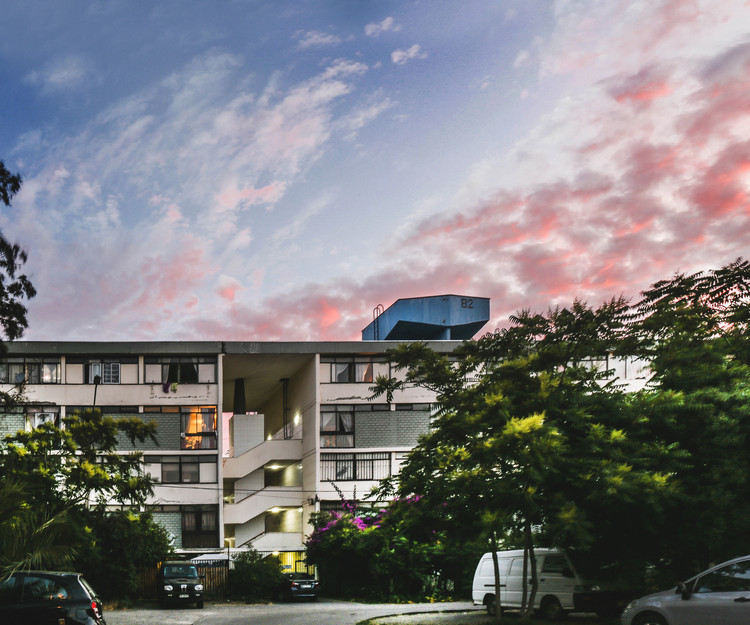
The modern movement was a key player in the cultural construction of Chile in the 20th century. Although the first projects came from the private sector, their urban and landscape principles were adopted by the modernizing project of the welfare state that began to be built after the social conflicts that exploded in the 1920s.
During chile's industrialization process, the State's housing construction incorporated concepts such as liveability, and universal access to housing and sanitation, which were put to the test early on in the reconstruction of cities such as Chillán after the 1939 earthquake. As Chile is a country that is familiar with earthquakes, it was necessary to readjust the concepts of the modern movement to national structural requirements, that is, resizing the reinforced concrete sections, which gave them a heavier visual expression than in Brazil or Argentina.
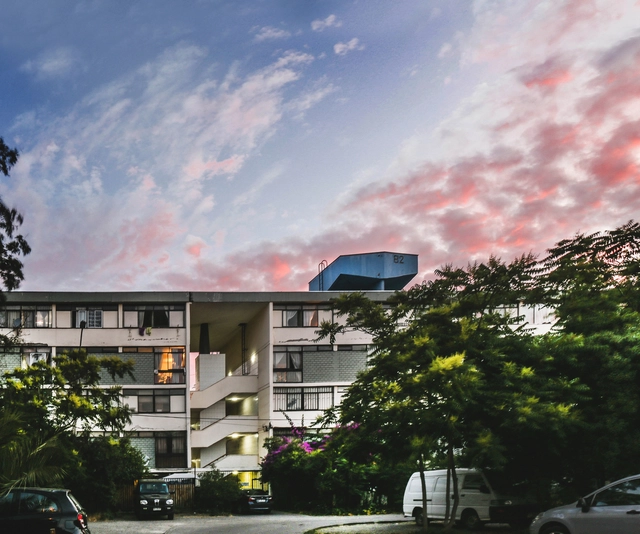
From the daring vision of Sergio Larraín García-Moreno and Jorge Arteaga in the Oberpaur building - the first of the modern movement - to the urban visions of BVCH in the Villa Portales, or the first exercises in height in the upper middle class sectors, the modern movement has left its mark on our society and in our cities. However, only one of the projects presented here is declared a historical monument.
In this edition of the architectural guides, we present you twenty chronologically ordered projects that reflect the evolution of the modern movement in Santiago, Chile.
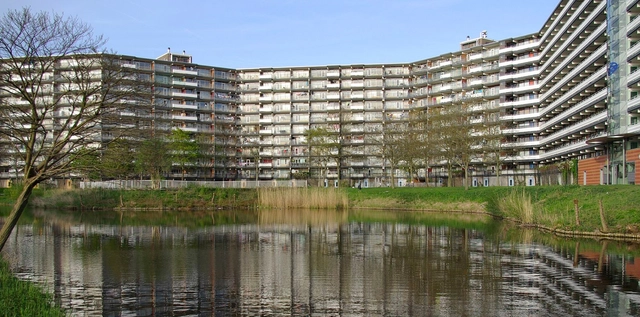
How can we plan a better city? The answer has confounded architects and urban planners since the birth of the industrial city. One attempt at answering came in the form of a spectacular modernist proposal outside of Amsterdam called the Bijlmermeer. And, as a new two-part episode by 99% Invisible reveals, it failed miserably. But, like all histories, the story is not as simple as it first appears.
The argument, made by architectural historian Charles Jencks in the introduction for the recently released book Postmodern Design Complete, that Postmodern styles never truly left the architectural profession is stronger than ever. The movement from the late 70s and 80s which began as a reaction against the utopian canon of modernism has recently been re-entering the architecture scene and defining our present moment of architectural culture.
This brings up an important question: What is the current movement of architecture? And what came directly after postmodernism? If anything, it was an immediate cry of “No more Po-Mo,” followed recently by a wave of “save Po-Mo” perhaps best demonstrated by the rallying to save Philip Johnson’s AT&T Tower from a Snøhetta makeover. Even Norman Foster claimed that although he was never a fan of the postmodern movement, he understood its importance in architectural history. Postmodernism is making its recursive return with Stirling-esque rule-breaking jokes and pictorial appearances.
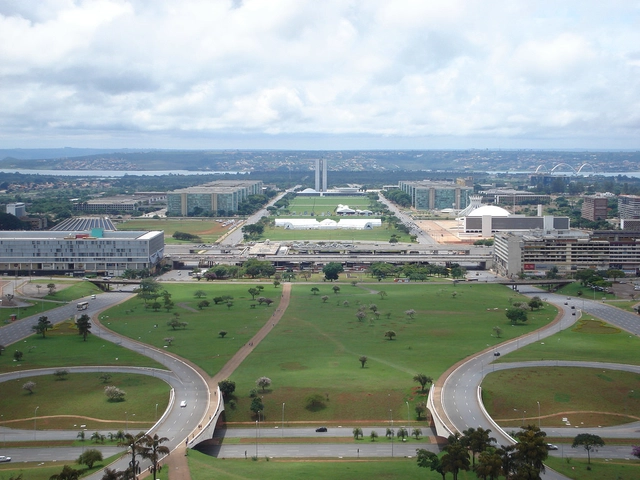
Brazilian planner, preservationist and modernist thinker Lúcio Costa (27 Feburary 1902 – 13 June 1998) is best known for his 1957 plan of Brasília that shaped the Brazilian capital into a monument to utopian modernism. A resolute and often controversial figure in the Brazilian establishment, Costa’s contributions to Brazilian architecture helped to shape the distinctive modernism that was practically Brazil’s official style until the 1980s.
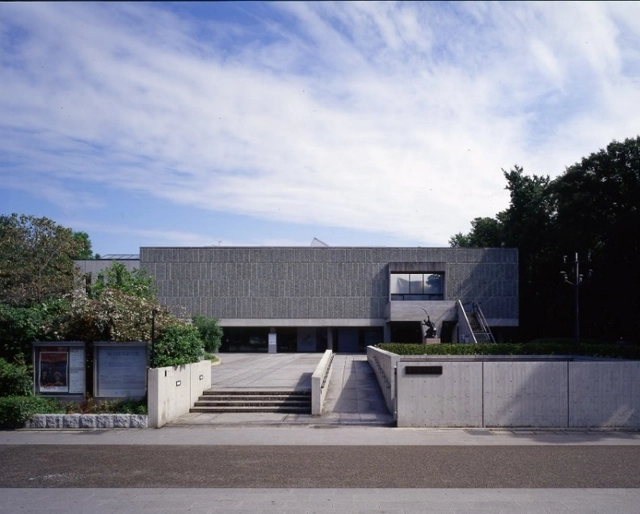
The Getty Conservation Institute has announced a workshop to address the care and conservation of three museums designed by Le Corbusier. The three museums are the only museums designed by the prolific architect. The workshop will be held in India, where two of the three museums are, with municipal corporations from Ahmedabad and Chandigarh serving as hosts for the event. The Foundation Le Corbusier, located in Paris, will also be assisting with the workshop.
Update:The deadlines for this opportunity have been extended
Call For tutors : Extended till January 28
Call for participants : Ends on February 28
MEDS workshop “Meetings of Design Students” is an international workshop that takes part each summer in a different country, focusing on various issues, themes, topics and settings that will help any designer expand their expertise. It is a chance to get in touch with diverse approaches to design, different building techniques, traditions and skills. MEDS workshop is both practical and educational because it focuses not only on creative theoretical designs, but actually compels participants to execute these designs during the 2-week span of the workshop. You can apply to MEDS as a tutor or as a participant.
The Union of Architects of Russia calls for submissions to the Sixth "Glass in architecture" awards for 2018. It will be held on April, 18-19, 2018 within the framework of the Forum of the architectural glass industry, "ArchGlass 2018," in Moscow at the Central House of Architects.
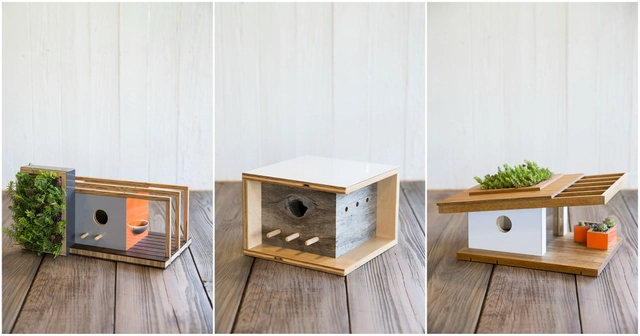
Douglas Barnhard, the owner of the home decor company Sourgrassbuilt, designs and builds birdhouses. Built out of repurposed materials, his designs are inspired by mid-century modernism and pay homage to the likes of Frank Lloyd Wright, Joseph Eichler and the Bauhaus School in Germany yet mix with Barnhard's experience of the rich surf and skate scene in Santa Cruz.
Villa Malaparte, Adalberto Libera's modern Italian classic, is featured as the backdrop in Saint Lauren's spring 2018 campaign starring modern English classic, Kate Moss. The video for the campaign, directed by Nathalie Canguilhem, positions Moss on the dramatic and monumental steps of the villa, an architectural promenade that seems to lead directly to the sky.
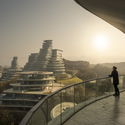
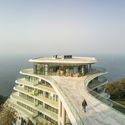
From Portuguesearchitectural photographerFernando Guerra comes imagery of MAD's Huangshan Mountain Village in China. This residential design, comprising ten housing blocks that mimic the mountain range they are embedded in, is just one piece of the Taiping Lake tourism master plan; architecture and nature blend together to create modern apartments with differing panoramic views.
As a trailblazer of Brazilian Modernism, Oscar Niemeyer is celebrated for his bold, sinuous forms, and his use of the “the liberated, sensual curve.” Paul Goldberger described it best when he wrote that “Niemeyer didn’t compromise modernism’s utopian ideals, but when filtered through his sensibility, the stern, unforgiving rigor of so much European modernism became as smooth as Brazilian jazz.”
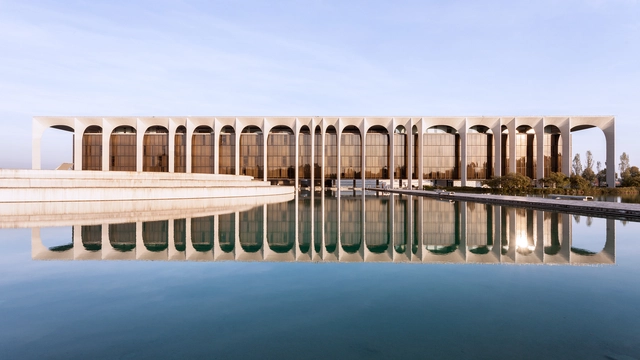
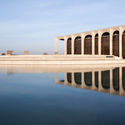
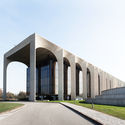
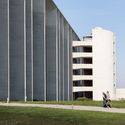
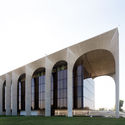
When Georgio Mondadori, chairman of the Italian publishing house Mondadori, commissioned Niemeyer to design the company’s new headquarters in 1968, he wanted the building to look like the Itamaraty Palace (also known as Palace of the Arches) in Brasília. Niemeyer agreed, but given his playful spirit, he deliberately deviated from the earlier design and proceeded to build what he would later identify as his favorite of the projects he completed in Europe. Read on to see a striking set of sixteen photographs of the Mondadori building by Milan-based photographer and visual artist Karina Castro, who was commissioned by Mondadori to capture their headquarters over 40 years after the building's completion.
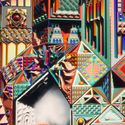
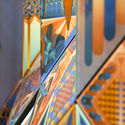
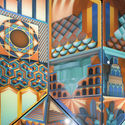
This essay by Space Popular references an installation currently on display at Sto Werkstatt, in London. You can experience it in virtual reality, here.
The Glass House has no purpose other than to be beautiful. It is intended purely as a structure for exhibition and should be a beautiful source of ideas for “lasting” architecture but is not intended as such. According to the poet Paul Scheerbart, to whom it is dedicated, the Glass House should inspire the disillusion of current architecture’s far-too-restricted understanding of space and should introduce the effects and possibilities of glass into the world of architecture.
Bruno Taut [above] described his Glashaus for the 1914 Werkbund Exhibition in Cologne, Germany, as a "little temple of beauty"; as "reflections of light whose colors began at the base with a dark blue and rose up through moss green and golden yellow to culminate at the top in a luminous pale yellow.”[1] The Glass Pavilion, designed based on its potential effects on those who perceived it, was supposed to create vivid experiences. The site was the human mind.
"The Glass Chain" (Die Gläserne Kettein its native German) was an exchange of written letters initiated by Bruno Taut in November 1919. The correspondence lasted only a year, and included the likes of Walter Gropius, Hans Scharoun, and Paul Gösch. In the letters, the penfriends—thirteen in all—speculated and fantasized about the possibilities of glass, imagining, in the words of Fredrik Hellberg and Lara Lesmes (Space Popular), "fluid and organic glass follies and colourful crystal cathedrals covering entire mountain chains and even reaching into space."