Adolf Loos, Joaquín Vaquero Palacios, Fernando Moreno Barberá, Norman Foster, and the bicentennial of the Museo del Prado are just some of the key names and milestones set to take over Spanish museums in 2018.
Here are 10 highly recommended architecture exhibitions for the new year that offer a rich and compelling cultural lineup. They span Spanish and international architects, iconic buildings from Spain's architectural history, and the profound impact of emerging technologies—such as artificial intelligence and virtual reality—on the field of architecture.
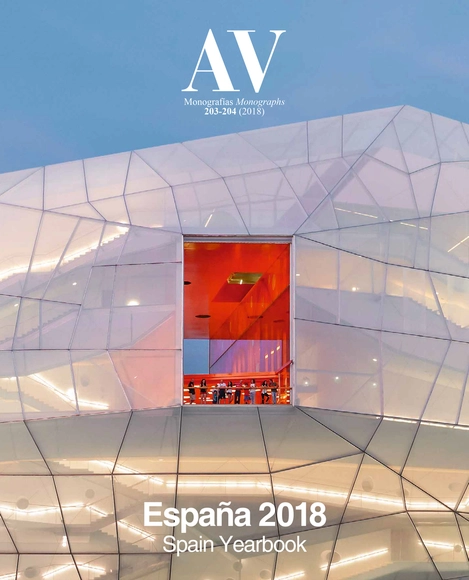
Cover. SelgasCano, Congress Palace, Plasencia (Cáceres). Image
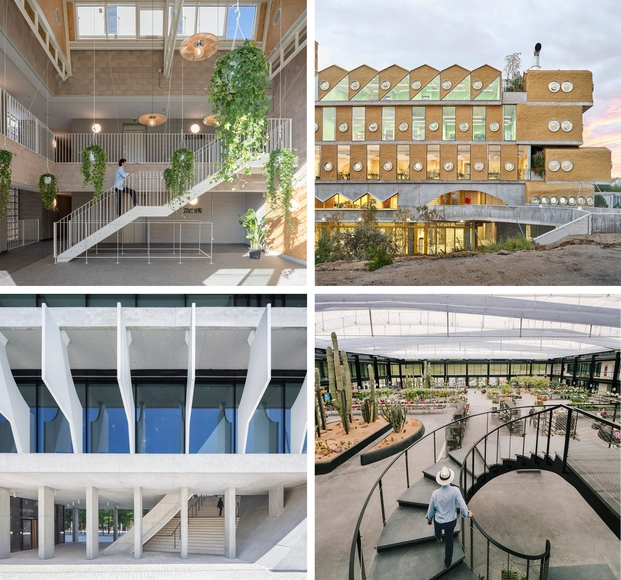
The publisher Arquitectura Viva recently released the monograph 'España 2018'. As it has every year since 1993, the AV Monographs Yearbook brings together, in a double volume, the best buildings completed in Spain over the past twelve months: a selection of 24 projects that provide an overview of the country's most recent architecture, taking stock of its characteristically high quality despite the crisis still affecting the sector.
Suzhou Museum of Imperial Kiln Brick. Image Cortesía de Jiakun Architects
The Pritzker Prize is the most important award in the field of architecture, awarded to a living architect whose built work "has produced consistent and significant contributions to humanity through the art of architecture." The Prize rewards individuals, not offices, as happened in 2000 (when the jury selected Rem Koolhaas instead of his firm OMA) or in 2016 (with Alejandro Aravena selected instead of ELEMENTAL); however, the Prize can also be awarded to multiple individuals working together, as was the case in 2001 (Herzog & de Meuron), 2010 (Kazuyo Sejima and Ryue Nishizawa from SANAA), and 2017 (Rafael Aranda, Carme Pigem, and Ramon Vilalta from RCR Arquitectes).
As architecture moves beyond human-centered design, new practices are rethinking coexistence as an ethical and ecological framework. From political infrastructures to habitats, these approaches invite us to imagine architecture as a shared living system.
Modern architecture has long been written through an anthropocentric lens, placing the human at its center and rendering other species invisible. Yet this paradigm continues to shift, as architects and researchers redefine the role of design in more-than-human worlds. Studios such as Office for Political Innovation, Studio Ossidiana, and Husos Architects are questioning human-centered narratives and reframing design as a shared practice between species. In this context, architecture is no longer a tool of control but a medium for coexistence, a discipline that mediates between species, environments, and cultures.
In the interview conducted by Louisiana Channel, architect Andrés Jaque discusses his foundational interest in architecture and his perspective on its role in shaping society. Jaque, founder of the Office for Political Innovation, emphasizes the creative potential of architecture to intervene in reality and reconnect all elements of the environment. He also goes into perspective on the political aspect of architecture, an interest from which the name of his office derives, as well as his perspectives on the true meaning of sustainability.
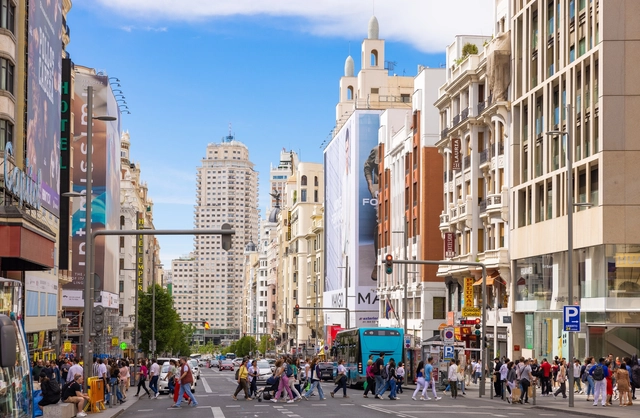
Madrid, the vibrant capital of Spain, offers a blend of tradition and modernity, reflected in its diverse architectural heritage. This rich past is etched into the old façades, expansive public spaces, and historic religious institutions that define much of Madrid’s character today. The city’s continuous architectural renewal, reflected in both respectful restorations and innovative new constructions, highlights Madrid’s commitment to preserving its heritage while embracing modernity.
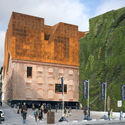
In the 20th century, Madrid embraced modernity, influenced by movements such as Rationalism, the International Style, and Brutalism. Today, Madrid is a showcase for contemporary design, where contemporary projects by renowned architects coexist with its historical legacy. Structures like the CaixaForum by Herzog & de Meuron and Jean Nouvel’s Reina Sofía Museum exemplify the city’s interest in architectural explorations
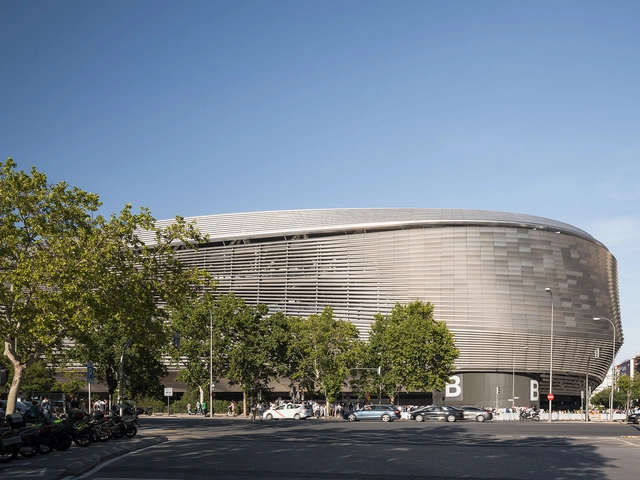
The Santiago Bernabéu Stadium is now recognized as a symbol of Madrid, Spain. Home to the Real Madrid football team, the stadium built in 1947 occupies a key position in the city, adjacent to a major transit artery. The stadium went through several refurbishments since its inauguration, most aimed at increasing the seating capacity. A major modernization process began in 2012, following an international competition. The winning design team is L35 Architects, in collaboration with GMP and Ribas & Ribas. The refurbishment project aimed to redefine the building’s relationship with the surrounding urban spaces, to improve accessibility, and to integrate more activities, from sporting to leisure, commercial, and socio-cultural functions.
The international architecture and city festival Open House will take place in Madrid from September 21 to 24, 2023, inviting residents to visit and explore some of the capital's most iconic buildings. Extending beyond Madrid to open several spaces in San Lorenzo de El Escorial, this ninth edition will open the doors of over 120 buildings and studios, while also offering 13 outdoor routes and itineraries to discover Madrid's architecture.
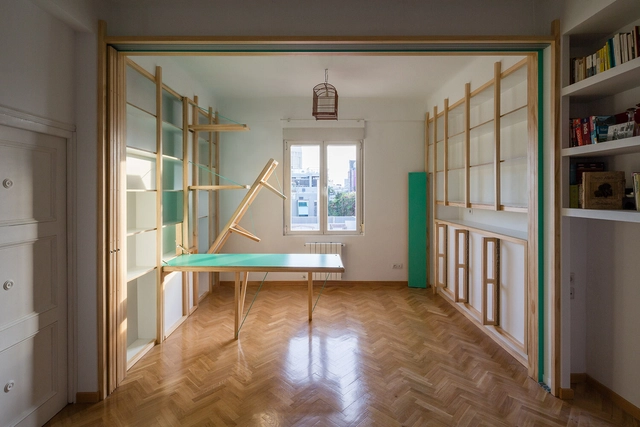
The Youtube channel Never Too Small boasts 2.25 million subscribers — a platform featuring the imaginative manipulation of space in tiny footprints. Videos of micro-apartments, in Paris, London, and beyond, get views in the millions. Clearly, there is a demand for content geared towards living small, as a global housing crisis has precipitated the ever-dwindling availability of affordable, larger-footprint residences in urban areas. Architects, working in this constrained contemporary reality, have been necessitated to make the most out of limited space, configuring sub-40 square-meter floor areas to create a non-claustrophobic spatial experience.
How relevant is the use of color in architecture? Throughout history, we find various scenarios where color takes centre stage in its integration with the architectural work. Nowadays this is no exception. This is because colour is a medium that can be used to provoke deep and immediate emotions and reactions in the person observing. Because of this, colour plays an important role in the architectural reading, as it has the power to clarify the components that make it up or, on the contrary, to change the perception of the work or space.
The following list shows various Latin American housing projects that have had a particular approach to color in their composition. In them, we see the conception of color as the integrator of the work, or as a means of enhancing a particular element, be it interior or exterior.
It has become evident that the spaces we inhabit have changed. The COVID-19 pandemic has forced us to appreciate values as lighting, ventilation, and comfort when working in home.
Choice of building materials and the inherent continuous reflection about the reach and capabilities of architecture are an interesting alternative way to approach this issue. The materials used in social housing should address local and economic possibilities and the real needs for access to housing in the contemporary context.
In this article, we analyze different projects published on our site to identify some of the predominant materials used in social housing, both for the formation of structures or enclosures. The intentions of this are two-fold: firstly, to create a worldwide panorama of different case studies with different construction styles from a range of geographical locations, and secondly, to provide inspiration and tools to architects to make better social housing.
Below we present 15 social housing projects and their diverse materials and construction styles.
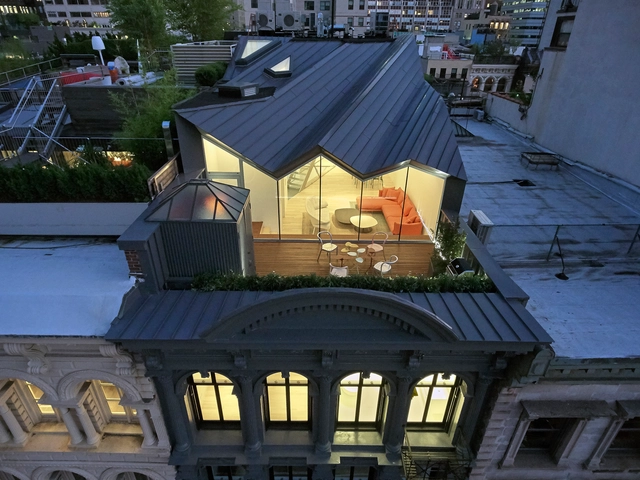
One of the most important cities in the world –and the most populated in the United States of America–, New York is home to a great mix of cultures and history that has been shaped over the years, while art and architecture play a fundamental role in this development.
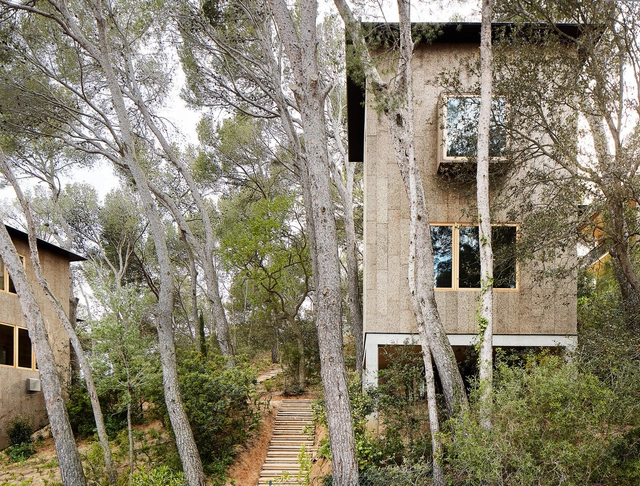
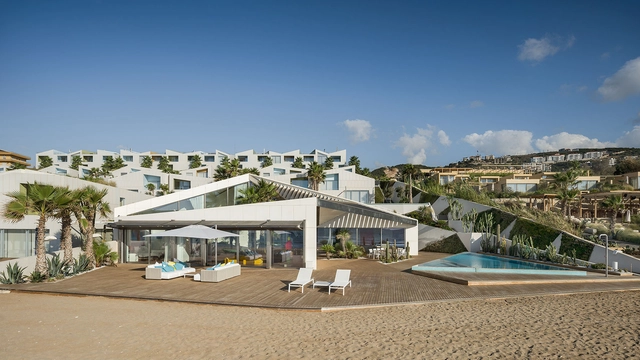
The history etched into Spain's wooden houses has many lessons to teach us about the role of wood in creating everything from light-weight and mobile modular homes to interior and exterior finishes. What's more, these lessons are not limited to new constructions. They apply to everything from furniture to remodels.
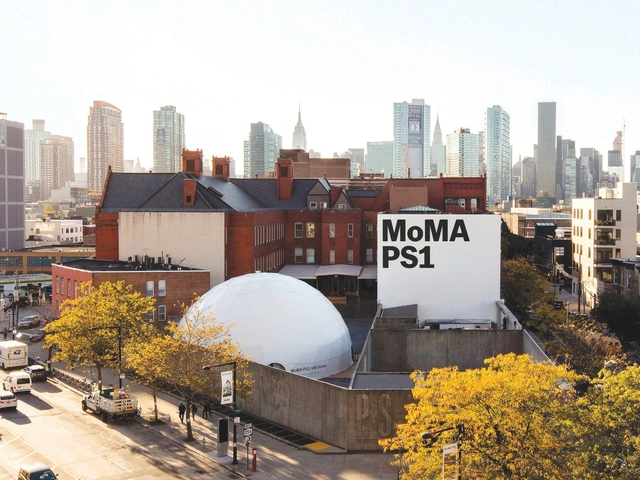
MoMA PS1 has announced that the Young Architects Program will be placed on a one-year hiatus. MoMA PS1, formerly P.S.1 Contemporary Art Center, is one of the oldest and largest nonprofit arts centers in the United States devoted to contemporary art. The Young Architects Program founded by MoMA and MoMA PS1 was made to offer emerging architectural talent the opportunity to design a temporary, outdoor installation in New York.















.jpg?1626079817&format=webp&width=640&height=580)
.jpg?1585197773&format=webp&width=230&height=230&crop=true)
_Frank_Oudeman_19.jpg?1585198175&format=webp&width=230&height=230&crop=true)