-
Architects: Francesc Rifé Studio
- Area: 3500 m²
- Year: 2018
-
Manufacturers: Andreu World, Parklex Prodema, Vibia, Accesorios y Acabados, Blasco&Vila, +8


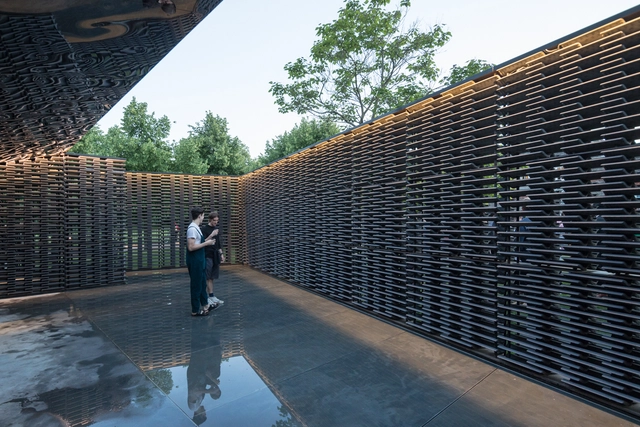
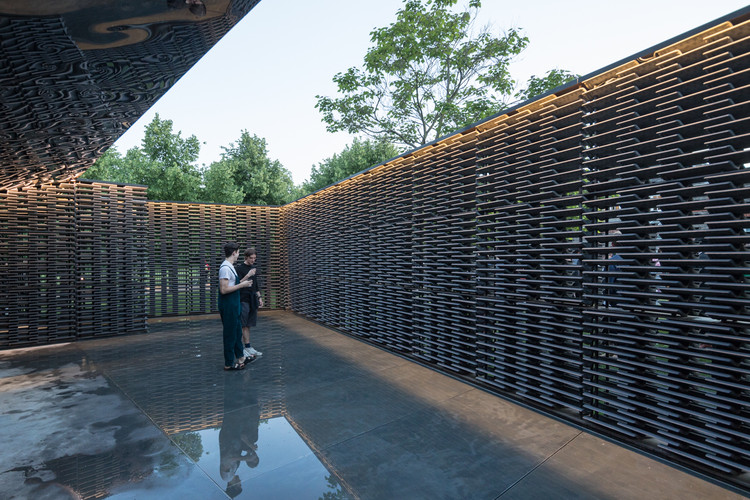
Following the opening of the 2018 Serpentine Pavillion this week, designed by Mexican architect Frida Escobedo, photographer Laurian Ghinitoiu has turned his lens to London. Ghinitoiu’s images, which you can discover below, capture the elemental beauty of Escobedo’s pavilion, defined by a permeable cement tile façade inspired by Mexican celosias.
Fusing elements typical to Mexican architecture with local London references, the pavilion centers on a courtyard enclosed by two rectangular volumes constructed using the characteristic celosia method.
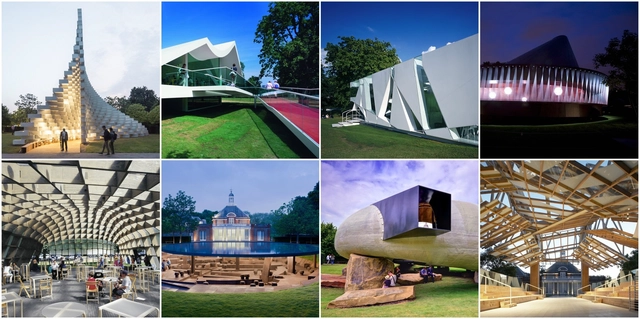
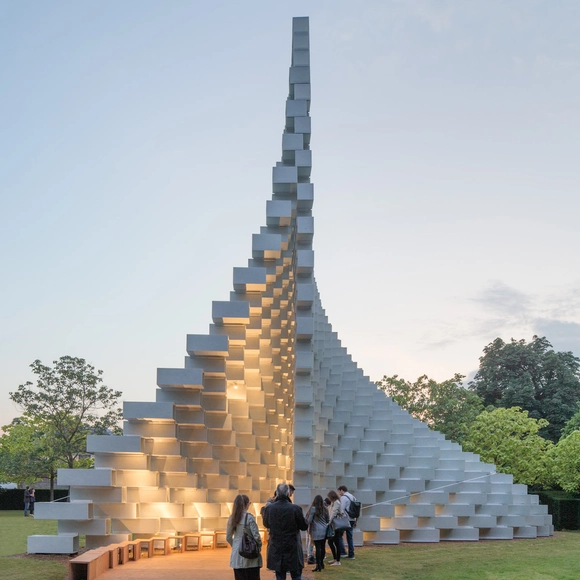
Lasting for close to two decades now, the annual Serpentine Gallery Pavilion Exhibition has become one of the most anticipated architectural events in London and for the global architecture community. Each of the previous eighteen pavilions have been thought-provoking, leaving an indelible mark and strong message to the architectural community. And even though each of the past pavilions are removed from the site after their short summer stints to occupy far-flung private estates, they continue to be shared through photographs, and in architectural lectures. With the launch of the 18th Pavilion, we take a look back at all the previous pavilions and their significance to the architecturally-minded public.
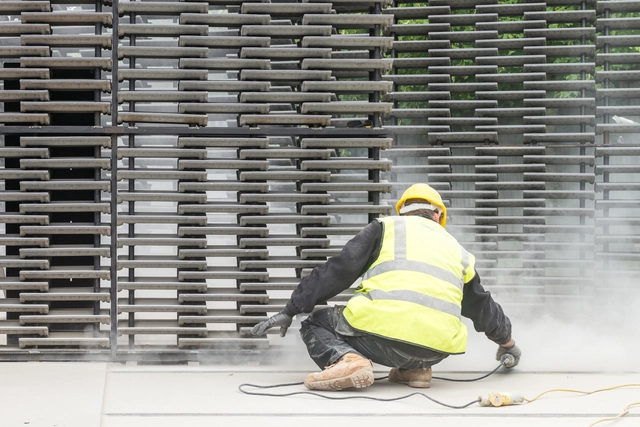
Photographer Francesco Russo has captured the construction of Frida Escobedo’s 2018 Serpentine Pavilion, as the structure nears completion in London’s Hyde Park. The images showcase the dark cement roof tiles used to construct the pavilion, which comprises an enclosed courtyard created by two rectangular volumes.
With an interplay of light and water, the pavilion seeks to evoke the sensation of the domestic architecture of Mexico, from where Escobedo hails. The stacked cement tiled visible in the photographs form a "celosia," a type of permeable wall common in Mexico.

The Mayor of London Sadiq Khan has unveiled a £1.1 billion vision for the East Bank project at the Queen Elizabeth Olympic Park, creating a “new powerhouse of culture, education, innovation, and growth.”The project, alternatively dubbed “Olympicopolis” will contain a number of landmark schemes, including the V&A East by DS+R, and a cultural and education quarter by Allies and Morrison, O’Donnell + Tuomey, and Josep Camps/Olga Felip Arquitectura.
As part of the announcement, the Mayor unveiled new images of designs for Sadler’s Wells, London College of Fashion, and the V&A scheme in partnership with the Smithsonian Institution. He also announced that the BBC will create a new home for its world-renowned Symphony Orchestra & Chorus as part of the program. The will also see the building of 600 new homes across the site, 50% of which will be affordable.
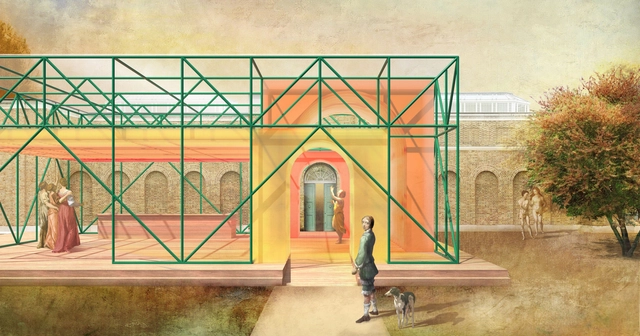
Following deliberation from a judging panel of industry experts, six emerging architecture firms have been shortlisted for the design of the Dulwich Pavilion 2019 in London, chosen from over 150. In collaboration with the London Festival of Architecture, the six schemes will be displayed at the Dulwich Picture Gallery throughout June and July of 2018.
The initiative follows on from the success of the gallery’s first pavilion in 2017, designed by IF_DO and exhibited at the London Festival of Architecture in 2017. Following the exhibition of the six shortlisted schemes for 2019, a public vote will be combined with a panel vote to select the winning pavilion.
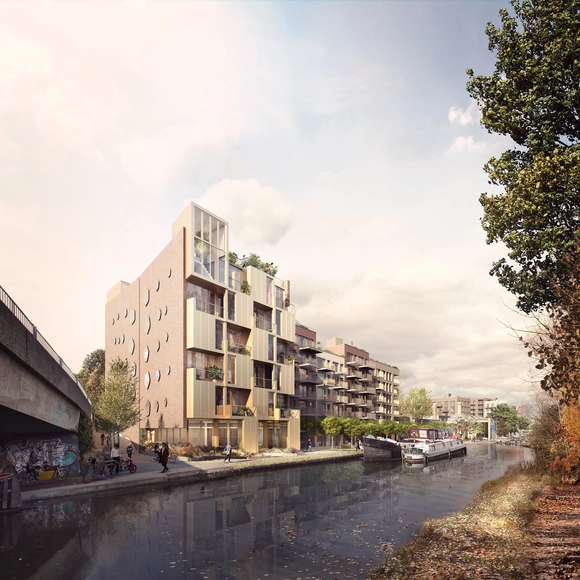
Wickside is a £120m “permeable, mixed-use neighborhood” that will provide 475 homes and 300 jobs for the surrounding community. Designed by BUJ Architects and Ash Sakula Architects, the neighborhood has recently received the all-clear from the LLDC planning committee. Almost nine years in the making, the scheme uses “urban blocks set around ordinary London streets” to create a complex, diverse townscape with a variety of uses. The neighborhood is housed within a 28,800 square meter former waste transfer site in Hackney Wick, London. Integrating the context’s existing buildings and cultural heritage, Wickside aims to develop the existing creative community through “retention and regeneration,” and is one of the largest development sites in the area.
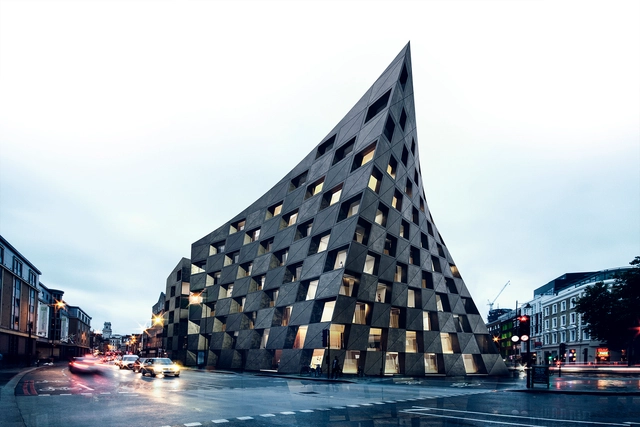
Found at the junction of two famous roads, the Shoreditch Hotel reacts with its unique context in a striking, ship-like form that preserves, and creates, public space for the surrounding area. Designed by AQSO Arquitectos, the proposed scheme includes a hotel at its front, while a cinema and various retail outlets are separated by a public atrium at its rear. The mixed-use facility “explores a formal response to the site conditions with an alternative contemporary language," the resultant blending of perspectives creating a gateway to London's creative heart.
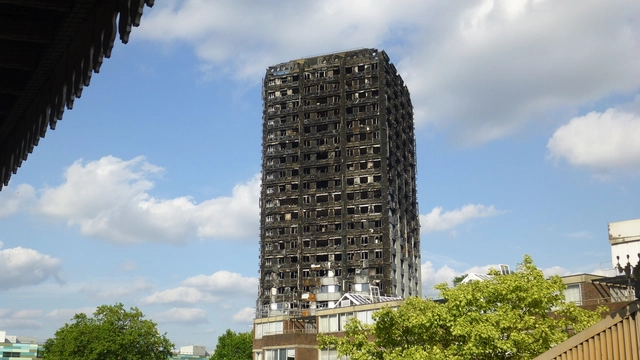
A BBC investigation has alleged that the insulation used in the refurbishment of London’s Grenfell Tower, which was tragically destroyed by fire in June 2017 with the loss of 72 people, never passed a fire safety test, and was unfit for use.
The BBC Panorama program, which aired on Monday night, concluded that the manufacturer Celotex “used extra fire retardant in the product that qualified for the safety certificate,” with the more flammable produce then sold for public use. According to the BBC, Celotex is yet to deny the program’s allegations.

.jpg?1526657351)
Diller Scofidio + Renfro has won an international competition for the design of a new V&A collection and research center to be located in the Queen Elizabeth Olympic Park in East London.
Designed in collaboration with Austin-Smith:Lord, the scheme seeks to broaden public access to collections of art, design, and performance which are not currently on display. The scheme forms part of V&A East, an initiative which also includes a new museum planned for Stratford Waterfront, designed by RIBA Gold Medal winners O’Donnell + Tuomey.
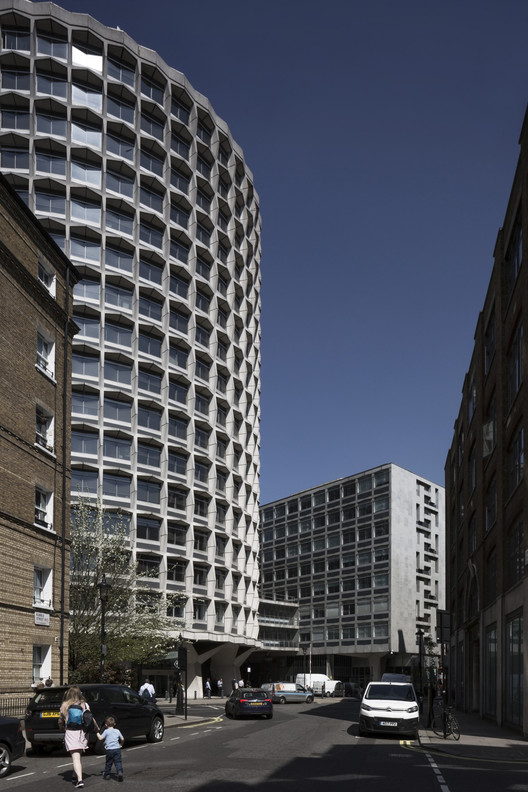
Appreciated within the industry but often maligned by the general public, brutalism came to define post-war architecture in the UK, as well as many countries around the world. In his 1955 article The New Brutalism, Reyner Banham states it must have “1, Formal legibility of plan; 2, clear exhibition of structure, and 3, valuation of materials for their inherent qualities as found.”
One Kemble Street, a 16-story cylindrical office block originally named "Space House" and designed by George Marsh and Richard Seifert, clearly exhibits all of these characteristics, creating a landmark in the heart of London that remains as striking today as it was upon its completion in 1968. Photographing the Grade-II listed building throughout the day, photographer Ste Murray manages to beautifully capture the building’s essence, celebrating its 50 year anniversary while also highlighting the intrigue of its form in a way that suggests parallels to contrasting ideologies.









_copy.jpg?1528216145 "© e10 Studio")