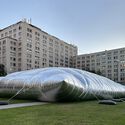
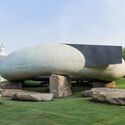
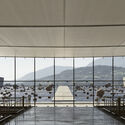
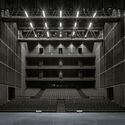
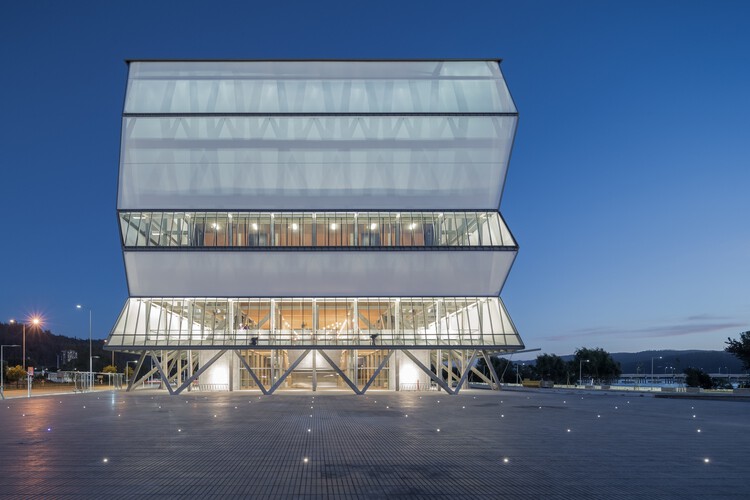
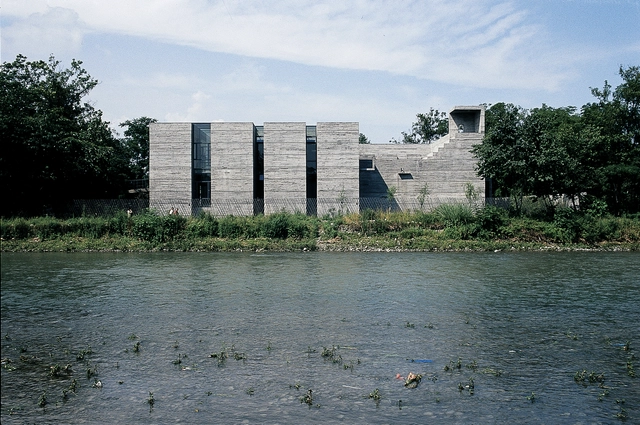
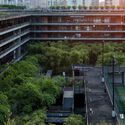
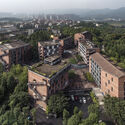
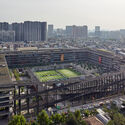
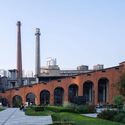
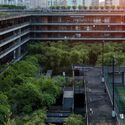
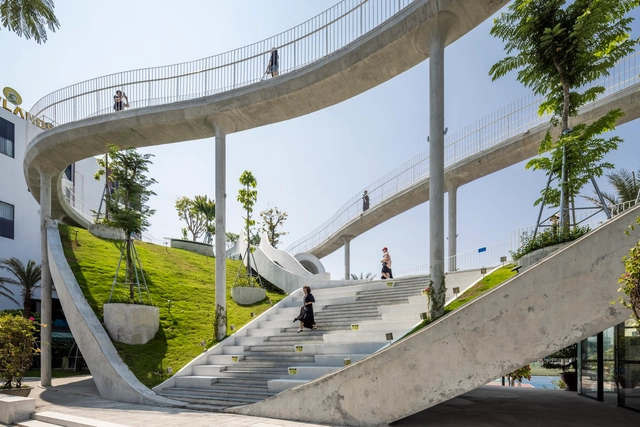
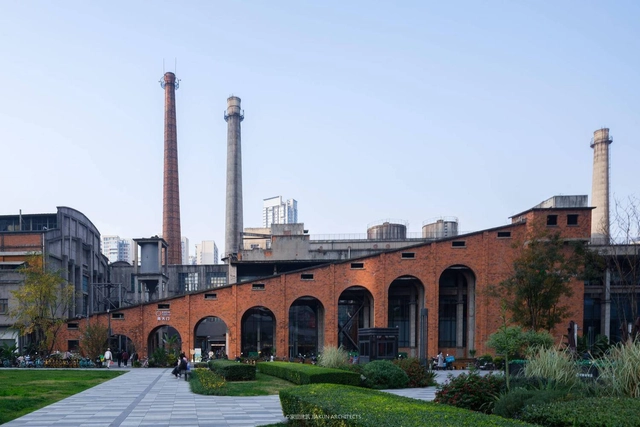
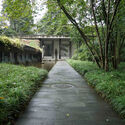
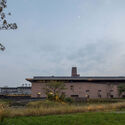
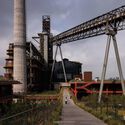
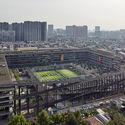
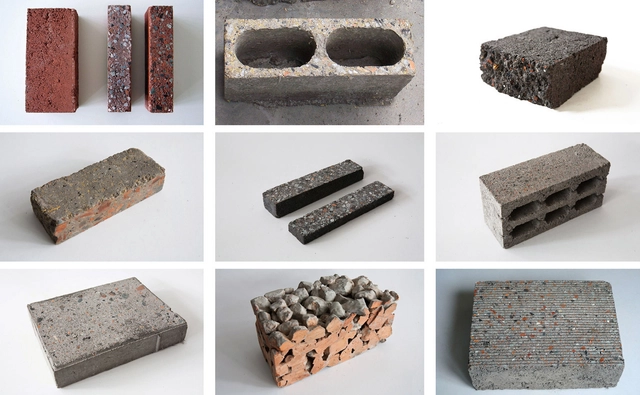
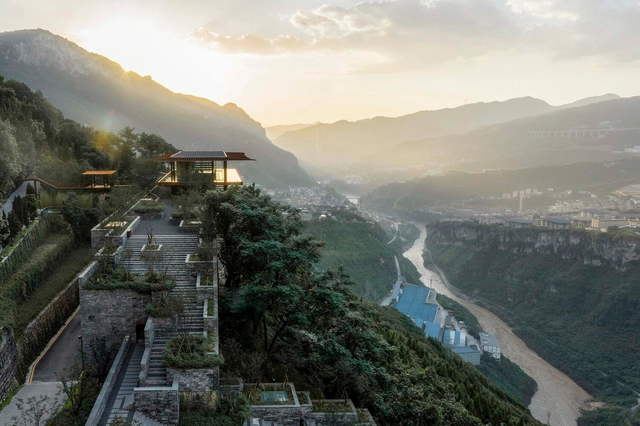
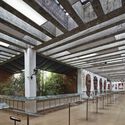
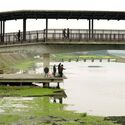
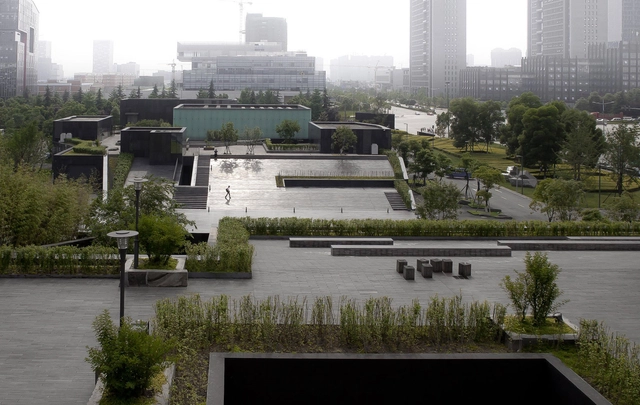
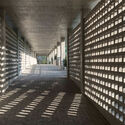
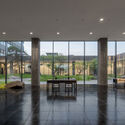
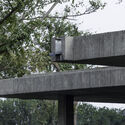
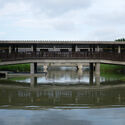
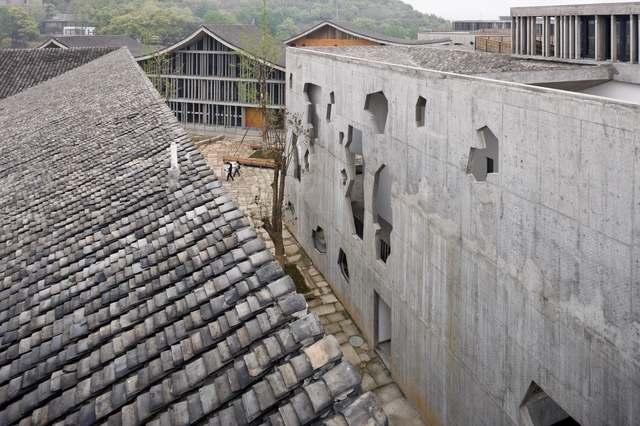
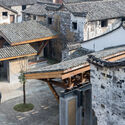
Suzhou Museum of Imperial Kiln Brick. Image Cortesía de Jiakun Architects
The Pritzker Prize is the most important award in the field of architecture, awarded to a living architect whose built work "has produced consistent and significant contributions to humanity through the art of architecture." The Prize rewards individuals, not offices, as happened in 2000 (when the jury selected Rem Koolhaas instead of his firm OMA) or in 2016 (with Alejandro Aravena selected instead of ELEMENTAL); however, the Prize can also be awarded to multiple individuals working together, as was the case in 2001 (Herzog & de Meuron), 2010 (Kazuyo Sejima and Ryue Nishizawa from SANAA), and 2017 (Rafael Aranda, Carme Pigem, and Ramon Vilalta from RCR Arquitectes).
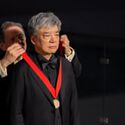
The Pritzker Architecture Prize has released a special video honoring Liu Jiakun, the 54th Laureate of the award. Filmed at the Louvre Abu Dhabi, the ceremony celebrates Liu's architectural vision, characterized by a deep engagement with civic life, cultural continuity, and the human condition. The film captures moments from the event and offers insight into Liu's broader practice, emphasizing architecture's capacity to reconcile tradition and modernity while addressing social and environmental challenges. The release of the ceremony video marks the culmination of the 47th edition of the Pritzker Architecture Prize. The 2026 Laureate will be announced in March, continuing the award's legacy of recognizing architects whose work advances the discipline and its role in shaping human experience.
A good conversation can make time feel like it's passing more quickly. But is this effect solely due to the verbal exchange, or could our perception of time be shaped by the spatial conditions surrounding us? There are environments that, due to their scale, distribution, and atmosphere, are conducive to meeting, listening, or pausing, thereby influencing the human experience. Perhaps it's not the words we share, but the space in which we speak that truly shapes our understanding of time. Some sociological theories about our society and the built environment go beyond considering it as a mere physical container and suggest that architecture, in its very duality, can act as both an inhibitor and a catalyst for our temporal experiences, impacting our wellbeing.
https://www.archdaily.com/1029304/wellbeing-and-slow-spaces-can-architecture-distort-the-way-we-experience-timeEnrique Tovar
For nearly the past two decades, cities around the world embraced "starchitecture"—futuristic, eye-catching buildings designed by globally renowned architects. In China, this trend was particularly pronounced as rapid urbanization fueled the construction of iconic megastructures like Zaha Hadid's Galaxy SOHO, OMA's CCTV Headquarters, and Herzog & de Meuron's Bird's Nest Stadium in Beijing. At the time of their construction, these were all celebrated as symbols of progress and global ambition. However, architecture worldwide has begun shifting toward a more context-driven, human-centered approach, with China emerging as one of the key contributors to this transformation. This year, Liu Jia Kun's 2025 Pritzker Prize further underscores that shift.
The world watches China's development with a mix of admiration, curiosity, and apprehension. From massive infrastructure projects—such as hydroelectric plants and a modern high-speed rail network—to the emergence of entire cities built from scratch, the country showcases an ambitious growth strategy and an impressive capacity for execution. However, this rapid progress also brings significant challenges and stark contrasts. On one hand, modernity asserts itself in futuristic skyscrapers and cutting-edge technology; on the other, there remains a pressing need to preserve the country's rich cultural and historical heritage, reflected in ancient temples, imperial palaces, and historic cities.
Rapid urban growth has also introduced issues such as overcrowding, environmental pollution, increasing social inequality, and the loss of agricultural land. Large-scale urbanization has led to the disappearance of traditional villages, environmental degradation, and the homogenization of architecture and lifestyles in many Chinese cities. It is within this context that Liu Jiakun, awarded the 2025 Pritzker Prize, stands out for his subtle yet profoundly transformative architectural approach. His work responds to these and other challenges of Chinese society while valuing traditional materials and techniques, as well as the creation of communal spaces.
Liu Jiakun, the 2025 Pritzker Prize winner, has spent decades redefining Chinese architecture by combining utopia with function and social engagement with personal memory. His buildings are reflections of the everyday lives of ordinary people, crafted with an understanding of place, culture, and materiality. Rejecting the pursuit of a fixed architectural style, Jiakun believes in a strategy rather than a signature aesthetic, tailoring each project to its specific context and needs. His work integrates history with contemporary urban needs, collectivism with individual experience, and density with openness, offering timely solutions to the challenges of rapid urbanization.
Jiakun's approach is deeply rooted in Chinese philosophy, common sense, and local craftsmanship, ensuring that architecture grows naturally from its surroundings rather than being imposed upon them. His buildings reflect an authenticity that speaks to both past and present, avoiding grand gestures in favor of spaces that foster interaction, spirituality, and human connection.
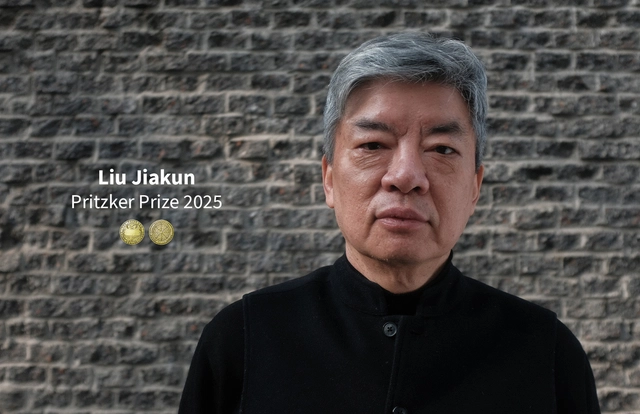
Chinese architect and educator Liu Jiakun has been announced as the laureate of the 2025 Pritzker Architecture Prize, the highest honor in the architecture field. This prestigious award recognizes Jiakun, founder of Jiakun Architects (established 1999), for his ability to blend traditional Chinese elements with contemporary design and for his commitment to social equity in the built environment. Born in Chengdu, China, where he continues to live and work, he becomes the second Chinese architect to receive the accolade, following Wang Shu (2012). Jiakun joins a distinguished list of previous laureates including Riken Yamamoto in 2024, David Chipperfield in 2023, and Francis Kéré in 2022. The award ceremony will be held this spring at the Jean Nouvel-designed Louvre Abu Dhabi, with a global video release of the presentation this fall, followed by the 2025 Laureates' Lecture and Symposium in May.
The 2025 Pritzker Prize has been awarded this year to Chinese Architect Liu Jiakun. Born in Chengdu in 1956, he grew up in the densifying city, before attending and graduating from the Chongqing Architecture and Engineering College (Chongqing University) in 1982 with a Bachelor of Engineering degree in Architecture, and becoming one of the first college graduates to be tasked with rebuilding the country during the Chinese transition period. However, it wasn't until many years later that the architect understood that "the built environment could be used as a medium for personal expression". It was then that his endeavors and career took off, with Liu Jiakun starting his practice in 1999, and participating in more collaborative works across China and Europe. Based on his experiences, his works are anchored in his understanding of reality and a respect towards China's multi-traditional history and internal diversity; all while achieving a seamless balance between architecture and nature, tradition and modernity.
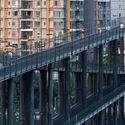
These concepts do not obstruct his consciousness of human needs and the importance of community spaces. Through his projects, Liu Jiakun proves that spaces can affect human behavior and become positively evocative. A public space such as those he's created can be conducive to a benevolent atmosphere that provides rest and collaboration. "such as my pursuit of narrative and poetry in design." The comprehensiveness of Liu Jiakun's works makes it easy not to be constrained by stylistic or aesthetic limitations or requirements. He just follows what the site, natural landscape, pre-existing urban frame, and citizen needs might require. The physical result is a mix of all of these with the predominant vernacular traditions.
I first went to China in 2002, a year after the International Olympic Committee awarded the 2008 Summer Games to Beijing. That initial trip was about exploring nature, cuisine, ancient temples, archeological sites, and, in general, experiencing lifestyles in China, mainly outside of its major cities. I was motivated by the pure curiosity of a Western tourist driven to an Eastern country in search of the old world, the exotic, hoping to catch a glimpse of a rich traditional culture on the cusp of its inevitable radical transformation. At the time, there was no modern, or rather contemporary, architecture in China to speak of. There were only the promising first hints of the development of a potentially new architectural language being undertaken by just a handful of independent architects almost entirely under the radar.
Originally published on the author’s website and blog on Archinect, 'Ruins of an Alternate Future (Jinhua Architecture Park)' was written by Shanghai-based architectural designer and theorist Evan Chakroff.
One of the great, if seldom realized, promises of architecture is its capacity to affect change. The best architects seem to have this potential in mind constantly as they structure career-length narratives around the social impact that good design can achieve. While this is often hyperbole, and most projects are driven by functional or economic considerations, there is the occasional opportunity for artists and architects to create purely speculative work, where radical departures from established typologies suggest alternatives to the status quo. In these rare cases, novelty is embraced not for its own sake, but for its potential to generate new archetypes, to provide a glimpse into a parallel world where architecture truly has agency: where design can change society for the better.