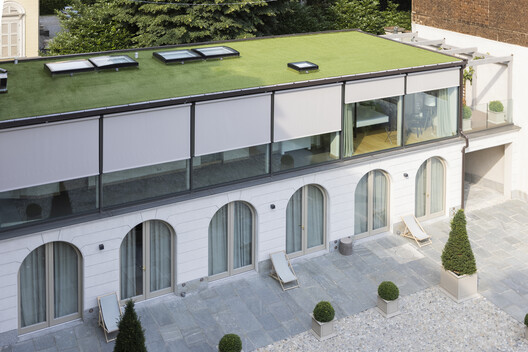
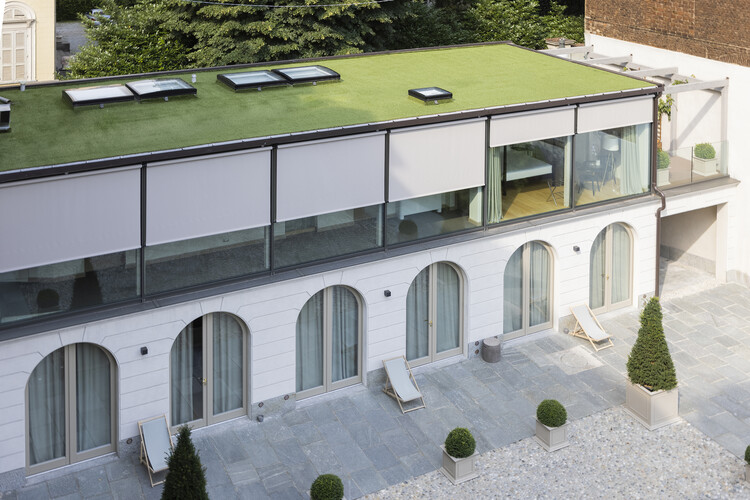
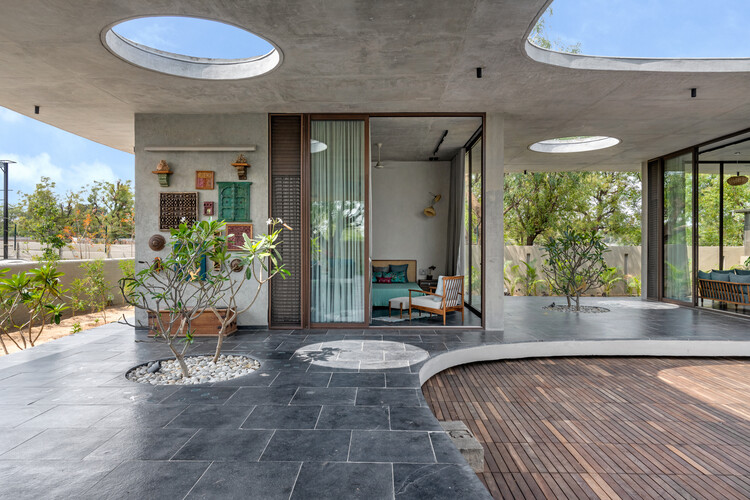
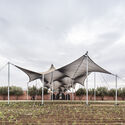
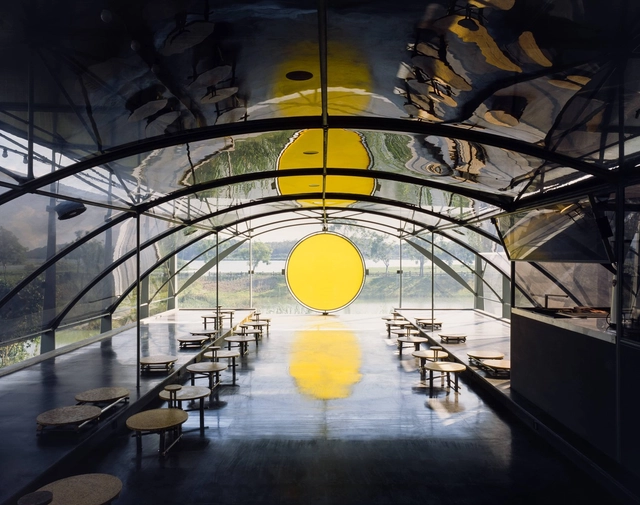
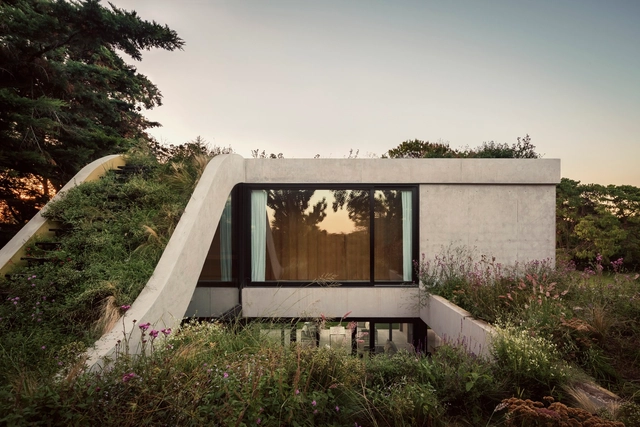
Heat waves are becoming more and more frequent worldwide, prompting architects to reconsider how building envelopes are conceived and designed. The focus is no longer solely on limiting heat loss during the colder months, but also on controlling how much heat enters buildings during periods of intense solar radiation. By understanding solar shading as a design decision rather than a decorative or interior-conditioning element, it becomes part of passive energy-efficiency strategies that can contribute to thermal and visual comfort while reducing cooling demand.
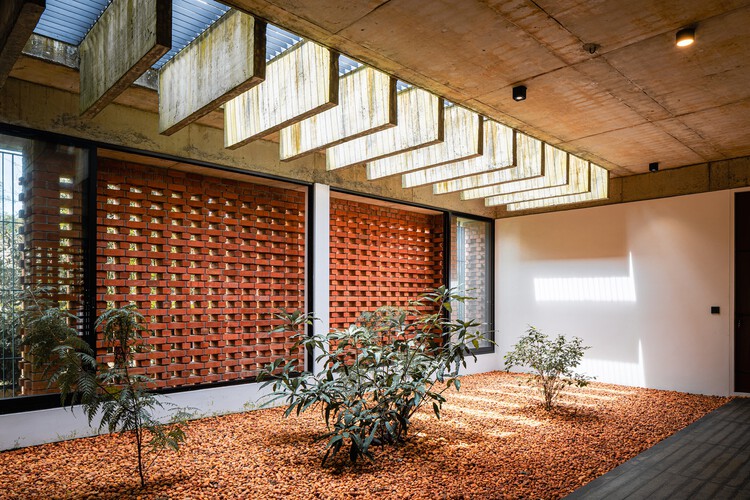
A brick façade does more than define the façade of a house. When designed as a porous screen, it becomes an intermediary between inside and outside, shaping the atmosphere and environmental conditions of the spaces behind it. Across contemporary Indian residential architecture, brick jali — a perforated or lattice brick screen — has been reinterpreted with a contemporary sensibility, drawing on vernacular architectural elements.
First Prize Winner: Below Shadows. Image Courtesy of Buildner
Buildner has announced the results of its fourth annual Home of Shadows international architecture ideas competition. The competition series is designed to focus on the vital interplay between light and shadow in creating functional and inviting living spaces. It highlights the importance of natural light in home design, essential for creating comfortable, inviting, and practical environments.
Light is viewed as a language through which architects communicate emotions in their designs, with shadows playing an equally significant role in influencing the ambiance of a space. The balance between light and shadow allows for the creation of spaces with depth and texture, setting different moods for various purposes. Often, this balance can be achieved through the strategic placement of windows and doors.
Long before it becomes a matter of performance, comfort, or energy efficiency, natural light is a way of giving presence to architecture. It reveals the texture of a wall, the depth of an opening, and the silent passage of time within a space. In works as distinct as those of Tadao Ando and Alvar Aalto, daylight appears as an essential material of design: in some cases, guiding the eye toward contemplation; in others, making spaces feel more human, welcoming, and connected to everyday life.
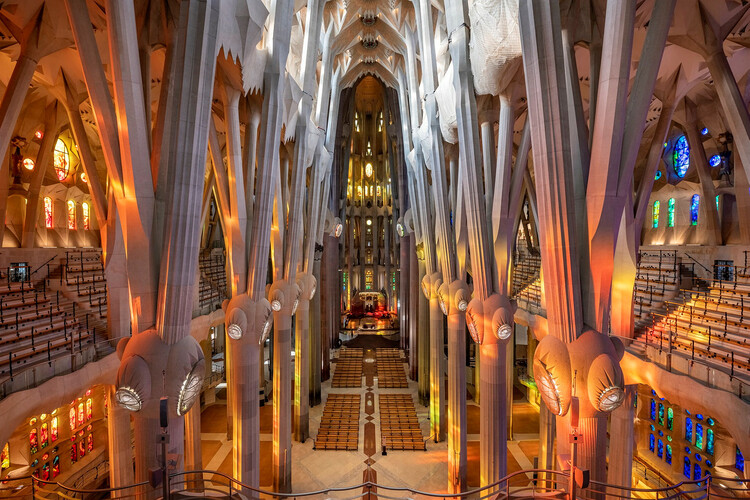
It is afternoon in the summer, and the nave of the Sagrada Família is saturated with warm colors. Shafts of amber and crimson sweep across the stone floor, shift as a cloud passes over Barcelona, then deepen again. Around you, visitors slow without quite realizing it. Some raise their phones — not to capture the architecture, but to step into the light itself, positioning themselves in a pool of orange or gold as if the colours were something you could wear.
They are, without knowing it, doing exactly what Gaudí intended: surrendering, however briefly, to the sensation of being bathed in something larger than themselves.
On UNESCO's International Day of Light, celebrated annually on May 16, the Daylight Award announced its 2026 laureates. Established to support research into the scientific understanding of daylight and its significance for health, well-being, ecosystems, and architectural design, the award recognizes achievements in two categories: Daylight in Architecture and Daylight Research. This year, Japanese architects Momoyo Kaijima and Yoshiharu Tsukamoto of Atelier Bow-Wow were honored for demonstrating how daylight can shape shared spaces and everyday life, while marine biologists Brittany N. Zepernick, Steven W. Wilhelm, and R. Michael McKay of the United States and Canada were recognized for their research on aquatic microorganisms and their implications for planetary health and biodiversity.
The image is familiar, a façade layered with brise-soleil, light softened into a patterned shadow, interiors kept cool without machines. It appears as intelligence made visible, architecture that understands the sun. This image is rarely examined closely. The same devices that temper heat also organize access, distribute comfort, and depend on particular forms of labor. What looks like a climatic response is also a decision about who gets relief from heat, and how. Tropical modernism, often reduced to a visual language of shade and porosity, emerges instead as a set of situated practices where climate, labor, and power are negotiated differently across contexts.
At the scale of the element, tropical modernism begins as a technical problem. In hot climates, solar radiation is not incidental but constant, requiring buildings to mediate light, heat, and air before they reach the interior. Architects like Maxwell Fry and Jane Drew approached this with a level of precision that resists any reading of these elements as decorative. Shading devices are calibrated according to solar angles, orientation, and seasonal variation. Brise-soleil are dimensioned to block high-angle sun while admitting diffuse light; overhangs extend just enough to prevent direct gain at peak hours; openings are aligned to encourage cross-ventilation. Mid-century research further tested these strategies, measuring temperature reductions and airflow improvements. In this sense, the language of tropical modernism is not symbolic. It is performative: each projection, void, and screen is part of an environmental system.
Architecture begins as an encounter with gravity. It is the ancient act of placing weight upon the earth, of persuading matter to stand, hold, and shelter. Within this fundamental condition of heaviness, however, lies a quieter possibility: density itself can generate a sense of lightness—a perceptual condition in which the body, fully convinced of matter's weight, begins to experience space as suspension.
Much of contemporary architecture has pursued lightness through reduction: thinner structures, smoother surfaces, increasingly seamless transitions between interior and exterior. Here, lightness is equated with disappearance, as if gravity could be overcome by withdrawing material presence. Yet there exists another register in which lightness is not the result of absence, but of intensification. It emerges when material presence becomes so precise, so fully asserted, that it begins to alter perception itself—when mass remains heavy, but no longer behaves as simply inert.
Architecture has long been drawn upward. In Air and Dreams, Gaston Bachelard writes about an imagination shaped by movement; by the urge to rise, to drift, to escape the pull of the ground. Air, for him, invites imagination to distort, to invent, to go beyond what is given rather than simply reproduce it. In that sense, lightness is not only a physical condition, but a feeling: a desire to transcend the weight of the earth and move toward something less tangible. This impulse can be traced across architecture's enduring attempts to lift itself, from pilotis and long spans to suspended systems and tensile membranes. To build lightly, then, is not only a technical ambition, but also a cultural one – a way of reaching toward the sky.
Today, this pursuit of lightness takes on renewed urgency. As environmental concerns, climate risks, and technological advancements reshape the built environment, building lightly is no longer only an aesthetic or structural ambition; it is increasingly framed as an ecological and ethical imperative.
For most of human history, night arrived as a planetary certainty. Darkness spread across landscapes, and the sky revealed thousands of stars. Today, that sky is disappearing. Artificial light spills upward from cities, scattering through the atmosphere and turning night into a permanent haze. Research mapping global sky brightness shows that more than 80 percent of humanity now lives under light-polluted skies, and the Milky Way has vanished from view for over a third of the world's population. The disappearance of dark skies is usually discussed within astronomy, but the sources of that change are deeply embedded in the built environment. Buildings emit light, reflect it through glass façades, and extend illumination far beyond their walls. In the technosphere, the vast system of infrastructures and materials humans have constructed, architecture now shapes both physical space and the sensory conditions surrounding it.
Does design guide usage, or does usage guide design? Students struggle to maintain focus, employees flinch under harsh lighting, and occupants withdraw from rigid spaces, often in response to environmental conditions that only become visible once a space is occupied. Light falling across a room, the resonance of sound, the texture of surfaces, or the rhythm of circulation can support focus, calm, or inspire creativity, but each can also inadvertently heighten stress and distraction. Architects and designers are exploring and questioning: how are design decisions informed, and whose knowledge is considered essential in shaping space?
As the solstice marks the shortest day of the year in the Northern Hemisphere, it also draws attention to something architecture has long negotiated but often overlooked: time. Beyond form or function, buildings and spaces are continuously shaped by cycles of light and darkness, seasonal shifts, and environmental rhythms that affect how they are inhabited.
In recent years, a growing number of architectural projects have begun to work explicitly with these cycles. Rather than designing spaces to function in a single, fixed way, architects are creating environments that change throughout the day, across seasons, or in response to natural phenomena such as the sun's path, lunar phases, wind patterns, or circadian rhythms. These projects operate in dialogue with time, appearing, transforming, and activating differently depending on environmental conditions.
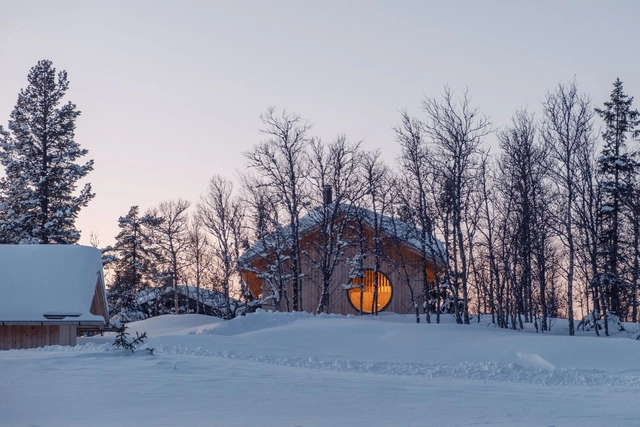
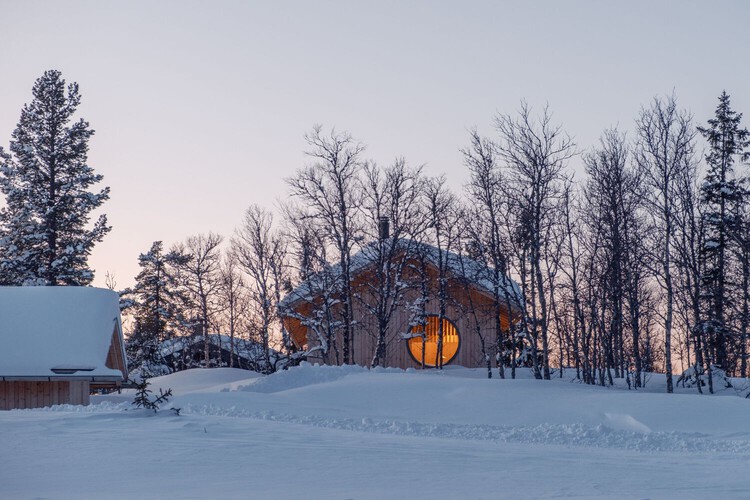
Scandinavia is shaped by environmental conditions that test both human endurance and architectural ingenuity, with long winters defined by limited daylight, low sun angles, deep snowfall, and cold winds that transform everyday movement, gathering, and habitation into deliberate acts. In this context, architecture is never neutral, and hospitality is never incidental. Buildings that welcome visitors across cities, forests, and coastlines must respond directly to darkness and cold, not by denying them, but by creating interior worlds that offer orientation, warmth, and psychological relief. The act of welcoming in Scandinavia is therefore inseparable from the climate, grounded in the understanding that shelter, light, and human presence are fundamental resources in Arctic environments.
Liminal Air Space-Time by Shinji Ohmaki, Noor Riyadh 2025. Image Courtesy of Noor Riyadh
Noor Riyadh 2025 brought large-scale light installations to public sites across the Saudi Arabian capital, temporarily transforming transit hubs, historic districts, and significant landmarks into illuminated urban environments. From November 20 to December 6, 2025, Riyadh became a citywide gallery of light, motion, and shifting perception. The festival's fifth edition featured 60 artworks by 59 artists from 24 countries, including more than 35 new commissions, responding to the theme "In the Blink of an Eye." Through light as both medium and concept, the installations reinterpreted the capital's rapidly evolving architectural landscape and reflected how perception shifts in spaces shaped by heritage and ambitious urban development.
Dedicated to high-end lighting specification, the UK's trade show LiGHT 25 will return to the Business Design Center in Islington, London, on November 19–20, 2025. Following LiGHT 24, which attracted more than 5,500 visitors, this year's edition will feature an expanded program of innovation, education, and networking opportunities. Key highlights for 2025 include the introduction of the Technical Zone, the return of the Associations Lounge, and a new large-scale immersive light art installation.
Seeking to create a fluid dialogue between architecture and its surrounding landscape, the study of topography embodies an awareness and exploration of the use of materials, self-sufficient strategies, low-maintenance solutions, and landscape designs that integrate into the natural environment and minimize the environmental impact of projects. Beyond recording variations in elevation, sun orientation, prevailing winds, or drainage slopes of the terrain, several architects in Argentina demonstrate a strong interest in developing architectural solutions capable of adapting to natural geographies and restoring the bond between nature and the human being.
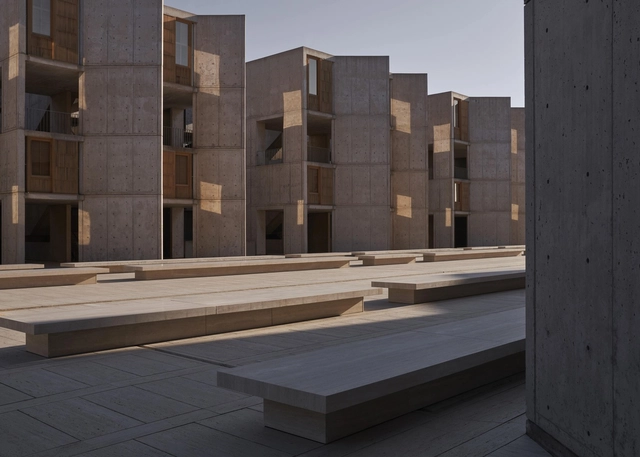
Jonas Salk Institute for Biological Sciences (1959-65). Image Courtesy of Form Portfolios
In the history of modern architecture, Louis I. Kahn is regarded as the undisputed master of monumentality in the United States. At the height of his career, Kahn managed to create a unique type of architecture, often awe-inspiring, but avoiding overdone grandiosity, expressing its constructive system, yet avoiding structural exhibitionism, steeped in history but developed with a new language and system of forms. His interest in light as a functional element and the specific qualities of materials extended beyond his buildings, in all the objects he created to populate them following their intrinsic spirit. To celebrate this legacy, Form Portfolios has now launched "Monumental Modernism," the first collection of lighting, objects, and furniture modeled after those discovered in Louis I. Kahn's buildings.
For over five decades, Swiss photographer Thomas Mayer has developed a serene, emotional, and documentary language for architecture. His lens captures the random and memorable moments of our built environment - reflections in the rain, long blue hours in Nordic summers, and the quiet darkness of sacred spaces. Recognized by ArchDaily as one of the top architectural photographers, Mayer carries an abundant fascination for light and space.