This year, the American Institute of Architects conferred its highest honor – the AIA Gold Medal – upon Steven Holl. I had the opportunity to talk with Steven about his sources of inspiration, a mid-career enlightenment, and his recent recognition as one of the most celebrated “American” architects.
Andrew Caruso: Balancing your practice with teaching and art is clearly a part of the designer we know you to be. How do these explorations shape your design point of view?
Steven Holl: Every project is unique: a site and a circumstance, a culture, a climate, a program. All of these forces are unique and you need a concept to hold the manifold pieces together, an idea that makes the project significant in its place and for its purpose. That is always the way I begin projects.
Copenhagen based architecture firm Tredje Natur recently presented their plans to develop Denmark’s first climate adapted neighborhood, which transforms Saint Kjeld’s Quarter into Copenhagen’s greenest neighborhood. The comprehensive urban development project seeks to demonstrate how the city can be arranged so rainwater can be managed in the streets in a more natural and effective way. Their project offers a wide range of pragmatic strategies to meet the many expectations in the area. As a key principle the architects reclaim 20% of the street area by optimizing the infrastructure and parking lots according to current standard. More images and architects’ description after the break.
A few months ago, Deborah Sheehan, a Principal and Healthcare Leader at Cannon Design, was given the task of designing a prototype healthcare facility in Afghanistan, a country averaging about one hospital bed for every 2,400 people.
The challenges that Sheehan and her colleagues faced were considerable: limited construction materials, few skilled tradesmen, political corruption, tribal rivalries. But the resultant design solutions were smart, low-cost, and high-quality – they had to be, after all.
To a certain extent, Sheehan was expecting her team to come up with an innovative design; what she didn’t consider, however, was how applicable the design strategies would be to our own troubled system. In her article for HealthCare Design, “Beautiful, Broken, and Broke,” Sheehan outlines the 4 things the Afghanistan healthcare system does well, frankly better than the American, and what we could gain by applying them here…
Read after the break to find out the 4 design strategies employed in Afghanistan that could help our Healthcare System…
Focusing on the relationship between tall buildings and sustainability, the ‘Beyond Green! – Tall Buildings in a Sustainable Future’ international symposium will take place October 10-12 at the University of Stuttgart, Germany. Due to urbanization and land being a fixed commodity, metropolitan areas become denser and can only respond with the typology of tall buildings to satisfy the demand for space. However, with respect to the provision of infrastructure, use of energy, shortage of resources and the demand for ecological compatibility there is the inevitable need to design green and sustainable cities. This seemingly contradicts the typology of tall buildings. The aim of the symposium, hosted by the Institute for Lightweight Structures and Conceptual Design at the university, is to evaluate and investigate in detail the green and sustainable credentials of tall buildings regarding their economy, ecology and functionality. More information on the event after the break.
At a time when sustainability is high on the agenda and construction costs continue to soar, many Cambridge residents are questioning a proposal to demolish a sound and respected school building to replace it with a new school one that will strive to be a “green facility”. The Martin Luther King Elementary School (1968-1971) was designed by Catalan architect Josep Lluis Sert (Sert, Jackson and Associate). As it stands today, the school compliments the many other buildings in Cambridge that Sert worked on while also teaching at Harvard University, including the Peabody Terrace Graduate Housing complex just across the street.
Read on to find out what the community is doing to save the building from demolition and why it can prove to be a more sustainable option for the city.
The Hegeman, designed by Cook + Fox Architects, is a residential community in Brownsville, Brooklyn that provides housing for low-income and formerly homeless individuals. Developed by Common Ground Community – an innovative non-profit whose mission is to end homelessness – the Hegeman Residence will also provide a range of on-site social services in a model known as supportive housing. For a little bit of context, Brownsville has the highest concentration of NYCHA (New York City Housing Authority) developments in New York City. A wave of arson in the 1970s destroyed most of the residential structures; Brownsville is just one of the many neighborhoods that were affected. The urban renewal that followed rebuilt many homes and designated them as low-income housing. The community has had many problems since associated with poverty, including crime and drug addiction, as well as low test scores and high truancy rates in the education system.
Phototropia is part of an ongoing series on the application of smart materials in an architectural context and was realized in April 2012 by the Master of Advanced Studies class at the Chair for Computer Aided Architectural Design (CAAD). The project combines self-made electro-active polymers, screen-printed electroluminescent displays, eco-friendly bioplastics and thin-film dye-sensitized solar cells into an autonomous installation that produces its required energy from sunlight and – when charged – responds to user presence through moving and illuminating elements.
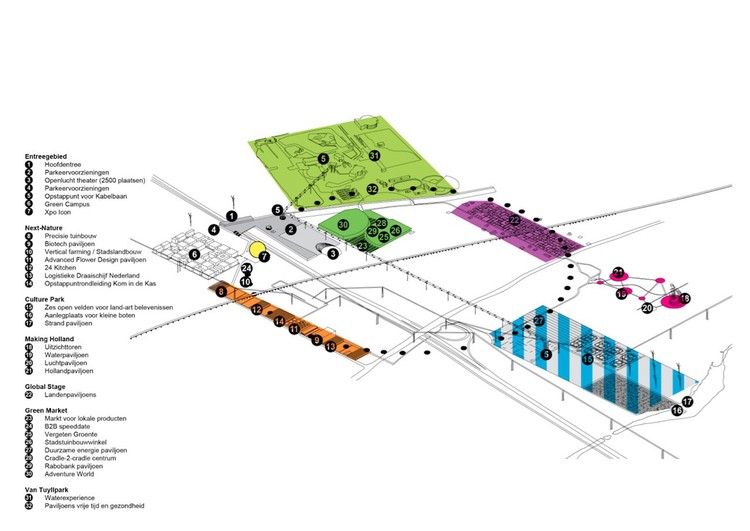
OMA has released their 60-hectare master plan proposal for Floriade 2022 – the next occurrence of Europe’s largest horticultural expo that attracts an average of two million international visitors every ten years since it was established in 1960, which is currently open in Venlo. As part of a team that includes the province of South Holland, eight local municipalities and ARCADIS, OMA is helping Holland Central compete against three other cities within the Netherlands to become the next Floriade host.
The City of Almere has revealed it’s MVRDV-designed proposal for the Floriade 2022 candidature! Almere is one of four Dutch cities competing to be the next location of the prestigious horticultural Expo, which takes place once every ten years in the Netherlands and is currently open in Venlo.
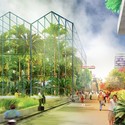
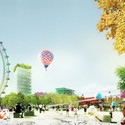
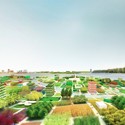
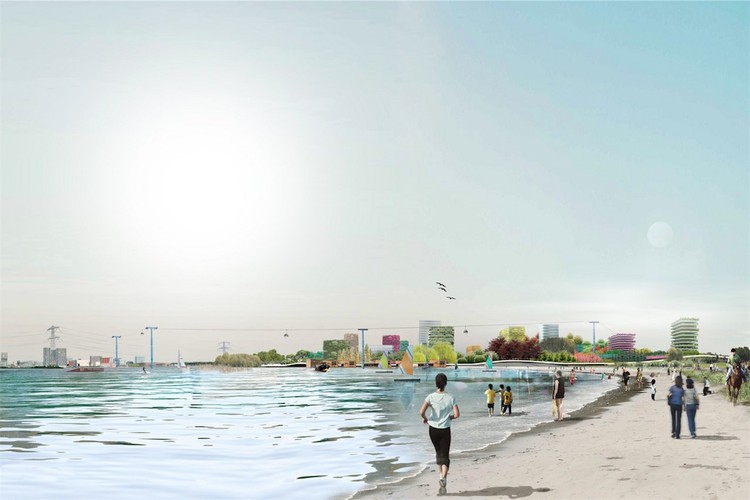
Rather than creating a temporary expo site, MVRDV has designed a lasting Cité Idéale, which would serve as a green extension to Almere’s city center. Drawing upon research from the radical DIY urbanism plan for Almere Oosterwold and the Almere 2030 master plan, MVRDV has designed an ambitious sustainable city that strives to be a 300% greener exhibition than the current standard.
Continue reading for more on this potential, exemplary green city!
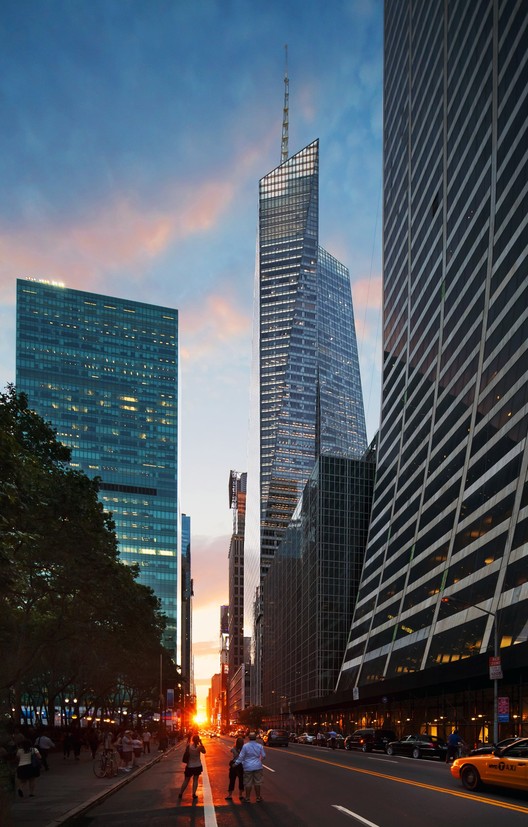
The Bank of America Tower at One Bryant Park in midtown New York, designed by Cook + Fox Architects, is the first commercial high-rise to achieve LEED Platinum certification. The design and high performance of this building is intended to set a new standard for commercial construction and for the office-work environment. By focusing on ways to emphasize daylight, fresh air and a connection to the outdoors, the architects redefine the parameters of the skyscraper as more than a glass box.
More on the strategies implemented in this project after the break.
In an effort to make New York City’s built environment “more livable and hospitable” the Department of Design and Construction (DDC), Health and Mental Hygiene, Transportation (DOT), and City Planning have developed the Active Design Guidelines: Promoting Physical Activity and Health in Design to be referenced in conjunction with the DOT’s Street Design Manual and other guidelines produced by NYC. The guidelines are written for urban planners, designers and architects and are driven by the need to address health concerns such as obesity and diabetes through intelligent design. Our built environments give us cues as to how to inhabit them and have tremendous effects, sometimes subconscious, on our lifestyles. Do you walk, drive, or bike to work? Do you take the stairs or the elevator? We make these types of decisions, which are largely based on comfort, on a daily basis. But the guidelines established in this manual are intended to give designers the tools to encourage healthy lifestyle choices to address the social concerns of NYC. So, what can planners, architects and designers do to create an active and healthy city? Find out after the break.
The Green Building Council of Australia has released Green Star – a new comprehensive rating system that can assess the degree to which communities, as a whole, succeed in creating livable and sustainable environments. This is a new and dynamic way to look at the culture of sustainability. “Green building” is not only reflected in individual buildings; it is the accumulation of the buildings, the infrastructure, the urban planning and design, the amenities of the community and the lifestyles that communities live. Projects such as DIY Urbanism in the Netherlands by MVRDV and “e_co_llectiva” by Athanasios Polyzoidis & Katerina Petsiou have this kind of regard for the development of holistic community.
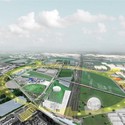
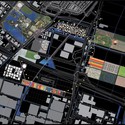
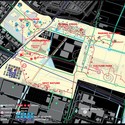
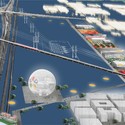
The New York Economic Development Corporation and Mayor Bloomberg of NYC announced the completion of the final plan for Willets Point - a peninsula on the Flushing River in Northern Queens, New York. The development of Willets Point is part of the urban renewal project associated with Citi Field – the Mets’ new stadium. Nicknamed the Iron Triangle, the project will include housing for mixed incomes, retail and entertainment amenities, a hotel, a convention center, office space, parks and open space, and a new public school, all of which falls under the umbrella of LEED-certified buildings and infrastructure. As with every redevelopment plan, there are positives and negatives to restructuring the community.
The Globe/Hedron Rooftop Farm is a bamboo greenhouse designed to organically grow fish and vegetables on top of generic flat roofs. Designed by Conceptual Devices, the structure is optimized for aquaponic farming techniques: the fish’s water nourishes the plants and plants clean the water for the fish. Using this farming technique, the design is optimized to feed four families of four all year round. More images and designers’ description after the break.
Here is our interview with Kevin Alter, founder of Austin-based firm Alter Studio architects. Not only is the Harvard graduate an internationally recognized architect, but he has also been a visiting critic, reviewer, lecturer and visiting professor for a number of institutions worldwide.