1. ArchDaily
  2. Interviews

Interviews: The Latest Architecture and News

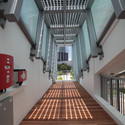
Friends Center at Angkor Hospital for Children / COOKFOX

Subscriber Access | 
Friends Center at Angkor Hospital for Children / COOKFOX - Image 1 of 4
© COOKFOX Architects

The Friends Center at Angkor Hospital for Children was designed by COOKFOX Architects as an accessory to the existing Angkor Hospital founded by Kenro Izu. The pediatric care facility provides free, quality medical services to over 500,000 patients in Siem Reap, Cambodia while also training health care professionals. The center is an outreach pavilion to welcome visitors to the hospital without compromising patient privacy. The center is a space of exchange where visitors, learning about the program may also experience elements of Cambodia’s heritage through exhibitions of art work and the architecture itself.

Winners announced of the 2012 Land Art Generator Initiative Competition for Freshkills Park

Subscriber Access | 
Winners announced of the 2012 Land Art Generator Initiative Competition for Freshkills Park  - Image 19 of 4
Scene-Sensor // Crossing Social and Ecological Flows / James Murray and Shota Vashakmadze; Courtesy of LAGI

Winners of the 2012 Land Art Generator Initiative Competition for Freshkills Park in Staten Island, NYC are out. With 4 placed winners and a long list of shortlisted projects, the range of ideas shows how designers are exploring many different options for sustainable energy infrastructure.

The Winners:

  • First: Scene-Sensor // Crossing Social and Ecological Flows byJames Murray and Shota Vashakmadze
  • Second: Fresh Hills by Matthew Rosenberg, Structural Engineering Consultant: Matt Melnyk, Production Assistants: Emmy Maruta, Robbie Eleazer
  • Third: Pivot by Yunxin Hu and Ben Smith
  • Fourth: 99 Red Balloons by Emeka Nnadi, Scott Rosin, Meaghan Hunter, Danielle Loeb, Kara McDowell, Indrajit Mitra, Narges Ayat and Denis Fleury

Check out the projects after the break!

Beyond the "Made In China" Mentality: Why China's Innovation Revolution Must Embrace Pre-Fab Architecture

Subscriber Access | 
Beyond the "Made In China" Mentality: Why China's Innovation Revolution Must Embrace Pre-Fab Architecture - Image 3 of 4
Chinese construction company Broad Group's rendering for Sky City One, soon to be the world's tallest skyscraper. (© Image: Broad Group via Gizmag)

When Wired correspondent Lauren Hilgers arrived to Broad Town, the headquarters of the Broad Sustainability Group in Changsha, China, she soon realized that this was not your typical workplace environment. At Broad Town, employees must be able to run 7.5 miles over the course of 2 days; recite company “policy” - covering everything from how to save energy to how to brush your teeth - at a moment’s notice; and refer to their boss as “my chairman.”

It may sound strict, but the workers at Broad are on a higher mission. The CEO and founder of the company, Zhang Yue, a.k.a the chairman, doesn’t just consider himself the head of a construction company, but of a “structural revolution.”

In a few years, Zhang has turned the world of skyscraper design on its head, pushing the technical and structural capabilities of pre-fabrication to its utmost (perhaps you’ve heard of the 30-story hotel he built in just 15 days). Not only do Broad’s techniques save time and money, they represent a potentially game-changing opportunity for China to maintain its unfathomable rate of growth in a way that’s both safe and sustainable.

But where does innovation enter in this revolution? China, for years an intellectual playground for Western architects, has become increasingly concerned with nurturing its own latent intellectual capital. However, if Broad’s paradigm takes hold (which, pragmatically-speaking, it should), what will that mean for architectural innovation? In a world of pre-fab structures, can architecture exist?

'Silver Streak' Architecture At Zero 2012 Competition Winning Proposal / Loisos + Ubbelohde Associates

Subscriber Access | 
'Silver Streak' Architecture At Zero 2012 Competition Winning Proposal / Loisos + Ubbelohde Associates - Image 4 of 4
Courtesy of Loisos + Ubbelohde Associates

Loisos + Ubbelohde just received the highest award at the 2012 Architecture at Zero competition for their proposal, ‘Silver Streak’. The contest, sponsored by PG&E and AIA San Francisco, was conceived as a response to the lofty zero net energy targets set out by the California Public Utility Commission. As the recipient of one of two honor awards, their design for the University of California, Merced campus features an administration building that acts as both a threshold to campus and an energy field in the large plane of the agricultural valley. More images and architects’ description after the break.

Will Sandy Finally Convince New York to Re-Design Its Waterfront?

Will Sandy Finally Convince New York to Re-Design Its Waterfront?  - Featured Image
On Avenue C and 14th. Instagram User megetz: "The water came up to my knees when I joined my neighbors on the front stoop."

Maybe Sandy, the colossal hurricane that has barreled across the East Coast this week, will finally get the message across: "We are all from New Orleans Now."

Thanks to climate change, America's coastal cities, and particularly New York, have become increasingly vulnerable to nature's wrath. Over two years ago, MOMA asked five architects to come up with a redesign of lower Manhattan that would prevent damage in the event of major flooding. Barry Bergdoll, the Curator of the "Rising Currents" exhibit, put it to the architects this way: “Your mission is to come up with images that are so compelling they can’t be forgotten and so realistic that they can’t be dismissed.”

Unfortunately, they were. As the many images from traditional news sources and social media users reveal, Sandy's damage has been extensive - and perhaps, in many ways, preventable. 

It often takes tragedy to instigate change. Let's hope that Sandy will finally get the conversation of New York's vulnerable urban landscape on to the table.

More images of Sandy's damage, as well as plans from MOMA's "Rising Currents" Exhibit, after the break...

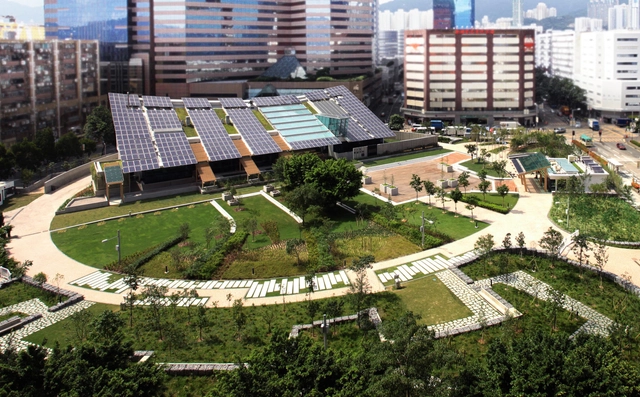
ZCB Zero Carbon Building / Ronald Lu and Partners

ZCB Zero Carbon Building / Ronald Lu and Partners - Cultural Architecture, FacadeZCB Zero Carbon Building / Ronald Lu and Partners - Cultural Architecture, Facade, BeamZCB Zero Carbon Building / Ronald Lu and Partners - Cultural Architecture, Courtyard, Facade, Handrail, Stairs, Fence, BalconyZCB Zero Carbon Building / Ronald Lu and Partners - Cultural Architecture, Facade, Arch, HandrailZCB Zero Carbon Building / Ronald Lu and Partners - More Images+ 5

  • Area Area of this architecture project Area:  3
  • Year Completion year of this architecture project Year:  2012

Environmental Awareness Week, Hosted by Cannon Design

From October 22-26, Cannon Design will host a prominent and diverse group of speakers to present at the Chicago firm’s 11th Annual Environmental Awareness Week.

JA+U Interviews Japanese Architect Shinichi Ogawa

Subscriber Access | 

In this video, JA+U interviews minimalist Japanese architect Shinichi Ogawa of Shinichi Ogawa and Associates. Ogawa describes the “austerity” and “organization” of minimalist design in regard to different projects. In residences, where flexibility and options are important, he says that the minimalistic approach grants a wide range of possibilities, providing open and flexible spaces that connect with the site. Ogawa describes the a range of projects that use simple forms and expressions to interact with the environment and accentuate the surroundings.

AD Interviews: Norman Foster

Subscriber Access | 

Norman Foster is undoubtedly one of the most influential architects of our time. Since establishing his award-winning practice in 1967 – originally titled Foster Associates – the Pritzker Prize laureate has grown Foster + Partners into an international powerhouse, with project offices in more than twenty countries.

ArchDaily Interviews Tomas Koolhaas, Director of 'REM', and features Exclusive New Clip

Subscriber Access | 

Cinematographer Tomas Koolhaas, son of notorious Rem Koolhaas, has shared with us his latest clips from the feature length documentary film, REM. Set to debut in 2013, the motion picture breaks away from conventional approach to filming architecture and exposes the raw, human experience of Dutch architect’s most famous projects. As Tomas describes, REM gives the audience “a rare insight into the reality of the hidden internal life of the buildings”.

ArchDaily had the chance to discuss the film with Tomas. Continue after the break for the complete interview and another small preview of the film!

Venice Biennale 2012: SPAINLab / Spain Pavilion

Subscriber Access | 

Ensamble Studio

SPAINLab, the name of the exhibit, looks to expose the research process behind the works of contemporary Spanish Architects:

Venice Biennale 2012: SPAINLab / Spain Pavilion - Image 22 of 4
© Nico Saieh

More photos about the pavilion and description from Anton and Débora after the break:

Interview: Krogmann Headquarters / Despang Architekten

Subscriber Access | 
Interview: Krogmann Headquarters / Despang Architekten - Image 22 of 4
© Olaf Baumann

The Headquarters Krogmann in Lohne-Kroge, Germany, by Despang Architekten investigates the numerous characteristics and fundamental opportunities inherent within wood and exhibits a modern approach to the craftsmanship of traditional German vernacular. Designed as a new corporate center of operations for the woodworking company Krogmann, this new office would need to succeed not only in handcrafting a new image for them, but also serve as a catalyst for future growth while showcasing their ability as ‘makers’ in the field of construction. Having worked as the builders for several projects for Despang Architekten, their choice to retain them as the design architects for their own project was a natural extension of an already solid relationship built upon the dedication to quality and progressiveness. As an extension of this article, we also had the opportunity to speak with Principal and University of Hawaii Associate Professor Martin Despang about the process involved in the making of this project.

More details and our Q&A with Martin after the break.

Interview: Krogmann Headquarters / Despang Architekten - Image 35 of 4Interview: Krogmann Headquarters / Despang Architekten - Image 18 of 4Interview: Krogmann Headquarters / Despang Architekten - Image 36 of 4Interview: Krogmann Headquarters / Despang Architekten - Image 39 of 4Interview: Krogmann Headquarters / Despang Architekten - More Images+ 37

'Beyond Green! Tall Buildings in a Sustainable Future' Symposium

Subscriber Access | 
'Beyond Green! Tall Buildings in a Sustainable Future' Symposium - Featured Image
Courtesy of Institute for Lightweight Structures and Conceptual Design of the University of Stuttgart

Taking place October 10-12 at the University of Stuttgart, Germany, the “Beyond Green! – Tall Buildings in a Sustainable Future” symposium focuses on how tall buildings be designed, built and maintained in a sustainable fashion. The keynote lectures will be held by Christoph Ingenhoven and Helmut Jahn_Murphy/Jahn. The sessions are dedicated to urban development and economy, ecology, planning and realization, structure and skin and building services. More information after the break.

AD Interviews: 5468796 Architecture & Jae-Sung Chon, Migrating Landscapes

Subscriber Access | 

We interviewed Winnipeg- based 5468796 Architecture (Johanna Hurme + Sasa Radulovic) and Jae-Sung Chon (Faculty of Architecture, University of Manitoba), the team that curated the “Migrating Landscapes” exhibit at the Canadian Pavilion for the 13th Venice Biennale. The Migrating Landscapes Oganizer (MLO) invited, through a national competition, young Canadian architects and designers from a wide range of cultural and educational backgrounds to create scale models of ‘dwellings’ and accompanying videos that draw on cultural memories.

AD Interviews: Reiser + Umemoto

Subscriber Access | 

Since it’s founding in 1986, Reiser + Umemoto, RUR Architecture P.C. has become a widely published, internationally recognized practice with a diverse collection of projects ranging in scale. On multiple occasions, the firm has been awarded for their contributions to architectural practice and theory – the most recent being The Cooper Union’s 2008 Presidential Citation and the 2011 John Hejduk Award – as they treat “each project as the continuation of an ongoing inquiry, delving into relationships among architecture, territory and systems of distribution.”

AD Interviews: Renzo Piano - Part III

Subscriber Access | 

Part IPart II – Part III

AD Interviews: Renzo Piano - Part II

Subscriber Access | 

Part I – Part II – Part III

The Recessionary Interviews: Spain's Josep Ferrando

Subscriber Access | 
The Recessionary Interviews: Spain's Josep Ferrando - Image 4 of 4
Josep Ferrando being interviewed at the ArchDaily office.

“Spain used to be a sexy, fit and energetic country. Envy, inferiority complexes, greed, arrogance and pride soaked it in fat. It is currently suffering from moral obesity.” That was Architect Manuel Ocaña’s incendiary take on the current state of his home country, one of the hardest hit by the Recession due to its extraordinary pre-Crisis construction boom (a.k.a “the mother of all housing bubbles”).

For this week’s edition of our Recessionary Interviews series – in which we talk to Architects across the globe surviving the Recession - we decided to get one final perspective from the Iberian Peninsula. We chatted with Spain’s Josep Ferrando, of Josep Ferrando Bramona Architecture, who told us how the economic bust has shifted focus from public works towards an architecture of “re”: rehabilitating, re-structuring, re-inhabiting.

Get Ferrando’s take on the state of Architecture in Spain today, after the break…