1. ArchDaily
  2. Cannon Design

Cannon Design: The Latest Architecture and News

Montreal Architecture City Guide: 15 Historic and Contemporary Landmarks in Canada’s Cultural Capital

Subscriber Access | 

Montreal, located along the Saint Laurent River in Southern Quebec, is Canada’s second-largest city. Often renowned for its architectural diversity, its built environment reflects both its colonial past and modern evolution. As a former territory of "Nouvelle France," French language and culture remain dominant, which has in turn influenced the city's architectural character. Notably, Old Montreal features well-preserved buildings from the 18th and 19th centuries, most of which are a testament to the city’s industrial growth after the construction of the Lachine Canal. The area's heritage has been protected and restored through efforts by figures like Phyllis Lambert and organizations such as Heritage Montreal, allowing the city’s rich architectural history to coexist with its modern developments.

Montreal's multiculturalism is evident in neighborhoods like Little Italy and Little Portugal, with its diversity fueling a vibrant cultural scene. The city hosts a multitude of festivals every year, many held in open-air venues like Place des Festivals. Parc Jean-Drapeau, built for the 1967 World Expo, is another popular spot for large events while offering stunning views of the city skyline. Another relevant site is Mont Royal Hill, a park offering panoramic views of downtown and access to hiking trails, Saint Joseph’s Oratory, Beaver’s Lake, and other areas of architectural interest such as the Plateau.

Montreal Architecture City Guide: 15 Historic and Contemporary Landmarks in Canada’s Cultural Capital - Image 1 of 4Montreal Architecture City Guide: 15 Historic and Contemporary Landmarks in Canada’s Cultural Capital - Image 2 of 4Montreal Architecture City Guide: 15 Historic and Contemporary Landmarks in Canada’s Cultural Capital - Image 3 of 4Montreal Architecture City Guide: 15 Historic and Contemporary Landmarks in Canada’s Cultural Capital - Image 4 of 4Montreal Architecture City Guide: 15 Historic and Contemporary Landmarks in Canada’s Cultural Capital - More Images+ 12

Istanbul Architecture City Guide: 5 Historical and 20 Contemporary Projects to Explore in Türkiye’s Largest City

Subscriber Access | 

Byzantium, Constantinople and now Istanbul, the many names this city has had over the centuries are proof of the central role it has played throughout history. Founded by Greek settlers in the 7th century, the city served as an imperial capital for a cumulated period of over 1600 years. During the Roman/Byzantine, it played a crucial role in the advancement of Christianity before its transformation into an Islamic center and becoming the sear of the Ottoman Caliphate. Today, Istanbul is a vibrant city with a rich cultural scene and multiple historical layers to be discovered.

Straddling the Bosphorus strait, the city lies in both Europe and Asia, integrating architectural masterpieces that reflect the meeting of European and Asian cultures over the centuries. As the largest city in Turkey with a population of over 15 million residents, Istanbul also serves as the country’s economic, cultural, and historic center. Istanbul is the 15th largest city and the eighth most visited city in the world. The city is also home to several UNESCO World Heritage Sites.

Istanbul Architecture City Guide: 5 Historical and 20 Contemporary Projects to Explore in Türkiye’s Largest City - Image 1 of 4Istanbul Architecture City Guide: 5 Historical and 20 Contemporary Projects to Explore in Türkiye’s Largest City - Image 2 of 4Istanbul Architecture City Guide: 5 Historical and 20 Contemporary Projects to Explore in Türkiye’s Largest City - Image 3 of 4Istanbul Architecture City Guide: 5 Historical and 20 Contemporary Projects to Explore in Türkiye’s Largest City - Image 4 of 4Istanbul Architecture City Guide: 5 Historical and 20 Contemporary Projects to Explore in Türkiye’s Largest City - More Images+ 21

3 Ways Multi-User VR Will Enhance the Design Work of the Future

Subscriber Access | 

2018 should prove to be a pivotal moment in how the design community uses virtual reality to deliver work. With leading firms exploring the introduction of mult capabilities, the technology will experience a breakthrough shift from purely enabling new modes of consumption to one that empowers design.

Today, VR essentially allows designers, clients, and stakeholders to consume models in dynamic new virtual environments. One by one, individuals can put on VR goggles and experience spaces that only exist digitally as others watch, listen to their reactions, and wait their turn. This implementation of VR technology has already strengthened design outcomes by enhancing strong communication throughout the design process, translating to less risk and stronger confidence in the eventual built product for clients.

7 Projects Announced as Winners of 2017 AIA National Healthcare Design Awards

The American Institute of Architects (AIA) Academy of Architecture for Health (AAH) has selected seven recipients of 2017 AIA National Healthcare Design Awards, given to the year’s best projects in healthcare building design and healthcare design-oriented research. Projects were selected for displaying “conceptual strengths that solve aesthetic, civic, urban, and social concerns as well as the requisite functional and sustainability concerns of a hospital.”

The award is given in four categories: Category A: Built, Less than $25 million in construction cost; Category B: Built, More than $25 million in construction cost; Category C: Unbuilt, Must be commissioned for compensation by a client with the authority and intention to build (No projects were selected in this category this year); and Category D: Innovations in Planning and Design Research, Built and Unbuilt.

See all the winners below.

Cannon Design Releases Plans for Mixed-Use Cancer Hospital in Brazil

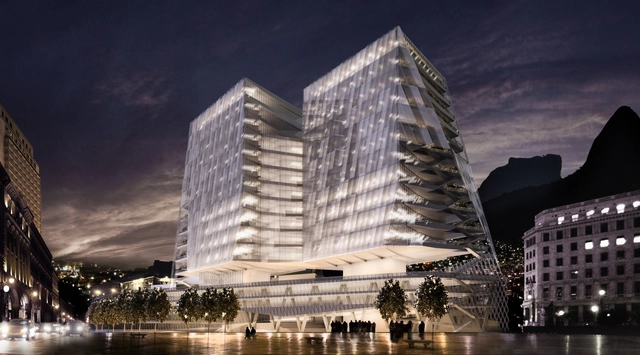
Cannon Design has unveiled its proposal for a mixed-use Cancer Hospital in Rio de Janeiro, Brazil. Originally envisioned as a “private hospital serving patients that can afford a high quality of health care,” the project transformed into a partnership between the public and private sector after preliminary feasibility studies determined the price of the site to be prohibitively high.

Thus, the project expanded to become a mixed-use complex with ownership shared between socially minded city government and private investors.

Cannon Design Releases Plans for Mixed-Use Cancer Hospital in Brazil - Image 1 of 4Cannon Design Releases Plans for Mixed-Use Cancer Hospital in Brazil - Image 2 of 4Cannon Design Releases Plans for Mixed-Use Cancer Hospital in Brazil - Image 3 of 4Cannon Design Releases Plans for Mixed-Use Cancer Hospital in Brazil - Image 4 of 4Cannon Design Releases Plans for Mixed-Use Cancer Hospital in Brazil - More Images+ 7

4 Reasons Architecture Firms Should Engage in Design Competitions

Subscriber Access | 
4 Reasons Architecture Firms Should Engage in Design Competitions - Featured Image
This work was for Infosys Nagpur in India, a really interesting invitation-only competition to make a sustainable office development for 30,000 in a desert-like environment. We worked with great collaborative engineers including Atelier Ten, Arup and Andropogon. We didn’t win, but the founder of the company Mr Murtha ("The Bill Gates of India") was so impressed that he promised us we’d work together in the future. Image Courtesy of CannonDesign

For decades, architectural competitions have been recognized as a great way for architecture firms to get their big break, or to make a name for themselves in the types of projects they might not have been considered for before. However, competitions come with a downside: it’s not always easy for firms to build them in to their culture. Design competitions take time, often don’t translate to billable hours, and aren’t always clear pathways to strengthening the firm’s balance sheet, and as a result they have seen something of a backlash in recent years.

Still, as the architecture profession evolves, it’s important we never lose sight of the remarkable value design competitions can bring to architects, firms and design culture. Regardless of their type, scale or structure, design competitions are key creative opportunities that can enrich our efforts personally and professionally, and as design leader of CannonDesign’s New York City office, I’ve worked with my colleagues to embed them into our work. We see numerous ways in which they can add value to our work, our firm and our clients – and they could do the same for you too.

4 Reasons Architecture Firms Should Engage in Design Competitions - Image 1 of 44 Reasons Architecture Firms Should Engage in Design Competitions - Image 2 of 44 Reasons Architecture Firms Should Engage in Design Competitions - Image 3 of 44 Reasons Architecture Firms Should Engage in Design Competitions - Image 4 of 44 Reasons Architecture Firms Should Engage in Design Competitions - More Images+ 6

The Architecture Software Revolution: From One Size Fits All to DIY

Subscriber Access | 

We’ve always been a profession of hackers. Every building is a one-off made up of countless elegant hacks, each bringing disparate materials and systems together into a cohesive whole. But when it comes to the software that designers have come to rely on, most of us have been content with enthusiastic consumerism, eagerly awaiting the next releases from software developers like Autodesk, McNeel (Rhino) and Bentley (MicroStation).

It’s been 5 years since we officially launched our research program at the Yazdani Studio of Cannon Design, and during that period we’ve come to understand the evolution of our process reflects the larger, changing relationship architects have with their means of production. Specifically, we've noticed that in late 2007 something changed. McNeel introduced a visual programming plugin called Grasshopper, and more and more architects began to hack their tools as well as their buildings.

The Architecture Software Revolution: From One Size Fits All to DIY - Image 1 of 4The Architecture Software Revolution: From One Size Fits All to DIY - Image 2 of 4The Architecture Software Revolution: From One Size Fits All to DIY - Image 3 of 4The Architecture Software Revolution: From One Size Fits All to DIY - Image 4 of 4The Architecture Software Revolution: From One Size Fits All to DIY - More Images+ 2

Can We Make New Office Buildings As Cool As Warehouses?

Subscriber Access | 

We are rapidly running out of old warehouse buildings to renovate, and selling space in the glassy towers of the central business district is difficult as corporate buildings become less and less attractive. We need a new building that is attractive to companies who cut their teeth in co-working incubators before seeking their own digs.

We are a society obsessed with the new. We want to look eternally young, drive the latest car, wear runway-fresh clothes and have up-to-the-minute technology at our fingertips. We do not care if the battery in our phones cannot be changed, because we are happy to simply get a newer phone. The American pursuit of life, liberty, and happiness is a glittering glare of polish and gloss, all sparkling and new.

That is, unless we’re talking architecture.

Can We Make New Office Buildings As Cool As Warehouses? - Image 1 of 4Can We Make New Office Buildings As Cool As Warehouses? - Image 2 of 4Can We Make New Office Buildings As Cool As Warehouses? - Image 3 of 4Can We Make New Office Buildings As Cool As Warehouses? - Image 4 of 4Can We Make New Office Buildings As Cool As Warehouses? - More Images+ 5

How Should Cities Prepare for an Aging Boomer Population?

Subscriber Access | 

Since the end of the Second World War, one of the biggest agents for social change has been the "Boomer" generation, those born in the postwar years who thanks to a spike in birth rates in those years represent a disproportionate amount of the population. But as this group ages, what will their effect on our cities be? In this article, originally published by Metropolis Magazine as "How Boomers Will Shape the Future of Our Cities," principle at CannonDesign Peter Ellis outlines what his generation will need from the places they live as they get older.

I am an architect, and a designer of cities. I am also among the Boomer generation, the 65-year-plus demographic that, due to our increasing numbers, is creating a giant bubble at the upper end of the population charts.

We are not, however, aging like the generations that preceded us. “We will be able to give many people an extra decade of good health, based on what we are able to do in the lab now,” says Brian Kennedy, President and CEO of the Buck Institute for Research on Aging in Novato, California. The primary triggers for most disease can be controlled, enabling people to remain productive well into their eighties, nineties, and beyond.

How will this “revolution” in human longevity impact our cities? Unlike our parents, Boomers have not moved to retirement communities, preferring, rather, to stay as long as they are able in their urban neighborhoods—where they can continue to lead active lives.

Welcome to the Wellness Center: A New Breed of Recreation Design

Subscriber Access | 
Welcome to the Wellness Center: A New Breed of Recreation Design - Image 5 of 4
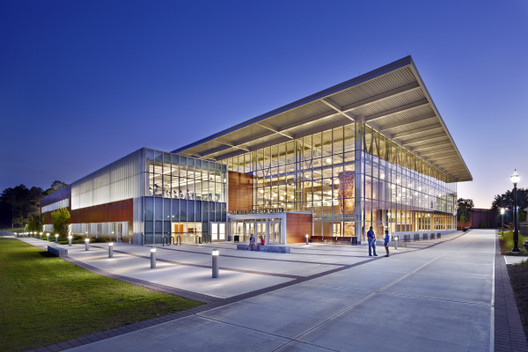
The Student Wellness & Recreation Center at Georgia College & State University. Image Courtesy of JWest Productions

Until recently, student health and counseling services have predominantly been offered independently of athletics and recreation. But as institutions contemplate a more unified approach to health and wellness, the boundaries of these traditionally separated campus services are becoming blurred. Many believe that unifying these various programs and services under one roof is in the best interest of their students’ long-term health, as well as a potential budgetary and operational boon. 

This recent shift in mindset has supported the emergence of a new breed of recreation centers that is only anticipated to multiply. “We’re seeing more and more universities come to us with a new set of challenges and program needs, as opposed to simply saying ‘we need this type of building,” says Brad Lukanic, Cannon Design’s executive director of education.

More on this new breed of Wellness Center, after the break...

Environmental Awareness Week, Hosted by Cannon Design

Environmental Awareness Week, Hosted by Cannon Design - Featured Image
Courtesy of Cannon Design

From October 22-26, Cannon Design will host a prominent and diverse group of speakers to present at the Chicago firm’s 11th Annual Environmental Awareness Week.

4 Things Afghanistan Can Teach Us About Healthcare

Subscriber Access | 
4 Things Afghanistan Can Teach Us About Healthcare  - Image 2 of 4
Rendering by Cannon Design.

A few months ago, Deborah Sheehan, a Principal and Healthcare Leader at Cannon Design, was given the task of designing a prototype healthcare facility in Afghanistan, a country averaging about one hospital bed for every 2,400 people.

The challenges that Sheehan and her colleagues faced were considerable: limited construction materials, few skilled tradesmen, political corruption, tribal rivalries. But the resultant design solutions were smart, low-cost, and high-quality – they had to be, after all.

To a certain extent, Sheehan was expecting her team to come up with an innovative design; what she didn’t consider, however, was how applicable the design strategies would be to our own troubled system. In her article for HealthCare Design, “Beautiful, Broken, and Broke,” Sheehan outlines the 4 things the Afghanistan healthcare system does well, frankly better than the American, and what we could gain by applying them here…

Read after the break to find out the 4 design strategies employed in Afghanistan that could help our Healthcare System…

Top 100 Architecture Firms

Subscriber Access | 
Top 100 Architecture Firms - Featured Image
© Joe Pugliese

Architect Magazine‘s third-annual ranking of American architecture firms takes a look at three factors: profitability, sustainability, and design quality. This whole picture approach provides an opportunity for small and large firms to go head to head, with a result of the best architecture firms, not necessarily the biggest.

Some of these practices have been featured on ArchDaily like Perkins + Will, Skidmore Owings & Merrill, Cannon Design, and Frank Harmon Architect.

Take a look at the complete rankings after the break.