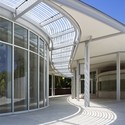
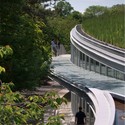
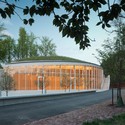
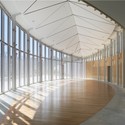
The design by davidclovers for the Bama Eco Resort includes two key areas of an eco-tourist resort project that intends to be a flagship project for China demonstrating how architecture can both re-work and reinvigorate sensitive habitat sites. Using innovative construction methods and design processes, both projects “farm” the existing terrain of the site finding its latent potentials. More images and architects’ description after the break.
Heroic. Contemplative. Grieving. Victorious. The rebirth of the former World Trade Center site in lower Manhattan has engendered significant public reaction and reflection. With implications as complex as they are profound, it is not surprising that it has taken more than a decade to heal the urban scars of September 11, 2001.
I had the rare opportunity to sit down with three architects working on the site, Santiago Calatrava, David Childs, and Daniel Libeskind, at the recent American Institute of Architects convention in Washington, D.C., where they were honored along with four others, as “Architects of Healing.” We discussed their experience of reshaping one of the most culturally significant sites in the history of the United States.
The Architectural Foundation of British Columbia (BC) has announced the five finalists of the 100 Mile House Competition. Similar to the well-known 100 Mile Diet, the 100 Mile House challenges participants to design a 1200-square-foot home using only materials and systems that are made, manufactured and/or recycled within 100 miles of the City of Vancouver. Many have questioned whether the 100 Mile House is a plausible solution in today’s modern cities (check out: The 100 Mile House: Innovative ‘Locatat’ or Just Plain Loca?). Be your own judge and review the finalists after the break.
Last week we went to Ingolstadt, Germany, to attend the launch of the Audi Urban Future Initiative. The program, now in its second version, invited a group of six architecture offices from different regions of the world, all with big urban populations, to think about the future of mobility. During this stage, the architects presented their initial research and diagnosis of their respective regions. In October, the architects will present their projects and an overall winner will be announced.
Today, Cornell University has announced their selection of Thom Mayne and Morphosis to design the first academic building for the CornellNYC Tech campus on Roosevelt Island. Mayor Michael Bloomberg awarded the Roosevelt Island campus project to Cornell mid-December of last year. With plans to achieve net-zero, the campus is striving to become the new modern prototype for learning spaces worldwide.
“This project represents an extraordinary opportunity to explore the intersection of three territories: environmental performance, rethinking the academic workspace and the unique urban condition of Roosevelt Island,” Mayne said, as reported by Cornell University. “This nexus offers tremendous opportunities not only for CornellNYC Tech, but also for New York City.”
São Paulo native Márcio Kogan has become an internationally recognized Brazilian architect known for his minimal designs that are often contrasted by intricate materiality. His work has been highly praised by our readers, and he is in the top 5 of individual architects searches at our site. His houses and institutional projects respect the modern principles of Brazilian architecture, with a special care on the design of interior spaces and their details, resulting in a mix of tradition and contemporary design. My favorite? Paraty House (and its section!)
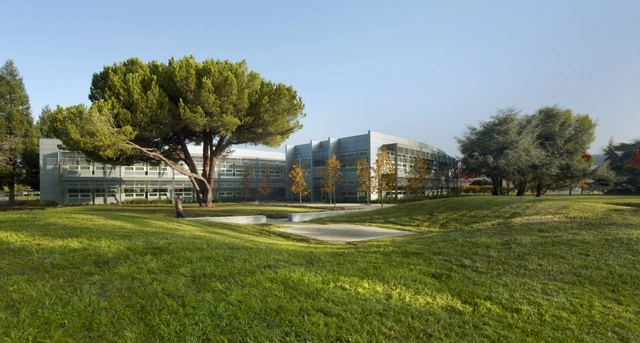
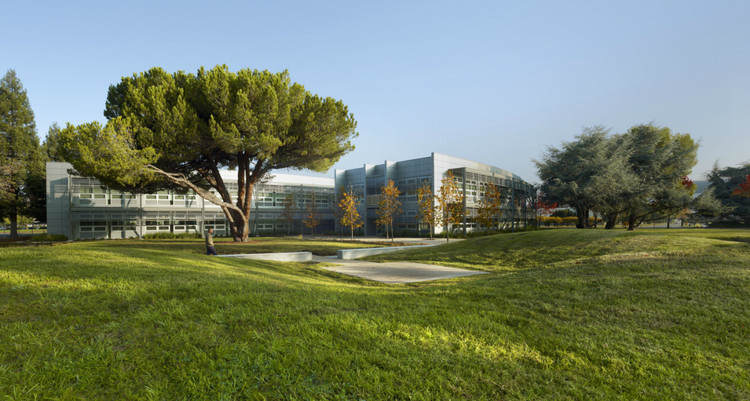
The PUC Building on 525 Golden Gate Ave, home of the San Francisco Public Utilities Commission, could have been just another government administrative building. But, the City and County of San Francisco, along with KMDArchitects, embraced the design challenge of achieving LEED Silver status. Now nearing completion, the building is expected to exceed LEED Platinum requirements and has been dubbed the greenest building of its kind. The architects had humble goals for the architecture as well, which included creating an “urban room” among the civic buildings in the area, creating a healthy and pleasant environment in the interior workplace to promote performance, efficiency and comfort, and represent the best value possible for the city and county of San Francisco.
Recently awarded the prestigious Maybeck Award by the AIA California Council (AIACC), Steven Ehrlich (FAIA, RIBA) has earned international recognition for his distinctive architecture and philosophy that has greatly influenced the architectural community. As the Design Principle of Ehrlich Architects, the Los Angeles-based architect is dedicated to the philosophy of Multicultural Modernism – a unique approach to architecture and planning that is centered on architectural anthropology; an idea that strives to identify and celebrate the uniqueness of each individual culture through design.
The American Institute of Architects (AIA) and its Committee on the Environment (COTE) have selected the top ten examples of sustainable architecture and green design solutions. Now in its 16th year, the COTE Top Ten Green Projects program is one of the profession’s best known recognition program for sustainable design excellence.
The highlighted projects are the result of a thoroughly integrated approach to architecture, natural systems and technology. They have made a positive contribution to their communities, improved comfort for building occupants and reduced environmental impacts through strategies such as reuse of existing structures, connection to transit systems, low-impact and regenerative site development, energy and water conservation, use of sustainable or renewable construction materials, and design that improves indoor air quality.
All the projects will be honored at the AIA 2012 National Convention and Design Exposition, next month in Washington, D.C. Continue after the break to review the top ten green projects.
With the aim of the Green Architecture competition to stimulate and collect innovative proposals on how architecture, urban design & planning, and landscape architecture could contribute to maintain and improve our biodiversity, Lijbers Architect looked at the decline of natural biodiversity from the perspective of complex human dynamics. By investigating the organized but fundamentally unpredictable behavior of human systems and its consequences for the natural environment, they find that the highly dynamic reallocation and changing of the earth’s habitat by human action falls short in providing vulnerable species of plants and animals with sufficient time to recover. More images and architects’ description after the break.
We had the incredible opportunity to interview Winy Maas, the M in MVRDV, one the most influential contemporary practices, which has been able to push the boundaries of our field in different scales, from buildings to master plan, from construction to theory. In this interview Winy shares interesting thoughts on the role of the architect and how he runs this design/research practice.
Grimshaw Architectsis one of two finalists selected in a competition for the master plan of central Tirana, Albania. The competition brief called for a comprehensive strategy that built upon the international identity of the city – particularly its waterways and the major boulevard running between them. It also called for an integration of transportation links – a city-wide transformation to streamline the infrastructure and bring vitality into the experience of the city.
Read on for more on Grimshaw’s strategy to enrich Tirana.
As Larry Levine and Ben Chou discuss in their NRDC blog post ”New York and Pennsylvania: Among the Best at Planning for the Inconvenient Truths of Climate Change”, we have already seen what the progress of climate change has done to the most recent weather patterns and the harm it has caused to our infrastructure. Rising temperature throws off climate balances making some areas wetter and others drier, complicating water supplies, farmland and infrastructure. In the post, they point out the specific affects on densely populated urban areas and outdated infrastructure that cannot support heavy rains and increased runoff, which inevitably ends up in our waterways: New York City, Albany, Buffalo, Philadelphia and Pittsburgh. While many parts of the country lack a comprehensive strategy to respond to these mounting threats, nine states have created detailed reactionary and preventative measures to deal with climate change (see the NRDC report).
However, public policies, regulations and reports are not always in sync with what people choose to construct or what actually gets built. New York’s 2012 Green Infrastructure Grant Program is promising in that respect; it is a step towards bridging that gap that exists between building purely for utility versus building to keep cities livable, functional and safe. The program focuses on storm water management, giving private enterprises the incentive to make responsible decisions that will alleviate the burden on the NYC sewer system. The grant has set aside $4 million for green infrastructure projects, which include green roofs, blue roofs, combined roofs, bioswales, permeable pavers and perforated piping. This money is open only for use on private properties and businesses, or along streets that abut privately owned properties and are located on sites that drain into a combined sewer. The full report is outlined here.
Inspired by the theme of Expo 2015 – “Feeding the Planet, Energy for Life” – the idea behind the design by Ternulomello + Nuno Marcos of recreating a greenhouse for the Service Areas seemed natural and spontaneous This construction method reminded them of the Crystal Palace, designed and built for the 1851 Universal Exhibition in London. The intervention is based on the application of passive technologies, to achieve a complete identification between energetic device and structure. Thermo-hygrometric comfort is achieved through natural ventilation, natural lighting and selective shading. More images and architects’ description after the break.