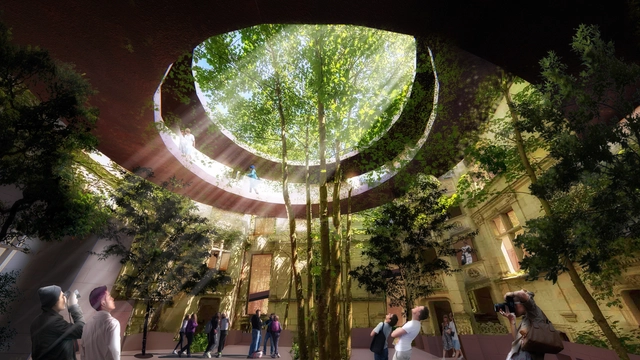
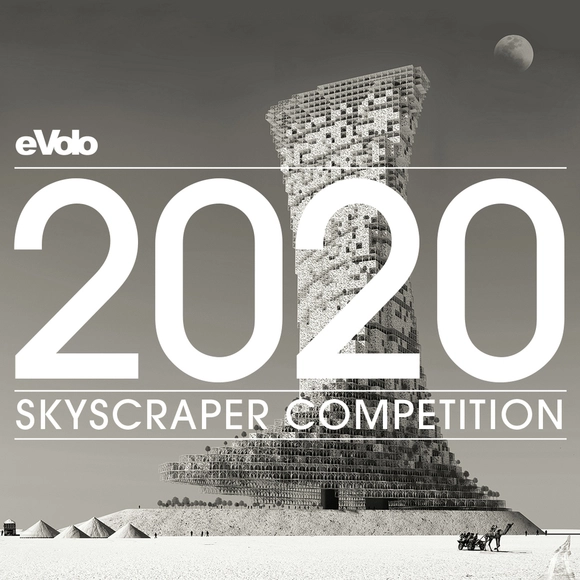
eVolo Magazine is pleased to invite architects, students, engineers, designers, and artists from around the globe to take part in the 2020 Skyscraper Competition. Established in 2006, the annual Skyscraper Competition is one of the world’s most prestigious awards for high-rise architecture. It recognizes outstanding ideas that redefine skyscraper design through the implementation of novel technologies, materials, programs, aesthetics, and spatial organizations; along with studies on globalization, flexibility, adaptability, and the digital revolution. It is a forum that examines the relationship between the skyscraper and the natural world, the skyscraper and the community, and the skyscraper and the city.
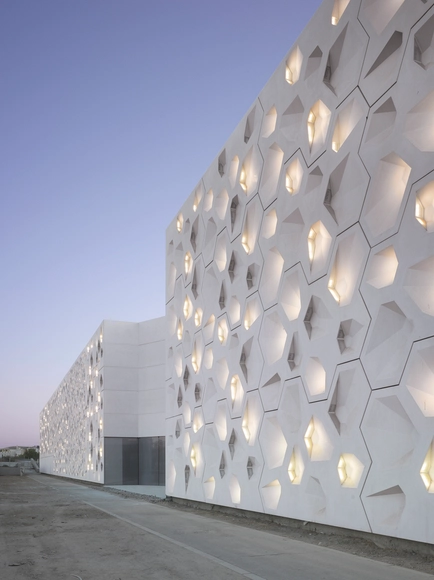
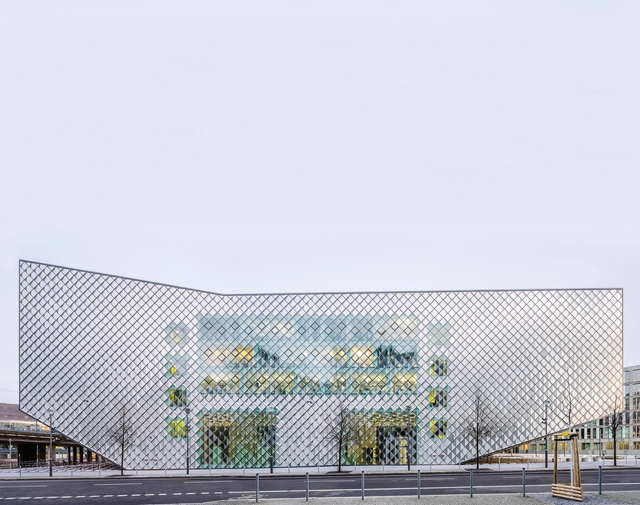
Facades are the interface between the interior and exterior of a building. They are the most striking and visible parts of a building, they protect it from external agents and are one of the main contributors to creating comfortable environments since it is where thermal gains and losses occur. Just like our skin, an extremely versatile organ of our body, it should be natural for it to be the part of the building which bears technology capable of becoming adaptable to the environmental conditions of the place where it is located.
“Clashes and Intersections” is an ongoing, one-on-one YouTube interview series with architects, theorists, and curators. The interviews begin with the question, “What do you consider your first project to be?” By initiating a dialogue between the practical and theoretical frameworks that have formed the interviewee’s work, this question aims to develop an understanding of reactions and critiques to historic, conceptual, and cultural events. In addition, it allows us to cross-examine the relationship, or lack thereof, between the participants.
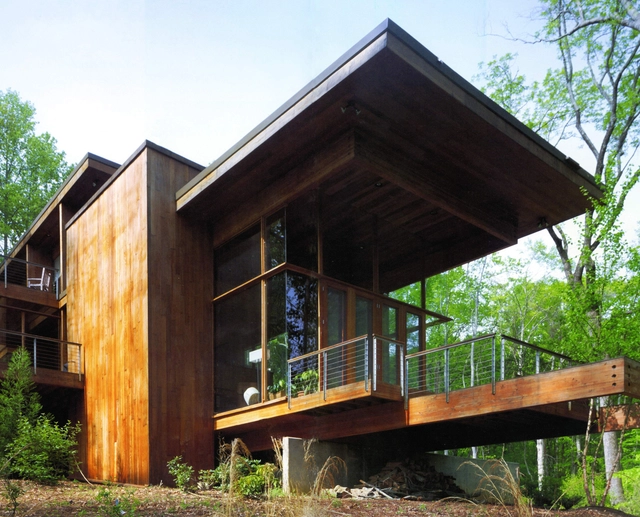
https://www.archdaily.com/925126/ray-kappe-on-sci-arc-and-architectural-challengesHouse of ZKA
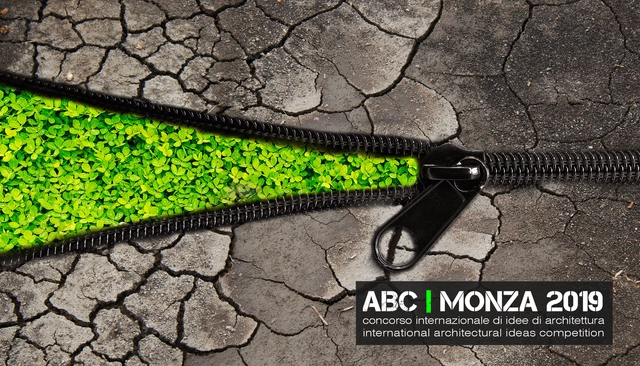
THE COMPETITION IN BRIEF ABC | MONZA 2019 is an international architectural ideas competition in the time of Digital Transformation. The theme of the competition is the urban regeneration of an industrial site of approximately 60,000 square meters in the city of Monza - Italy in accordance with the values of environmental, economic and social sustainability. One of the characterizing elements of this competition is the use of BIM (Building Information Modeling) for the ideation, design and submission of the proposal.
WHERE Via Philips 12 in Monza - Lombardy - Italy, north of the Greater Milan and close to what in the coming years will
La Muralla Roja, Alicante, 1973. Image Courtesy of Ricardo Bofill
To the uninitiated, Ricardo Bofill might come across as something of a chameleon. Comparing the post-modernism of his projects in Paris of the 1980s, his recent glass-and-steel towers, and the stark stoicism of his own home and studio which he renovated in the 1980s, one would be forgiven for thinking that there is no consistent thread present throughout his work. However, as Bofill reveals in this interview from Vladimir Belogolovsky's 2016 “City of Ideas” series, his designs are actually rooted in concepts of regionalism and process which, while recently popular with the architectural community at large, have underpinned his architectural mind since his twenties.
Architecture is mostly known through representations. Even today, when traveling is no longer rare or just for the rich, buildings and places are mostly disseminated and appreciated through images. In that sense, photography has been—and still is—paramount to architecture. The following interview delves into Erieta Attali’s work and the relationship to both architecture and landscape through the lens of her camera. With over two decades of experience, shooting and teaching all over the world, the Israeli photographer reflects on the origins and evolution of her renown practice.
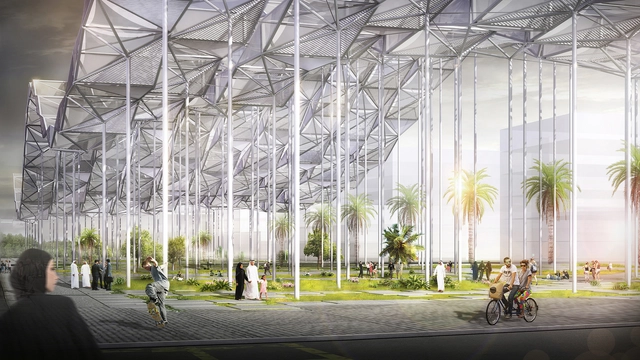
Chinese architect Mingfei Sun has designed an environmentally oriented urban hub for Masdar City, Abu Dhabi. Titled SURGE, its natural aesthetics and technological forwardness are intended to communicate a J.M.W. Turner-esque awe for the power of nature, making it an oasis of high aesthetic and ecological value.
https://www.archdaily.com/922010/surge-combines-high-aesthetics-with-environmentally-oriented-technologyLilly Cao
It is expected that within the next few of decades, Earth will have absolutely nothing left to offer whoever/whatever is capable of surviving on it. Although the human race is solely responsible for the damages done to the planet, a thin silver lining can still be seen if radical changes were to be done to the way we live on Earth and how we sustain it.
Since architects and designers carry a responsibility of building a substantial future, we have put together an A-Z list of every sustainability term that you might come across. Every week, a new set of letters will be published, helping you stay well-rounded on everything related to sustainable architecture and design. Here are the terms that start with letters J, K, and L.
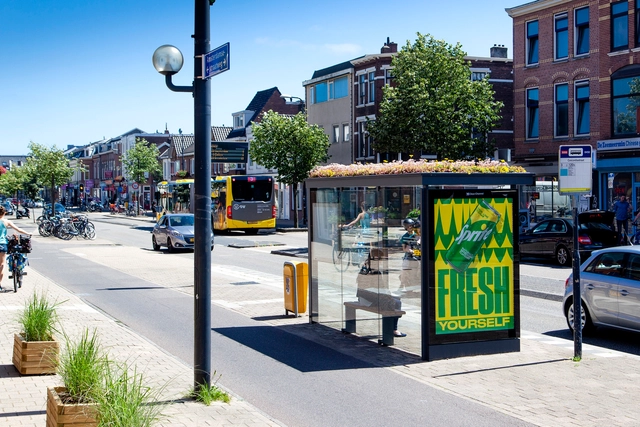
The City of Utrecht Council, in collaboration with advertising agency Clear Channel, has transformed 316 bus stops across the city into “bee stops.” The adaption involved installing green roofs onto the bus stops, creating bee-friendly spaces for the endangered species.
Videos
Image Courtesy of TuDelft and the Spong3d project
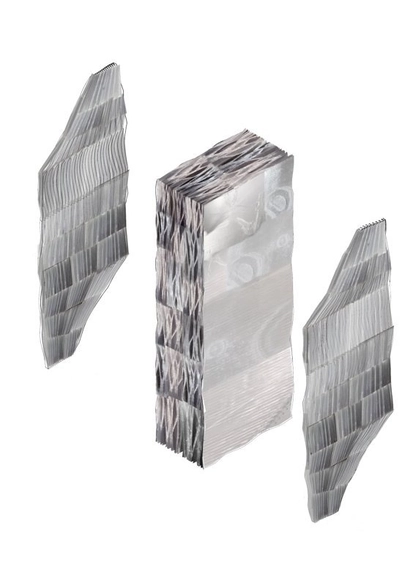
The term "resilience" has been employed in a wide range of subjects. The scientific definition is the ability of a substance or object to recover its form after suffering some trauma. In other words, it is quite different from resistance, as it concerns the capability of adapting and recovering. In ecology, resilience is about the ability of an ecosystem to respond to a perturbation or disturbance, resisting damage and recovering quickly. In architecture, however, designing something while having resilience in mind can lead to a variety of approaches. Resilient designs are always site-specific. Predicting the potential scenarios for typical building use, and even any disasters that could challenge the integrity of the project and its occupants is an important starting point. Furthermore, it is possible to address adaptive structures and materials that can ''learn'' from their environment and continuously reinvent themselves. Since there are software and robots with algorithms that learn from their contexts, why can't we use the same approach in construction?
We have selected 10 adaptive materials and solutions that work under the concept of Resilience in Architecture and Construction. We are left wondering whether these solutions will someday become mainstream or merely occasional innovations.
Past, Present, Future is an interview project by Itinerant Office, asking acclaimed architects to share their perspectives on the constantly evolving world of architecture. Each interview is split into three video segments: Past, Present, and Future, in which interviewees discuss their thoughts and experiences of architecture through each of those lenses. The first episode of the project featured 11 architects from Italy and the Netherlands and Episode II is comprised of interviews with 13 architects from Spain, Portugal, France, and Belgium.
The goal of the series is to research these successful firms and attempt to understand their methods and approaches. By hopefully gaining a clearer picture of what it means to be an architect in the 21st century, the videos can also serve as inspiration for the next generation of up-and-coming architects and students as they enter the field.
Since the 1970s, humanity’s resource consumption began to exceed what the planet could renew in a year. That is, we are withdrawing and polluting nature more than it can naturally recover. According to the World Bank, if the world's population reaches even the projected number of 9.6 billion people by 2050, it will take almost three Earth planets to provide the natural resources needed to maintain humanity's current lifestyle.
Every day an enormous amount of carbon dioxide is released into the atmosphere through industry, transportation, burning fossil fuels and even respiration of plants and living things. As the consequences of climate change become clearer, both governments and private sector companies are setting targets for carbon emission reductions, since these are regarded as the main greenhouse gases, and their high concentration in the atmosphere lead to air pollution and acid rain, among other consequences.
New York-based architect Eran Chen (b. 1970) was born and grew up in Be'er Sheva, Israel where his Polish-born grandparents, Holocaust survivors, settled right after World War Two. Early on the original long Polish surname was abbreviated to short Chen, which is pronounced “Khen.” In Hebrew, it stands for charm. After four years in the army, following high school, Chen studied architecture at the Bezalel Academy of Arts and Design in Jerusalem, the top architecture school in the country. Upon graduation in 1999, he ventured to New York to gain professional experience. He was hired by Perkins Eastman, a global New York-based giant of over 1,000 architects. In just a few years Chen was made the youngest principal in the company to oversee the design of his own diverse projects, including several competition-winning entries. By then he got married, became a father, a licensed architect, and settled in the city that he now calls home. In 2007, Chen decided to strike on his own. He focused on working with developers on residential projects, mainly in New York, as well as other major cities in the US and around the world. Many of Chen’s projects are situated in dense urban places. They are about reinventing the familiar living typology of buildings as extruded boxes. We met at the architect’s busy Manhattan office of over 100 young, ambitious architects helping Chen to make our cities more livable. We discussed his concept of vertical urban village and the truly democratic idea that every apartment, no matter where it is positioned in the building, can be turned into a penthouse.
When architecture has been evolving within the context of “Chinese characteristics”, Shanghai as one of the national creative centers provides us with a glimpse of the transformations and the prospects of Chinese contemporary architecture. Based in Shanghai, architect Liu Yuyang, who was born in Taiwan and grew up in America, has conceived his personal architectural approach with the multicultural background and shared his visions with others by a number of built projects. In the following excerpt from a conversation between Liu Yuyang and the author, he talks about his design philosophy, origins of the practice, the attitude to the profession, and more.
Nikoloz Lekveishvili (b. 1986), originally from Tbilisi, Georgia, has left his country in 2004 for his bachelor studies to Istanbul Mimar Sinan Fine Arts University and to get Master of Architecture at Politecnico Di Milano. He then practiced architecture in Italy, Germany, Turkey, and India until 2017, when he was attracted back to his home country by emerging economic opportunities and bustling creative scene in this former Soviet republic in the Caucasus. Nikoloz has started his practice, TIMM Architecture the same year together with his younger sister, Natia Lekveishvili (b. 1989) who has graduated from Georgian Technical University in 2012 and worked in local architectural and design-build firms.
The partners’ studio is located in the heart of old Tbilisi in the same building where their parents, architecture professors and practitioners, lead their own research-based office known for documenting historical monuments in the region. We met with Nikoloz and Natia at their studio which also serves as an architectural salon where young architects and students are welcome. In the following conversation, the architects spoke about a journey of emotions, transitioning from light to darkness, being interested in Kintsugi, traces of time, treating buildings like human beings, and of the importance of being selfish in order to create architecture that’s unique and personal.
Past, Present, Future is an interview project by Itinerant Office, asking acclaimed architects to share their perspectives on the constantly evolving world of architecture. Each interview is split into three video segments: Past, Present, and Future, in which interviewees discuss their thoughts and experiences of architecture through each of those lenses. The first episode of the project featured 11 architects from Italy and the Netherlands and Episode II is comprised of interviews with 13 architects from Spain, Portugal, France, and Belgium.
Succulent Walls tackle how architecture can respond to Southern California’s precarious relationship to water and lack of disaster preparedness. The work of a Master of Architecture (M.Arch.I) Research Studio taught by Heather Roberge, this collaboration between Mary and David Martin's MADWORKSHOP and UCLA Architecture and Urban Design prototypes a series of residential water catchment systems. By integrating a system for easily installed water storage and food production into the residential vernacular, the class of eleven graduate students hopes to transform our laissez-faire attitude towards this critical and finite resource into one of proactive self-sufficiency. Five group projects were distilled
Thermal comfort becomes very evident when it is not attended to. When thermal conditions are adequate in one location, our body is in balance with the environment allowing us to perform activities normally. On the other hand, when a space is too hot or too cold, we soon see changes in our mood and body. Dissatisfaction with the thermal environment occurs when the heat balance is unstable, that is when there are differences between the heat produced by the body and the heat that the body loses to the environment.


.jpg?1473772116&format=webp&width=640&height=580)


.jpg?1473772116)





.jpg?1563475598&format=webp&width=640&height=580)
.jpg?1563468257 "Courtesy of Stéphane Beel Architects")
.jpg?1563464422 "Courtesy of Stéphane Beel Architects")

.jpg?1563467060 "Courtesy of Stéphane Beel Architects")
.jpg?1563475598)