Succulent Walls tackle how architecture can respond to Southern California’s precarious relationship to water and lack of disaster preparedness. The work of a Master of Architecture (M.Arch.I) Research Studio taught by Heather Roberge, this collaboration between Mary and David Martin's MADWORKSHOP and UCLA Architecture and Urban Design prototypes a series of residential water catchment systems. By integrating a system for easily installed water storage and food production into the residential vernacular, the class of eleven graduate students hopes to transform our laissez-faire attitude towards this critical and finite resource into one of proactive self-sufficiency. Five group projects were distilled
Thermal comfort becomes very evident when it is not attended to. When thermal conditions are adequate in one location, our body is in balance with the environment allowing us to perform activities normally. On the other hand, when a space is too hot or too cold, we soon see changes in our mood and body. Dissatisfaction with the thermal environment occurs when the heat balance is unstable, that is when there are differences between the heat produced by the body and the heat that the body loses to the environment.
Award-winning architect Tatiana Bilbao spoke in an interview released by Louisiana Channel about her frustrations with today’s concept of sustainability in architecture. Living in Mexico, which Bilbao describes as a “country with no resources,” she states that people are accustomed to not wasting resources and that “sustainability” is a natural part of daily life. “I hate the word ‘sustainability’ because I think it has become a word that can qualify a type of architecture, and for me it should be embedded.”
Why don’t architects often consider the ethics of what they do? Thomas Fisher’s new book, The Architecture of Ethics, digs into this topic in great depth and with engaging insight. At the recent AIA convention in Las Vegas, I sat down with Fisher—former dean of the University of Minnesota College of Design, and now a professor in urban design at the school, as well as director of the Minnesota Design Center—to talk about his book and the ethical dimension of designing and building in the context of contemporary practice.
https://www.archdaily.com/919412/thomas-fisher-on-the-ethics-of-architecture-and-other-contradictionsMichael J. Crosbie
It is expected that within the next few of decades, Earth will have absolutely nothing left to offer whoever/whatever is capable of surviving on it. Although the human race is solely responsible for the damages done to the planet, a thin silver lining can still be seen if radical changes were to be done to the way we live on Earth and how we sustain it.
Since architects and designers carry a responsibility of building a substantial future, we have put together an A-Z list of every sustainability term that you might come across. Every week, a new set of letters will be published, helping you stay well-rounded on everything related to sustainable architecture and design. Here are the terms that start with letters G, H, and I.
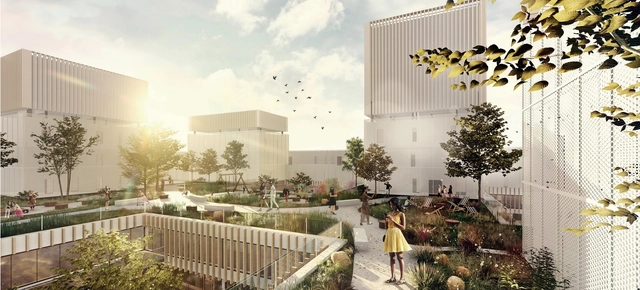
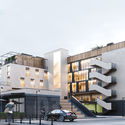
"Co.Living" - Exterior view. Image Courtesy of Saint-Gobain
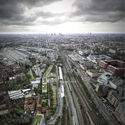
Competing in this year’s 15th annual Multi Comfort Student Contest, Saint-Gobain had over 2,200 students from 199 universities worldwide. The final was narrowed down to 60 competing teams from 34 countries, all of whom traveled to Milan to present their designs to an international panel of experts from the Municipality of Milan. This year’s brief was to design a project to rehabilitate and reconnect the urban area around Crescenzago subway station in Milan in line with the city’s #milano2030 development plan. The competition also focuses on Saint-Gobain’s concept of Multi Comfort: thermal, visual, and acoustic comfort, as well as good indoor air quality.
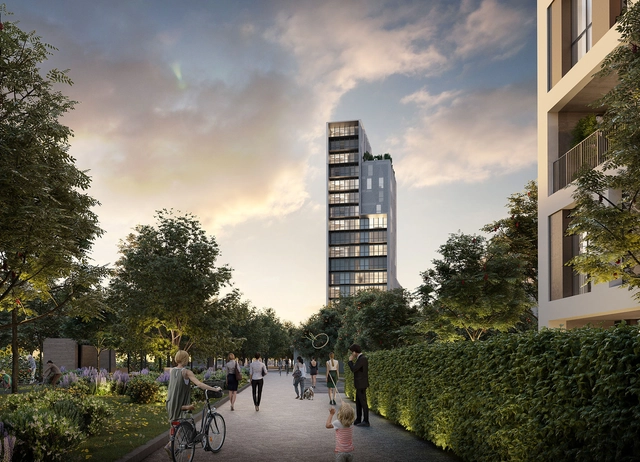
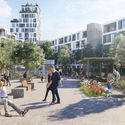
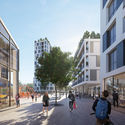
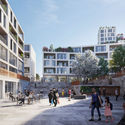
Barreca & La Varra has won the “C40 Reinventing Cities” competition with their proposal for a zero carbon “Housing Sociale” scheme in Milan titled INNESTO, working in collaboration with Arup Italia.
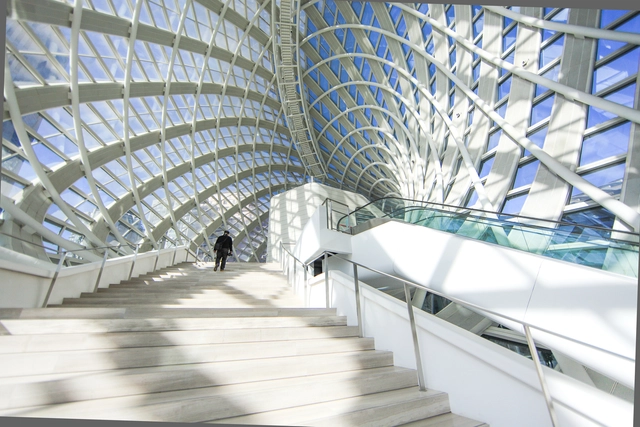
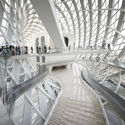
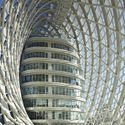
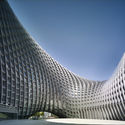
Italian architects Massimiliano and Doriana Fuksas were both born and grew up in Rome. Both graduated from La Sapienza University – he in 1969, she a decade later. He started his studies as a painter, she initially persued the history of art. In the early 60s, Massimiliano assisted Giorgio De Chirico and after graduation worked for Archigram in London and then for Henning Larsen and Jørn Utzon in Copenhagen. He started his first practice, the GRANMA in 1967. Doriana joined him in 1985 and became an equal partner in 1997. Subsequent offices were opened in Paris (1989) and in Shenzhen (2004). In 2000, Massimiliano Fuksas served as the Director of the 7th Venice Architecture Biennale under the theme "Less Aesthetics, More Ethics." The duo’s most recognized built works include Museum of Graffiti in Ariege, France; Shenzen Bao'an International Airport; EUR Convention Centre in Rome; New Milan Trade Fair, Rho-Pero; Zenith Music Hall in Strasbourg; and Peres Peace House in Jaffa, Tel Aviv. I met with the architects during their recent visit to New York where so far, they completed only one project, Armani 5th Avenue Flagship Store. We discussed how they start again with every project, their preoccupation with the future, and why buildings should try to become something else.
Last week, Chaos Group returned to Bulgaria presenting the latest and most innovative within the world of technology and visualization through the Total Chaos 2019 conference. With more than 50 specialists in the field, the event was divided into a series of talks and masterclasses where ArchDaily had the opportunity to participate to cover what was a remarkably enriching instance for all those involved in the world of architecture and the creative industry.
In this second version, Total Chaos provided a shared space for 3D artists and developers to connect and grow, as they explore how topics like AI, real-time ray tracing, light fields and collaborative VR will continue to change professional workflows.
Recorded on August 31st, 2011 at the architect’s New York office
I first met Daniel Libeskind on December 18, 2002, when he presented his vision for the New World Trade Center at the newly restored Winter Garden of the World Financial Center. I see that morning as the birth of starchitecture phenomenon and him as the very first starchitect, as he presented first in front of the mainstream world media and the way he did it, it was clear – here is the winner. Something clicked, and I thought – I must interview this great architect, even though I have never interviewed anyone before. But as soon as he left the stage, the man was mobbed by the press. Dozens of superficial questions flew his way… I looked across the grand atrium and saw the architect’s wife, Nina, standing proudly, but alone. We had a quick chat and set up my very first interview for the following day!
It is expected that within the next few of decades, Earth will have absolutely nothing left to offer whoever/whatever is capable of surviving on it. Although the human race is solely responsible for the damages done to the planet, a thin silver lining can still be seen if radical changes were to be done to the way we live on Earth and how we sustain it.
Since architects and designers carry a responsibility of building a substantial future, we have put together an A-Z list of every sustainability term that you might come across. Every week, a new set of letters will be published, helping you stay well-rounded on everything related to sustainable architecture and design. Here are the terms that start with letters D, E, and F.
Contemporary Chinese architects can be divided into two main categories. One is a huge network of government and university-owned design institutes and the other –independent, privately-run architects’ studios, a phenomenon that was started by Beijing-based architect Yung Ho Chang when he opened the very first such practice in 1993. While it is these independent architects that succeeded in producing many, mostly small-scale original works that collectively established a new architectural identity that is unmistakably Chinese, it is the design institutes that produce the greatest bulk of the built environment in the country. For this reason, I wanted to talk to Weiping Shao, the Chief Executive Architect of the Beijing Institute of Architectural Design, BIAD. In a way, Mr. Shao is the chief architect of the Chinese capital. He also serves as the Executive Director of the Architectural Society of China. Shao graduated from Tongji University in Shanghai in 1984 with a master’s degree. Apart from heading BIAD’s design efforts, the architect is the head and leading designer of his 30-architect studio called UFo, which was founded in 2003. We met at Shao’s office, full of international magazines and with an expansive view over Downtown Beijing and spoke with the help of translator and architect Zewo Zhou who works at the studio.
The conversation with renowned architect and artist Zvi Hecker (born 1931) followed Crusaders Come and Go, his exhibition at Galerie Nordenhake, Berlin (June-July 2017). In the first part, Hecker introduces his historical critique of the Modernist turn in architecture and its effect on city planning. He points out the tension between an urbanistic approach and approach which focuses on the impact of the single building. In the second part, Hecker tackles the notion of the architect’s style and positions his work against or in distance to the endeavor of cultivating a stylistic signature. In the last part, Hecker elaborates on a recurring motif in his work, the motive of the open book as a symbol, concept and formal dynamic reference.
It is expected that within the next couple of decades, Earth will have absolutely nothing left to offer whoever/whatever is capable of surviving on it. Although the human race is solely responsible for the damages done to the planet, a thin silver lining can still be seen if radical changes were to be done to the way we live on Earth and how we sustain it.
Since architects and designers carry a responsibility of building a substantial future, we have put together an A-Z list of every sustainability term that you might come across. Every week, a new set of letters will be published, helping you stay well-rounded on everything related to sustainable architecture and design. Here are the terms that start with letters A, B, and C.
Established in 1973 by Simeon Bruner and Leland (Lee) Cott, Bruner/Cott Architects is now led by three second-generation principals, Jason Forney, Jason Jewhurst, and Dana Kelly, who took over the practice in 2016. Architects of a broad spectrum of work regionally and nationally, the firm is widely recognized for adaptive reuse projects of historical, industrial, and mid-century buildings, including MASS MoCA in North Adams, Massachusetts, as well as future-focused net zero design such as the R.W. Kern Center at Hampshire College in Amherst, Massachusetts.
University of Massachusetts Amherst John W. Olver Design Building. Photo: Albert Vecerka / Esto
Boston-based Leers Weinzapfel Associates was founded by two women, Andrea Leers and Jane Weinzapfel, in 1982, later joined by a next generation of partners, Josiah Stevenson, and Tom Chung. The majority of their work is done on university campuses across America, but this can hardly be identified as the firm’s focus, as campuses are actually cities in miniature, containing nearly every building type imaginable. The point of difference, however, is that campus buildings are generally designed with more idealism than projects in our chaotic cities and mundane suburbs.
Sergey Makhno Architects. Image Courtesy of ArchDaily
As Milan Design Week continues to set avant-garde design trends for the upcoming years, the 2019 Salone del Mobile’s lighting biennale, Euroluce, saw a nod to classic designs mixed with contemporary craftsmanship.
Two dominant trends at this year’s Euroluce are ‘rediscovering the past’ and a ‘reference to nature’. Vintage lighting pieces were rediscovered, not only to serve as valuable tokens of the past, but as foundation for new research. The reference to nature is evidently the most dominant design trend at this year’s lighting biennale, as designers found inspiration from natural, organic forms, and produced their pieces with eco-friendly material.
However, some of the most unique pieces at this year’s Euroluce were developed in collaboration with heavyweights in the world of design. Profound architects found their way into the 2019 Euroluce, bringing together their design skills with the engineering solutions of design companies.
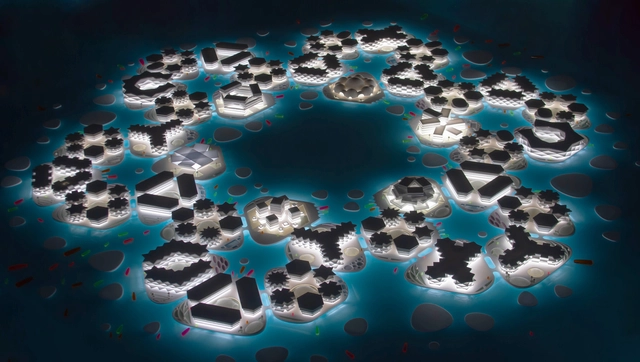
As part of UN-Habitat’s New Urban Agenda, Bjarke Ingels Group has proposed a vision for the world’s first resilient and sustainable floating community, designed to accommodate 10,000 people. “Oceanix City” is a response to the prediction that by 2050, 90% of the world’s largest cities will be exposed to rising seas, resulting in mass displacement, and the destruction of homes and infrastructure. The scheme is anchored in the UN Sustainable Development Goals, enacting circular flows of food, energy, water, and waste.





.jpg?1560394338 "\"Induction\" - Exterior view. Image Courtesy of Saint-Gobain")



Aki_Furudate_Niaux_03.jpg?1558971632&format=webp&width=640&height=580)
_Archivio_Fuksas_2013._DSC0197.jpg?1558972211 "© Archivio Fuksas. ImageShenzhen Airport")
_Nikolay_Kaloshin_iPad_18.jpg?1558972304 "© Archivio Fuksas. ImageRhike Park in Tbilisi")
_Leonardo_Finotti_70502_20X30_161025-065D.jpg?1558971768 "New Rome EUR. Image")
_Studio_Fuksas_New_Milan_Trade_Fair_(18).jpg?1558971850 "© Studio Fuksas. ImageNew Milan Trade Fair")
Aki_Furudate_Niaux_03.jpg?1558971632)









_0523.jpg?1554982545&format=webp&width=640&height=580)