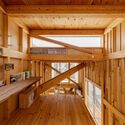
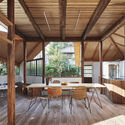
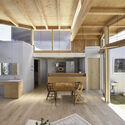
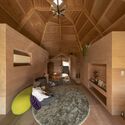
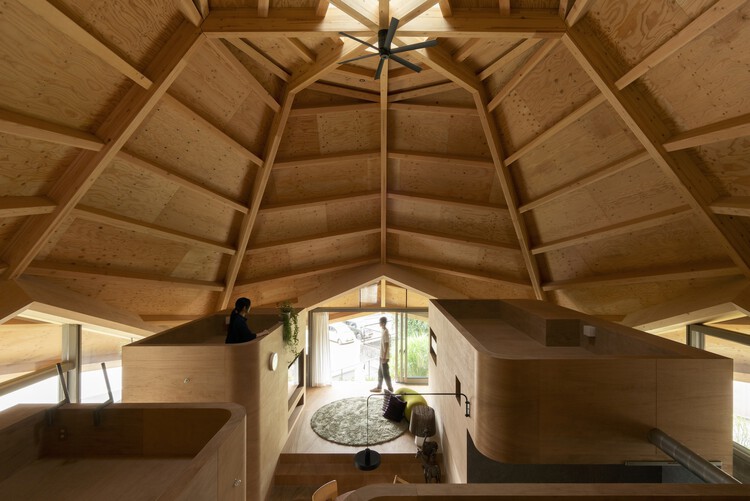
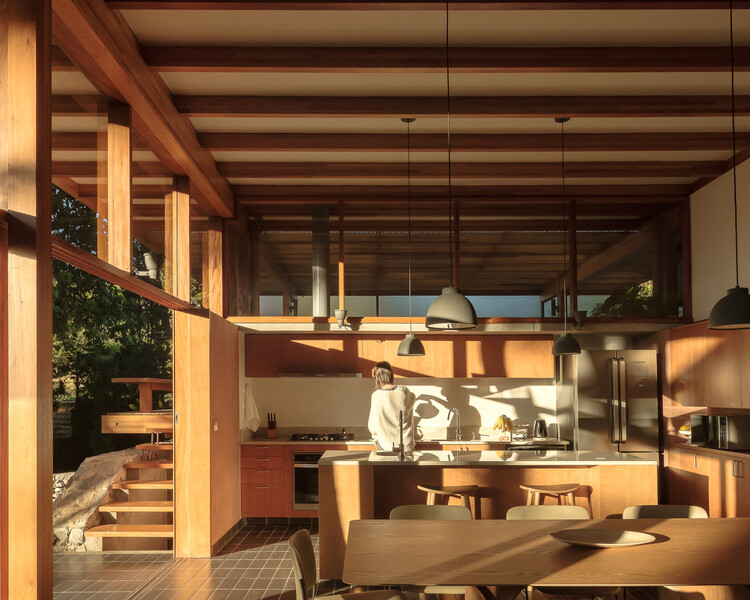
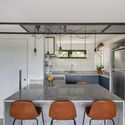
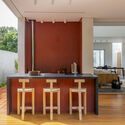
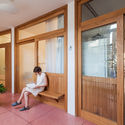
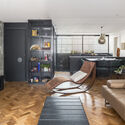
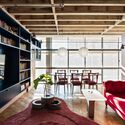
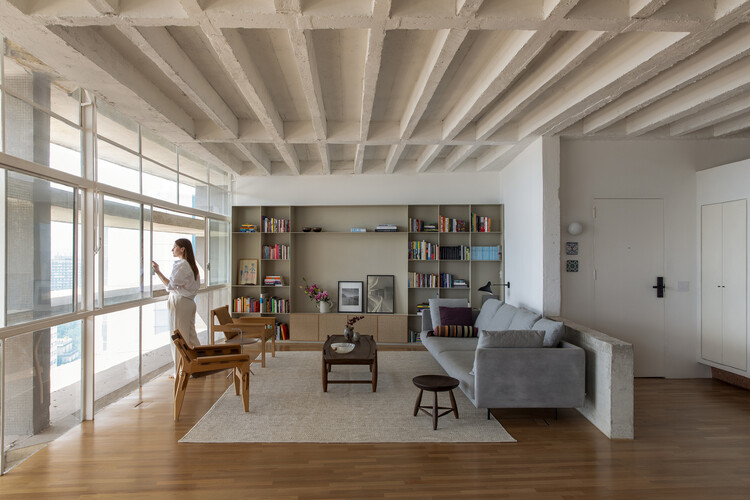
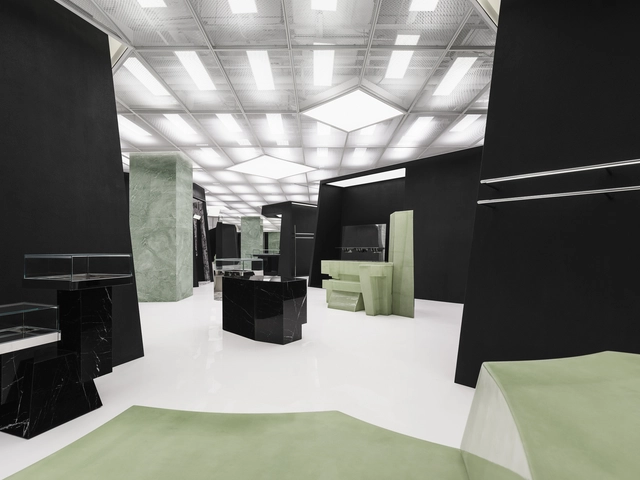
Contemporary Japanese architecture continues to demonstrate how to adapt the evolving needs of modern residents to a rich building tradition and artisanal legacy. Wood has always been the soul of Japanese architecture. In many recent residential projects, this material transcends its structural role to become the primary finish for various surfaces — ranging from floors and ceilings to furniture and architectural elements. These environments strike a delicate balance between elegance and coziness.
The use of natural, unpainted finishes highlights the material's inherent honesty while also celebrating the unique character of each piece, its natural grain, and the diversity of the overall composition. While some houses feature sober, dark-stained timbers to create a grounded atmosphere, others utilize lighter woods like pine to foster a bright, airy, and ethereal feel. This versatility proves that wood can adapt to any aesthetic, from the rustic to the ultra-minimalist.
Bolete Lounge BIO® by Andreu World x Patricia Urquiola. Image Courtesy of Andreu World
When walking into a large living space, a hotel lobby, or an open-plan workplace, the first thing that can be noticed is not what divides the space, but what holds it together. There are rarely clear boundaries, no obvious rooms, no strict partitions, yet the space still feels organized. Some areas invite a pause; others dictate movement; others foster community. The transitions are subtle, but legible.
At the same time, these interiors are expected to do more. They must accommodate constant change, withstand intensive use, and respond to environmental pressures by reducing waste, extending lifespans, and avoiding frequent replacement. The question is not only how a space looks, but how it performs over time. What is actually doing the heavy lifting?
Videos
Dornbracht Madison fittings for Brenners Park-Hotel & Spa in Baden-Baden. Image Courtesy of Dornbracht
During renovation projects, replacement is often preferred over refurbishment. Used fixtures are removed, new products specified, timelines secured. Particularly in hospitality projects, where closures are costly and operations are tightly scheduled, installing new components appears to be the most reliable solution. It is faster, easier to coordinate, and aligns with established workflows. Refurbishment operates differently. It requires careful dismantling instead of disposal, evaluation instead of substitution, and trust in the quality of what is already there. It introduces complexity into a process designed for efficiency.
The recent renovation of Brenners Park-Hotel & Spa in Baden-Baden demonstrates that under the right circumstances, this additional effort can become a deliberate architectural strategy for similar projects, especially when the original materials were never intended to be temporary.
In many high-density cities across Asia, the staircase is often treated as a necessary evil. Whether in apartment buildings, private homes, or retail interiors, it is frequently hidden, tucked away, or pushed to the margins—an element to be minimized so more area can be given to "usable" space. Yet as density intensifies and square footage becomes increasingly scarce, architects and designers are forced to rethink this vertical puzzle.
The question shifts from how to conceal the staircase to how to make it work harder: can it become a productive addition to the interior—an architectural device that does more than connect levels, performing dual (or multiple) duties rather than simply consuming floor area?
In an age dominated by screens and digital images, the full character of a designed object often remains hidden. Only when encountering an object in person can one sense its texture, notice how it interacts with light, or even perceive its subtle smell. These sensory qualities— so difficult to convey online—reveal why design fairs continue to matter. Increasingly, these fairs have become spaces for experimentation in contemporary design, where ideas about materials, collaboration, and social responsibility are publicly explored. Curated programs, exhibitions, and experimental installations transform these events into environments where designers, manufacturers, and researchers test new possibilities for the built realm.
Set along the outer breakwater of Port de Cap-d'Ail, located next to Monaco, the Beach House occupies a threshold between land and sea. Surrounded by water and docked boats, the building sits in close dialogue with the harbor, exposed to the shifting light, reflections, and atmosphere of the Mediterranean. Within this setting, the house reads almost like another vessel moored along the harbor wall.
When architect Dave Rowles began work on the project, however, the residence offered little of this character internally. The former private home had been stripped back almost entirely, leaving a raw concrete shell. The renovation, therefore, began with a fundamental question: how can an interior capture the qualities of its surroundings? Rather than competing with the powerful maritime context, the design focused on creating a calm, material-driven interior that frames and amplifies the beauty and experience of the surrounding landscape crafted from oak, cedar, marble, and stainless steel details. In collaboration with barth, a company specializing in interior craftsmanship, Rowles transformed the concrete structure into a cohesive interior, where natural materials, light, and refined detailing define both the interior and exterior spaces.
The BIG SEE Festival returns on May 21-22, 2026, to Portorož, Slovenia, as the leading architecture and product design platform in South-East Europe, bringing together architects, designers, brands, and decision-makers from across the world. Formerly known as BIG Architecture and BIG Design, the unified BIG SEE Festival reflects an expanded ambition: to frame architecture and design as critical tools for navigating complexity, responsibility, and change.
In the picture: F128 PA Black Ambiance Granite, U590 PM/TM Deep Blue, U705 PM/TM Angora Grey, U755 PM/TM Havanna Grey, H1708 ST17 Brighton Chestnut. Image Courtesy of EGGER
Designing an interior is, in many ways, an exercise in orchestration. Just as a conductor coordinates instruments, timbres, rhythms, and intensities to compose a coherent piece, the architect brings together materials, color, light, texture, and proportion to define the spatial quality and atmosphere of an environment. None of these decisions operates in isolation: the choice of a surface influences how light is reflected; a given material can shape how a room ages over time; color, in turn, directly affects the perception of scale.
Wood-based materials such as decorative particleboards, MDF boards or laminates can therefore be understood as more than simple finishes. Industrially produced, they combine decor selection, surface texture, and technical substrate, defining both their appearance and the way a space responds to use, light, and time. Factors such as dimensional stability, ease of maintenance, and resistance to wear become integral to design decisions, particularly in interiors subject to intensive use.
For decades, heritage has been easiest to recognize from the street. We protect facades, skylines, and monuments because they are visible, stable, and legible as cultural assets. Yet most of what we remember about living is how we eat together, withdraw, argue, care, and rest, which happen far from view. It happens inside rooms. As open plans quietly give way to thresholds, corridors, and enclosures, a deeper question emerges: what if cultural memory survives not in what architecture shows, but in how it is lived?
"Feeling at home" is more than just an expression—it is the sense of warmth and comfort that transforms a space into a true refuge. To achieve this, elements like color, texture, lighting, and materials play a crucial role in shaping an environment that fosters relaxation and well-being. Backed by research in environmental psychology and neuroscience, the connection between physical spaces and human behavior highlights how architecture can directly influence the atmosphere, turning chaos into tranquility.
Selected as one of the winners of ArchDaily 2025 Next Practices Awards, NAAW represents a new generation of architectural studios reshaping contemporary practice in Central Asia. Founded in 2019 by Elvira Bakubayeva and Aisulu Uali, the studio operates at the intersection of research, interdisciplinary collaboration, and spatial experimentation, positioning architecture as a tool for reflection and an active agent in shaping contemporary Kazakhstani identity.
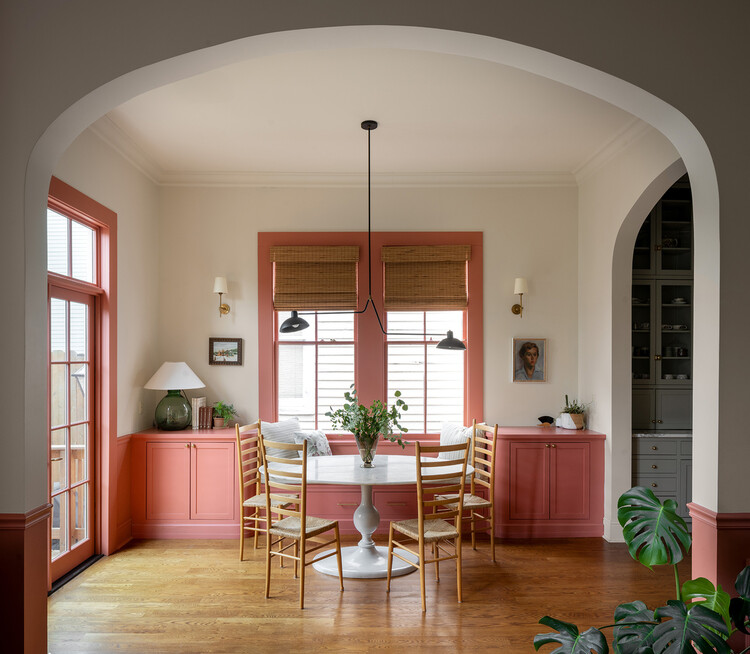
Breakfast nooks emerged in the early twentieth century in response to increasing domestic density and shifting ideas about everyday life. Rooted in the American Arts and Crafts movement and popularized through bungalow housing of the 1910s and 1920s, they evolved from the more formal Victorian breakfast room into compact, built-in spaces embedded within the kitchen. As houses grew smaller and more economical, architects and millwork companies used fixed benches and tables to occupy corners, alcoves, and bay windows that might otherwise be inefficient. These light-filled enclosures provided an affordable means of concentrating daily activities while preserving comfort and spatial clarity.
The 2026 Color of the Year selections show a shift toward nuanced, layered palettes and understated spatial calm, moving beyond the saturated earth tones of previous forecasts. Pantone's Cloud Dancer, a soft white, sets a foundation of clarity and simplicity, while Sherwin-Williams and C2 Paint highlight the versatility of mid-tone neutrals and soft ochres, emphasizing material authenticity and adaptability across different interior surfaces and lighting conditions. Benjamin Moore and Graham & Brown explore deeper, atmospheric hues that balance warm and cool undertones, and Behr, Valspar, and AkzoNobel introduce muted greens and blue-based tones aimed at creating restorative, composed, and visually engaging interiors.
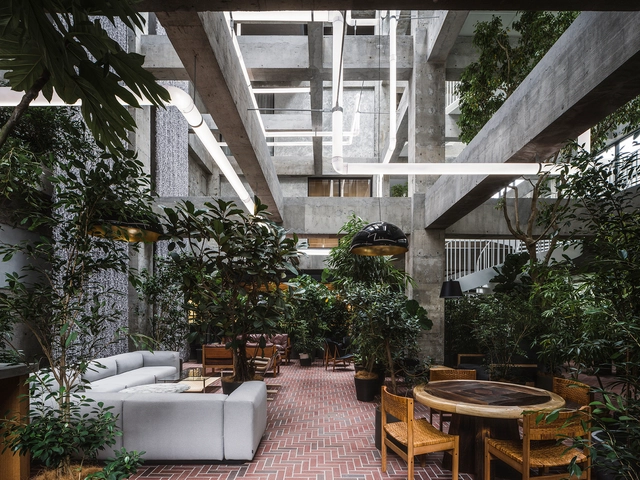
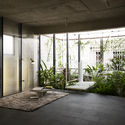
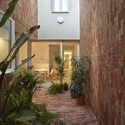
There is not enough that can be said about the benefits of incorporating plants in interiors or Plantscaping. Integrating vegetation indoors serves many purposes, whether practical, aesthetic, or psychological. Although there are basic requirements for incorporating greenery into Homes, well-thought-out plant selections and placements are characteristically different across the world. By going over recent interior works, a few recurrent plantscaping design patterns arose, each reflective of distinctive climates, building styles, and traditional building techniques.
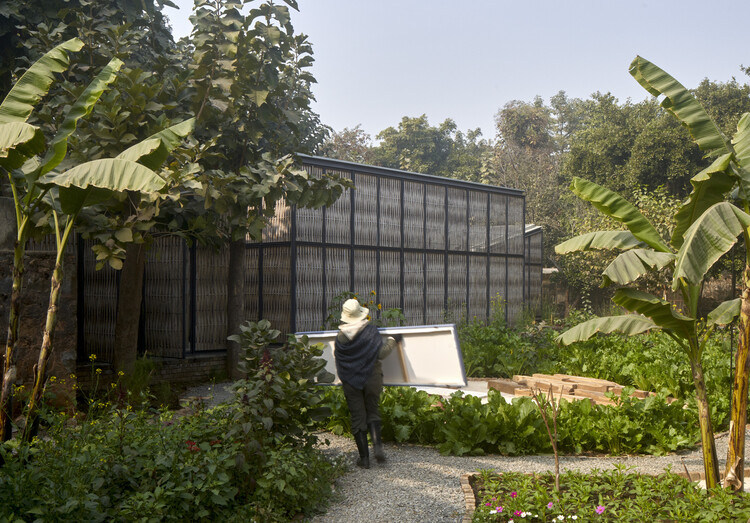
While the type of the chosen plants varies depending on favorable conditions for growth and local availability, the main distinctions are related to the direct environment and display method in which the vegetation is set, as well as its intended purpose. While plants are there to offer mental wellness to some, they are essential for cooling to others, or could even be meant for small-scale farming.
Living in residences designed by renowned modern architects is a dream sought after by many. Projects that have become iconic are major attractions for new residents who value both the authorial signature and history of the building, as well as the innovative architectural solutions that have contributed to the prominence of such projects.
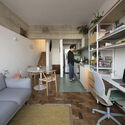
As for the work of Oscar Niemeyer, fluidity and flexibility may best express his plans and typologies. These features provide great potential for the architects working on renovations within these buildings. São Paulo’s Copan Building is a prime example: its 1160 units, spread over six blocks, vary from 25m² studio apartments to larger units of over 150m². Niemeyer’s extensive portfolio includes other residential landmarks in São Paulo — like the Montreal, California, and Eiffel buildings — plus others in Belo Horizonte and Brasília, even reaching as far as Berlin with the Interbau Apartment House.
In contemporary architecture, commercial spaces have become more than points of sale; they are stages where identity, image, and experience converge. Stores, showrooms, and branded interiors often operate as laboratories where architects experiment with form, material, and light, translating corporate narratives into spatial experiences. In this context, the architect emerges as a mediator of desire, shaping atmospheres that guide perception, evoke emotion, and subtly influence behavior. This role reveals a complex intersection between design and capitalism: the creation of spaces that sell not only products, but also aspirations, lifestyles, and cultural meaning. By transforming commerce into an architectural performance, these projects invite reflection on how the discipline negotiates its agency in a world where visibility and image have become as essential as function.
5 Houses on the Wild Side is a visual feast showcasing the wildly imaginative, rules-free, cozy and sumptuous interiors Elena Agostinis has created for her family’s homes in New York, Montana, and Mexico.