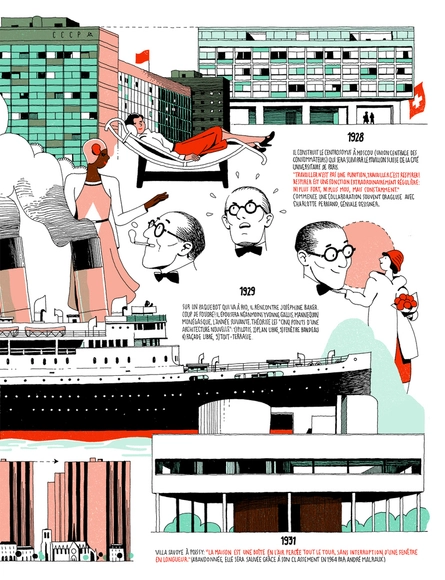
French artist and illustrator Vincent Mahéhas shared his most recent work with us -- a series of illustrations made for a special edition of Telerama magazine that depicts the life of the renowned Swiss-French architect, Le Corbusier. In just eight pages, the artist highlights the most relevant facts of this unforgettable architect's life. Expressed in green and pink tones, we can see key moments that have without a doubt shifted the course of contemporary architecture, with the extreme care and clarity that Mahé's work presents us.
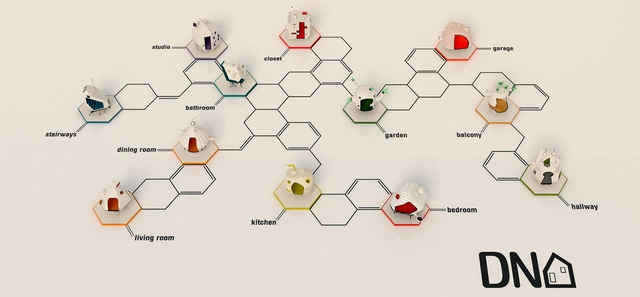
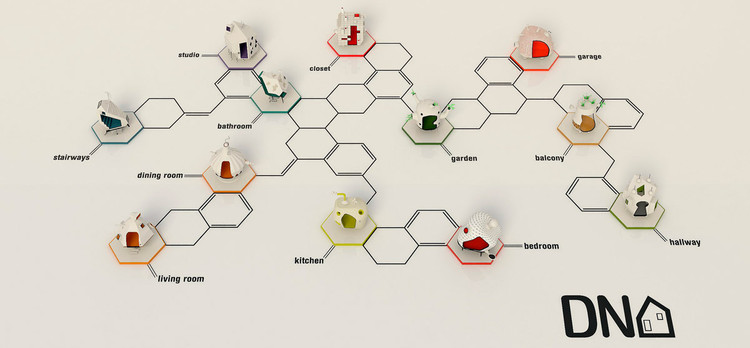
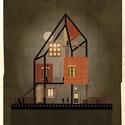
For his latest project, Federico Babina teamed up with architect Federico Ortiz Sanchez to imagine, illustrate and sculpt 12 “symbolic and symbiotic micro-architectures,” each representing a different component of a house and together making up the “DNA of the House.”
The project was inspired by the Fundamentals theme of the 2014 Venice Biennale, “but instead of dissecting a catalogue of components we composed a collection of images,” writes Babina. “We wanted to highlight the specific personality of each one of the artifacts we proposed, every single one uses its own set of symbols in order to address their different issues in this diverse compendium of spaces of the intimate.”
Learn more about the project and view the 12 illustrations after the break.
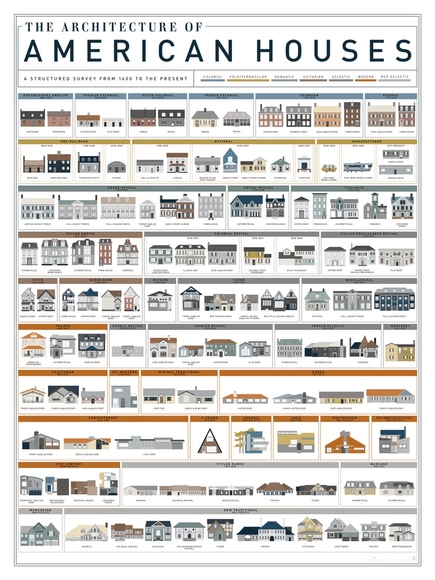
From 17th century Postmedieval English homes to the “McMansions" of the 90s, check out Pop Chart Lab's structured survey of 121 North American homes from the past 400 years. Sorted into seven major categories and 40 subdivisions, the comprehensive diagram highlights the morphology of homes throughout the US.
Each print is signed and numbered by the artists, much like the Brooklyn-based company's popular "Schematic of Structures" poster that features mankind's 90 greatest architectural achievements.
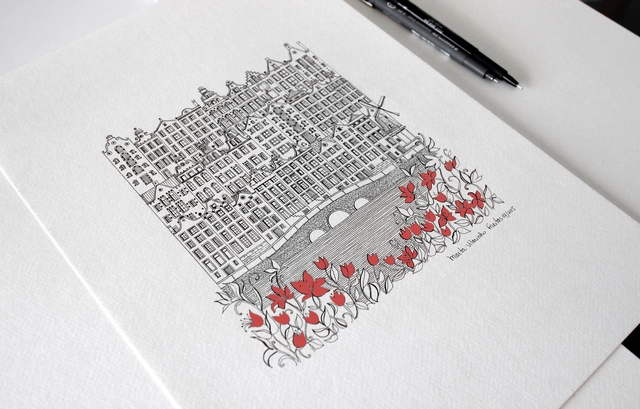
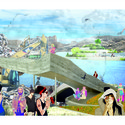
Through her project "Cities and Memory - the Architecture and the City" Architect Marta Vilarinho de Freitas has created a set of illustrations that focus on architecture and the fantasy worlds it can create. The project arose from her thesis on “Communicating Art” at the Superior Artística School in Porto, and seeks to tell stories of the “cities and the life that inhabits in each of them.”
View more images and a text from the architect after the break.
A competition proposal by Alexander Culler and Danny Travis, placed second in Blank Space's recent Fairy Tales competition, is now the subject of a Kickstarter campaign asking whether there is "a way to use architectural drawing to tell a story that was easy enough for everyone to understand?" The team behind the Beautifully Banal comic-zine are now seeking to transform their competition entry into a full-scale publication in order to "combine the intricacies of architectural drawing types with a form of story telling that allows those outside of the field to gain a new appreciation for the buildings and structures that occupy the world."
"The architecture is like a scene from a movie where the story is the life, the script is dictated by the use of the building and where the actors are the residents. A labyrinth where all - characters, director, audience –are lost and found in the intensity of their emotions," Babina adds.
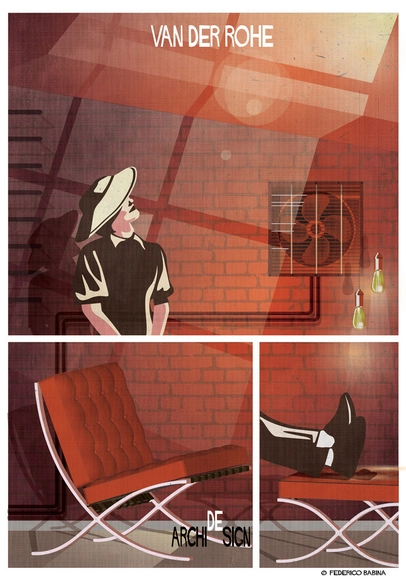
With his latest series of illustrations, Federico Babina offers us "a journey into the universe of design" through 28 illustrations which use a composition of frames to tell stories around iconic designs. "I like to think of the objects that inhabit our homes as a silent audience, but active in our lives," explains Babina. "The objects themselves tell stories, not inanimate things but things that soak up the life that surrounds them."
Through the combination of so-called "timeless" designs with clear references to the times and styles that produced them, Babina tells the history of these iconic objects that we may take for granted today (with the occasional saucy human story thrown in for good measure).
See the entire set of ARCHIDESIGN illustrations after the break - and if you missed them, make sure to check out Federico Babina's previous illustration sets and his website.
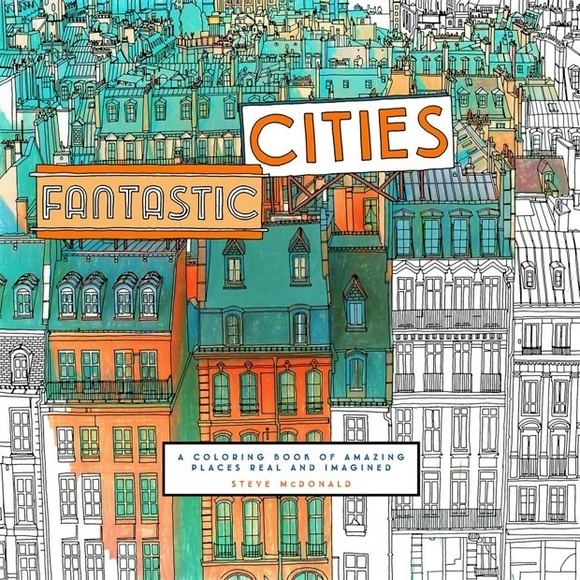
Canadian artist Steve McDonald has released "Fantastic Cities," an illustrated coloring book featuring 60 cities from around the world. From Paris to New York, Tokyo to Istanbul, the illustrations will take any architect or urban planner back to childhood times.
The book, with 48 full-view pages of real and imaginary places, is on sale Amazon and Chronicle Books. Take a look inside, after the break.
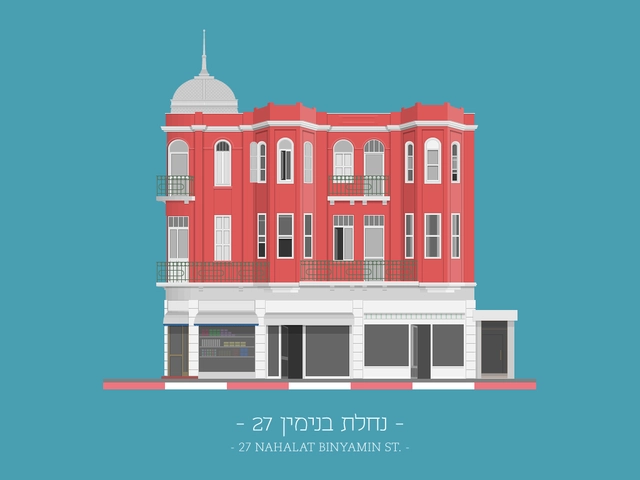
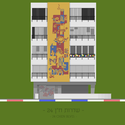
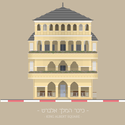
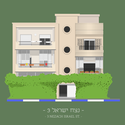
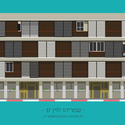
Take a virtual walk down the streets of Tel Aviv with these illustrations of the city's facades by graphic designer Avner Gicelter. “My aim is to capture the unique essence of the building's features in my illustrations, using a minimal set of graphic elements,” he explained. “After the building's illustration is done I choose a background color out of a palette and a typeface that will reflect what I refer to as a Tel Avivian atmosphere."
Gicelter first had the idea to capture the unique architecture in Tel Aviv’s city center when apartment hunting in 2013. “I got more interested in the building's facade than in the apartments we were looking at,” he said. Since then he has illustrated over 70 different buildings.
Check out some of Gicelter’s illustrations after the break and visit his website to learn more. His illustrations are also available for purchase on Etsy.
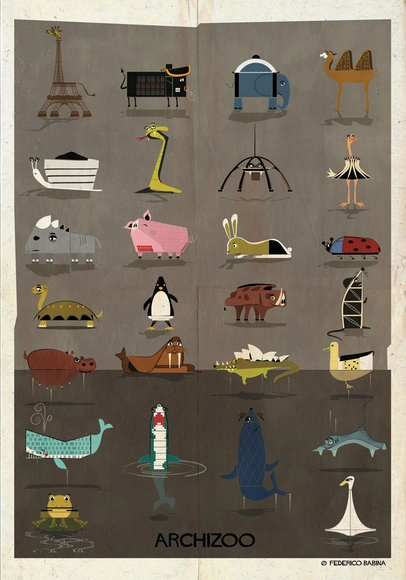
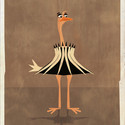
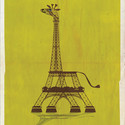
An architectural “Paraidolia,” Federico Babina has uncaged the ARCHIZOO. Recalling images from his childhood, Babina has imagined a creative series of zoo animals rendered in familiar architectural forms.
“When I was a child I wanted to be an architect and now that I'm an architect I would like sometimes go back to my childhood,” says Babina. “Our mind is capable of collecting, record and store millions of images. One thing that always interests me is the association that we can do between these images.”
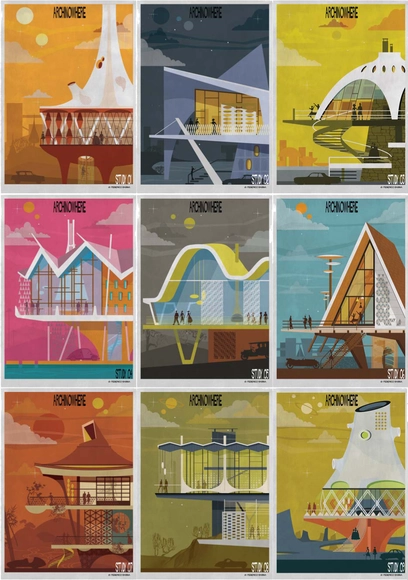
Federico Babina has released ARCHINOWHERE, a “series of illustrations that represent a parallel universe where past, present and future intertwine” to present a fantastical collection of “realistic yet unreal” architectural visions. The playful graphic, as Babina describes, “maintains a balance between illustrated architecture and an architectonical illustration” to relay imagined stories built on a foundation of contemporary ideals.
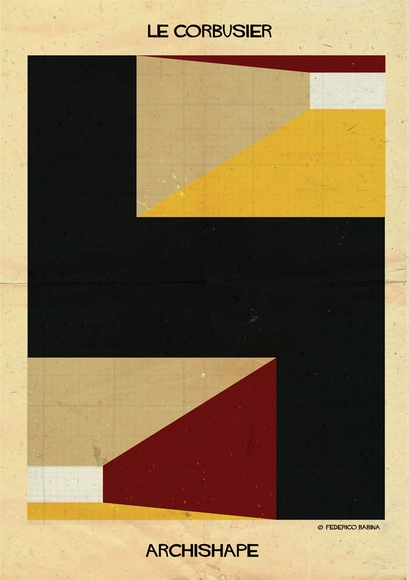
Working in reverse, Italian architect Federico Babina’s latest set of illustrations deconstructs the stylistic forms of 25 famous architects into a series of abstract compositions that embody the essence of each architect's style. This “process,” as Babina says, aims to reveal the “ideal connection between architecture itself as a form of representation and the representation used in its design.”
“The architecture is a set of shapes that draw volumes and voids which sequence generates functions and meanings. These illustrations are one of the possible ways to watch, observe and describe architecture… In these pictures you can read architectural references or simply let your mind get lost between the lines and colors for more imaginative interpretations.”
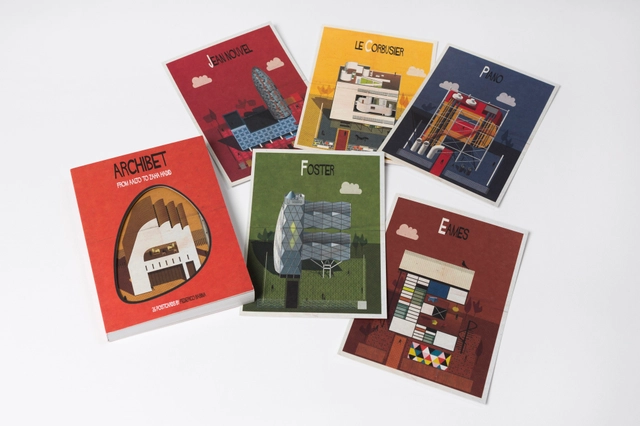
Archibet / Federico Babina. Image Courtesy of Laurence King
UPDATE: Congratulations to winners Robert, Angelo, Nathaniel, Enasaveva, and Avi! We will be contacting you via email.
When Italian architect Federico Babina released his Archibet set this past year, it was an instant hit; no surprise, considering Babina’s illustrations depict the styles of 26 famous architects, from Alvar Aalto to Zaha Hadid, in a clever way unlike anything else. Now, thanks to Babina and publisher Laurence King, five of our readers can win their very own Archibet set.
Official rules: Check out Babina’s complete Archibet set (here) and let us know your favorite “letter” in the comment section below. Five winners will be chosen at random from entries received between Monday, January 12th and Sunday, January 18th 11:59 EST. Anyone in the world is welcome to participate. One entry per person. ArchDaily will enforce verification and remove duplicated ones before choosing the winner.
Bonus: ArchDaily readers can purchase a copy of Archibet by Federico Babina at a discount of 30% when ordering from www.laurenceking.com. Enter the code ARCHIBET30 at the checkout.
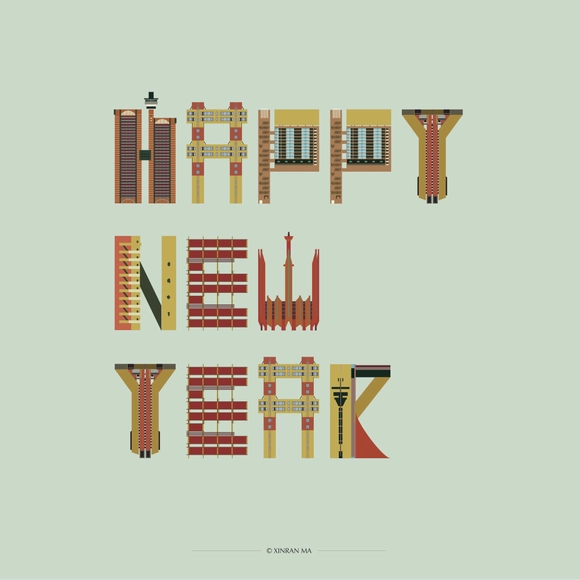
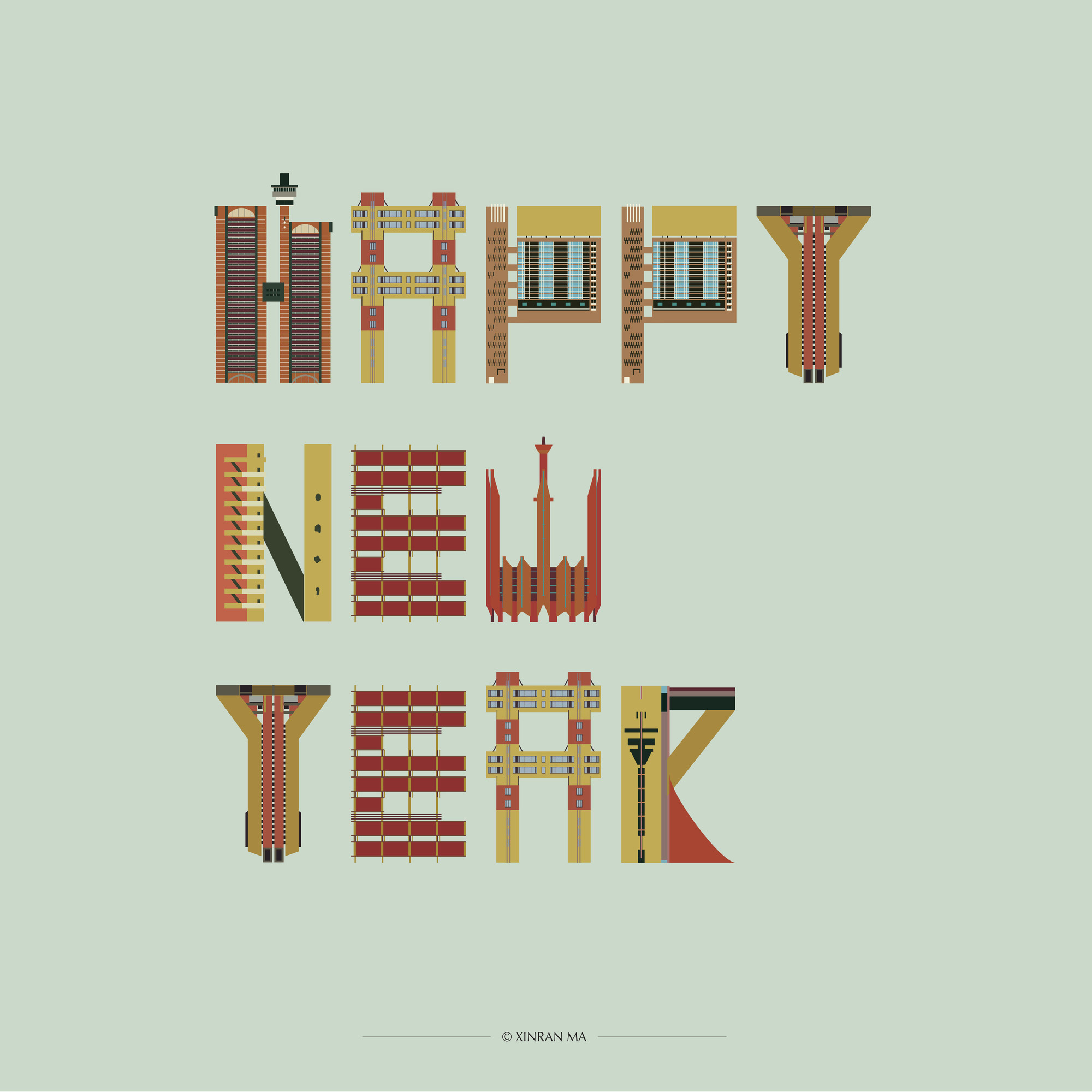
To celebrate the start of 2015, Xinran Ma, a New York-based architectural designer and illustrator, has created this brutalist-inspired greetings card. Based on his work illustrating over 50 of the classic projects of modernist and brutalist architecture, this card features pieces of these recognizable buildings, remixed and adapted to create a typeface.
Xinran says that the buildings he illustrates all have one unfortunate thing in common: "they are extremely attractive and inspiring to me," he says, but "ironically they have been somehow gradually forgotten." As a result, the illustrations he produces are not just a hobby, but part of an obligation he feels "to defend, memorize and deliver the classics that I believe are immortal." Xinran has shared 18 of these illustrations with ArchDaily to spread the word about these buildings; check them out after the break, and click on the images to find out more about each one.
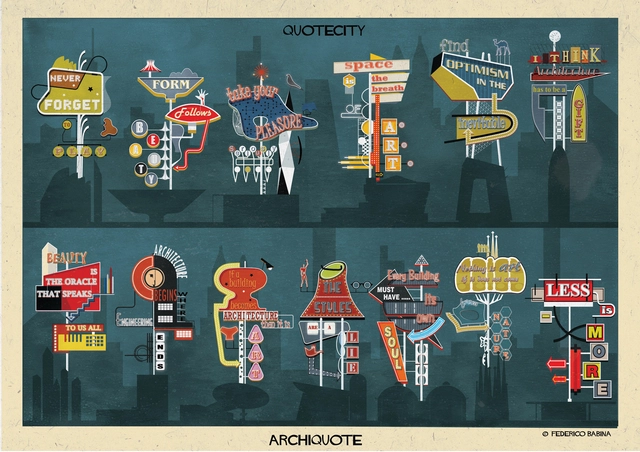
Federico Babina is at it again, this time creating a series of 13 Las Vegas-inspired billboards that advertise architectural concepts of the profession’s most prolific contributors. The idea behind ARCHIQUOTE, as Babina describes, was to put words into manifest examples of architectural concepts and aesthetics from Mies van der Rohe to Rem Koolhaas.
“The words can be considered as architecture,” says Babina. “Simple concepts with deep meanings and complex thoughts explained with simplicity…Billboards that evoke a Las vegas of architecture where the phrases guide us to understand a little more the idea hidden behind the work done with volumes and space… In these 13 illustrations are mixed, intersect and integrate aphorisms and shapes in a communicative game.”
"Cyberspace, filled with bugs and glitches – the components of its natural habitat – will form a completely new and previously unknown location when released into a real city – Cybertopia," says Egor Orlov, a current student at the Strelka Institute in Moscow. According to Orlov, the physical world is on the brink of a major technological breakthrough that will revolutionize the way architects conceive of space – closing the gap between analog and digital.
Cybertopia - completed while he was a student at the Kazan State University of Architecture and Engineering under tutors Akhtiamov I.I. and Akhtiamova R.H. and nominated for the Archiprix Madrid 2015 - exists as another dimension for Orlov, where fairy tales come to life and science harmonizes with engineering and architectural design. "Future of an Architecture Space. Cybertopia. Death of Analogous Cities," delves into a fantasy world where the "possibility to fly or walk from one planet to another" becomes an illustrated reality using a combination of drafting-based techniques and a wild imagination.
Enter the hybrid technological-analog world of Cybertopia after the break
Have you ever had the urge to squeeze a lemon on the dome of St. Peters Basilica? Or perhaps, crack a beer with Kohn Pedersen Fox’s “bottle opener”? New York-based designer Nicholas Blechman has put into illustration what we’ve all been thinking, landmark architecture as the food-related items they resemble. Check out Blechman’s “Gastro-Architecture” series here on the New York Times and preview a couple of our favorites, after the break.
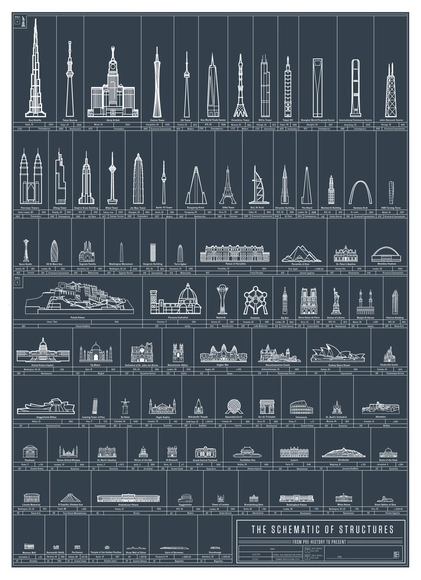
Hagia Sophia, Guggenheim Bilbao, and Burj Khalifa are amongst 90 structural feats in which Pop Chart Lab has deemed to be “mankind’s greatest architectural achievements since prehistory.” Each are hand-drafted and presented on this blueprint-style infographic to commemorate great architecture.




















.jpg?1417633447&format=webp&width=640&height=580)
.jpg?1417633447)