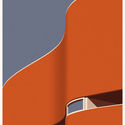
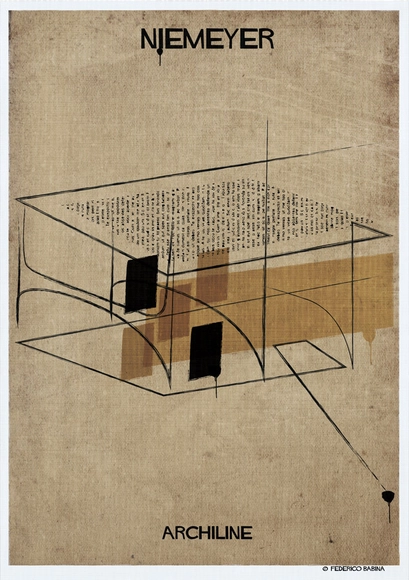
Federico Babina, the illustrator behind the series of popular architectural interpretations including ARCHITALE and ARCHIPLAY, has just released his latest project: PORTRART, 35 illustrations that tell 35 short stories describing and relating to the individual personalities of 35 artists.
"The shapes, the sculpted and painted geometries of the artists are transformed to draw their faces," explains Babina. Each composition portrays a realistic fantasy in a series of geometric shapes around a central matrix, the portrait.
Babina continues, "The project attempts to visualize the likeness, personality, and capture the essential features of the protagonist through simple lines, geometries, color, and ink. The idea is to achieve an almost abstract representation without losing the essence of figurative representation."
You may know about Lynda.com, the online education platform that hosts thousands of video courses for learning how to use software. But did you know that Lynda also has some great drawing, animation, and design courses? The best part (if you're a current student or local library card owner)? Lynda can be accessed for free from many universities, colleges, and libraries! If your backpack-toting, library-visiting days are behind you, the platform offers a free 10-day trial.
If you're looking to perfect your ability to capture or project building interiors and exteriors, Amy Wynne's hour-long course "Drawing 2-Point Perspective" is a solid option.
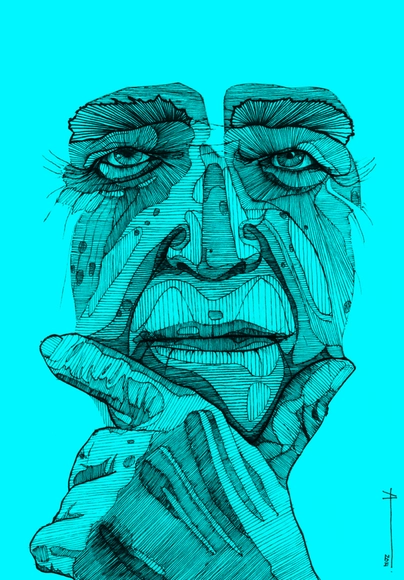
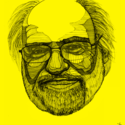
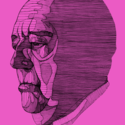
Chilean architect and illustrator Francisca Álvarez Ainzúa created "Architecture of the Portrait": a series of illustrations of renowned architects drawn with the precision and accuracy of a fineliner. In order to choose the protagonists of her geometrical analyses, the architect states a preference for strong character and the presence of imperfections, which imparts a certain richness to the representation.
The architectural construction of the face is done using lines to create a hatch effect. Next, she adds color that pays tribute to the traditional default CAD shades: yellow, cyan and magenta.
Imaginative Italian illustrator and architect Federico Babina has unveiled his latest series, ARCHITALE, “a tribute to the fairytale universe where the architectures are reinvented to accommodate the protagonists of the story.”
Through his illustrations, Babina imagines 17 structures that dance between reality and fantasy, with each architectural detail revealing information about the characters and story of the respective fairytale.
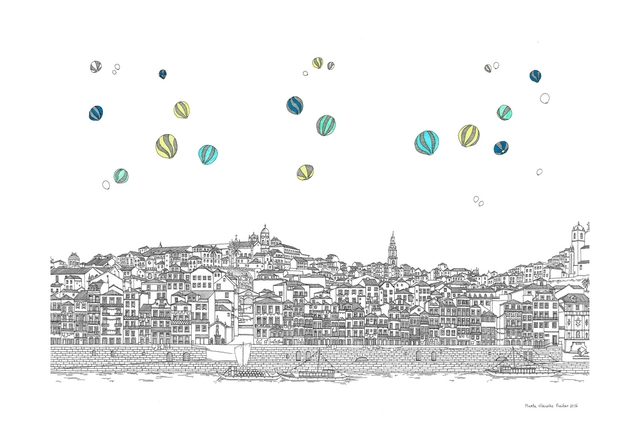
In the first installment of her series, “Cities and Memory - the Architecture and the City," architect Marta Vilarinho de Freitas created a set of intricately rendered architectural fantasy worlds that straddled the line between realism and abstraction.
Now Vilarinho de Freitas has returned with an additional 7 illustrations, this time experimenting with planimetrics and new cityscape scenes.
Much like snowflakes, the most beautiful architectural plans consist of complex relationships between geometries – and no two are exactly alike. In this spirit, KOSMOS Architects has created a series of planimetric graphics of some of the most notable architectural projects to have disappeared from our world in celebration of the New Year.
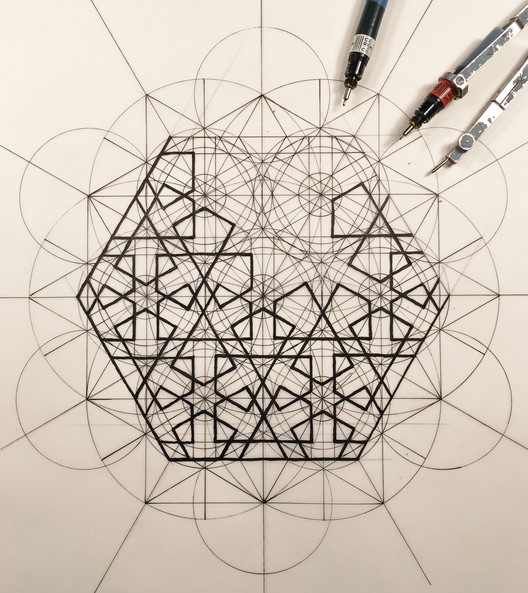
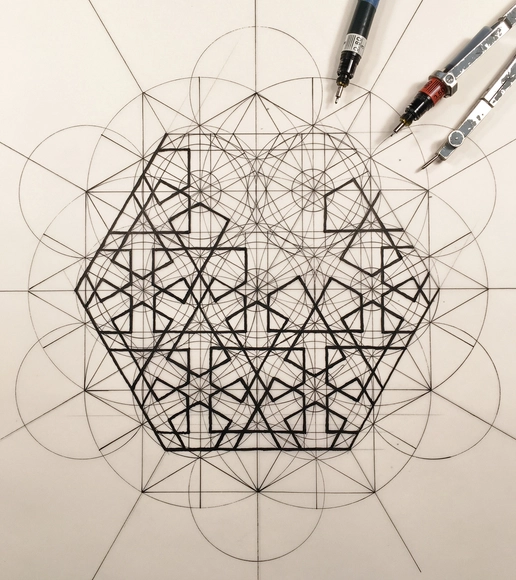
Rafael Araujo is a Venezuelan architect and illustrator who at the age of fifteen began to observe intelligent patterns in nature, giving rise to his interest in the golden ratio located in our natural environment.
More than 40 years later, the results of this hobby is a collection of beautiful illustrations of nature made entirely by hand, equipped with a pencil, a compass, a ruler and a protractor.
The artist's illustrations give his ability to represent the mathematical brilliance of the natural world, inciting the reunion of humans with nature.
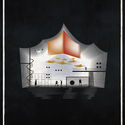
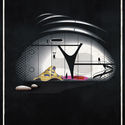
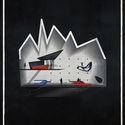
In this latest set of illustrations from Federico Babina, the artist envisions set designs in the styles of 27 of history's greatest architects, using signature elements from some of their most notable works to "stage [architecture] as if it were an architectural play."
While using technical drawings, Zema Vieira makes architectural illustrations by using only AutoCAD without any further techniques. Her body of work became a project called “Fachada Frontal” or "Front Facade." In it, the artist depicts buildings from cities around the world, with a particular focus on Belo Horizonte, Brazil.
Check out below the illustrations made by the artist.
André Chiote’s newest series of illustrations focuses on the seminal architectural works of Danish firm Schmidt Hammer Lassen Architects, in celebration of the 30th anniversary of the firm’s founding this year. Established in Aarhus, Denmark, in 1986 by architects Morten Schmidt, Bjarne Hammer and John F. Lassen, the firm has since grown into an award-winning, international practice (with offices in Aarhus, Copenhagen, Shanghai and London) whose design philosophy begins with the Nordic architectural traditions of democracy, welfare, aesthetics, light, sustainability and social responsibility.
To commemorate the important date, SHL selected a set of 6 emblematic buildings to be illustrated through Chiote’s personal vision. Check out the collection and links to the projects after the break.
“The architectural plan is a formula to order the anarchy of space.”
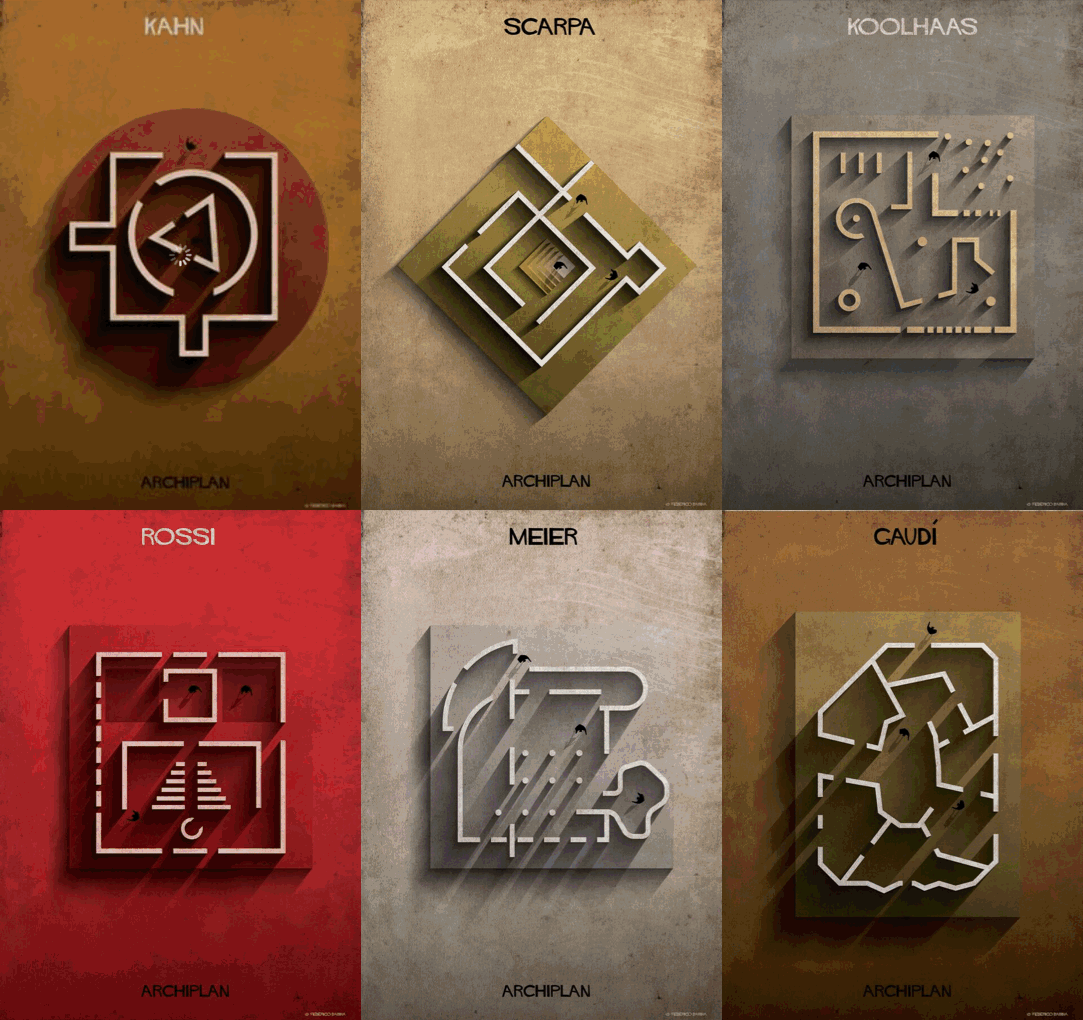
In these latest images from Federico Babina, the artist explores the design styles of 25 of history's greatest architects, abstracting the plans of some of their most famous creations onto simple geometric backgrounds. The resulting illustrations resemble dynamic labyrinths or abstract symbols, and are what Babina refers to as “Planimetric graphologies.”
“Analyzing an architectural plan is how to make a graphology study,” explains Babina. “The plans are like the signatures of architects and can reveal conceptual details about the artistic and aesthetic personalities of their authors.”
“Immersed in reading a book it feels like [being] inside an architecture, a metaphysical space surrounded by the words,” says Federico Babina, discussing his latest series of illustrations, ARCHIWRITER. In the new series of 27 drawings, the illustrator has created “portraits” of authors by personifying their writing styles, periods, and locations as built environments made from architectural elements and words. Heightening this sense of individuality, Babina states that the resultant portraits can be “fluctuating, vernacular, itinerant, ephemeral, concentric, labyrinthine, surrealist, oneiric, and futuristic.”
"I always liked play as a form of learning; toys are often a prelude to serious ideas," says Federico Babina about his latest series of illustrations, titled ARCHICARDS. "The game can also be a thought experiment. I'm interested in playing with architecture's seriousness and illustration's lightheartedness."
Babina's illustrations turn 12 of the architecture world's most recognizable faces into card-game caricatures, accompanied by the designs and symbols that most characterize their design style. Whether it's the dislocated planes of Mies van der Rohe (a Jack), Queen Zaha Hadid's jagged curves, or the modulor man that accompanies Le Corbusier - who is, of course, a king - Babina's playing cards are loaded with design references. They might indeed have some educational value, but they are mostly, as Babina points out, for "serious fun."
“Libraries,” says Chiote, “Are houses of books. And newspapers. And magazines. And music. And movies. The entire world connected, where we are with ourselves and with others. They are our memories and our legacy. The reference of knowledge and leisure but also urbanity. Libraries are the house where we must always return.”
What would some of our favorite buildings do if they could stand up and walk around? From the Leadenhall building to the Petronas Towers and One Central Park, designer and illustrator Michael William Lester has taken 20 architectural landmarks from around the world and brought them to life in a series of animated GIFs.
“Good architecture interacts with its surroundings,” writes Lester on his website. “It gives off energy, sparks interaction and pulls so much life in that the building itself lives and breaths.”
Petterson Dantas was born in Caicó, Brazil and has lived in Natal for 17 years. An architect and urban planner, he graduated from the Federal University of Rio Grande do Norte. His series "Ode to Oscar" illustrates important works of Oscar Niemeyer, depicting the contrasts and the beauty of the buildings designed by Brazil's most famous architect.
Read the description of the project and see the illustrations below.
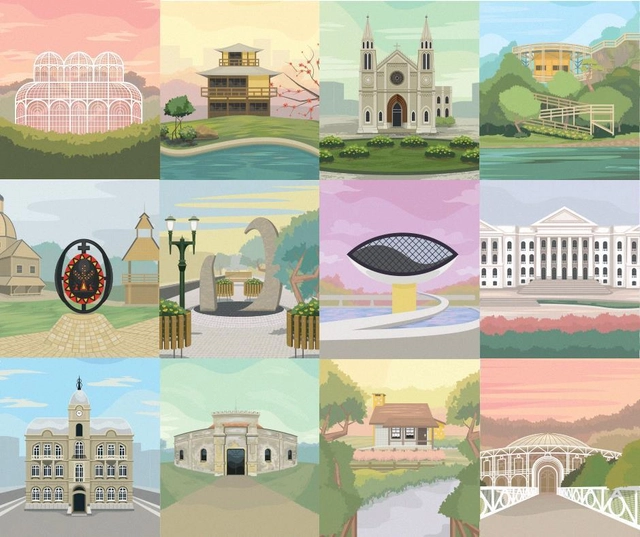
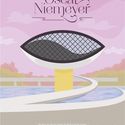
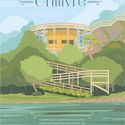
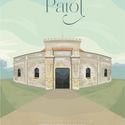
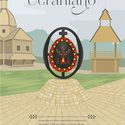
Artist Maycon Prasniewski has developed a series of illustrated posters featuring historic and cultural sites in Curitiba, Brazil. Important buildings in the city, such as the Oscar Niemeyer museum, the Wire Opera House, the Free University of the Environment (Unilivre), and the Botanical Garden are represented alongside other landmarks.
Striping away the unnecessary to reveal the soul of architecture's greatest works is the latest challenge Federico Babina has taken on. With 18 paintings, Babina has revisited the notorious works of Le Corbusier, Tadao Ando, MVRDV, Rem Koolhaas and many others to summarize in just "a few lines" their true essence.
"The intent is to display the volumes, shapes, and even style of iconic architecture through simple lines and geometry," says Babina. "The project is part of a study on the simplification and the identification of the basic elements for the recognition of buildings. The idea is to archive an almost abstract representation without losing the essence of the figurative representation."






.jpg?1483734839 "© Marta Vilarinho de Freitas")
.jpg?1483734922 "© Marta Vilarinho de Freitas")



.jpg?1480005281 "Courtesy of Rafael Araujo")
.jpg?1480005581 "Courtesy of Rafael Araujo")

_(2000x1616).jpg?1480005429 "Courtesy of Rafael Araujo")