This week’s curated selection from our readers’ submissions focuses on some of the essential components of our present-day cities.
Featuring the best-unbuilt architecture, the article highlights adaptive reuse projects that transformed abandoned warehouses and factories, a street design in Luxembourg, a regenerative master plan in Seoul, and an emergency family accommodation to temporarily house those in need. Moreover, the roundup distinguishes a library in South Korea and an extension of a museum in Helsinki, because the cultural aspect is an integral part of our urban environment.
Ensuring a platform for everyone, ArchDaily is rounding up, every once in a while, a curated selection from our readers’ submissions. With proposals coming from all over the world, our aim is to feature the best Unbuilt Architecture out there.
In this article, we are highlighting proposals that were awarded the first prize in international competitions. Each one of these projects showcases a unique conceptual approach and responds to a different program. With a mixed-use project in France, a market in Helsinki, an aquarium in New York and a civic building in Norway, to name a few, the variety of these unbuilt interventions underlines the vast scope of the architectural field.
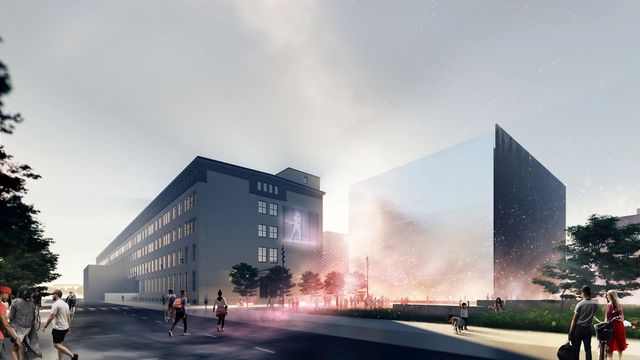
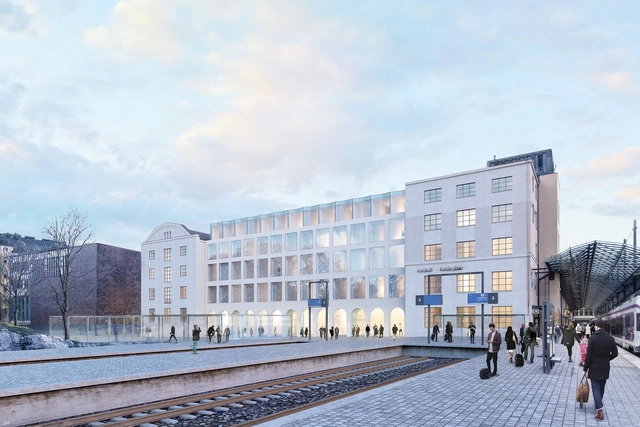
JKMM’s “Atlas” proposal won the international design competition for the new extension of The National Museum of Finland. Organized by the Finnish Heritage Agency, the National Museum of Finland and Senate Properties, the competition entitled “New National” or “Uusi Kansallinen” in Finnish, gathered 185 entries from all around the world.
Finnish practice JKMM’s newest project, The Dance House Helsinki, is set to become Finland’s first venue dedicated primarily to dance and the performing arts. Offering rehearsal and performance spaces for artists, Dance House forms an extension to Cable Factory, the largest existing cultural center in Finland.
https://www.archdaily.com/924855/jkmms-dance-house-helsinki-is-designed-to-advance-the-performing-artsLilly Cao
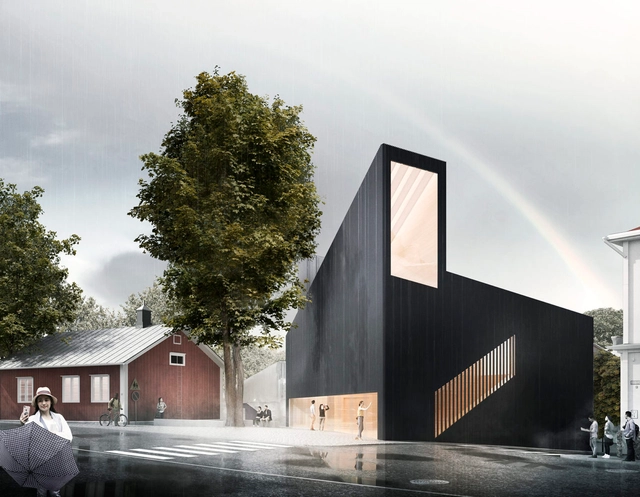
JKMM Architects has won the competition to design a new museum in the sea side town of Tammisaari outside Helsinki. Organised by the Albert de la Chapelle Art Foundation, the competition aims to create a museum for the foundation's art collection with space to exhibit the work. JKMM’s entry was designed to act as a landmark and beacon for the city's cultural quarter to invite the public from the town’s main square.
Uusi Kansallinen (in English: the New National) is a two-stage, open ideas architecture competition for the design of an Annex to the National Museum of Finland in Helsinki. The competition has been jointly organized by the Finnish Heritage Agency, the National Museum of Finland and Senate Properties.
The new Annex will facilitate the production of large-scale and technically demanding exhibitions for the National Museum of Finland. In addition to exhibitions, its multi-use, easily adaptable spaces will be well suited for a diverse range of cultural, art and recreational events, conferences and other functions.
A maximum prize pool of EUR 220,000 is available for prizes.
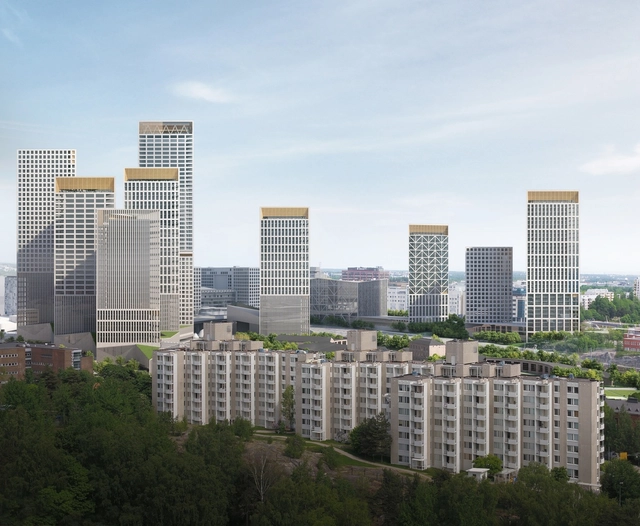
Trigoni, Helsinki High-Rise. Image Courtesy of Brick Visual
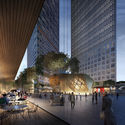
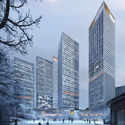
Finnish office Lahdelma & Mahlamäki architects have won the competition to design a new high-rise district in Helsinki. Proposing a cluster of public space and triangular plan towers, the firm will see the phased construction of the high-density, mixed-use towers and public space alongside construction firm YIT. Located in the Pasila district, the project is called Trigoni as a reference to the triangular plan of the towers and the desire to create strong connections around sustainable development.
OOPEAA, working in collaboration with Lundén Architecture Company, has won a design and build competition for a timber housing development in Kivistö, Vantaa in the Helsinki metropolitan area of Finland. Organized by the City of Vantaa, the competition asked entrants to design a district of wooden housing, part of a commitment “to provide climate-conscious development in housing.”
Titled “Upstairs – Downstairs, Living Together on Three Levels,” the OOPEAA and Lundén scheme will form part of the broader sustainable district, creating a link between natural forest, active streets, and railway infrastructure.
https://www.archdaily.com/902353/oopeaa-plus-lunden-architecture-company-design-charred-timber-housing-district-in-helsinkiNiall Patrick Walsh
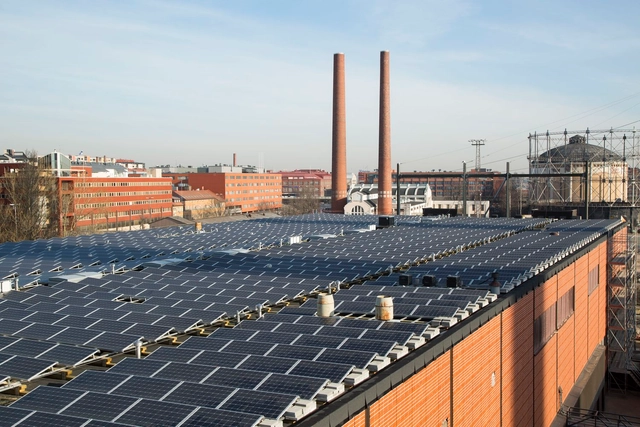
Helen’s Suvilahti solar power plant. Customers can lease panels and monitor their output in real time on the power plant’s webpage. Thus citizens can become solar power producers. In the background is the old Suvilahti power plant, today a cultural center. Photo attribution: Katri Tamminen / Helen
In the quest for carbon neutrality, the City of Helsinki in Finland announced its action plans to minimize greenhouse gas emissions substantially by 2035. The city’s fully owned energy company, Helen Ltd, a producer of district heating, power, and district cooling, aims to augment this policy by converting its largely coal and natural gas energy production processes to climate-neutral energy production, thereby eliminating carbon dioxide emissions fully by 2050.
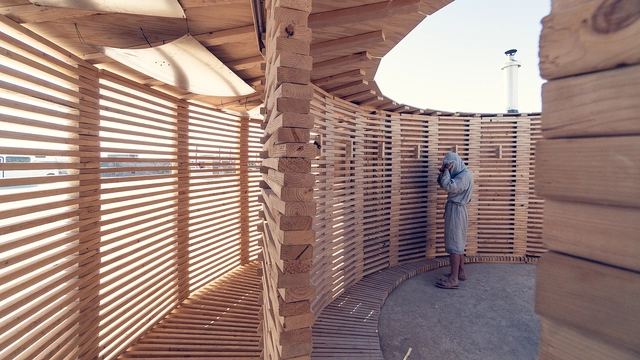
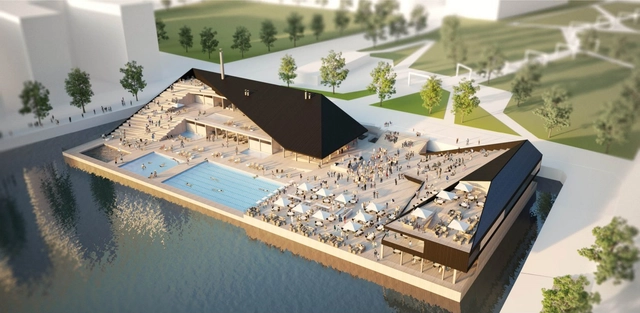
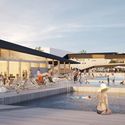
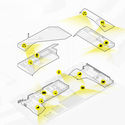
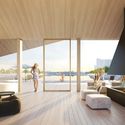
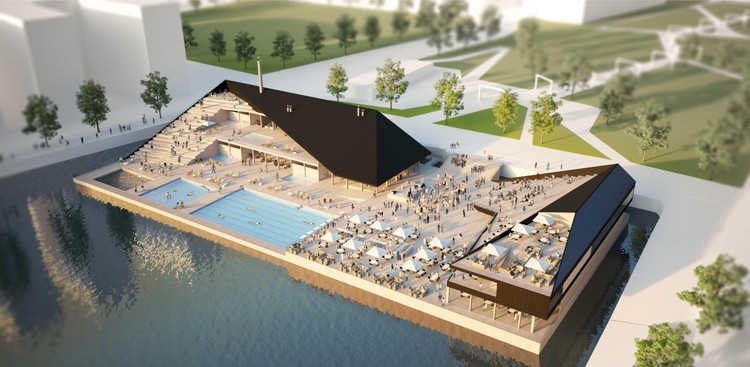
OOPEAA (Office for Peripheral Architecture) has won an invited competition for the design of the Allas Sea Pool Family in Helsinki, Finland. Constructed on floating platforms, and designed as a modular, flexible, adjustable system, the Allas Sea Pool Family is intended to be a new global typology for coastal sites, where building on land is not feasible.
The invited competition asked entrants to submit proposals which responded to varying environmental and seasonal conditions, with OOPEAA ultimately chosen for their “strong concept that places the floating spa in a central location in the city.”
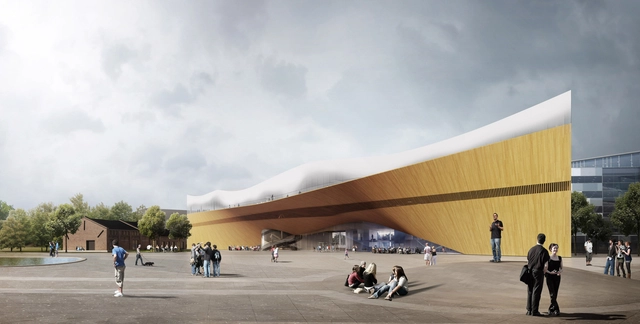
The Helsinki Central Library Oodi. Image Courtesy of ALA Architects
The Helsinki Central Library Oodi, designed by ALA Architects, is nearing completion in Finland. Due to open its doors on December 3rd 2018, the library is situated in the cultural district of Töölönlahti, where it will sit as a ”powerful and iconic temporary design” among other architectural landmarks.
Situated across from the Finnish Parliament House, the scheme represents an interaction between the state and its citizens, “a new avenue to promote freedom of speech and democracy.”
Finland based Futudesign has been announced as the winner of a competition which invited firms to repurpose part of the HelsinkiCentral Railway Station. The design, which will transform the station’s underutilized eastern wing into a hotel, both reinterprets and modernizes Eliel Saarinen's original architectural intent.