Helene Binet

BROWSE ALL FROM THIS PHOTOGRAPHER HERE

From Deconstructivism to Barrier-Breaking Achievements: Zaha Hadid’s Legacy 10 Years After Her Passing

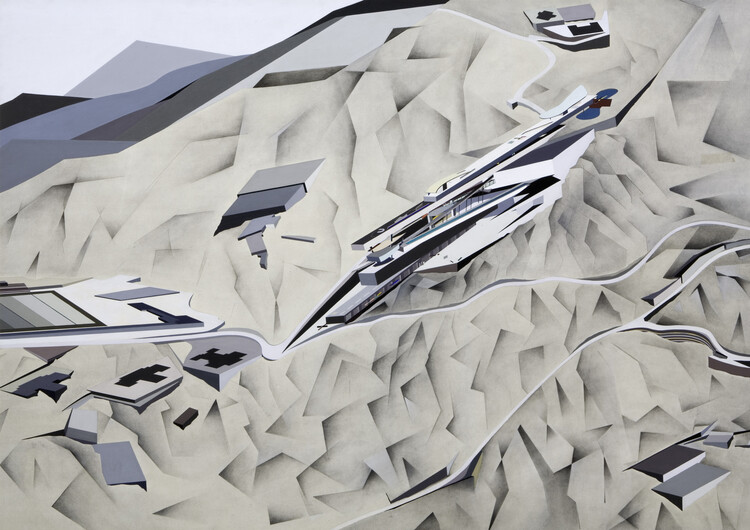
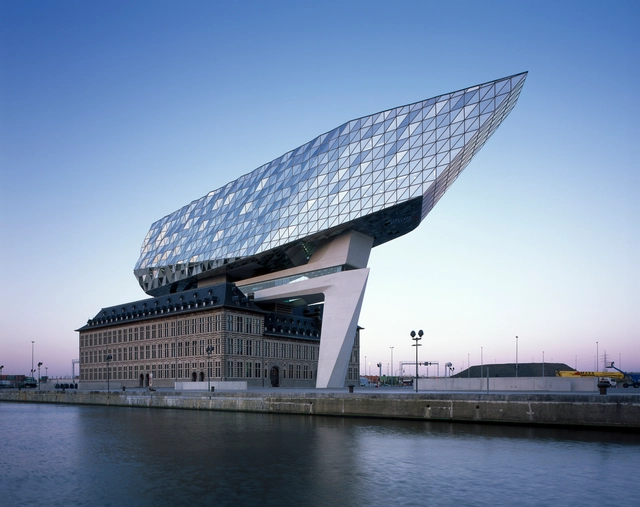
Between June 23 and August 30, 1988, The Museum of Modern Art (MoMA) in New York held an exhibition titled Deconstructivist Architecture, as part of a program "conceived to examine current developments in architecture." Curated by Philip Johnson and Mark Wigley, it focused on the contemporary work of seven international architects: Coop Himmelblau, Peter Eisenman, Frank Gehry, Rem Koolhaas, Daniel Libeskind, Bernard Tschumi, and a young Zaha M. Hadid. At 37 years old, her work was presented to the world as an example of "the emergence of a new sensibility in architecture." The material on display was not a model or a blueprint, but a painting, The Peak, submitted for an architectural competition in Hong Kong in 1983. From this starting point, her contribution to architecture deepened along the same lines recognized at the time of her inclusion in the exhibition: the development of a distinctive, mathematical, and, in her own words, "fluid" architectural language, and her emergence as a leading female figure in a field historically dominated by men.

From Deconstructivism to Barrier-Breaking Achievements: Zaha Hadid’s Legacy 10 Years After Her Passing - More Images+ 10

Why Sit by the Dock of the Bay? Designing Thresholds to the Water

Subscriber Access | 

Boat docks and harbors are liminal spaces where the shore marks the meeting of land and water, and serve as a space for the convergence of culture, industry, and community. For those who work at sea, from commercial fishers to marine freight operators, the dock is a threshold between labor and rest, between oceanic uncertainty and terrestrial stability. For others, the dock serves as a gateway to recreation, sport, and adventure, accommodating everything from rowing clubs to family sailing trips. And for many who never board a vessel, the dock offers a powerful connection to the marine environment where one can pause, observe, and engage with the rhythmic tides.

Why Sit by the Dock of the Bay? Designing Thresholds to the Water - More Images+ 48

Touching the Past: When Architecture Becomes a Gesture of Continuity

Subscriber Access | 

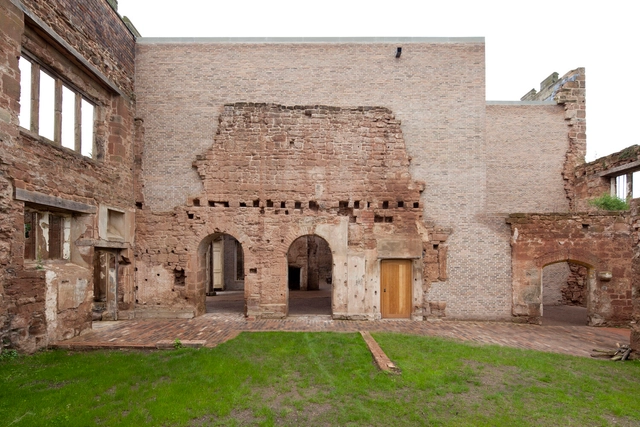
There is a particular kind of architecture that does not begin with a blank page. It begins in silence, in ruins, in walls shaped by time. It begins by listening. Rather than imposing itself, it draws near, slowly, choosing to touch rather than overwrite. This is an architecture that engages with the past through the lens of the present, not to erase it or mimic it, but to offer it continuity.

Contemporary architecture increasingly recognizes that to build with the past is not to be held back by it. Heritage is no longer seen as a constraint but as an active ground for design. Within this shift, pre-existence becomes more than a physical condition — it becomes a narrative thread, a structural and symbolic presence that invites care. Rather than asserting dominance, many architects today choose to respond with gestures that are deliberate, quiet, and precise. These interventions frame rather than replace, protect rather than obscure. In doing so, they allow history to remain visible, not as a backdrop, but as a living layer of the architectural experience.

Touching the Past: When Architecture Becomes a Gesture of Continuity - More Images+ 55

Who Has Won the RIBA Royal Gold Medal?

Subscriber Access | 

Recognized as the UK’s highest honor for architecture, the RIBA Royal Gold Medal for Architecture is approved personally by Her Majesty The Queen and is given to a person or group of people who have had a significant influence "either directly or indirectly on the advancement of architecture.", according to the organization. In 2024, the recognition was awarded for the first time to an African Woman, to the Ghanaian-Scottish architect, academic, and curator Lesley Lokko.

Who Has Won the RIBA Royal Gold Medal? - More Images+ 9

Museum of the Home / Wright & Wright Architects

Museum of the Home  / Wright & Wright Architects - More Images+ 29

What is Deconstructivism?

Subscriber Access | 

If we define deconstructivism, it literally translates to the breaking down, or demolishing of a constructed structure, whether it being for structural reasons or just an act of rebellion. It is perhaps for this reason that many misunderstand the Deconstructivist movement.

Deconstructivism is, in fact, not a new architecture style, nor is it an avant-garde movement against architecture or society. It does not follow “rules” or acquire specific aesthetics, nor is it a rebellion against a social dilemma. It is the unleashing of infinite possibilities of playing around with forms and volumes.

What is Deconstructivism? - More Images+ 6

New Dates for Expo 2020 Dubai Announced

Expo 2020 Dubai has been postponed and will be held from 1 October 2021 to 31 March 2022. The decision has been declared after the two-thirds majority of the votes was surpassed within a week of voting, opening on 24 April.

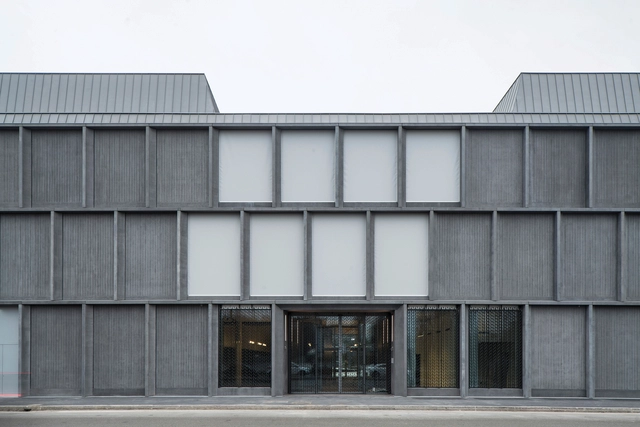
Groupwork Architects Investigate the Sustainable Advantage of Structural Stone

Groupwork, in collaboration with Jackson Coles, Eight Associates, Webb Yates, The Stonemasonry Company and Polycor, is investigating the possibilities to build large commercial buildings in stone, through the Stone Tower Research project and The New Stone Age exhibition.

Groupwork Architects Investigate the Sustainable Advantage of Structural Stone - More Images+ 17

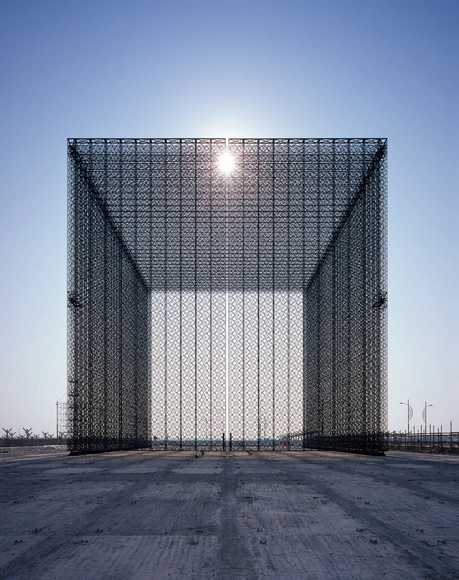
Asif Khan Imagines the Expo 2020 Dubai “Mashrabiya” Entry Portals

Asif khan studio has unveiled images of his first intervention for the public realm of Expo 2020 Dubai. Running from the 20th of October 2020 till the 10th of April 2021, The World Expo will have three majestic Entry Portals to welcome visitors from all over the world.

Asif Khan Imagines the Expo 2020 Dubai “Mashrabiya” Entry Portals - More Images+ 7

Communication is About More Than Selling

Subscriber Access | 

With December and January nearly behind us, many of us will have been producing reports. There is an increasing number of tools for reporting PR value sold to companies as ways to justify their worth. There is no doubt that it’s useful to regularly take stock of past and upcoming initiatives and producing a report can even be pleasurable when adding to a sense of accomplishment and direction. The bad thing is that this heavily-report-reliant culture leads to management style PR that focuses more on how something will look on paper as stats, graphs, and pics, than what is actually accomplished.

For instance, The Architecture Foundation in London is highlighting growing Biennale fatigue in its forthcoming “Bored of Biennales” event in March. One can well imagine how all-too-often such events are best experienced not in situ, but instead, through carefully-edited reports or via media coverage as suggested by the Foundation.

Innovative Uses of Water in Architecture

Subscriber Access | 

From playful indoor pools to tranquil exterior fountains to soaring waterfalls and grand lakes of enormous proportions, architecture throughout the centuries has engaged with water in endlessly innovative ways. Sometimes serving aesthetic purposes, but just as often acting as centers of activity or promoting sustainability, water features can take countless different forms and serve multiple different purposes. Below, we synthesize a series of water features espoused by innovative contemporary architectural projects, ranging from single-family residential homes to vast commercial complexes.

Innovative Uses of Water in Architecture - More Images+ 29

Studio Akkerhuis Transforms a 19th Century Flour Mill Complex into a Mixed-Use Project

Part of a bigger vision and a master plan by Peter Zumthor, Studio Akkerhuis’ new 55.000 square meter project in Leiden’s 19th-century flour mill complex is under construction. With a landscape by Piet Oudolf and Lola, the development that recently won the "Future Project - Commercial Mixed Use” at WAF, will include shops, galleries, apartments, workspaces, a hotel, and a spa.

Studio Akkerhuis Transforms a 19th Century Flour Mill Complex into a Mixed-Use Project - More Images+ 30

What is Plantscaping?

What is Plantscaping? - More Images+ 44

Interior gardens and plants produce many day-to-day benefits, like mood boosting and memory enhancing effects. Interior landscape design, also known as "plantscaping", is much more than the act of bringing plants indoors; it's actually about the strategic placement and selection of plant species within an architectural project to highlight and enhance aspects of spatial design.

Nevill Holt Opera Theatre / Witherford Watson Mann Architects

Nevill Holt Opera Theatre / Witherford Watson Mann Architects - More Images+ 20

Spotlight: Geoffrey Bawa

Spotlight: Geoffrey Bawa - Featured Image
A courtyard in Bawa's campus for the University of Ruhuna. Image © Harry Sowden

Despite his late entry into architecture, Geoffrey Manning Bawa FRIBA, (July 23, 1919 – May 27, 2003), explored modernism and its cultural implications and created a unique, recognizable style of design which had a lasting impact on architects across the world. Well versed in Modernist theory, Bawa was one of the original proponents of Tropical Modernism, a design movement in which sensitivity for local context combines with the form-making principles of modernism. Bawa’s architecture led to the formation of a new architectural identity and aesthetic for many tropical environments, and won him recognition and awards, including the Chairman’s Award of the Aga Kahn Special Chairman’s Award for Architecture (2001) and the title Deshamanya, in recognition of his contributions to his country by the government of Sri Lanka.

Spotlight: Geoffrey Bawa - More Images+ 10

The 50 Most Inspiring Architecture Photographs of 2018

Subscriber Access | 
The 50 Most Inspiring Architecture Photographs of 2018 - Image 28 of 4
Courtesy of JAJA Architects

The 50 Most Inspiring Architecture Photographs of 2018 - More Images+ 48

Because, for all the inspirational works across the world, we would be lost without the photographers dedicated to sharing this inspiration with us. Here we present to you the 50 most influential architectural photographs of the year.

AD Classics: Bergisel Ski Jump / Zaha Hadid Architects

This article was originally published on May 9, 2016. To read the stories behind other celebrated architecture projects, visit our AD Classics section.

Situated on the peak of Bergisel Mountain above the picturesque alpine city of Innsbruck, Austria, the Bergisel Ski Jump represents the contemporary incarnation of a historic landmark. Designed by Zaha Hadid between 1999 and 2002, the Ski Jump is a study in formal expression: its sweeping lines and minimalist aesthetic create a sense of graceful, high-speed motion, reflecting the dynamic sensation of a ski jump in a monumental structure that stands above the historic center of Innsbruck and the mountain slopes around.

AD Classics: Bergisel Ski Jump / Zaha Hadid Architects - More Images+ 22

How Architectural Theory Distances People from Design

This article was originally published on Common Edge as "How Architectural 'Theory' Disconnects the Profession from the Public."

Whatever the form—personal, theoretical, scholarly—architects frequently veer into the philosophical terrain when defending otherwise subjective design decisions. Personally, this may be justifiable. But professionally, this reliance on quasi-philosophical spin is one of the fundamental ways architecture differs from other practical pillars of society, such as law, finance or medicine. Those disciplines are based on structures of knowledge (precedent or code, economics, and science, respectively) that mediate between professional decisions and subjective judgement.