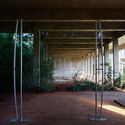
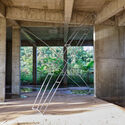
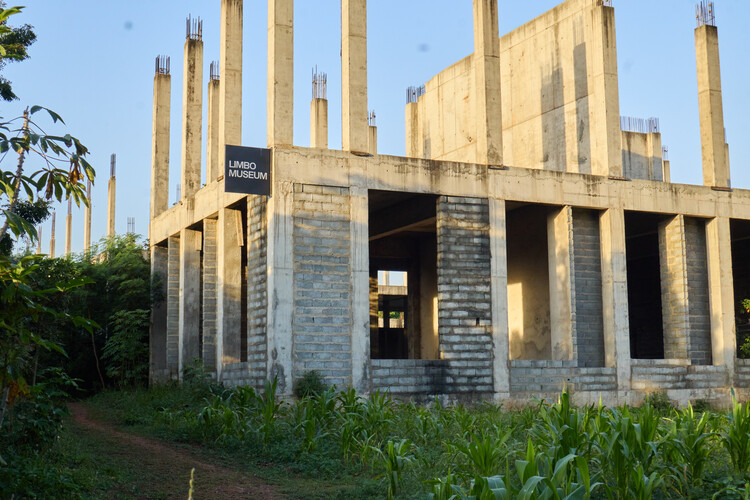
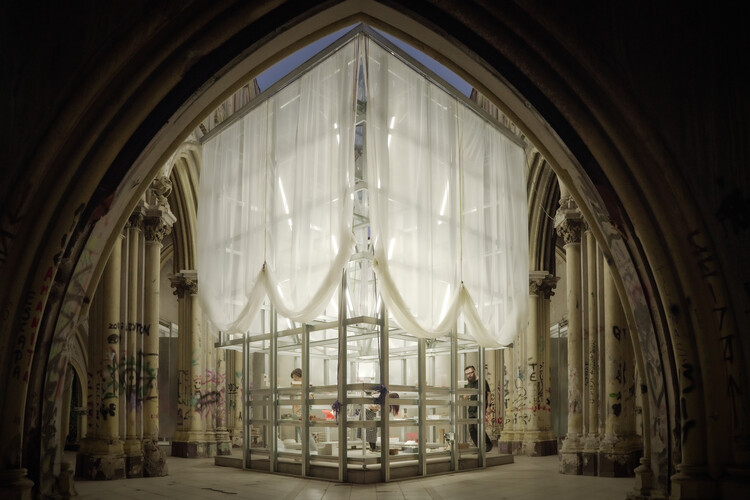
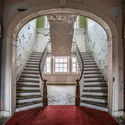
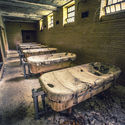
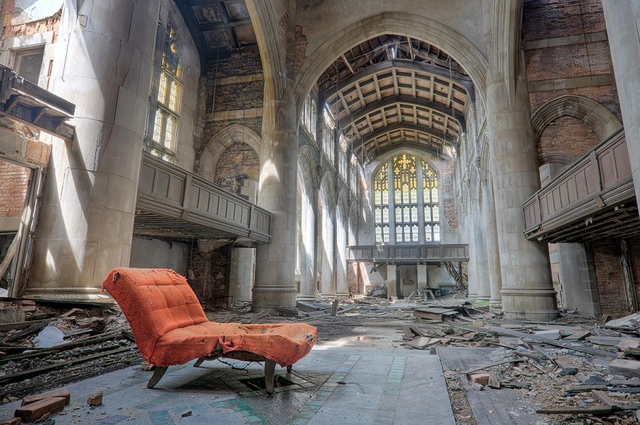
On the Other Side of Languish exhibition by Reginald Sylvester II. Debut exhibition of the Limbo Museum in Ghana, West Africa. Image Courtesy of Limbo Museum
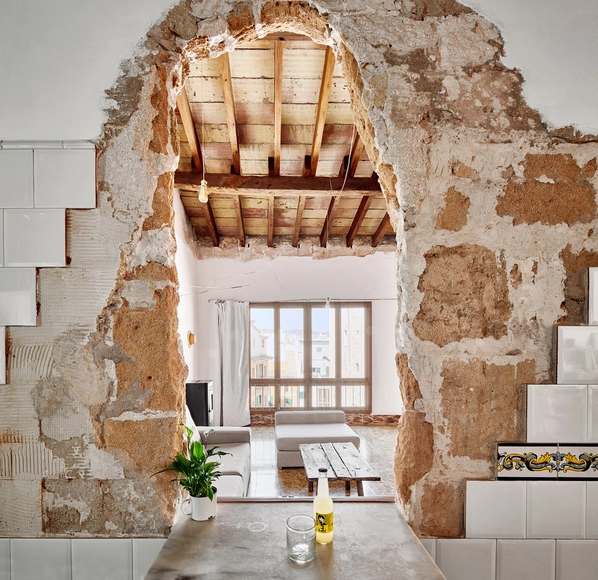
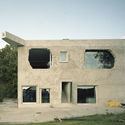
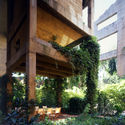
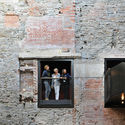
The Limbo Museum is a new institution dedicated to architecture, art, and design based in Ghana, West Africa. The museum challenges the concept of the ruin, operating from a formerly abandoned Brutalist estate that currently conveys the image of an unfinished building. The project was founded by Limbo Accra, a spatial design and research-based practice established in 2018 by Dominique Petit-Frère and Emil Grip, dedicated to "unlocking the potential of unfinished buildings across West Africa and beyond." On October 31, 2025, the museum opened its first public exhibition, On the Other Side of Languish by Reginald Sylvester II, developed through the institution's visiting artist residency program.
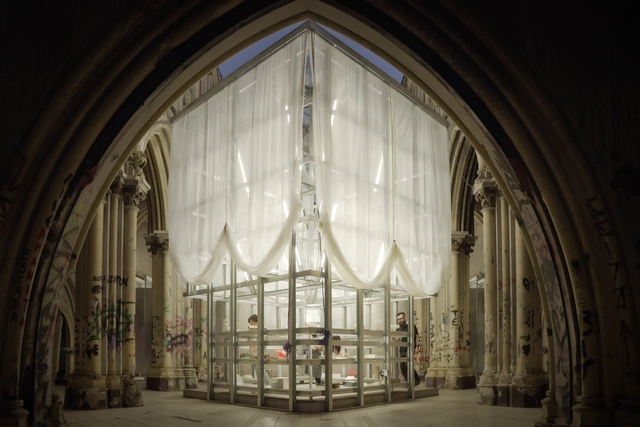
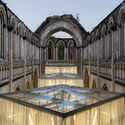
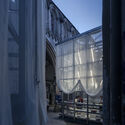
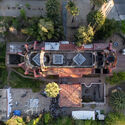
Between September 25 and October 5, 2025, the XXIII Chilean Architecture and Urbanism Biennial took place in Santiago. Under the title "DOUBLE EXPOSURE: (re)program · (re)adapt · (re)construct," the event was organized around the idea of "understanding architecture not as the production of the new, but as the ability to reactivate what already exists." Based on this premise, the curatorial team, composed of Ángela Carvajal and Sebastián López (Anagramma Arquitectes) together with Óscar Aceves, conceived a circuit of eight venues located in downtown Santiago. Their goal was to revive and reclaim urban spaces through a series of free public activities that drew around 70,000 visitors. Among the reactivated sites, the ruins of the San Francisco de Borja Church stood out. Burned during the social outburst of October 2019, the site hosted a temporary pavilion that served as a venue for talks, readings, art installations, discussions, and community events.
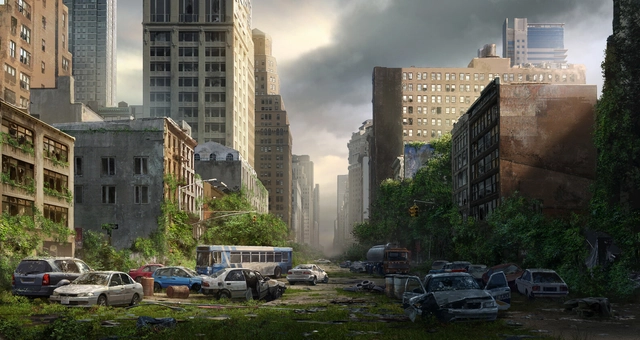
We’re all familiar with the plot of a movie that occurs in a city still standing in a post-apocalyptic era. The streets are empty, except for a few survivors who wander aimlessly, searching for signs of life. Buildings begin to crumble and rust away after years of neglect, public transportation sits idle, and overgrown weeds spring from the cracks in the unmanaged sidewalks and streets. The scene feels eerie because we can’t imagine letting our physical environment sit in decay. It seems impossible that our built environments where we live and work each day suddenly fall silent. It’s a city without a pulse.
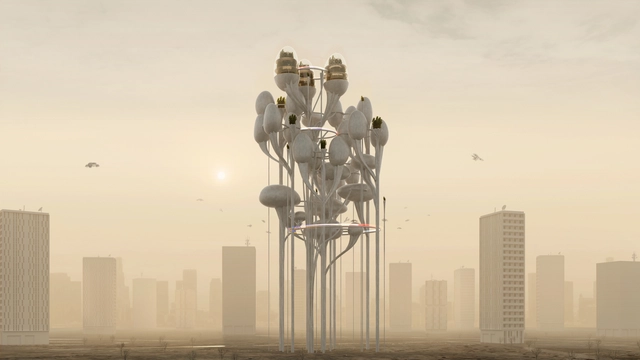
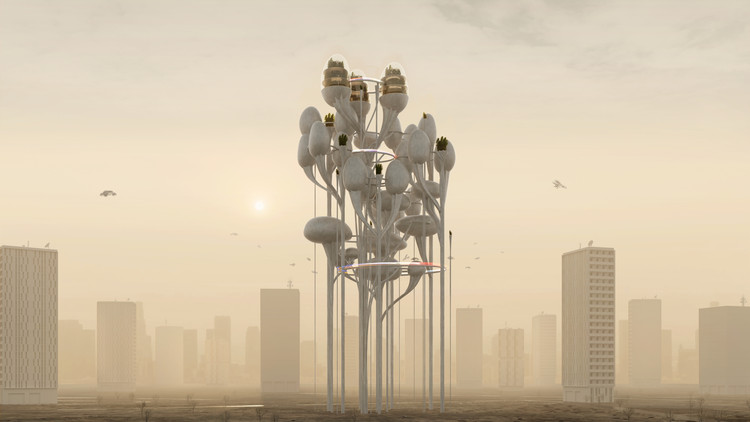
Force Majeure - Futura. Image Courtesy of Jeanne Schultz Design Studio
Putting together competition entries from all around the world, this week’s curated feature for Best Unbuilt Architecture showcases inspiring approaches and concepts. Submitted by our readers, the selection highlights uncommon proposals, part of international contests. While some are winning projects, others received honorable mentions.
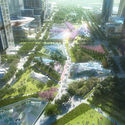
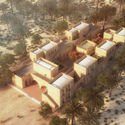
Serie imagines stacked timber pavilion-like offices, Schlaich Bergermann Partner, LAVA, and Latz + Partner design new pedestrian and cycle bridge over the Neckar River in Heidelberg, Germany and Aidia Studio create an Oculus in the Emirati desert. Other competition entries include a landscaped avenue by ZXD Architects in Hangzhou, a community school in Egypt by Hand Over, a winning pavilion for the Singapore’s Archifest 2020 by ADDP Architects and OWIU Design Studio; and a Baha’i House of Worship by SpaceMatters in India.
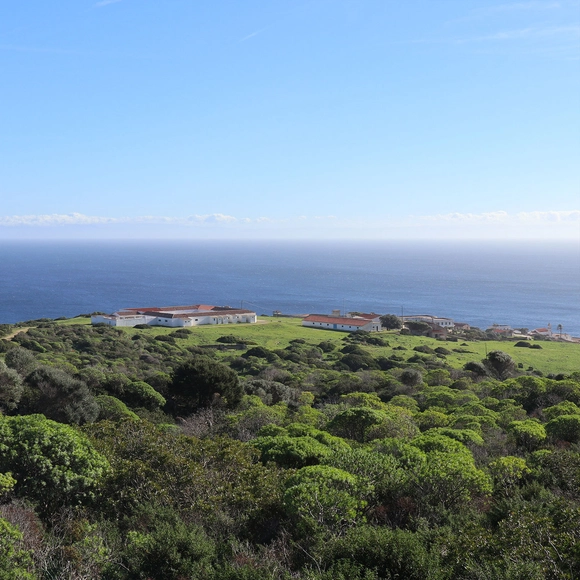
Cala d'Oliva agrarian penal colony branch, copyright Paolo Emilio Pisano
Every human intervention on an island – even those that interpret it as an ideal space for confinement - starts as an act of colonisation aimed at reducing the unescapable condition of insularity. Enacting the power of nomads as decolonising agents, Casting Castaways will migrate every two years from island to island across a former carceral archipelago in the Mediterranean Sea. We will seek for a pedagogy that, while suggesting future scenarios vis a vis current trends in tourism, environmental preservation and heritage, interrogates those territories to understand how and whether architecture can challenge and escape from the very ideas
If walls could speak, they would have the most stories to tell - stories of antiquity, war, scandal, and reconciliation. Approaches to preservation are as varied as the architects behind them, but many take on the challenge with flair and restraint in equal measure. It is common to see preservation that combines ancient structure with contemporary features, creating beautiful combinations of old and new.
Take a look at some architectures from our projects database that highlight the beauty in the imperfections of ruins and great combinations of used and new materials.
This collection is one of many interesting content groupings made by our registered users. Remember you can save and manage what inspires you on My ArchDaily. Create your account here.
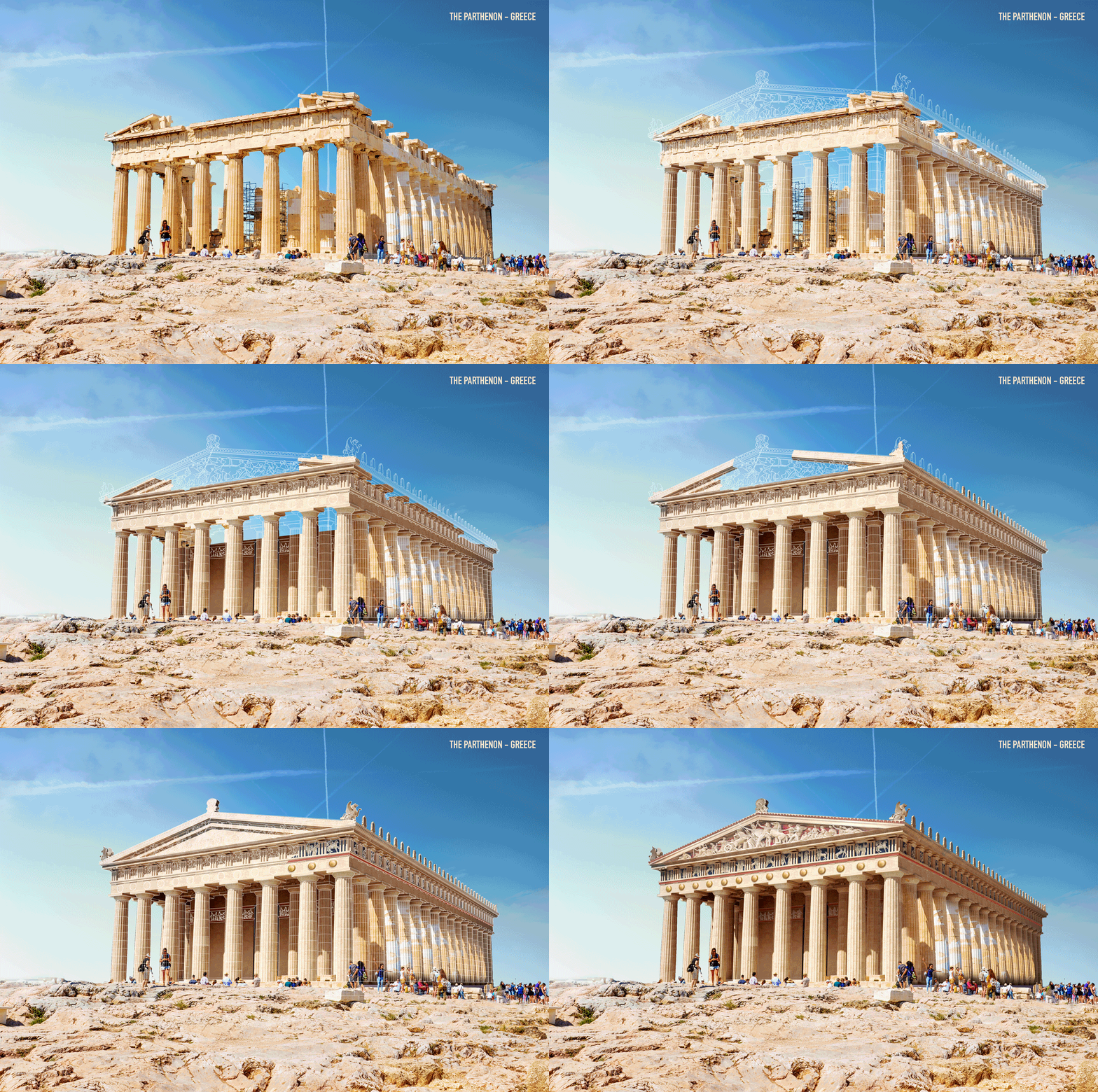
Ancient ruins, like the Parthenon and Luxor Temple, can teach us about the past in a unique way. Through architectural remains, we can gather what building techniques and civilizations were like long ago. Even so, ruins can’t compare to the real deal, and historical reconstructions of these architectural wonders are key to a fuller understanding of the cultures that created them. In these GIFs made for Expedia by NeoMam and Thisisrender, seven architectural wonders are reconstructed into their original form, allowing us to see how the ruins visible today developed from the initial structures in all their glory.
In 1986, Peter Zumthor completed one of his first projects: a shelter over an Ancient Roman archaeological site in Chur, (Graubünden, Switzerland). Now over three decades old, this film by ArcDog captures the building and the preserved excavations that it sits around with a quiet sophistication. With only timber lamella to allow in light and ventilative air, the project stands as a testament to Zumthor's sensitive architectural approach.
https://www.archdaily.com/884003/explore-peter-zumthors-1986-shelter-for-roman-ruins-in-quiet-solitudeAD Editorial Team
With cracked paint, overgrown vines, rust, and decay, abandoned buildings have carved out a photographic genre that plays to our complex fascination with the perverse remnants of our past. While intellectual interest in ruins has been recorded for centuries, the popularity and controversy of contemporary "ruin porn" can be traced back to somewhere around 2009, when photographer James Griffioen’s feral houses series sparked a conversation about the potential harm in the aesthetic appropriation of urban collapse.
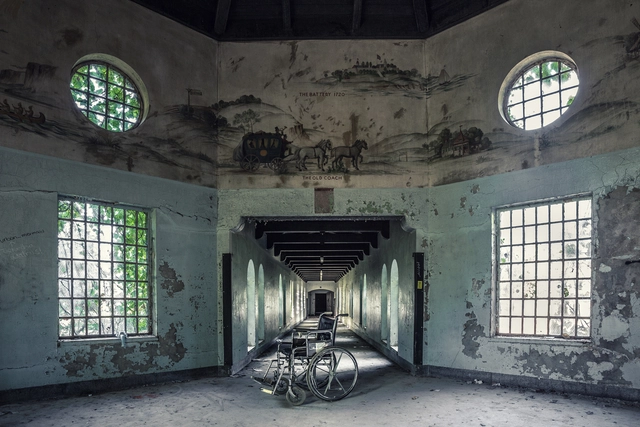
A favorite subject within this field is the American insane asylum, whose tragic remains carry echoes of the unsavory history of mental illness treatment in the United States. These state-funded asylums were intensely overcrowded and often housed patients in nightmarish conditions in the 20th century. Beginning in 1955, with the introduction of the antipsychotic drug Thorazine, these institutions were closed in large numbers, never to be reopened [1]. Now, these closed but un-demolished asylums that dot the country are the subject of "ruin porn" that neglects an equally important piece of the buildings’ narrative: the beginning. In his recent photobook Abandoned Asylums, Photographer Matt Van der Velde depicts this earlier period of asylum architecture, when the institutions were built in the belief that the built environment has the power to cure.
AGi Architects has won a competition to transform 18 ancient Roman sites into a natural museum in Pontevedra, Galicia, Spain. The winning proposal, entitled In Natura Veritas, was selected from 26 submissions in a competition organized by the Spanish Ministry of Public Works. The AGi scheme, due to be realized in the coming months, aims to preserve the memory of the natural environment chosen as a living place by the Roman settlers hundreds of years ago and to treat the visitor to a multi-sensory journey through the 18 sites across the Pontevedra landscape.
Architectural photographer Mirna Pavlovic has an obsession with abandoned places. For her, their appeal lies in their ability to exist on a different temporal plane from the rest of reality – both impossibly ancient and frozen in the present.
“They are never truly dead, yet never really alive,” Pavlovic explains. “Precariously treading along the border between life and death, decay and growth, the seen and the unseen, the past and the present, abandoned places confusingly encompass both at the same time, thus leaving the ordinary passer-by overwhelmed with both attraction and revulsion.”
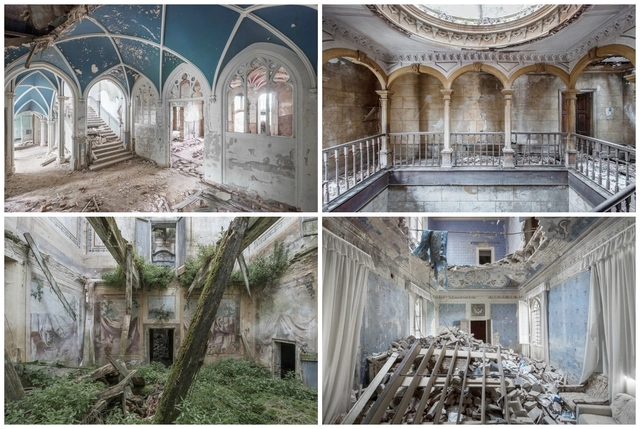
For her latest series, Dulcis Domus, Pavlovic trekked over fences and past “no trespassing” signs to capture the once-glorious villas, palaces and castles of Europe that have now been left to decay, slowly returning to the Earth that existed before them. Through photography, Pavlovic attempts to highlight social issues through an aestheticised approach, allowing viewers to “see with fresh eyes what lies beneath those spots that we pass by on the street.”
Continue reading to see a selection of photographs from the series – hover over the images to see where each villa is located.
Enter the unique realm of the "beautifully disturbing" with Project Senium, a new short film exploring the aging interiors of an abandoned mental hospital. Named for the Latin word for 'decay', the atmospheric film documents the asylum in breathtaking depth and detail, elevating material often dubbed "ruin porn" to a level of cinematic beauty.
The internet has been good to fans of "ruin porn," providing them with a platform for sharing images and even coining the phrase, courtesy of a well-known Detroit blogger in 2009. However, the phenomenon isn't actually as new as most people believe. In this article, originally published on 6sqft as "Before There was 'Ruin Porn' There was 'Ruin Value'" Diane Pham expands on the idea of the connection between ruins and architectural value (recently discussed on ArchDaily in an article by Shayari de Silva), delving into the concept's surprising history.
In the hierarchy of “things the internet likes”, we’d argue that ruin porn sits wedged somewhere between Buzzfeed quizzes and cats. Images of decaying architecture conjure up unsettling feelings of tragedy and loss, but somehow manage to grip us with its intangible beauty. Whatever the cause for this may be, the thrill and enjoyment we get from looking ruin porn is palpable.
The term ‘ruin porn’ is said to have been coined by blogger James Griffioen during a 2009 interview with Vice magazine in which he criticized photographers who scouted down-trodden Detroit for provocative photos. While ruin porn is the trend at hand, decades before its arrival there was something called ‘ruin value’.
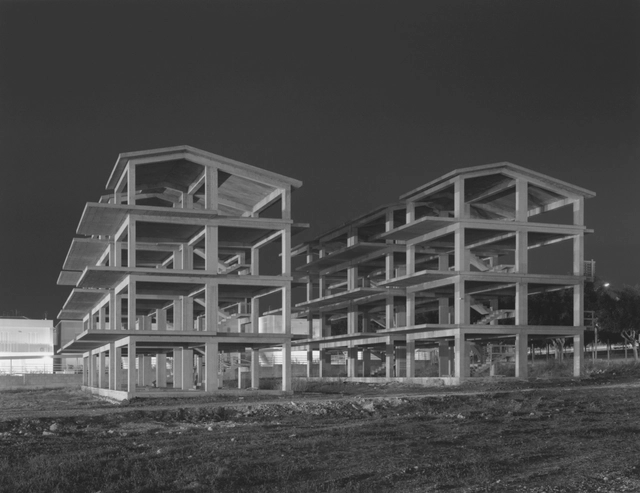
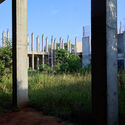
Europe's ancient ruins are numerous: Pompeii, the Parthenon, the Colosseum - but what about new ruins? Skeletons of incomplete buildings now litter the skylines of European cities. A form of memento mori, these abandoned constructions prove that no structure is permanent or impervious to the changing desires of a society in flux. EnglishphotographerSam Laughlin documents the creation of these 'ruins' in his series Frameworks, a contemporary dissection of the aging built environment.
Enter the abandoned world in Frameworks with more photos and info after the break.
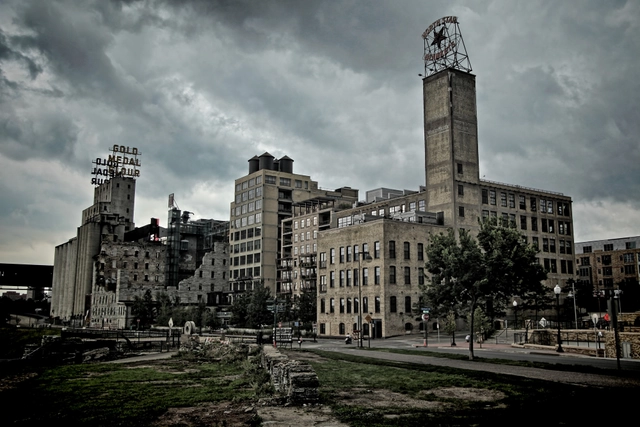
Historic mill city ruins in downtown Minneapolis. Image Courtesy of Flickr CC License / Joey Lax-Salinas
Lately, architects are sharing an increasing captivation with ruins. As our technologies for envisioning the buildings of the future become ever-more accurate – enabling us not only to walk through, hover over, and inhabit walls, but also to calculate exact quantities of materials, structural load capacities and costs – our fascination for ruin, a process that is governed by laws of nature and time in a manner that is spatially unpredictable and rarely uniform, has also seen a rise in popularity.
Blogs such as Ruin Porn, Abandoned America and Architecture of Doom draw from a recent sub-genre of photography, identified as ‘ruins photography’ or ‘ruin porn’. While buildings can go into decay for many reasons, these images tend to focus on urban decay, especially in cities such as Detroit, Chicago and Berlin, which saw a surge of industrialization in the last century that has since dwindled.
https://www.archdaily.com/537712/beyond-ruin-porn-what-s-behind-our-obsession-with-decayShayari De Silva
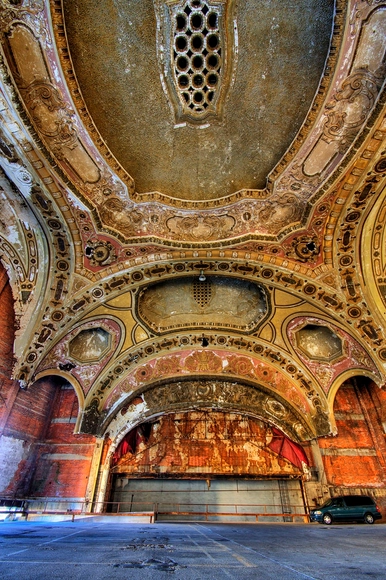
Originally posted on the Huffington Post's Home Section as "How a Historic Movie Palace Became America's Most Unusual Parking Garage," this article tells of both the history and the possible future of the Michigan Theater - once one of Detroit's most opulent nights out, but now a crumbling (albeit oddly magnificent) parking garage. Emblematic of the city's rapid decline, it turns out the recently-purchased Michigan Theater may also be a symbol of the city's regeneration.
An inventor's workshop. A movie palace. A rock club. A car park. A skate park. The backdrop for Eminem videos. Now it's one of America's strangest parking garages, but a peek inside the Michigan Theatre reveals why it's remained a landmark -- and has a unique story that explains a lot about the importance of preserving cities' historic architecture.
The former theater is attached to the Michigan Building, a partially occupied office tower, and might look familiar to some who have sought out urban decay photos. There's something radically visceral about cars parked in the garage under the crumbling but ornately decorated ceilings of the site that in its heyday hosted legends like the Marx Brothers, Frank Sinatra, Louis Armstrong and Doris Day.
Read more on the theater's unusual, inspiring story after the break
Material Minds, presented by ArchDaily Materials, is our new series of short interviews with architects, designers, scientists, and others who use architectural materials in innovative ways. Enjoy!
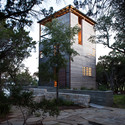
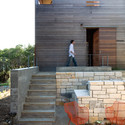
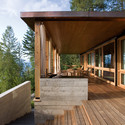
Arthur Andersson of Andersson-Wise Architects wants to build ruins. He wants things to be timeless - to look good now and 2000 years from now. He wants buildings to fit within a place and time. To do that he has a various set of philosophies, processes and some great influences. Read our full in-depth interview with Mr. Andersson, another revolutionary "Material Mind," after the break.