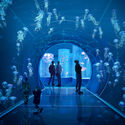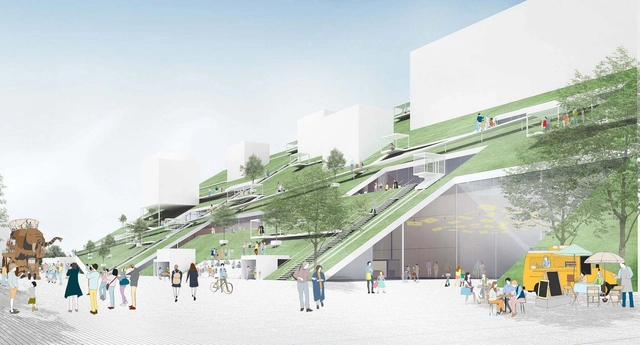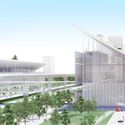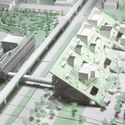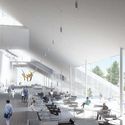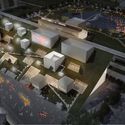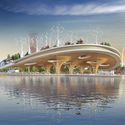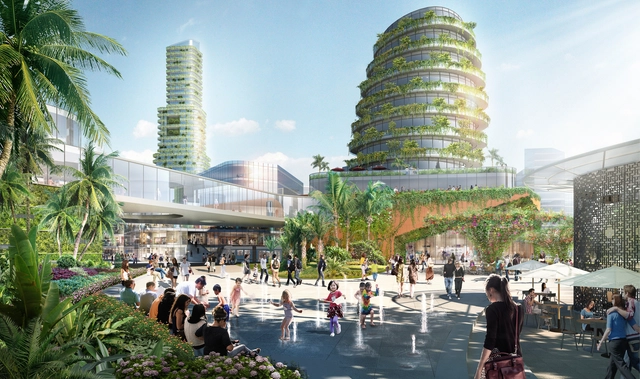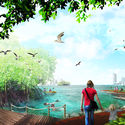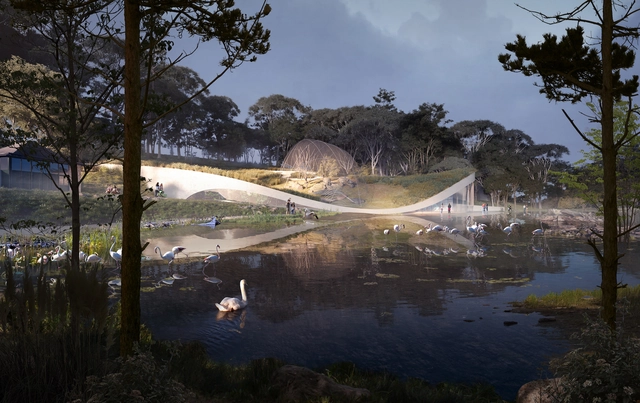
Perkins+Will is creating a whole new world 62 miles northwest of Shanghai for the Suzhou Science & Technology Museum. Inspired by shan sui, the Chinese phrase for "mountain-water,” the complex lies at the foot of Lion Mountain and adjacent to Shishan Lake. The 600,000 square foot museum will be the focal point of a new cultural neighborhood in Shishan Park.
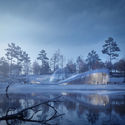
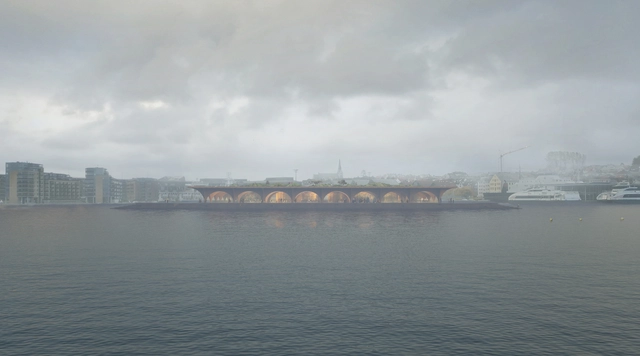
Soon the people of Stavanger, Norway will get to see the LERVIG beer brewing process at the new 11,000 square meter visitor center and brewery designed by Danish architects COBE. An iconic focal point on what was once an industrial pier, the building will offer many new amenities to central Stavanger. The brewery will be encircled by public spaces such as a harbour bath and Norway’s first west-coast ‘street-food’ market, complete with a green roof above. From these periphery spaces, guests will be able to view the brew tanks and fermentation process happening in the heart of the building.
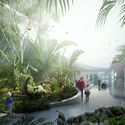
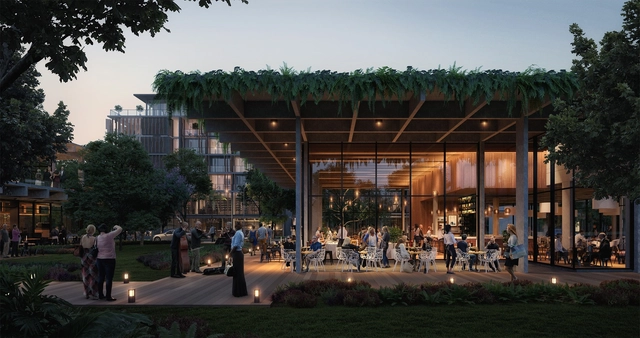
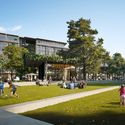
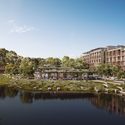
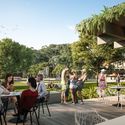
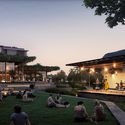
The Sunshine Coast of Australia’s Yaroomba Beach is about to get a $900 million upgrade. The integrated, mixed-use development will be the first 5-star resort developed on the Sunshine Coast in 30 years. HASSELL has been awarded the work as master planners, architects, and landscape architects for the massive project, focusing on sustainable and ecological goals to ‘touch the ground lightly.'
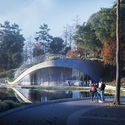
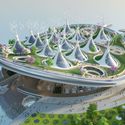
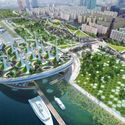
Vincent Callebaut Architectures have developed a design plan reimagining the riverbank of Yeouhido Park, Seoul. The park is envisioned as an experimental urban space dedicated to sustainable development through a series of interventions - including a floating ferry terminal. Named the “Manta Ray,” the ambition of the proposal is to transform the park into an ecological forest of trees, enhancing its natural irrigation and strengthening the banks from floods. The “permeable landscaping” seeks to reduce floods and rehabilitate urban ecosystems that have become fragmented through Seoul’s rapid built expansion. The vegetation-dominated strategy also seeks to reduce the urban “heat island” effect Seoul has been experiencing due to climate change over the past decades.
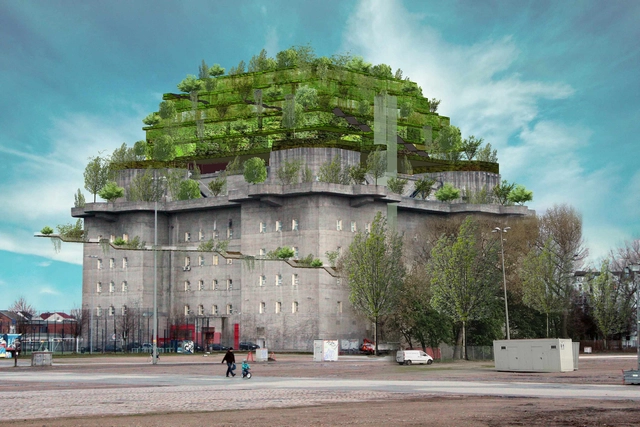
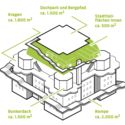
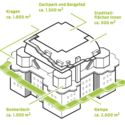
A team of local residents and architects in Hamburg’s neighborhood of St. Pauli have been granted planning permission for a proposal to repurpose a war bunker dating back from the 1940s. Coined Hilldegarden, the proposal seeks to create a “green mountain” garden atop the disused roof of the bunker along with a range of mixed-use projects that increase its height by several stories. “We are rebuilding what we inherit.” The project’s initiative states, “Adding something to history while dealing with it and thereby reshaping history itself.”
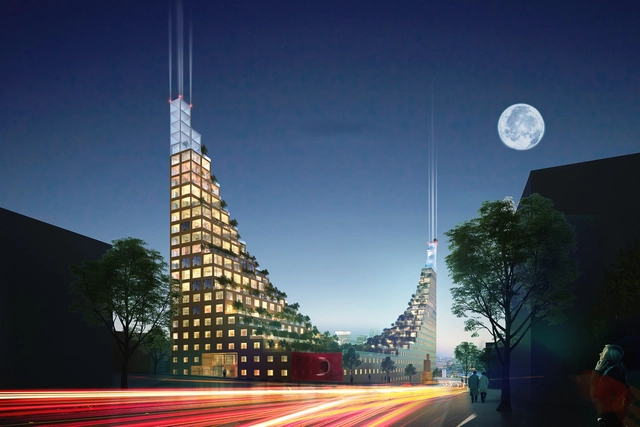
A new housing complex in the form of 500 terraced units has been proposed by London practice Architects of Invention for the city of Birmingham, in response to its growing multicultural population. Drawing inspiration from the ancient Hanging Gardens of Babylon, Garden Hill’s formal composition is that of two staggered 25-storey towers, with private and communal gardens on each level of terraces.
With the project's swooping mass, the residences aim to offer panoramic views of Birmingham, given its central location in the Digbeth area, a 10-minute walk from the city center. Additionally, the staggered towers capture ample daylighting over the course of the day, with the south end benefitting from the morning sun and the north end in the evening.
Titled “Saltholmsgade”, the winning proposal is a reinterpretation of Aarhus’ historical housing typologies along Hjortensgade, creating modern and green communal spaces. The complex consists of 38 individual apartments, offering tenants views of the city through the inclusion of rooftop gardens.
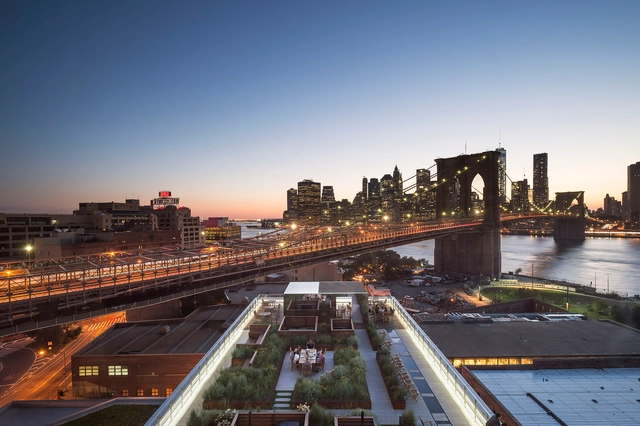
James Corner Field Operations has completed a nearly 6,000 square foot rooftop garden located in the heart of the DUMBO neighborhood in Brooklyn. The garden is located on top of a seventeen-story apartment complex designed by Leeser Architecture and developed by Two Trees Management. The Dock Street Rooftop Terrace allows residents to view the panoramic scenery of the Brooklyn Bridge, Manhattan Bridge, East River, and Manhattan Skyline.
Rendered VIew. Image Courtesy of Sasaki Associates
Located on four man-made islands in Iskandar Malaysia, “Forest City” is set to be South-East Asia’s largest, mixed use green development. Designed by Sasaki Associates, the master plan has an estimated investment of S$58.3 billion (US$40.9 billion) and is expected to bring around 220,000 jobs to the area. Located near the economic centers of Southeast Asia, the new Forest City is ideally placed to become a hub of commerce and culture. Designed to encourage live/work culture, it is composed of “financial institutions, high-tech research and development facilities, headquarter offices, and a variety of creative industries that establish an innovative and sustainable employment base for the region,” write the architects. Read more after the break.
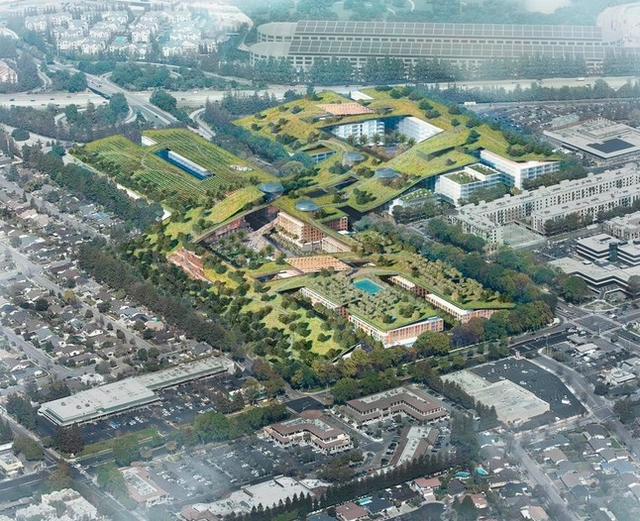
Rafael Viñoly and OLIN have unveiled plans to transform Cupertino's Vallco Shopping Mall into a new mixed-use neighborhood that boasts the "world's largest green roof." The current plans call for a 15-block sustainable town center with 625,000-square-feet of retail, two-million-square-feet of office space and 800 residential units. All this, if approved, would be topped by a 30 acre public green space with a 3.8 mile trail network that runs through orchards, vineyards, an amphitheater and play areas.
Film often makes a mockery of architectural features. Glass facades are obliterated by gunfire, grisly murders are set against a white modernist palette, deconstructed stairs are the cause of nasty accidents or ludicrous slapstick, and you just know a tensile fabric roof will be shredded by the time 007 is finished with it.
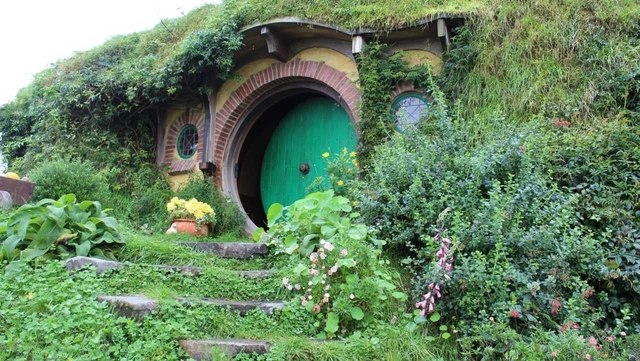
There is one architectural feature however that has benefited from very complimentary treatment by the film industry, and surprisingly it is a sustainable one. Green roofs and other “architectural” green spaces have been popping up regularly in mainstream movies over the past decade: blockbusters including The Vow (2012) and Source Code (2011) utilized the greenscape outside Gehry's Jay Pritzker Pavilion in Millennium Park; last year the Vancouver Convention Centre was featured in both Godzilla and Robocop; and Kaspar Schroder’s 2009 uber cool documentary My Playground, about the sport of parkour (the art of bouncing off buildings made famous by the opening scenes of Casino Royale), features BIG’s Mountain Dwellings in Copenhagen. And we cannot forget two of the biggest film franchises in history: both of Peter Jackson’s Lord of the Rings and The Hobbit franchises feature green roofs in their portrayal of Hobbiton – home of the virtuous and incorruptible Hobbits.
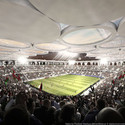
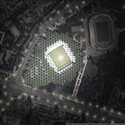
Designed to seat 33,000 people, stadiumconcept and IAA architecten’s proposal for Minsk’s newest football stadium has a unique and allusive form. The column-like supports of the stadium roof resemble tractor valves, a reference to Minsk’s booming tractor fabrication industry. These tapering columns provide a signature identity for a building that, in addition to being a stadium, will serve the city as a shopping and business center.
This article by Jonathan Ward, originally published on Arup Thoughts as "A Top-Down Approach to Flood Prevention" discusses a cheap, simple, but effective method of easing the load on drainage after a storm: temporary storage of water on flat roofs, which can not only help to prevent floods, but also provide unexpected benefits as well.
Gravity offers a simple and cheap way to attenuate stormwater flows – by storing water temporarily on a flat roof. All sorts of causes are being blamed for the current flooding in the UK; lack of dredging, poor management of catchment areas, construction on flood plains and paving over front gardens are all being mentioned in the press.
One thing is for sure – we will be paying a lot more attention to the topic given the current experience, and the fact that wetter winters are predicted in our changing climate, with a certainty of more extreme events.
Read on for an explanation of why this counter-intuitive measure actually makes perfect sense
Five amazing green roof projects from earlier this year. Check them all after the break.
Sky Garden House / Guz Architects This house is located on a new housing estate on the island of Sentosa adjacent to Singapore. The plots are not large and neighbouring buildings are built close to the sides of each house. Thus our strategy was to build a solid wall to each side neighbor to provide privacy where possible, while creating a central light and stair well which would funnel the sea breeze through the centre of the building (read more…)
St. Patrick’s today, and it’s all about green! So for today’s Round Up, we have our sixth selection of previously featured green roofs! Check them all after the break.
Welham Studios / Mark Merer Welham Studios started with the study of placement, watching objects in clay and sand creating shapes through the interaction of the wind and rain. The work is looking for a union of object and environment (read more…)
A lot of amazing projects are designed now with green roofs. And for our 5th selection, we even have a Building of the Year 2009 by ACXT. Check them all after the break.
BTEK – Technology Interpretation Center / ACXT BTEK is an interpretation centre for new technologies, aimed at student visitors. The site’s location, on one of the highest points of the Vizcaya Technology Park and close to the Bilbao airport’s flight path for takeoffs and landings, helps with the aim of making the building a landmark in its landscape (read more…)