Third time’s the charm, at least in the case of Apple’s Foster + Partners-designed flagship store planned for San Francisco’s historic Union Square. After being sent back to the drawings boards on multiple occasions, the signature glass box’s third proposal (which was claimed to be “more iconic” than the company’s famous Five Avenue glass cube in New York City) has been awarded approval from the city.
Writing for Future Cape Town, this article by Julia Thayne - originally titled The Skycycle: A Plan for the People? - explores the proposal by Foster + Partners to build an elevated cycle highway above London's, explaining why it is little more than an optimistic pipe-dream.
Headlines in London this November were grim. Six cyclist deaths in less than a fortnight. All but one cyclist killed in accidents involving trucks, buses, or coaches. People were understandably concerned. From 3,000 miles away, my mother sent me a fluorescent coat and another set of bike lights, and as a cyclist commuter, I avoided roundabouts that I had previously sailed through, noting that cars seemed to be driving more slowly and other cyclists thinking twice before flouting traffic laws.
In response to the deaths, the public and public sector alike launched a “cycling state of emergency.” Officers patrolled the streets to ticket both vehicles driving unsafely and cyclists disobeying road rules. A thousand citizens gathered for a candlelight vigil at the roundabout where three cyclists’ lives had been claimed. Another thousand staged a “die-in” outside of Transport for London’s headquarters, in which protesters lay down in the streets, using their bicycles to block traffic. Newspaper columns, magazine articles, and blog spots examined and re-examined the safety of cycling routes around London. Mayor Boris Johnson’s Cycle Superhighways (four blue-painted, supposedly safety-enhanced cycling routes around London) became a particularly contentious topic of discussion, as three of the six cyclist deaths during those two weeks (and of the 14 deaths thus far in 2013) had occurred on or near one of these routes.
From the conversation about cycling and safety, the Skycycle has emerged.
Read on for the problems with the Skycycle project
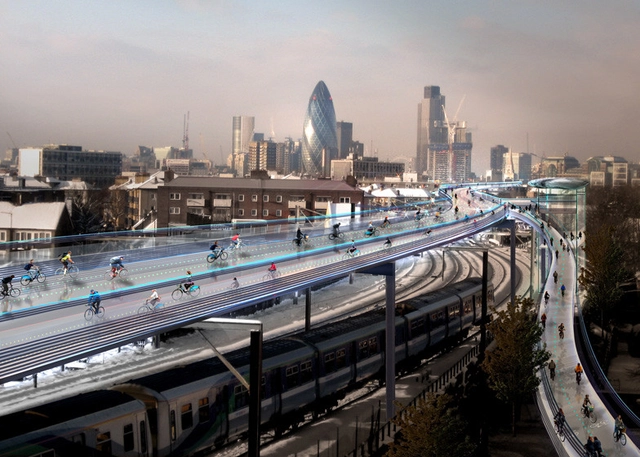
Foster + Partners has unveiled a scheme that aims to transform London’s railways into cycling freeways. The seemingly plausible proposal, which was designed with the help of landscape firm Exterior Architectureand transportation consultant Space Syntax, would connect more than six million residents to an elevated network of car-free bicycle paths built above London’s existing railway lines if approved.
"SkyCycle is a lateral approach to finding space in a congested city," said Norman Foster, who is both a regular cyclist and the president of Britain's National Byway Trust. "By using the corridors above the suburban railways, we could create a world-class network of safe, car free cycle routes that are ideally located for commuters."
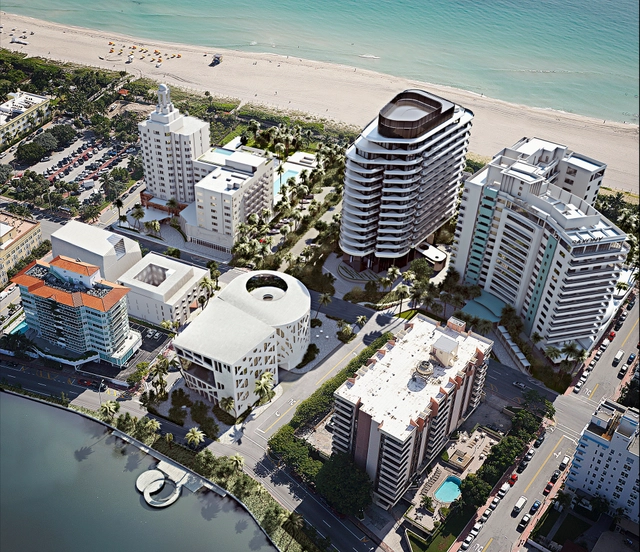
Alan Faena — prominent argentine developer — is partnering with an all-star cast of celebrated artists, architects and Hollywood darlings to revive the decadence of the roaring twenties, envisioning a booming cultural "epicenter" for the city of Miami. The development, Faena Miami Beach, would include the restoration of the historic Saxony Hotel (the original symbol of opulent resorts along Florida beaches), the construction of new luxury apartments by Foster + Partners and the Rem Koolhaas/OMA-designed Faena Arts Center and Artist Residency. Review them all after the break.
https://www.archdaily.com/462667/star-architects-and-artists-recruited-to-design-faena-district-of-miami-beachJose Luis Gabriel Cruz
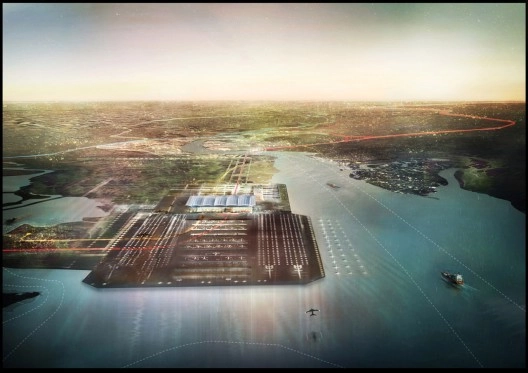
The prognosis does not look good for Foster + Partners' plan for an airport hub in the Thames Estuary. The Guardian reports that the Independent Airports Commission has released an interim report, revealing a shortlist of potential options for the UK - and the Thames Hub (with an estimated price tag of £112bn) isn't on it. Yet hope (however slim) does remain for the proposal, as its persistent defender, London mayor Boris Johnson, has managed to convince the commission to revisit the idea in early 2014. Get the whole story at The Guardian.
As part of their annual research for the World Architecture Top 100, Building Design (BD) has compiled a list of which architects are most admired by their colleagues from across the globe. Last year's results were somewhat predictable, with Foster + Partners leading and Renzo Piano's Building Workshop and Herzog + de Meuron close behind. According to BD, "this year saw a trend towards more commercial names."
This four part series (originally published on Aggregate’s website) examines the Gherkin, the London office tower designed by Foster + Partners, showing how the urban icon engaged and leveraged perceptions of risk. In part one, author Jonathan Massey introduced the concept of "risk design” to describe how the Gherkin’s design managed the risks posed by climate change, terrorism, and globalization. In parts two and three, Massey examined the building’s treatment of risks associated with climate change and terrorism. In this final installment, Massey concludes by addressing the building’s engagement with risks posed to the City of London by globalization.
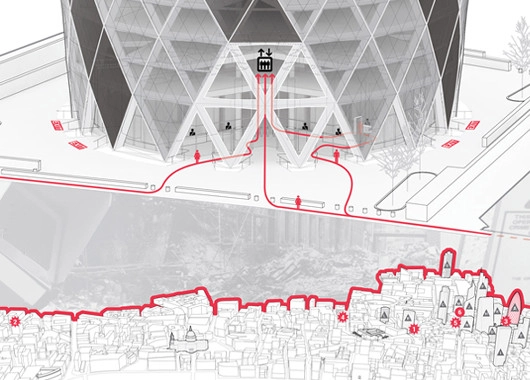
Unlike New York and other cities in which zoning codes entitle landowners to some kinds of development “as of right,” the City of London regulates property development through case-by-case review by planning officers, who judge how well the proposed construction conforms to City-wide plans and guidelines regarding factors such as building height, development density, access to transit, and impact on views and the visual character of the area. In order to develop the Gherkin, the property owners and Swiss Re had to secure planning consent from the City Corporation through its chief planning officer, Peter Wynne Rees. The review and permitting process that culminated in the granting of planning consent in August 2000 spanned the planning office as well as the market, the courts, and the press. Rees brokered a multilateral negotiation so intensive that we could almost say the building was designed by bureaucracy. Part of that negotiation entailed imagining and staging risk: climate risk, terrorism risk, and, especially, the financial risks associated with globalization.
This four part series (originally published on Aggregate’s website) examines the Gherkin, the London office tower designed by Foster + Partners, showing how the urban icon engaged and leveraged perceptions of risk. In part one, author Jonathan Massey introduced the concept of "risk design” to describe how the Gherkin’s design managed the risks posed by climate change, terrorism, and globalization. In part two, Massey examined the building’s treatment of climate risk. In part three, below, he explains how the Gherkin redesigned the risk imaginary associated with terrorism.
Mornings the Zamboni scrubs the plaza. Moving across the pavement in parallel lines connected by tight turns, the sweeper cleans the stone of cigarette butts and spilled food and beer left the night before by the underwriters and bankers who patronize the bar and shops in the building’s perimeter arcade as well as the adjacent restaurant that in fair weather sets up outdoor tables and chairs.
By pulling away from its irregular property lines, the tower achieves almost perfect formal autonomy from its context. The gap between the circular tower base and trapezoidal site boundaries forms a privately owned public space, a civic and commercial amenity in this densely built part of the City.
This four part series (originally published on Aggregate’s website) examines The Gherkin, the London office tower designed by Foster + Partners, showing how the urban icon engaged and leveraged perceptions of risk. In part one, author Jonathan Massey introduced the concept of "risk design” to describe how the Gherkin’s design managed the risks posed by climate change, terrorism, and globalization. In part two, below, Massey examines the Gherkin’s enclosure and ventilation systems in detail to explain how the building negotiated climate risk.
In a poster promoting London’s bid to host the Olympic Games, the Gherkin supported gymnast Ben Brown as he vaulted over the building’s conical peak. The image associated British athleticism and architecture as complementary manifestations of daring and skill, enlisting the Gherkin as evidence that London possessed the expertise and panache to handle the risk involved in hosting an Olympic Games.
But a poster created three years later offered a very different image. Created by activists from the Camp for Climate Action to publicize a mass protest at Heathrow Airport against the environmental degradation caused by air travel, this poster shows the Gherkin affording only precarious footing to a giant polar bear that swats at passing jets as its claws grasp at the slight relief offered by spiraling mullions and fins.
How does design change the nature and distribution of risk? In this, the first of four installments examining the Gherkin, the London office tower and urban icon designed by Foster + Partners, author Jonathan Massey introduces the concept of “risk design.” The series, originally published on Aggregate's website, explains how the Gherkin leveraged perceptions of risk to generate profits, promote economic growth, and raise the currency of design expertise.
Designing Risk
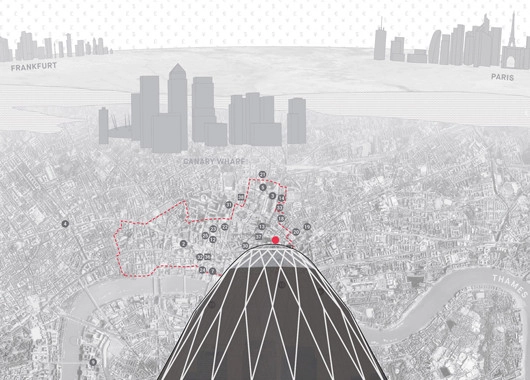
Back the Bid. Leap for London. Make Britain Proud. Emblazoned across photomontages of oversized athletes jumping over, diving off, and shooting for architectural landmarks old and new, these slogans appeared in 2004 on posters encouraging Londoners to support the city’s bid to host the 2012 Olympic Games. Featured twice in the series of six posters—along with Buckingham Palace, Nelson’s Column, the Tower Bridge, the London Eye, and the Thames Barrier—was 30 St Mary Axe, the office tower known colloquially as the Gherkin for its resemblance to a pickle, or as the Swiss Re building, after the Zurich-based reinsurance company that commissioned the building and remains its major tenant.
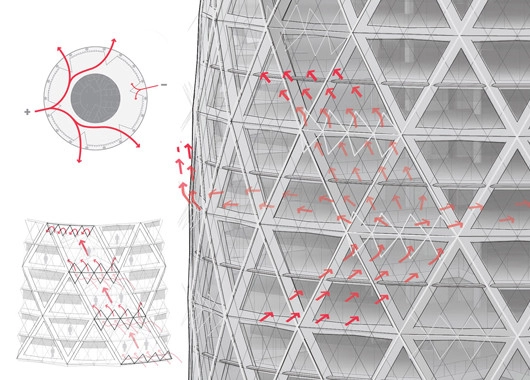
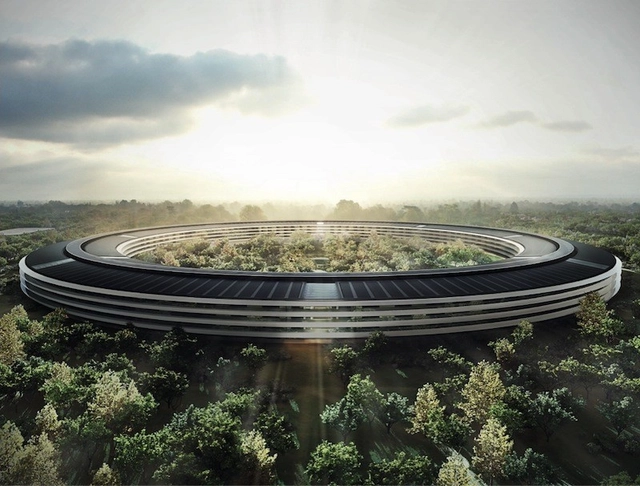
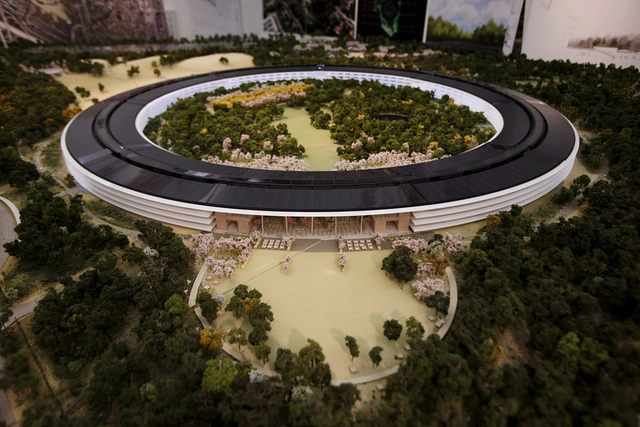
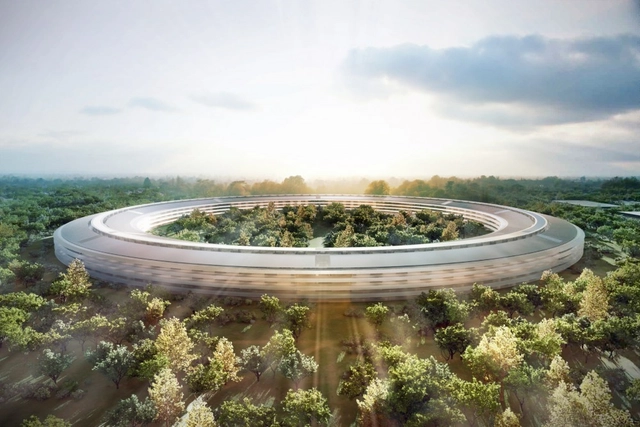
It has been a long road for Foster + Partners's team since first taking on the design for Apple's new campus in 2009. Four years later, despite the criticism and budget concerns, plans for Apple’s corporate headquarters have been approved by Cupertino’s planning commission. A recent video from the Cupertino City Council reveals some insight into the design decisions, including statements by Sir Norman Foster. As Foster states in the video, CEO Steve Jobs called him "out of the blue" in 2009 and said, "It's Steve: Hi Norman, I need some help."
UPDATE: Although having already cleared a preliminary vote, the Apple HQ was given unanimous approval from the Cupertino council yesterday. One "largely perfunctory" vote remains for November 15th. Detailed images, after the break.
In a recent article for the Financial Times, Edwin Heathcote explores the 'Skyscraper Index', an informal term that suggests a correlation between the construction of a big company's ambitious headquarters and subsequent financial crisis: "Think of the Empire State Building opening into the Wall Street crash of 1929, the Twin Towers being completed as New York City was flirting with bankruptcy or the Petronas Towers in Kuala Lumpur taking the mantle of the world’s tallest building and presaging the Asian financial crisis." Heathcote goes on to describe the latest generation of headquarters being constructed for our current, tech-oriented goliaths - like Apple's monolithic "donut", by Foster + Partners, and Facebook's Gehry-designed Menlo Park campus - and wonders: "if skyscrapers can tell us something about the temperature of an overheating economy, what do these groundscraping new HQs say?" Read the full article here.
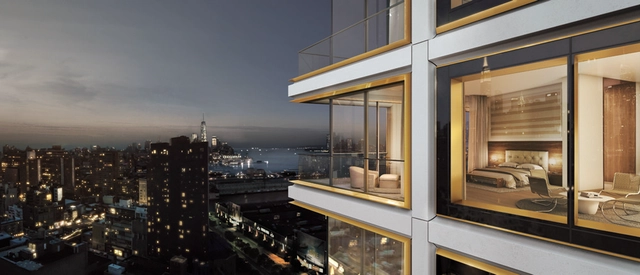
Foster + Partners have just revealed a new design for a 19-story luxury condominium building at 551 West 21st Street, on the western side of Manhattan. The design features a cast concrete frame surrounding windows with a warmly colored metal trim that cover the full 11-foot floor to ceiling height.
Foster + Partners' revised design for the new SF Apple Store.. Image Courtesy of Apple
Earlier this summer we reviewed plans for a new Foster + Partners-designed Apple Store in the heart of San Francisco which received a considerable amount of backlash for its accused ubiquitous design that disregarded the city's historic Ruth Asawa Fountain. Since, Apple has decided to respond to the complaints and Foster + Partners have just released images of the revised design that preserves the fountain.
Norman Foster has walked away from a $670 million expansion project for Moscow’s largest museum of European art: The Pushkin Museum of Fine Arts. According to The Art Newspaper, the prized British architect resigned from the project back in June after Moscow’s chief architect, Sergei Kuznetsov issued an ultimatum that demanded Foster either work and defend the project himself or turn it down.
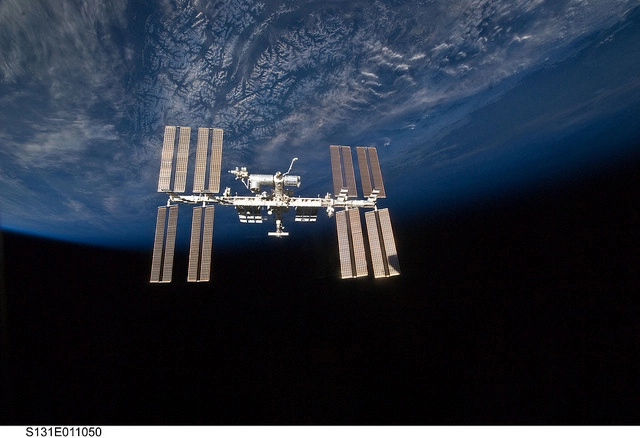
Three months ago, Commander Chris Hadfield captured the attention of millions by recording a cover of David Bowie's Space Oddity - entirely on board the International Space Station. The video was the culmination of five months of social media efforts to raise awareness and interest in current space programs worldwide, and it certainly seems that Hadfield succeeded in piquing the interest of at least a few future astronauts.
But for architects, something else probably stands out in the video: the ISS seems an extremely clinical and uncomfortable environment to live in for five months. The reasons for this are obvious: it is a highly controlled engineered environment; sending luxuries into orbit is expensive; the astronauts are there to work, and after all they are trained to cope in stressful and uncomfortable environments. However, with proposals for longer missions, such as a manned trip to Mars, as well as the continued promise of commercial spaceflight on the horizon, the design of living spaces outside of our own planet may soon become an issue which architects must get involved in.
Read on to find out about the challenges of architecture in space, after the break.